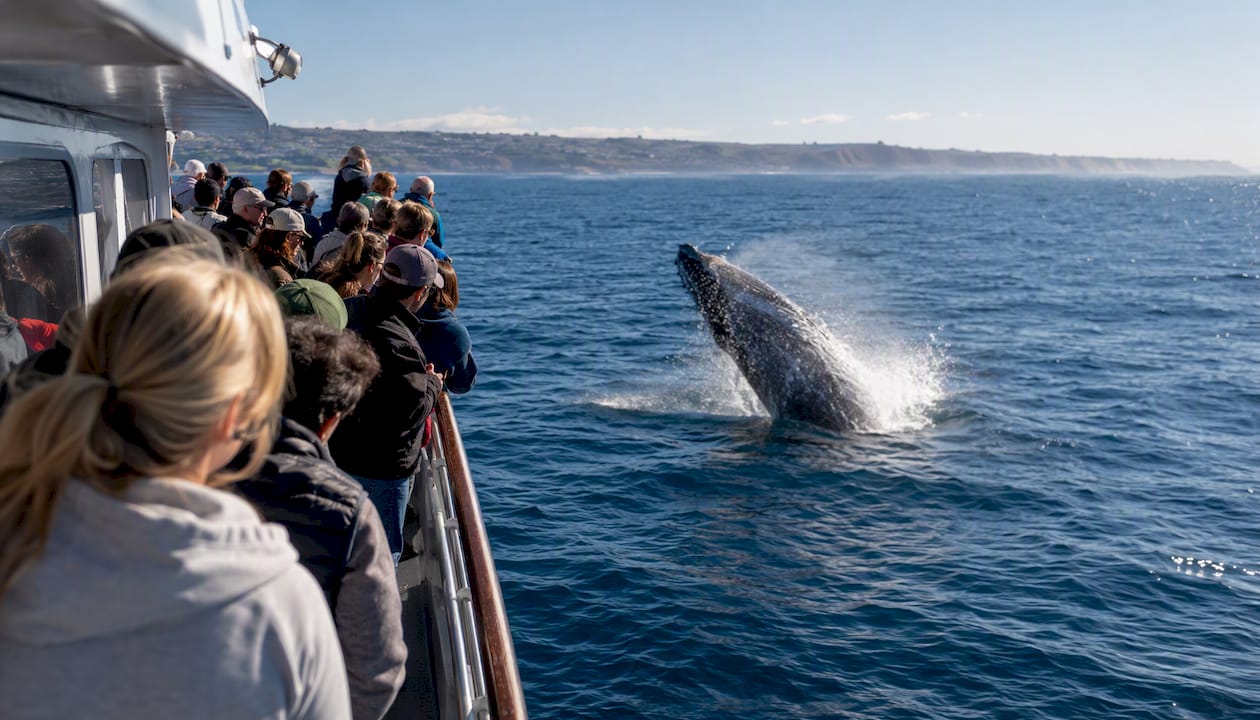
If you want to book a whale-watching trip in San Diego and skip the research spiral, here are the four operators worth your time right now:
- San Diego Whale Watch (Mission Bay): Daily departures, a naturalist on board, and a sighting guarantee — free return trip if you don’t spot whales or dolphins. Fares start at moderate prices.
- Gone Whale Watching San Diego: Small, fast boats with private-charter options. Best for photographers and anyone who wants to cover more water quickly and find whales effectively.
- Wild Pacific Whale Watch: Comfort-forward vessel with stabilizers and indoor seating. The go-to pick for blue whale season (mid-May through September).
- City Cruises / Whale Watching by City Cruises: Narrated, museum-affiliated trips that work well for first-timers and families who want the educational angle.
For peak gray whale season (January and February), book at least two to three weeks ahead. Summer blue-whale trips fill up fast too, especially on weekends.
Key Takeaways
Gray whale season in winter and blue whale season in summer are the two main windows that define whale watching in San Diego, and picking the right operator for your goals matters as much as picking the right month.
| Point | Details |
|---|---|
| Best months for gray whales | Peak sightings occur during the annual coastal migration. |
| Best months for blue whales | The season runs from mid-spring through late summer. |
| Sighting guarantee | San Diego Whale Watch offers a free return trip if no whales or dolphins are spotted; confirm terms at booking. |
| Small vs. large boats | Small fast boats cover more water and suit photographers; large vessels offer stability and indoor seating for families. |
| Socalsights day planning | Socalsights pairs whale-watching departures with curated local itineraries, parking tips, and land-based add-ons. |
Table of Contents
- How do San Diego whale-watching operators compare?
- How do you pick the right whale-watching trip for your goals?
- When is the best time for whale watching in San Diego?
- Where do San Diego whale-watching tours depart from?
- What should you bring on a whale-watching trip?
- Where can you see whales from shore in San Diego?
- How do you watch whales responsibly in San Diego?
- What are the typical booking and cancellation policies?
- An honest local take on choosing a San Diego whale-watching trip
- Plan your San Diego whale-watching day with Socalsights
- Sources
How do San Diego whale-watching operators compare?
The table below covers the operators you’ll encounter most often when searching for tours. Prices and policies shift seasonally, so confirm details directly with each operator before booking.
A few things worth knowing about boat size:
- Small, fast boats (like Gone Whale Watching’s vessels) cover more water and often reach sightings sooner. The trade-off is a rougher ride and less shelter from wind.
- Large two-deck vessels (San Diego Whale Watch, City Cruises, Flagship) offer indoor seating, restrooms, and more stability. Families and passengers prone to seasickness generally prefer them.
- The San Diego Natural History Museum partners with select operators to provide trained naturalists on board. If the educational experience matters to you, ask specifically whether a museum naturalist is on your departure.
How do you pick the right whale-watching trip for your goals?
A little upfront thinking saves a lot of post-trip regret. Work through these five questions before you book:
- What species do you want to see? Gray whales run December through April. Blue whales show up mid-May through September. If you’re visiting in spring, you may catch the tail end of gray whale migration and the start of blue whale season.
- How important is the educational experience? If you want narrated, science-backed commentary, prioritize operators with confirmed naturalist affiliations (San Diego Natural History Museum partnerships are the gold standard locally).
- Are you traveling with kids or anyone prone to seasickness? Go with a larger vessel. Stability and indoor seating matter more than speed when you have young kids or a queasy stomach.
- Do you want to maximize sighting odds? Small, fast boats like Gone Whale Watching’s cover more ocean per hour. They’re also better for photography because you can position closer and move quickly.
- What’s your budget and flexibility? San Diego Whale Watch’s sighting guarantee (free return if no whales appear) is a real safety net for first-timers. Confirm the exact terms at booking since policies vary.
Questions to ask any operator before you pay:
- Is the vessel USCG-inspected?
- Is there a naturalist on board, and what’s their affiliation?
- What’s the exact refund or rebook policy if weather cancels the trip?
- Does the boat have indoor seating and a restroom?
- Where exactly do you depart, and is parking available?
Red flags to watch for: no safety information listed on the website, vague or missing refund language, no mention of vessel inspection, or departure logistics that don’t match the booking confirmation.
When is the best time for whale watching in San Diego?
San Diego is genuinely a year-round destination for marine wildlife, but two distinct migration windows define the calendar.
Gray whale season runs mid-December through April, with January and February delivering the highest concentration of sightings. These are the whales making the longest mammal migration on Earth, traveling between Alaska and Baja California. You’ll see them traveling close to the coast, often in small groups or mother-calf pairs on the return leg in February and March.
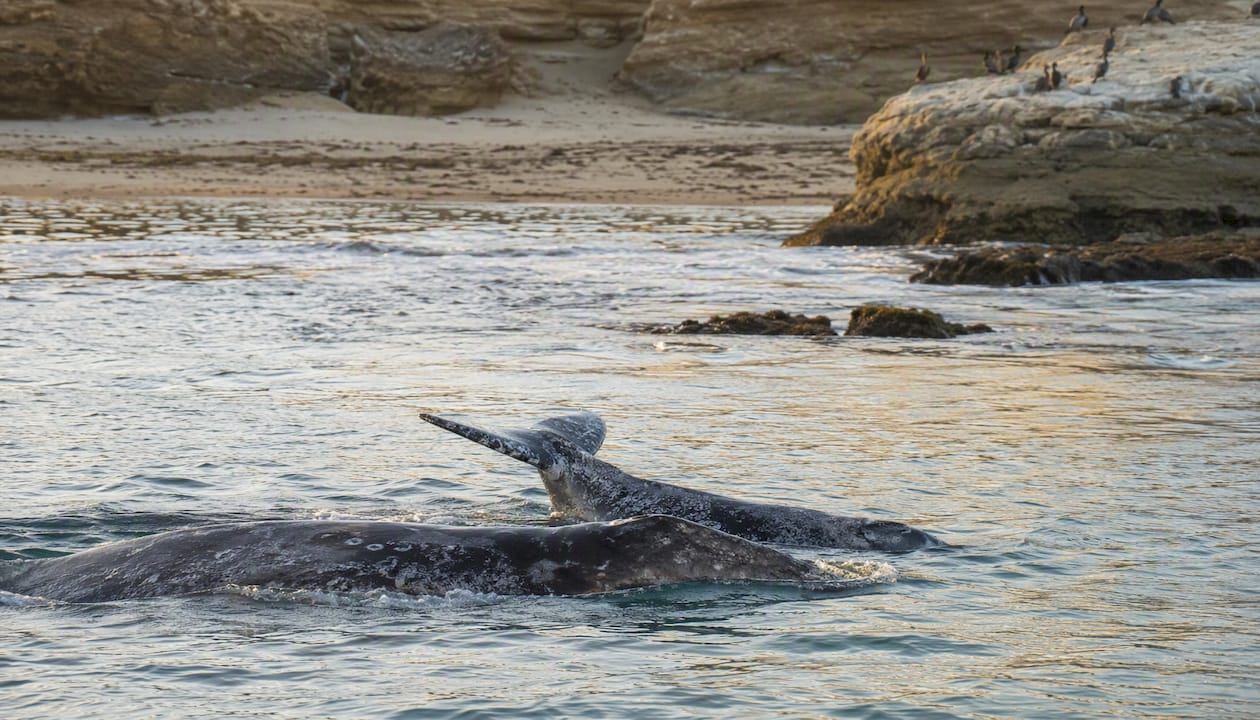
Blue whale season typically opens mid-May and runs through September, tied to krill blooms off the Southern California coast. Blue whales are the largest animals on the planet, and seeing one surface near a boat is genuinely hard to describe. Timing shifts year to year depending on where the krill concentrate, so operators offering dedicated five-hour blue whale trips tend to have better odds during peak mid-summer months.
| Species | Typical Months | Peak | What to Expect |
|---|---|---|---|
| Gray whale | Mid-December–April | January–February | Coastal migration, mother-calf pairs on return leg |
| Blue whale | Mid-May–September | July–August | Deep-water feeding, massive surfacing, tail flukes |
| Common dolphin | Year-round | Spring–summer | Large pods, bow-riding, acrobatics |
| Minke whale | Year-round (sporadic) | Winter–spring | Solitary, fast-moving, brief surfacing |
Best time of day: Morning trips offer calmer seas and better natural light for photos. Sunset trips trade photo conditions for dramatic skies and often see more active dolphin behavior. If photography is your priority, go morning. If atmosphere matters more, sunset trips are genuinely beautiful.
Where do San Diego whale-watching tours depart from?
Knowing your departure point before you book saves real hassle on the day.
- Mission Bay: San Diego Whale Watch departs here daily. It’s a calm, protected launch point with easy freeway access and paid parking nearby. Operators here can reach productive search areas without long transit times.
- Embarcadero / Harbor: City Cruises and Flagship Cruises depart from the downtown waterfront. Parking can be tight on weekends; ride-share drop-off is the easier move. The harbor setting is scenic and convenient if you’re already staying downtown.
- Shelter Island / Point Loma area: Some smaller operators use this launch point. It’s close to open ocean, which shortens the ride to deeper water.
- Oceanside (North County): Oceanside’s harbor sits close to deep water, which can cut transit time to feeding areas. Worth considering if you’re staying in North County and want to minimize driving.
Check-in tips: Arrive at least 30 minutes before departure. Most operators close boarding 10–15 minutes before the boat leaves. If you’re driving, budget extra time for parking on weekends during peak season.
Accessibility: Ask each operator directly about ADA boarding access, accessible restrooms, and seating. Larger vessels generally offer better accessibility than small fast boats. Give operators advance notice of any mobility needs so they can confirm the right departure for you.
What should you bring on a whale-watching trip?
Packing right makes a real difference between a great trip and a miserable one.
- Layers: San Diego mornings on the water are cold, even in summer. A windproof jacket over a fleece is the right combination.
- Binoculars: Useful even on a boat. Whales surface at varying distances, and binoculars let you track behavior between surfacings.
- Sunscreen and a hat: Glare off the water is intense, and you’ll be outside for two to five hours.
- Camera with a zoom lens: A 200mm+ lens gives you usable shots. Phone cameras struggle with distance and motion.
- Motion sickness remedies: Dramamine or Bonine taken the night before and the morning of departure works better than waiting until you feel sick. Ginger chews are a gentler option for mild sensitivity.
Pro Tip: Sit or stand near the middle of the boat and keep your eyes on the horizon if you feel queasy. The bow and stern amplify motion. Staying outside in fresh air almost always beats going below deck.
Common onboard facilities on larger vessels include indoor seating, restrooms, and a snack bar or small galley. Smaller fast boats may have limited or no indoor space. Confirm what’s available before you book, especially if you’re bringing kids or have specific needs.
Where can you see whales from shore in San Diego?
Not everyone wants to get on a boat, and honestly, land-based viewing in San Diego can be spectacular during peak migration.
- Cabrillo National Monument (Point Loma): The Kelp Forest Overlook and Whale Overlook are the two named vantage points here. Binoculars are strongly recommended because gray whales typically transit several tenths of a mile offshore. Mid-January is the sweet spot for sightings. There’s an entry fee for the monument, and mornings offer the best light and calmest conditions.
- Torrey Pines State Reserve: The blufftop trails give you elevated views over the Pacific. It’s a longer shot than Cabrillo, but the scenery makes it worth the visit even on a slow whale day.
- Sunset Cliffs Natural Park (Ocean Beach): A dramatic shoreline with multiple elevated viewing points. Best during high migration months (January–February). Free access, easy parking on weekdays.
Bring the best binoculars you own. Whales at these distances are visible to the naked eye when they blow, but binoculars let you actually watch the behavior.
How do you watch whales responsibly in San Diego?
Federal law governs how close you can get to marine mammals, and the rules apply to both boats and kayakers.
- Do maintain at least 100 yards of distance from whales (300 yards for endangered species like blue whales).
- Do follow operator instructions immediately if the captain adjusts course for wildlife.
- Don’t feed, chase, or attempt to touch any marine mammal.
- Don’t make sudden loud noises or play music near surfacing animals.
- Do choose USCG-inspected vessels operated by companies that follow NOAA’s marine mammal viewing guidelines.
Following these guidelines isn’t just about compliance. Whales that feel pressured dive early and move away, which means shorter sightings for everyone on board. Operators who enforce distance rules consistently tend to deliver better experiences because the animals stay at the surface longer.
What are the typical booking and cancellation policies?
Policies vary by operator, but here’s what you’ll typically encounter:
- Weather cancellations: Most operators cancel or reschedule if conditions are unsafe. You’ll usually receive a full refund or a free rebook. Confirm this before paying.
- Sighting guarantees: San Diego Whale Watch offers a free return trip if no whales or dolphins are spotted. Not every operator matches this, so check the fine print. “Guarantee” can mean a full refund at some companies and a discounted rebook at others.
- Cancellation windows: Most operators require 24–48 hours’ notice for a full refund. Same-day cancellations often forfeit the fare.
- Travel insurance: For peak-season bookings (January–February gray whale, July–August blue whale), travel insurance that covers activity cancellations is worth considering, especially if you’re flying in for the trip.
Pro Tip: Book refundable fares when available during peak season. January and February weekends sell out, and having a refundable ticket gives you flexibility to reschedule around weather without losing money.
An honest local take on choosing a San Diego whale-watching trip
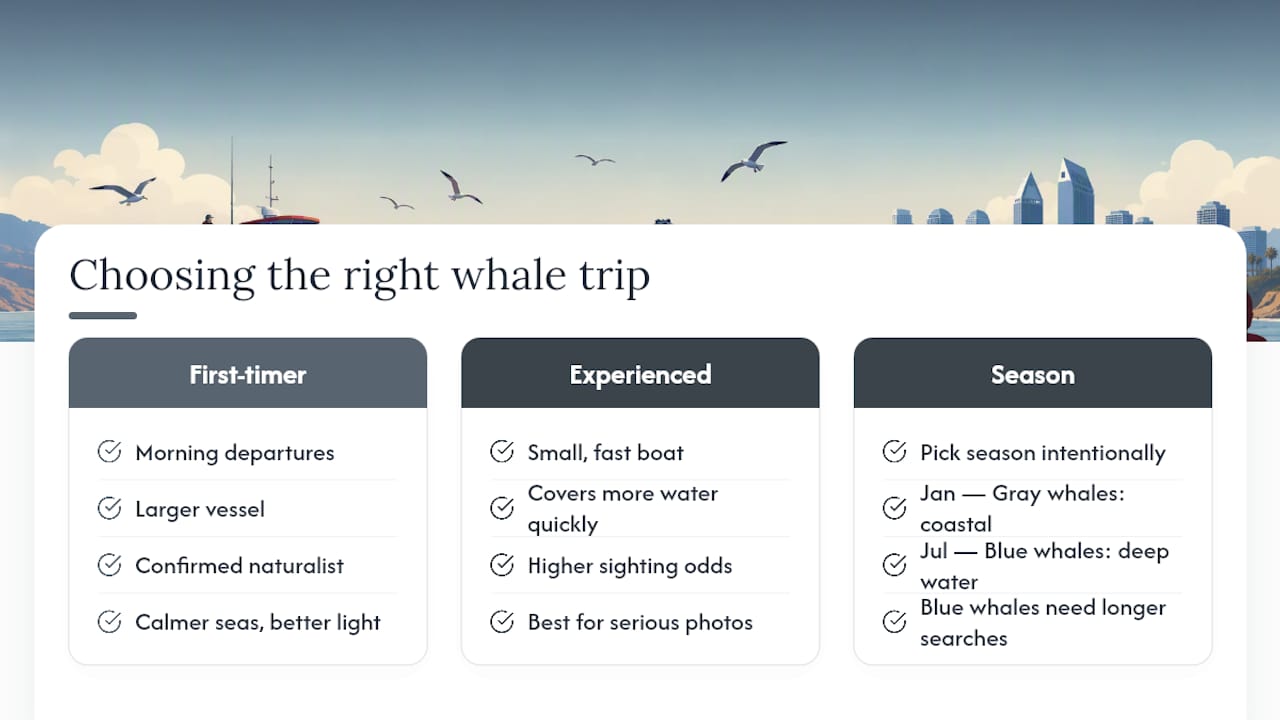
If I had to send a first-time visitor out on the water tomorrow, I’d point them toward a morning departure on a larger vessel with a confirmed naturalist on board. Calmer seas, better light, and someone explaining what you’re seeing makes the whole experience click in a way that a self-guided trip on a fast boat doesn’t always deliver.
That said, if you’ve done this before and you want to maximize sighting odds or get serious photos, a small fast boat is genuinely the better tool. Gone Whale Watching’s approach of covering more water quickly is a real advantage when whales are spread out.
The one thing most people underestimate is how much the season matters. A January gray whale trip and a July blue whale trip are almost different activities. Gray whales are coastal, predictable, and often visible from shore. Blue whales are deep-water animals that require more searching and longer trips. Pick your season intentionally, not just by when you happen to be in town.
Socalsights curates recommendations like these to help you spend less time researching and more time actually out there.
Plan your San Diego whale-watching day with Socalsights
Booking a whale-watching tour is just one piece of a great San Diego day on the water. Socalsights puts together curated Southern California day itineraries that pair a morning whale-watching departure with the best nearby lunch spots, parking tips, and land-based add-ons like Cabrillo National Monument, so you’re not piecing it together from five different tabs.

You get local knowledge baked in: which departure point has the easiest parking, which spots are worth the detour after your trip, and what the area looks like beyond the tourist trail. Check out the 100+ SoCal Sights guide for the full picture of what Southern California has to offer, and browse the local businesses directory to find operators and spots the big travel sites tend to miss. Ready to plan your day? Start with the Socalsights daycation guide and build your itinerary from there.
Sources
- Your 2026 Guide to Gray Whale Watching Season in San Diego – Go Visit San Diego
- Cabrillo National Monument — Whale watching (NPS)
- Whale Watching in San Diego, CA — Book Your Trip Now!
- San Diego Whale & Dolphin Watching Tours | Wild Pacific Whale Watch
Check operator websites directly before departure for live sighting updates, current schedules, and any seasonal changes to pricing or departure times.