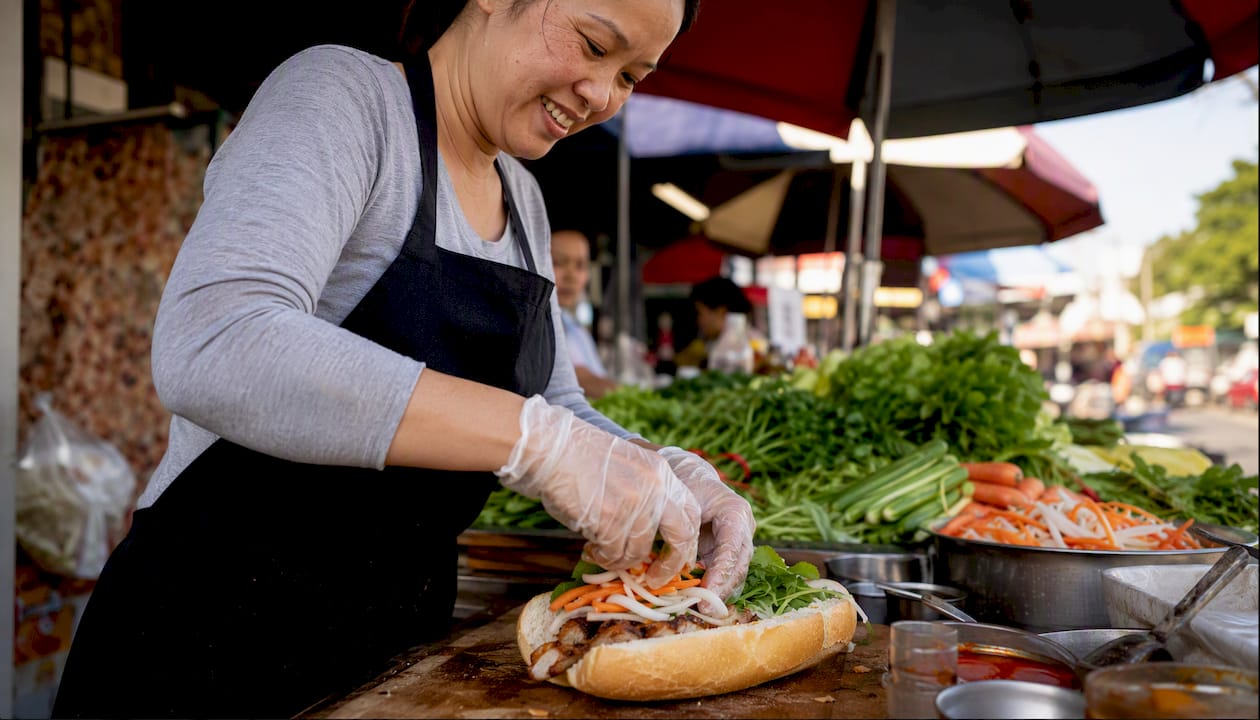
Little Saigon food is authentic Vietnamese cuisine served across tightly knit U.S. Vietnamese enclaves, and the dishes you absolutely need to try first are pho, bánh mì, cơm tấm, bún thịt nướng, bánh xèo, chả giò, chè, and Vietnamese iced coffee. These aren’t fusion approximations or Americanized takes. They’re the real thing, made by families who carried recipes across the Pacific after 1975 and have been perfecting them in strip-mall kitchens ever since.
Here’s your quick-start list before we get into the details:
- Pho — slow-simmered beef or chicken broth with rice noodles; the neighborhood’s most iconic bowl
- Bánh mì — a French-Vietnamese baguette stuffed with pork, pickled daikon, cilantro, and jalapeño
- Cơm tấm — broken rice topped with grilled pork, a fried egg, and fish sauce
- Bún thịt nướng — cold vermicelli noodles with charred grilled pork and fresh herbs
- Bánh xèo — a sizzling, turmeric-yellow crepe filled with shrimp, pork, and bean sprouts
- Chả giò — crispy fried spring rolls, best eaten wrapped in lettuce with mint
- Chè — sweet dessert soups or layered drinks made with beans, jellies, and coconut milk
- Vietnamese iced coffee — strong drip coffee over sweetened condensed milk and ice
Read on for which U.S. neighborhoods to visit, how to order each dish like a local, and a plug-and-play SoCal itinerary for both half-day and full-day visits.
Key Takeaways
Little Saigon food is best experienced through community-sourced curation, early-morning timing, and a willingness to follow the local crowd into nondescript strip-mall storefronts.
| Point | Details |
|---|---|
| Start with the classics | Pho, bánh mì, and cơm tấm are the three dishes every first-timer should try before branching out. |
| Orange County leads | Westminster/Garden Grove is the largest Vietnamese community outside Vietnam and the most concentrated food destination. |
| Follow the line, not the stars | The best vendors often have minimal online presence; a crowd of regulars is the most reliable quality signal. |
| Bring cash | Many bakeries, chè shops, and market stalls are cash-only or add a card surcharge. |
| Socalsights curates the best | Socalsights builds SoCal food itineraries around local loyalty and walkability, not star ratings. |
Table of Contents
- What “Little Saigon” actually means and why it matters for food lovers
- Major U.S. Little Saigons worth visiting and what each does best
- 1. Pho: the bowl that defines Little Saigon
- 2. Bánh mì: the sandwich that earns its own trip
- 3. Cơm tấm: broken rice done right
- 4. Bún thịt nướng: the cold noodle bowl you’ll crave in summer
- 5. Bánh xèo: the sizzling crepe worth the mess
- 6. Chả giò: crispy spring rolls as a starter or snack
- 7. Chè: Vietnamese dessert drinks and sweets
- 8. Vietnamese iced coffee: the drink that fuels the whole visit
- Where to find these dishes inside a Little Saigon neighborhood
- Practical tips for visiting Little Saigon: menus, ordering, and timing
- Sample Little Saigon food itineraries: half-day and full-day plans
- Why authentic curation matters more than star ratings in Little Saigon
- Plan your Little Saigon visit with Socalsights
- Sources
What “Little Saigon” actually means and why it matters for food lovers
The name “Little Saigon” refers to Vietnamese-American enclaves that formed largely after the fall of Saigon in April 1975, when hundreds of thousands of Vietnamese refugees resettled in the United States. As the Migration Policy Institute documents, Vietnamese immigration to the U.S. accelerated through the late 1970s and 1980s, with communities clustering in Southern California, Texas, and the Pacific Northwest. The name itself — a tribute to the former South Vietnamese capital — became a way for these communities to preserve cultural identity in a new country.
Food was never just sustenance in these neighborhoods. It was the fastest way to rebuild community, generate income, and maintain cultural memory. Families opened restaurants, bakeries, and grocery markets within years of arriving, often operating out of modest storefronts that looked like nothing from the outside but served food that drew lines around the block. That dynamic is still true today.
Wikipedia’s encyclopedic overview of Little Saigon notes that the name is applied to Vietnamese enclaves across multiple U.S. cities, with Orange County’s Westminster/Garden Grove corridor being the most prominent. That area is widely recognized as the largest Vietnamese community outside Vietnam, and recognition from institutions like the James Beard Foundation and Michelin has expanded its audience well beyond the local Vietnamese-American base.
The food here is the community’s living history. Every bowl of pho and every bánh mì reflects decades of adaptation, pride, and craft.
Major U.S. Little Saigons worth visiting and what each does best
The short answer: Orange County is the flagship, but you don’t have to fly to SoCal to experience a genuine Little Saigon. Here’s how the major U.S. neighborhoods stack up.
| Neighborhood | Location | Known for | Best for |
|---|---|---|---|
| Westminster / Garden Grove | Orange County, CA | Largest concentration of Vietnamese restaurants in the U.S.; pho variety, bánh mì, night markets | First-time visitors; full-day food tours |
| San Jose / South Bay | Santa Clara County, CA | Dense restaurant corridor on Story Road; strong bánh mì and bún bò Huế scene | Bay Area locals; weekend lunch runs |
| San Gabriel Valley | Los Angeles County, CA | Overlap with Chinese-Vietnamese cuisine; diverse noodle options | Adventurous eaters; dim sum crossover fans |
| Houston (Midtown / Bellaire) | Harris County, TX | Large Vietnamese population; strong pho and seafood-focused menus | Southern U.S. visitors; seafood lovers |
| Seattle (South Seattle) | King County, WA | Smaller but tight-knit; excellent bánh mì and Vietnamese sandwiches | Pacific Northwest visitors |
| San Diego (El Cajon Blvd.) | San Diego County, CA | Organized business corridor with community-listed vendors | Day-trippers from SoCal |
| Philadelphia | Philadelphia County, PA | East Coast hub; strong bánh mì shops and Vietnamese grocery culture | East Coast visitors |
| Orlando | Orange County, FL | Growing community; mix of Vietnamese and Southeast Asian food | Florida visitors and theme-park travelers |
Peak times and logistics: In Orange County, weekends between 10 AM and 2 PM are the busiest windows, especially for pho and cơm tấm. Night markets in Westminster typically run on summer weekends and draw large crowds after 6 PM. Parking in OC’s Little Saigon is almost entirely strip-mall lots, which fill fast on weekends. Arriving before 11 AM or after 2 PM on weekdays is the smoothest move. San Jose’s Story Road corridor is more spread out, so a car is helpful there too.
1. Pho: the bowl that defines Little Saigon
Pho is the dish most people associate with Vietnamese food, and for good reason. A proper bowl starts with broth that has simmered for hours, sometimes overnight, with beef bones, charred ginger, star anise, cinnamon, and cloves. The result is a clear, deeply aromatic soup served over flat rice noodles with thin slices of beef (or chicken), a plate of fresh herbs, bean sprouts, lime, and hoisin and sriracha on the side.
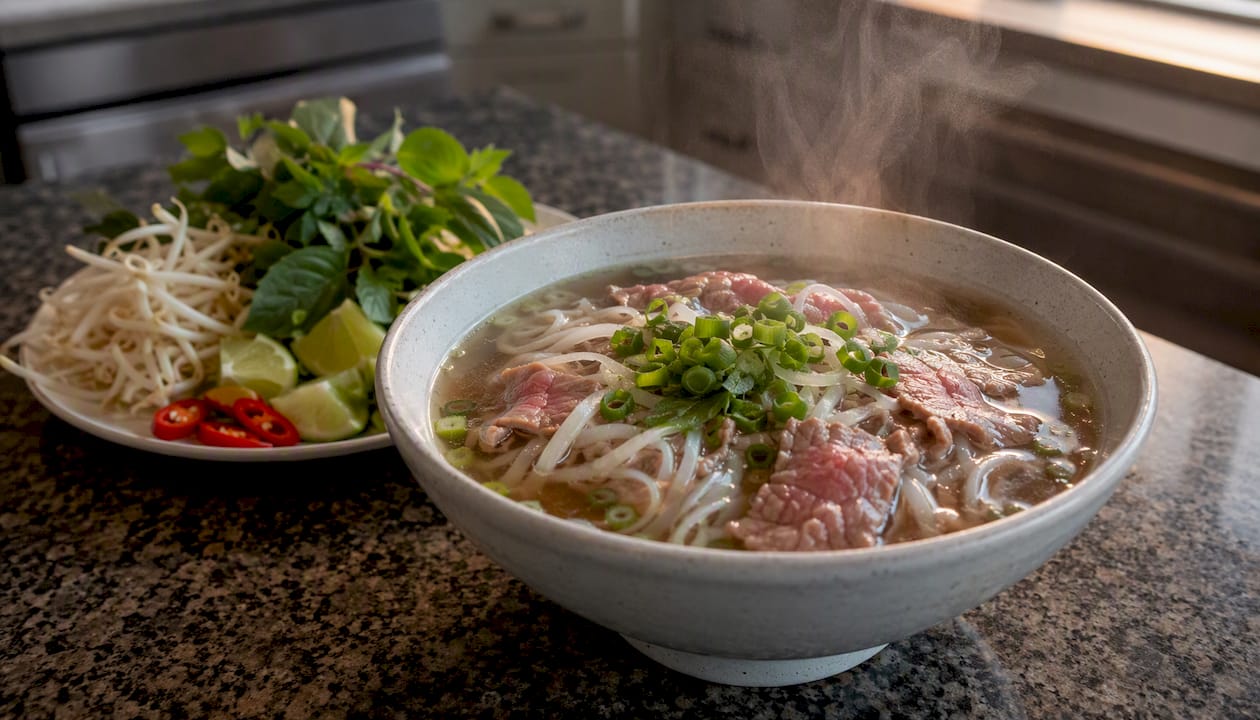
In Little Saigon, pho quality is taken seriously. Some spots, like Pho REDBO in Garden Grove, push the tradition further with 24-hour Wagyu bone broth, showing how the neighborhood’s best kitchens balance heritage with premium ingredients. Meanwhile, long-running family spots like Pho Quang Trung in Westminster have been serving Northern Vietnamese-style pho for decades, with a cleaner, less sweet broth than the Southern style most Americans know.
Ordering tip: “Pho tái” means rare beef added to the hot broth tableside. “Pho bò viên” adds beef meatballs. If you want a bigger portion, ask for “tô lớn” (large bowl). Always add your herbs and squeeze lime in before the hoisin.
Pro Tip: Order pho before 11 AM if you can. Broth is freshest at opening, and the restaurant is quieter. Many spots sell out of specialty cuts like tendon or tripe by early afternoon.
2. Bánh mì: the sandwich that earns its own trip
A bánh mì is a French baguette, light and crackly on the outside, filled with a combination of pork pâté, cold cuts or grilled meat, pickled daikon and carrot, cucumber, cilantro, and jalapeño. The contrast of textures and flavors in one handheld sandwich is genuinely hard to beat at any price point.
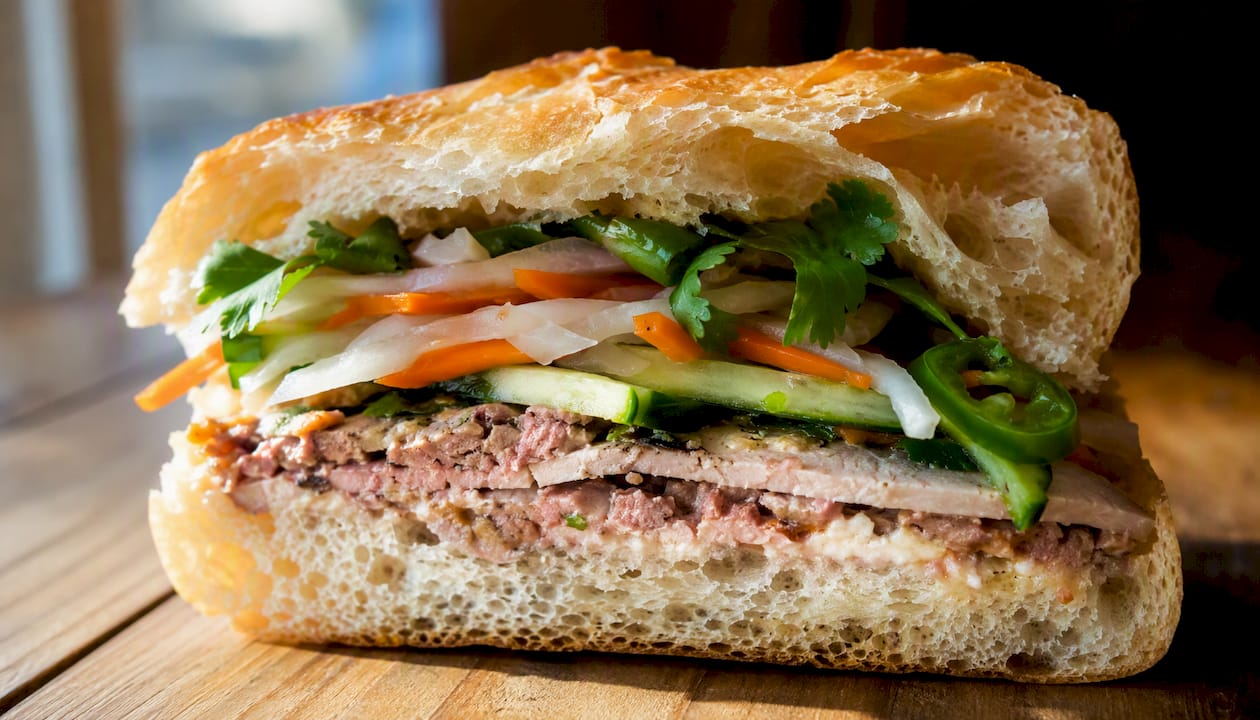
OC Weekly’s guide to essential Little Saigon restaurants notes that many bánh mì shops run buy-two-get-one-free deals, and sandwiches often cost just a few dollars each. That pricing isn’t a sign of low quality. It reflects a cultural norm of high volume and community accessibility that has been part of these shops since they opened.
Ordering tip: Ask for “bánh mì đặc biệt” (the special) if you’re unsure where to start. It typically includes the full spread of meats and condiments. Tell the counter person if you want extra jalapeño or no cilantro.
3. Cơm tấm: broken rice done right
Cơm tấm, or broken rice, is one of the most satisfying plates in the neighborhood. The rice itself is made from grains that broke during milling, giving it a slightly softer, stickier texture than regular steamed rice. It’s topped with grilled pork chop (sườn nướng), shredded pork skin (bì), a steamed egg meatloaf (chả), a fried egg, and a small bowl of nước chấm (fish sauce dipping sauce) on the side.
This is a working-class dish that became a neighborhood staple, and it shows up on nearly every menu in Orange County’s Little Saigon. The OC Weekly guide specifically calls it out as central to the neighborhood’s food identity.
Ordering tip: Ask for “cơm tấm sườn bì chả” to get the full combination plate. Drizzle the nước chấm over everything, mix it in, and eat it while it’s hot.
4. Bún thịt nướng: the cold noodle bowl you’ll crave in summer
This dish is a room-temperature bowl of thin vermicelli rice noodles topped with charred, caramelized grilled pork, fresh lettuce, cucumber, bean sprouts, mint, pickled daikon and carrot, crushed peanuts, and fried shallots. A small cup of nước chấm comes on the side for pouring over the whole thing.
It’s lighter than pho but just as complex in flavor. The contrast between the smoky pork, the cool herbs, and the tangy dipping sauce makes it one of the most refreshing dishes in Vietnamese cuisine, especially in warm weather.
Ordering tip: Mix everything together before eating. Don’t be shy with the nước chấm — the whole bowl needs it.
5. Bánh xèo: the sizzling crepe worth the mess
Bánh xèo translates roughly to “sizzling cake,” named for the sound the batter makes when it hits the hot pan. The crepe is made with rice flour, coconut milk, and turmeric, giving it a bright yellow color and a crispy, lacy edge. Inside: shrimp, sliced pork, bean sprouts, and green onions.
You eat it by tearing off pieces, wrapping them in lettuce or mustard greens with fresh mint and perilla, then dipping the whole bundle in nước chấm. It’s a hands-on dish, and that’s part of the fun.
Ordering tip: Don’t wait too long to eat it. The crepe softens quickly, and the crispy edge is the best part.
6. Chả giò: crispy spring rolls as a starter or snack
Chả giò are deep-fried spring rolls filled with ground pork, shrimp, glass noodles, mushrooms, and shredded vegetables, all wrapped in a thin rice paper skin that fries up shatteringly crisp. They’re served with lettuce leaves, fresh herbs, and nước chấm for dipping.
These are common as appetizers at sit-down restaurants and as quick snacks at market food courts. The texture contrast between the crunchy shell and the savory filling is what makes them so satisfying.
7. Chè: Vietnamese dessert drinks and sweets
Chè is a broad category covering everything from warm sweet soups to layered cold drinks. Common versions include chè ba màu (three-color dessert with red beans, mung beans, and pandan jelly in coconut milk over crushed ice), chè đậu xanh (mung bean pudding), and chè chuối (banana and tapioca in coconut milk).
Dedicated chè shops are some of the most fun stops in any Little Saigon. You’ll often find 20 or more varieties on a handwritten menu board, and prices are typically very low per cup.
Ordering tip: Point at what looks good in the display case if the menu feels overwhelming. Most shops are happy to let you sample before committing.
8. Vietnamese iced coffee: the drink that fuels the whole visit
Vietnamese iced coffee (cà phê sữa đá) is brewed through a small metal phin filter directly into a glass of sweetened condensed milk, then poured over ice. The result is intensely strong, sweet, and cold. It’s the perfect pairing for a heavy cơm tấm plate or a midday break between stops.
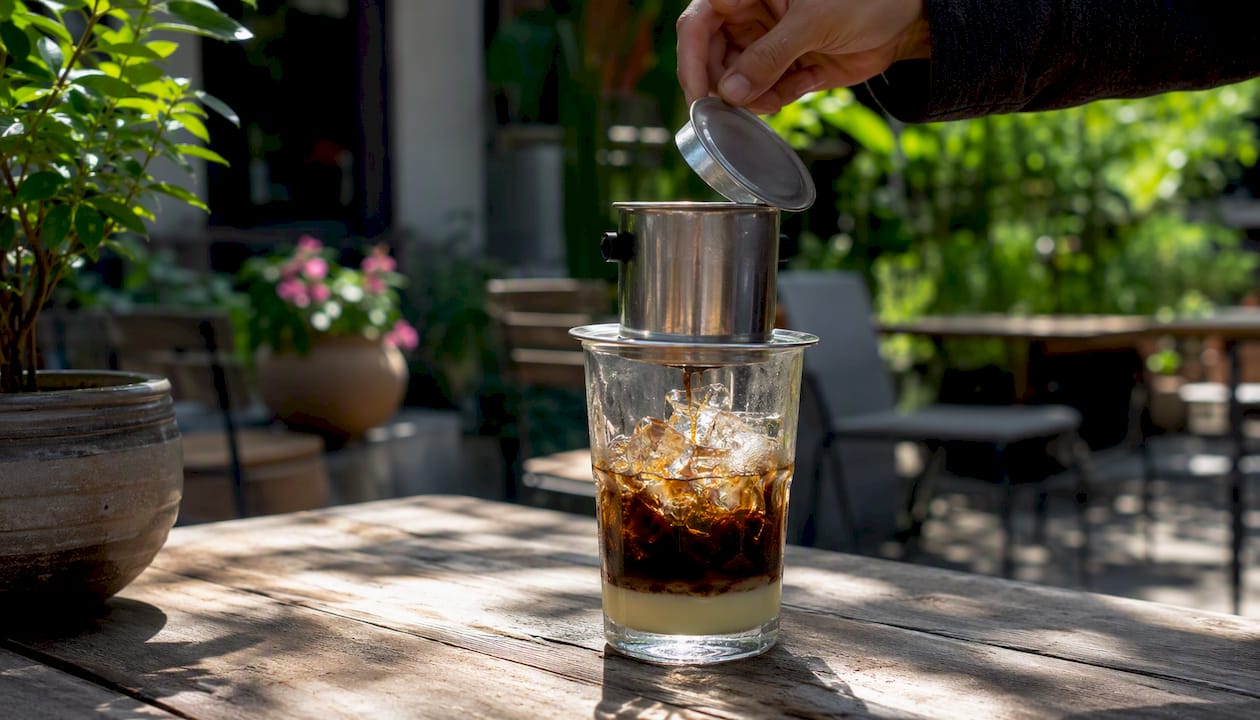
Egg coffee (cà phê trứng) is a newer addition to some menus, made with a whipped egg yolk and sugar foam on top of strong coffee. Worth trying if you see it.
Where to find these dishes inside a Little Saigon neighborhood
The four main venue types each serve a different purpose, and knowing which to choose saves time and money.
| Venue type | Best for ordering | Price range | Insider note |
|---|---|---|---|
| Sit-down restaurant | Pho, cơm tấm, bánh xèo, family-style dishes | $10–$20 per person | Table service; cash preferred; tip 15–18% |
| Bánh mì bakery / deli | Bánh mì, pâté chaud (Vietnamese meat pastry), Vietnamese baguette | $3–$7 per item | Counter service; buy-two-get-one deals common |
| Market food court | Quick bites, bún thịt nướng, chả giò, chè | $6 per item | No table service; bring cash; great for sampling multiple dishes |
| Dessert / chè shop | Chè, shaved ice, Vietnamese drinks | $3–$8 per cup | Often cash only; handwritten menus; point-and-order friendly |
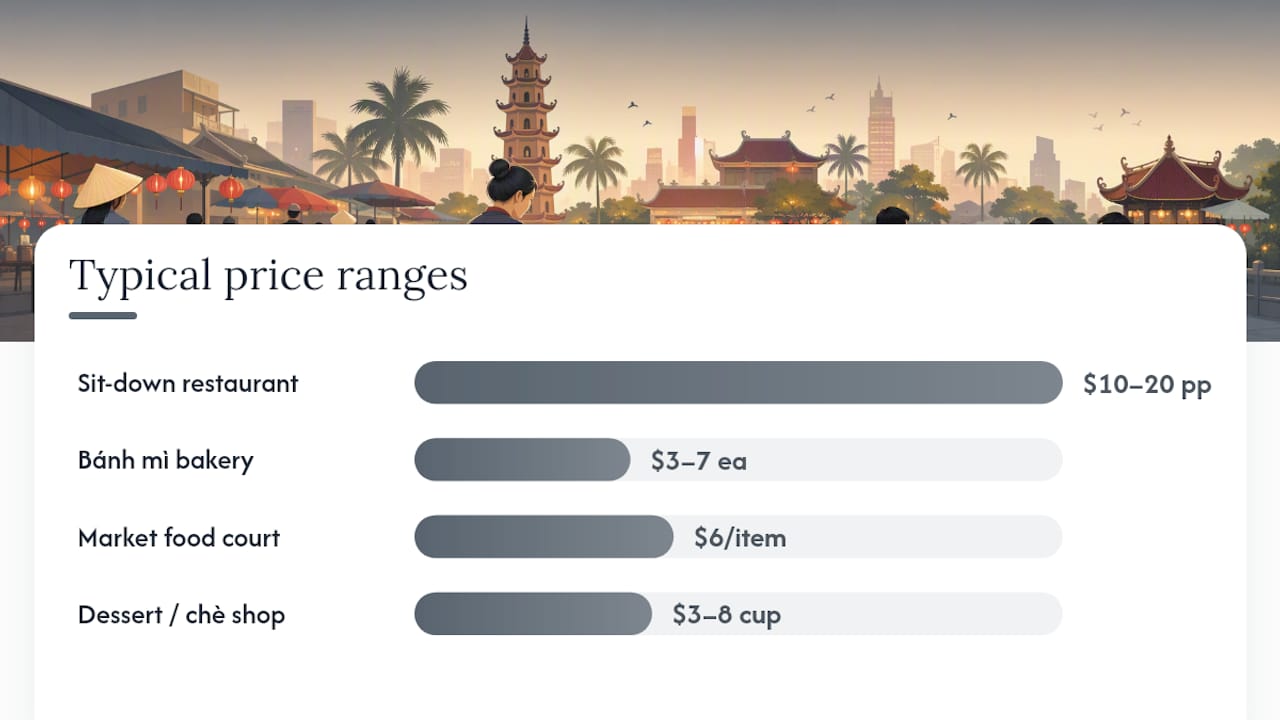
Cash vs. card: Many smaller bakeries, chè shops, and market stalls are cash-only or add a card surcharge. Bring $40–$60 in small bills for a full food tour day. Larger sit-down restaurants generally accept cards.
How to spot the best vendors: Follow the line. The Infatuation’s guide to Little Saigon restaurants makes the point clearly: the best food often comes from nondescript strip-mall storefronts with no signage that would catch a tourist’s eye. A crowd of Vietnamese-American regulars at 11 AM on a Tuesday is the most reliable quality signal you’ll find.
Practical tips for visiting Little Saigon: menus, ordering, and timing
Before you walk in:
- Look up the restaurant’s specialty before you arrive. Many spots do one or two things exceptionally well. Ordering off-specialty at a pho house rarely ends as well as ordering the pho.
- Check for a “house special” or “chef’s recommendation” note on the menu, often marked with a star or written in red.
- Know your pho variations: “tái” (rare beef), “chín” (well-done beef), “gân” (tendon), “sách” (tripe), “bò viên” (meatballs). You can mix and match by listing them: “tái gân bò viên,” for example.
At the counter or table:
- At counter-service spots, have your order ready before you reach the front. Menus are usually posted above the counter, and lines move fast.
- To request spiciness, say “cay” (spicy) or point to the chili sauce. Most places keep it mild by default.
- Sharing plates is completely normal at sit-down restaurants. Order two or three dishes for the table and share family-style.
Payment and tipping:
- Tip 15–18% at full-service restaurants. Counter-service spots and market stalls don’t expect a tip, but a small one is always appreciated.
- If a card surcharge applies (often 3%), it’s usually posted at the register.
Pro Tip: Strip-mall parking in Orange County’s Little Saigon fills fast on weekend mornings. Park once in a central lot and walk between stops rather than moving your car. The Westminster/Garden Grove corridor is walkable enough for a three-stop morning if you plan your route in advance.
Sample Little Saigon food itineraries: half-day and full-day plans
These itineraries are SoCal-focused, centered on Orange County’s Westminster/Garden Grove corridor, which is the most accessible and concentrated Little Saigon in the country.
Half-day plan (first-timers, 3–4 hours)
| Time | Stop | What to order | Notes |
|---|---|---|---|
| — | Pho restaurant (Westminster) | Pho tái gân, Vietnamese iced coffee | Arrive early for fresh broth; cash preferred |
| — | Bánh mì bakery | Bánh mì đặc biệt (x2 for the deal) | Buy-two-get-one deals common; eat one now, save one |
| — | Asian Garden Mall food court | Bún thịt nướng or chả giò | Great for sampling; multiple vendors under one roof |
| — | Chè shop | Chè ba màu or cà phê sữa đá | Cash only at most shops; perfect cool-down stop |
Vegetarian/vegan note: Most pho restaurants offer a vegetable broth pho (phở chay) on request. Bánh mì shops often carry a tofu or vegetarian filling option. Chè is largely plant-based by default.
Full-day plan (deep-dive foodies, 6–8 hours)
| Time | Stop | What to order | Notes |
|---|---|---|---|
| — | Sit-down pho restaurant | Pho tái + side of chả giò | Start with the classics; Northern-style broth if available |
| — | Bánh mì bakery | Bánh mì đặc biệt + pâté chaud | Stock up; these travel well for later |
| — | Cơm tấm restaurant | Cơm tấm sườn bì chả | The lunch rush starts at 11:30; arrive just before |
| between 1 PM and 2 PM | Vietnamese supermarket (e.g., Lee’s Sandwiches area) | Browse; pick up snacks, sauces, or fresh produce | Great for pantry finds; air-conditioned break |
| 2:30–3:30 PM | Bánh xèo or bún bò Huế restaurant | Bánh xèo + fresh herb plate | Afternoon is quieter; easier to get a table |
| — | Chè shop or dessert café | Chè ba màu, egg coffee, or shaved ice | Wind down; most shops are open until 7–8 PM |
Gluten-free note: Most Vietnamese rice noodle dishes (pho, bún thịt nướng, cơm tấm) are naturally gluten-free. The main watch-out is soy sauce used in some marinades. Ask your server about the marinade on grilled meats if gluten is a concern.
Why authentic curation matters more than star ratings in Little Saigon
Here’s something I’ve come to believe after spending real time in these neighborhoods: the standard restaurant-rating model doesn’t serve Little Saigon well. A place that’s been open for 30 years, run by the same family, and packed with Vietnamese-American regulars every morning may have 50 reviews on a national platform and a three-star average. Meanwhile, a newer spot with a slick interior and a PR team has 500 reviews and a four-star rating. The ratings don’t tell you which bowl of pho is better.
The Infatuation puts it plainly: ask 15 locals for the best pho in Little Saigon and you’ll get 15 different answers. That’s not a problem. That’s the point. The neighborhood’s strength is its depth and specialization, not a single consensus winner.
What actually works is community-sourced curation: finding out which spots locals return to weekly, which bakeries have been making the same bánh mì recipe since the 1980s, and which chè shops the Vietnamese-American community itself considers the real deal. That’s the standard Socalsights uses when building food guides for Southern California. Long-running businesses, local loyalty, and walkable concentration matter more than Yelp stars.
The other thing worth saying: Little Saigon is not a museum. It’s a living, evolving food scene. National recognition from the James Beard Foundation and Michelin has brought new visitors and pushed some restaurants to modernize, which is genuinely exciting. However, the soul of the neighborhood is still in the family-run spots that haven’t changed their menu in 20 years and don’t need to.
Plan your Little Saigon visit with Socalsights
Socalsights is the local guide for Southern California food experiences that actually deliver, and Little Saigon is one of the neighborhoods we cover with the most depth. Instead of sorting through hundreds of generic review-site listings, you get curated itineraries built around walkability, local loyalty, and dishes worth the trip.

Through Socalsights, you can access 100+ SoCal Sights that go well beyond the obvious tourist stops, including food corridors, night markets, and neighborhood guides across Orange County and the wider region. The local businesses directory connects you directly to the kinds of family-run spots that don’t advertise but consistently deliver the best food. If you’re planning a full day out, the daycation planning page gives you a structured framework for building a SoCal food day that actually flows. Start there, pick your neighborhood, and go eat something real.
Sources
These sources were selected for historical accuracy, local credibility, and practical depth. They back the claims in this guide and offer more detail for readers who want to go deeper.
- The Best Restaurants In Little Saigon – Los Angeles – The Infatuation
- The Best Vietnamese Restaurants in Little Saigon, Orange County | Eater LA
- Little Saigon – Wikipedia
- 10 Essential Little Saigon Restaurants – OC Weekly
- Vietnamese immigrants in the United States | Migration Policy Institute