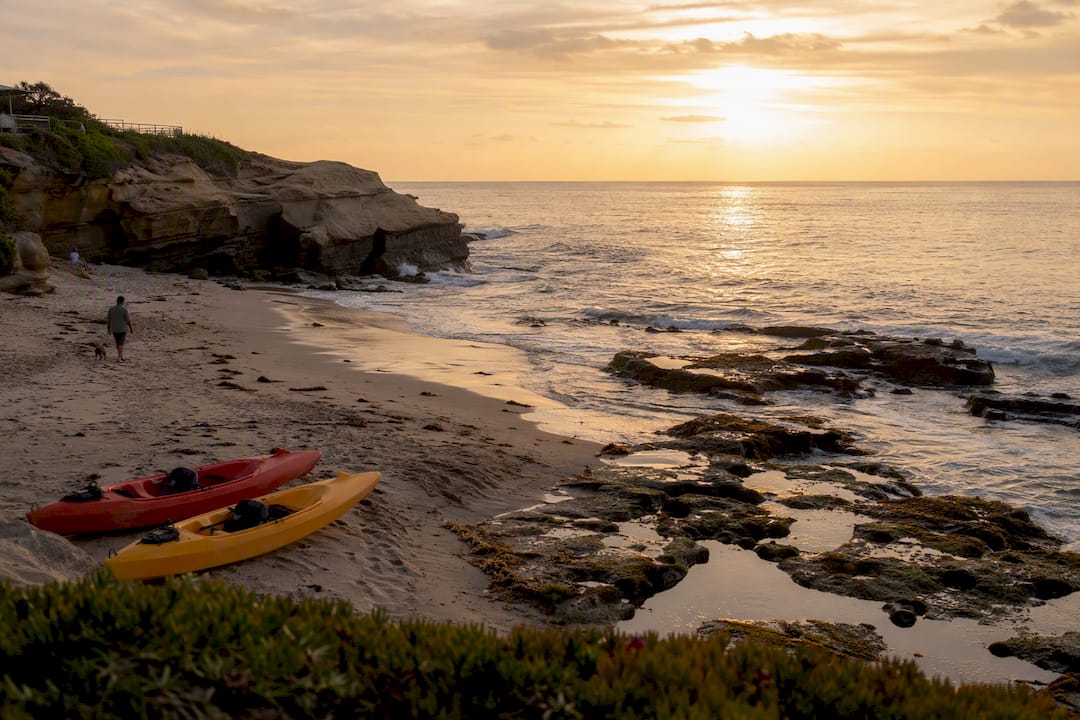
Your San Diego weekend itinerary comes down to three neighborhood pillars: coastal (La Jolla and Torrey Pines), downtown cultural (Balboa Park, Little Italy, and the Gaslamp Quarter), and unique local experiences (Coronado, Barrio Logan, and Ocean Beach). Fly into San Diego International Airport (SAN), expect highs in the low 70s°F even in the shoulder seasons, and grab a SoCal Sights downloadable map before you land so you’re not stitching together directions on the fly.
The 2-day version: Friday evening, land and settle into your neighborhood. Saturday morning, La Jolla Cove and Torrey Pines; afternoon, Balboa Park; evening, dinner and drinks in Little Italy or the Gaslamp. Sunday morning, Coronado and the ferry; afternoon, Barrio Logan for tacos and Chicano Park murals; evening flight out.
The 3-day version adds a full day: Friday arrival, Saturday for coastal and downtown, Sunday for Coronado and Barrio Logan, and Monday morning for Ocean Beach or an extension out to Del Mar before your flight.
Top three pillars to prioritize:
- Coastal — La Jolla’s coves and Torrey Pines’ cliffside trails
- Downtown cultural — Balboa Park, Little Italy, Gaslamp Quarter
- Local flavor — Coronado, Barrio Logan, Ocean Beach, North Park
Key Takeaways
A San Diego weekend itinerary works best when built around three neighborhood pillars, coastal, downtown cultural, and local flavor, paced with San Diego’s consistently mild weather in mind.
| Point | Details |
|---|---|
| Follow the three pillars | Group your weekend around coastal (La Jolla, Torrey Pines), downtown cultural (Balboa Park, Little Italy, Gaslamp), and local flavor (Coronado, Barrio Logan). |
| Choose your base wisely | Little Italy and the Gaslamp Quarter offer walkability; La Jolla and Coronado cost more but deliver quieter, view-driven stays. |
| Budget two to four hours per stop | Most major attractions, from La Jolla Cove to Chicano Park, need two to four hours, not a full day. |
| Mix transit modes | Use rideshares from SAN, the trolley downtown, and bike rentals in Coronado or along the La Jolla coastal path. |
| Pack layers and check events first | Highs stay in the low 70s°F, but evenings cool off, and local festivals can shift your weekend plans. |
| Use a curated map to save time | SoCal Sights offers a downloadable weekend map with pre-mapped neighborhoods and parking notes for faster planning. |
Table of Contents
- Where Should You Stay for a Weekend in San Diego?
- How Much Time and Money Should You Budget for Each Stop?
- What’s the Best Way to Get Around San Diego Neighborhoods?
- Where Should You Go for San Diego Nightlife?
- Is San Diego Safe for Tourists?
- Why This Neighborhood-Pillar Approach Actually Works
- Plan Your Weekend Faster With a Ready-Made Map
- Where to Check Weather, Events, and Park Details Before You Go
- Sources
Where Should You Stay for a Weekend in San Diego?
Pick your neighborhood before you pick your hotel, because it decides how much time you spend in the car instead of on the beach. Little Italy and the Gaslamp Quarter put you within walking distance of restaurants, coffee shops, and nightlife, and they split the difference between downtown culture and quick freeway access to La Jolla or Coronado. Expect mid-range to higher rates here, especially on weekends, since you’re paying for walkability.
La Jolla itself runs pricier and quieter, better suited to travelers who want ocean views from their window and don’t mind driving twenty minutes into downtown for dinner. If you’re building your trip around the coastal pillar, a night or two here is worth the splurge.
Coronado offers a different vibe entirely: resort-style stays near the beach, a short ferry ride from downtown, and a small-town feel that works well for couples or families who want distance from Gaslamp’s bar noise. Budget travelers often do better basing themselves in North Park or nearby Hillcrest, where rates run lower and you’re still a quick rideshare from Balboa Park.
Pro Tip: Booking a hotel near a trolley stop (Little Italy and Gaslamp both have several) cuts your parking costs dramatically, since San Diego’s downtown garages add up fast over a weekend.
How Much Time and Money Should You Budget for Each Stop?
Most of your major stops need two to four hours, not a full day, which is exactly why the three-pillar structure works for a compact trip. La Jolla Cove and the surrounding tide pools take a couple of hours if you’re walking the coastal path and stopping for photos; add some extra time if you want to snorkel or kayak with the seals.
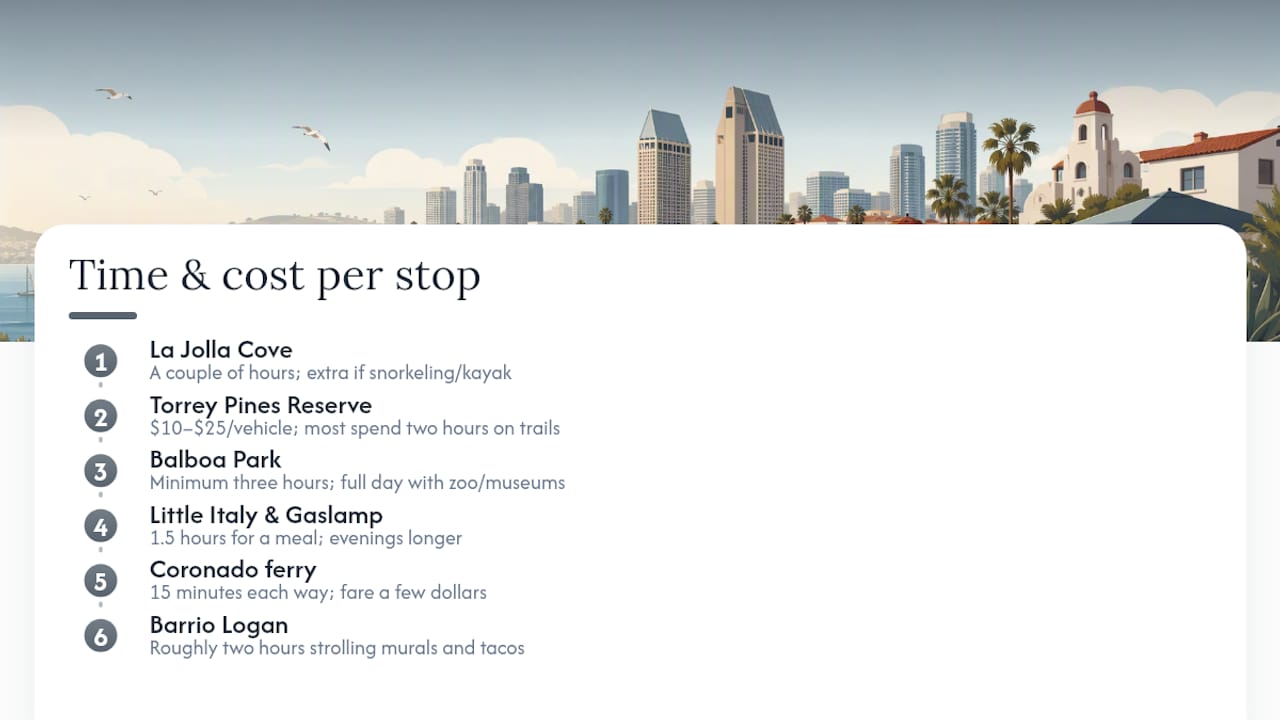
Torrey Pines State Natural Reserve runs $10 to $25 per vehicle for parking depending on the day and lot, and most visitors spend two hours on the main trails. Balboa Park is the trickiest to budget for because it’s enormous. Give yourself a minimum of three hours just for the gardens and the Prado, and closer to a full day if you want to add the San Diego Zoo or multiple museums, most of which charge separate admission typically in the moderate price range per person.
Little Italy and the Gaslamp Quarter are grazing zones more than checklist items. Plan around an hour and a half for a meal, or spend a longer evening enjoying multiple bars and restaurants. Coronado’s ferry ride takes about fifteen minutes each way and costs a few dollars, while Barrio Logan’s Chicano Park and the surrounding taco stands take roughly two hours if you’re walking the murals slowly. Lonely Planet’s weekend guide suggests building in buffer time between pillars, since San Diego traffic moves in unpredictable pockets even on short drives.
What’s the Best Way to Get Around San Diego Neighborhoods?
Rideshare areas at SAN are well-marked and fast, which makes a rental car optional unless you’re planning to hit Torrey Pines or Del Mar, where public transit thins out. Inside downtown, the San Diego Trolley connects Little Italy, the Gaslamp Quarter, and Barrio Logan directly, and a day pass beats paying for parking at every stop.
La Jolla and Coronado are where a car (or at least a longer rideshare) earns its keep, since both sit far enough from downtown that walking isn’t realistic. Once you’re in La Jolla itself, though, the village and Cove area are entirely walkable, and bike rentals are common along the coastal path if you want to cover more ground between the Cove and Torrey Pines without driving.
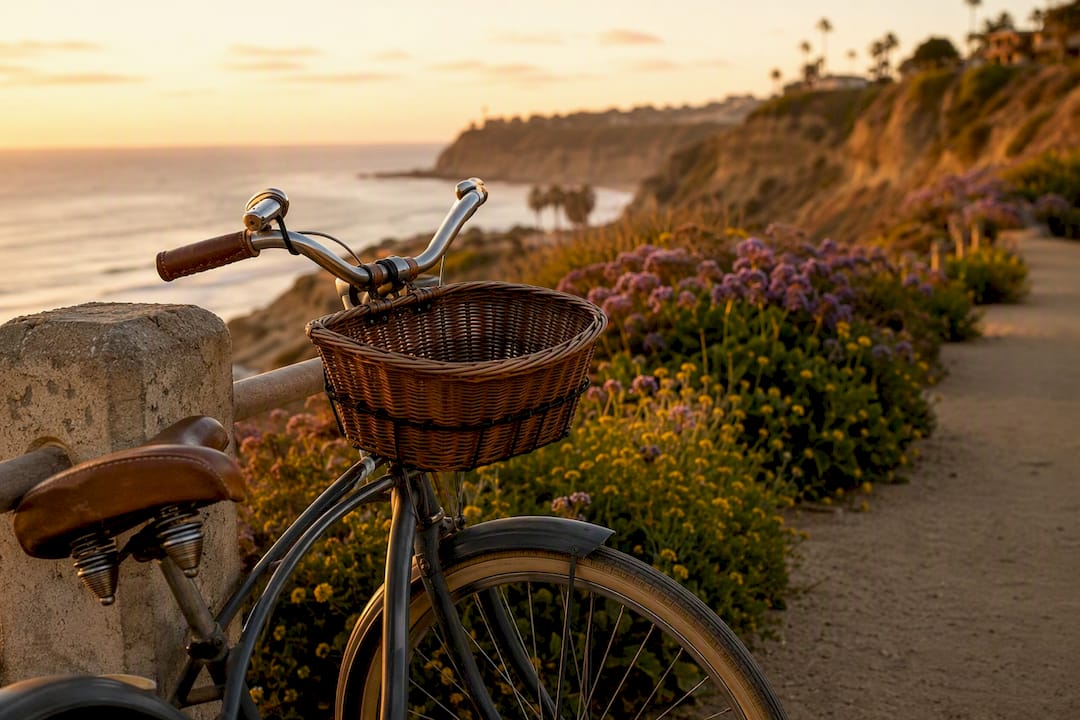
Coronado is famously bike-friendly and flat, and renting a cruiser for a couple of hours to loop the island is one of the better uses of a slow afternoon. Ocean Beach and North Park both reward walking once you’re there, but getting between them and downtown works best by rideshare or trolley rather than on foot. If you want a tool to visualize how these neighborhoods connect before you land, a day-planning resource like DayHop can help you map out realistic transit windows between stops.
Travelers with mobility challenges will find Balboa Park’s main promenade paved and accessible, and the Coronado ferry has step-free boarding, though some Torrey Pines trails involve uneven terrain and steeper grades worth checking ahead.
Where Should You Go for San Diego Nightlife?
The Gaslamp Quarter is the obvious answer if you want dense bar-hopping, live music, and late-night energy packed into a walkable grid, and it’s where most first-time visitors default. Little Italy runs quieter and more food-focused after dark, with wine bars and rooftop patios that suit a slower evening better than a loud one.
North Park has become the neighborhood locals actually recommend for craft beer, with a cluster of breweries and taprooms that feel less touristy than downtown. Ocean Beach leans dive-bar and laid-back, a good fit if you want live music without a dress code or a line. Barrio Logan’s nightlife centers more on late-night taco stands and the occasional gallery opening than bars, which fits its identity as a cultural district rather than an entertainment strip.
Coronado, by contrast, goes quiet early. If you’re staying there, plan on a relaxed dinner and a walk on the beach rather than a night out, and save the Gaslamp for a night when you’re already staying downtown.
Is San Diego Safe for Tourists?
San Diego is generally a safe city for visitors, but the answer shifts a bit by neighborhood, which matters when you’re moving between pillars after dark. Downtown areas like the Gaslamp Quarter and Little Italy are well-lit and busy late into the evening, though it’s worth staying alert around the edges of the Gaslamp closer to closing time, when crowds thin and foot traffic gets less predictable.
Balboa Park is safe during the day but quiets down after sunset; plan museum and garden visits for daylight hours rather than a late evening stroll. Barrio Logan and North Park are both walkable and welcoming during the day and early evening; use the same common sense you’d apply in any city neighborhood once it gets late. Coronado and La Jolla run on the safer end overall, partly because they’re quieter, residential, and don’t have the late-night bar density that draws bigger crowds.
Basic precautions cover most of it: keep valuables out of sight in your car (smash-and-grabs happen at scenic overlooks like those near Torrey Pines), stick to marked trails, and check local event listings before you go, since festival weekends can mean bigger crowds and tighter parking.
Why This Neighborhood-Pillar Approach Actually Works
I built this itinerary around three pillars instead of a checklist because clustering by neighborhood cuts down on wasted driving between far-flung attractions. SAN sits close enough to downtown that rideshare pickup is quick, which frees up your first hours for La Jolla or Balboa Park instead of traffic. The mild low-70s weather and the tacos in Barrio Logan aren’t afterthoughts. They’re why this pacing works at all.
Plan Your Weekend Faster With a Ready-Made Map
Piecing together a San Diego weekend itinerary from scratch means juggling parking notes, drive times, and a dozen open browser tabs. SoCal Sights skips that step with a downloadable weekend map that pre-plots the coastal, downtown cultural, and local-flavor pillars, complete with suggested parking and arrival points for each stop.

The map comes out of a community-curated list of over 100 local sights, so you’re not relying on one writer’s opinion but on locals who actually go to these spots. If you want the full rundown of what’s included, start with the SoCal Sights adventure overview and download the map before your trip so your first morning in La Jolla starts with a plan instead of a Google search.
Where to Check Weather, Events, and Park Details Before You Go
- National Weather Service San Diego for real-time forecasts and temperature swings.
- Times of San Diego’s weekend events guide for festivals that might reroute your plans.
- Balboa Park’s official FAQ page for hours and museum admission details.
- Little Italy’s event calendar for weekend markets and street fairs.
- Local festival roundups for seasonal concerts and events worth building a trip around.
Sources
- National Weather Service — San Diego area forecast discussion
- Lonely Planet — How to spend a perfect weekend in San Diego
- Times of San Diego — San Diego weekend guide: Tiki Oasis wraps and CityFest returns