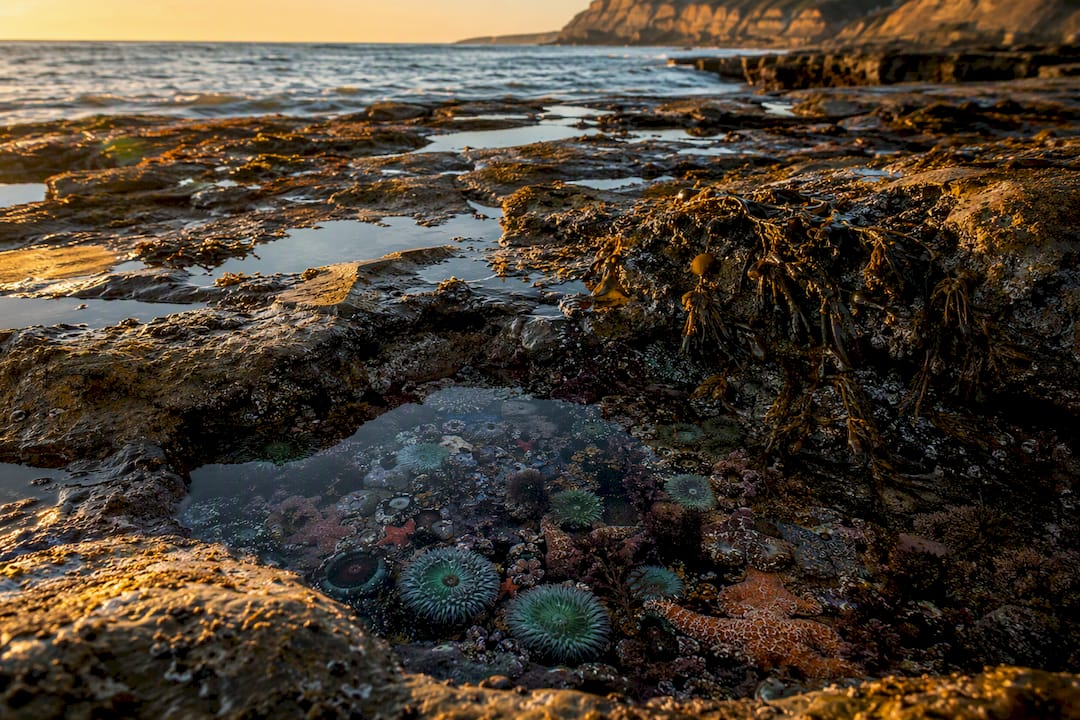
The best tide pools in San Diego are at Cabrillo National Monument, La Jolla’s Shell Beach and Dike Rock, Coronado, Sunset Cliffs, Cardiff, and Swami’s. Go in late fall through winter when minus tides land during daylight, and aim for a predicted tide of 0.7 feet or lower at Cabrillo. Arrive an hour before low tide, and start heading back once the water turns.
- Cabrillo National Monument: the most protected, most species-rich option
- La Jolla (Shell Beach, Dike Rock): gentle, family-friendly rock shelves
- Coronado Beach: easy access near the Hotel del Coronado
- Sunset Cliffs: dramatic scenery, rougher footing
- Cardiff & Swami’s: quieter Encinitas alternatives
Pro Tip: Check the tide chart the morning of your visit, not the week before. Tide predictions shift daily, and a 0.9 vs. 0.4 reading is the difference between a great day and a soggy one.
“Cabrillo’s tidepools sit inside one of the best-protected rocky intertidal zones in the region, and the payoff shows during the biggest winter draw-downs.” That protection is why the low zone still hosts octopus, sea stars, and spiny lobsters that have mostly vanished from less-guarded shorelines.
Key Takeaways
The best San Diego tide pooling happens at Cabrillo, La Jolla, and Coronado during winter minus tides, timed to arrive an hour before low tide and to respect posted reserve rules.
| Point | Details |
|---|---|
| Best season | Target November through March, when minus tides expose the low zone during daylight. |
| Best tide reading | Look for 0.7 feet or lower at Cabrillo, or negative readings for La Jolla’s reserve pools. |
| Arrival timing | Show up about an hour before low tide and leave once the tide starts rising again. |
| Footwear and rules | Wear closed-toe shoes with grip, and never touch or collect anything inside La Jolla’s ecological reserve. |
| Rainy-day alternative | Birch Aquarium at Scripps offers year-round marine exhibits when the tide chart doesn’t cooperate. |
| Plan it with Socalsights | Socalsights’ curated itineraries pair the best tide pool spots with parking and timing notes for families. |
Table of Contents
- What Lives in San Diego’s Tide Pools by Zone
- Do You Need a Permit to Explore San Diego Tide Pools?
- Are There Guided Tide Pool Tours in San Diego?
- How Does Weather Affect Tide Pooling Conditions?
- What Tide Pooling Feels Like on a San Diego Winter Morning
- Let SoCal Sights Plan Your Tide Pool Day For You
- Where to Verify Tide Times and Park Rules
- Frequently Asked Questions
- Sources
What Lives in San Diego’s Tide Pools by Zone
Tide pools aren’t one habitat. They’re three stacked habitats, and knowing which one you’re standing in tells you what to look for.
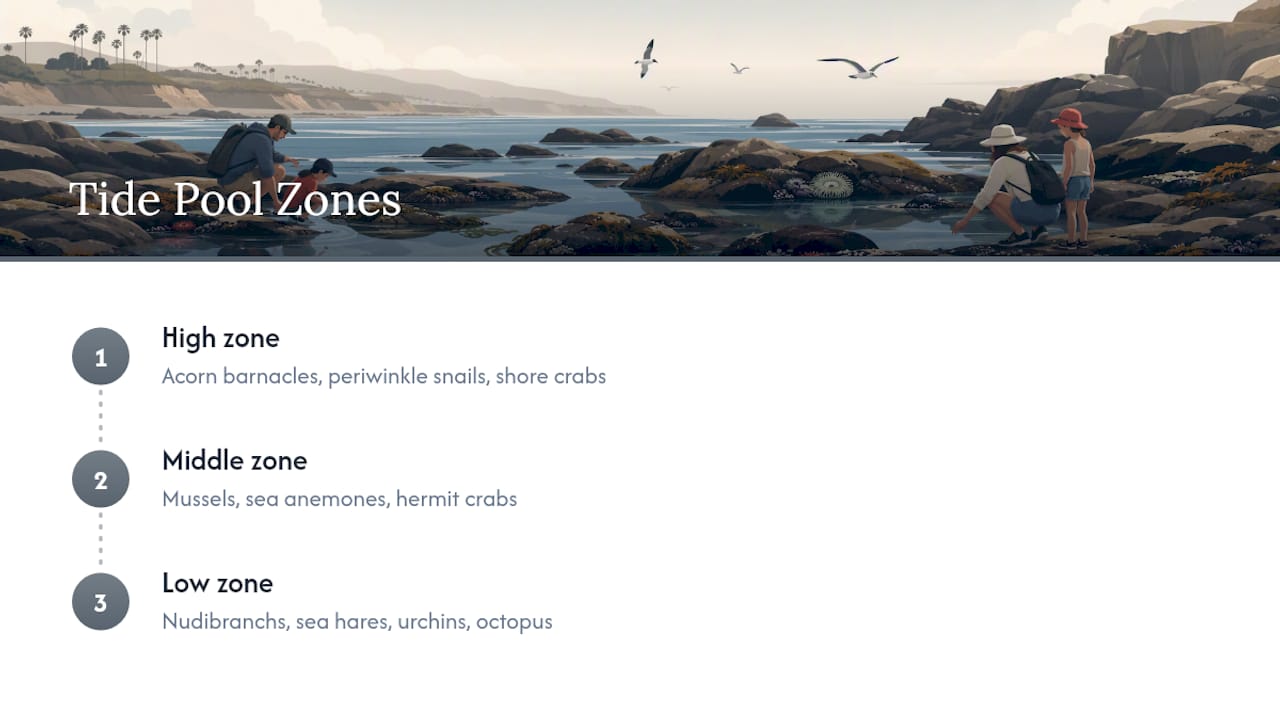
The high zone gets splashed by waves but rarely fully submerged. It’s the toughest neighborhood in the intertidal world, so you’ll mostly find hardy survivors: acorn barnacles, periwinkle snails, and the occasional shore crab wedged into a crack. Nothing here is delicate. Everything has adapted to bake in the sun for hours between tides.
The middle zone is where things get interesting for most visitors. Mussels form dense clusters here, sea anemones tuck into shaded crevices, and you’ll spot hermit crabs scuttling between rocks. This is also the easiest zone to explore safely, since it’s exposed for a longer window as the tide drops.
The low zone is the reward for good timing. It’s only exposed during the deepest minus tides, and that’s exactly why it’s so rich. According to the National Park Service, Cabrillo’s low zone can turn up nudibranchs, sea hares, urchins, and even the occasional octopus tucked into a rock crevice. Biodiversity climbs as you move down the shore, simply because fewer creatures can survive the constant exposure higher up.
Move slowly, check under ledges (not by flipping rocks), and remember that a still pool often has more going on than it looks.
Do You Need a Permit to Explore San Diego Tide Pools?
No permit is required to walk into San Diego’s public tide pools, but several sites carry rules that function like one. Much of the La Jolla coastline sits inside an ecological reserve, and touching, collecting, or removing anything, living or dead, including shells, is prohibited and enforced by state officers.
Cabrillo National Monument charges a standard park entrance fee and posts hours that determine when the tidepool area is even open. Since the park closes in the afternoon, a low tide that hits after closing time simply isn’t accessible that day, no matter how good the number looks on the chart.
La Jolla’s Children’s Pool beach adds a seasonal layer: it’s restricted from December 15 through May 15 to protect nursing harbor seals, which happens to overlap almost entirely with San Diego’s best minus-tide season. Plan your La Jolla stop for Shell Beach or Dike Rock instead during those months.
The rule that covers every site, reserve or not, is simple: look, don’t touch. Tide pool animals are often more fragile than they look, and a five-second grab can undo years of a mussel bed’s growth.
Are There Guided Tide Pool Tours in San Diego?
Yes, and they’re worth booking if you want species identification without doing your own research first. Birch Aquarium at Scripps runs educational tidepool programs tied to the low-tide calendar, pairing a beach walk with staff who can explain what you’re looking at in real time. It’s also the aquarium’s built-in indoor alternative when the tide isn’t cooperating.
Cabrillo National Monument hosts ranger-led tidepool walks on select low-tide days, and these are genuinely useful for families with young kids who ask a lot of “what is that” questions. Rangers know where the octopus tends to hide and which tide pools have hosted the same anemone colony for years.
Local nature centers around La Jolla and Cardiff occasionally run small-group walks timed to the monthly minus tides, though availability shifts with the season. If a guided option isn’t running the day you’re free, the same knowledge is available through NPS interpretive signage posted at most major sites, which covers zone breakdowns and common species without needing a scheduled tour.
How Does Weather Affect Tide Pooling Conditions?
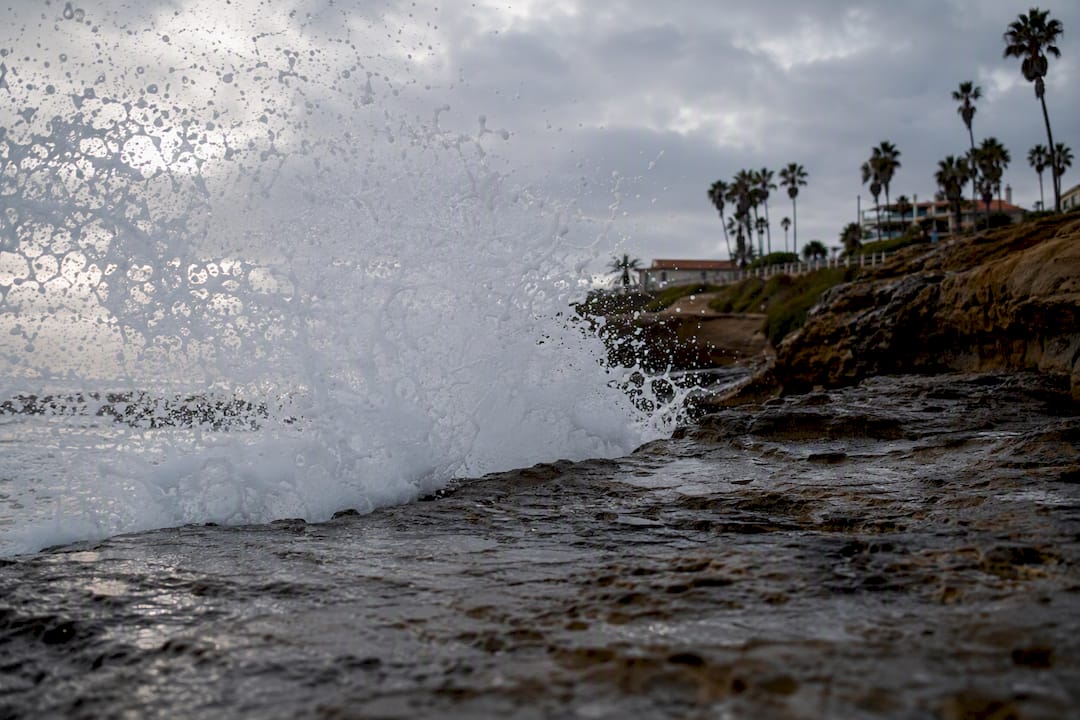
Weather changes what’s safe to explore, even when the tide chart looks perfect. A big winter swell can push wave action over rocks that would otherwise sit dry during a low tide, creating what’s known as a sneaker wave, a wave that runs farther up the shore than the rest and can knock someone off balance without warning.
Overcast, cooler days are actually the better conditions for tide pooling, not the sunny ones. Cooler air keeps pools from warming up and stressing the animals living in them, and it’s more comfortable for you to be crouched over rocks for an hour. Rain isn’t a dealbreaker, but storm runoff can cloud pools near river mouths and make it harder to see what’s inside them.
Wind matters more than most visitors expect. A strong onshore wind stacks extra water against the coast, which can shrink your exploration window even when the tide prediction was favorable. If the surf report shows a significant swell, treat the tide chart as a starting point, not a guarantee, and give the water extra distance.
What Tide Pooling Feels Like on a San Diego Winter Morning
Winter mornings at Cabrillo mean smaller crowds and better light for spotting things in the low zone, though parking still fills fast once a minus tide hits on a weekend. Families do best at Dike Rock or Ocean Beach, where the rock shelves are flatter and parking is more forgiving than La Jolla’s narrow streets.
Pro Tip: Arrive a full hour before your target low tide, and wear closed-toe shoes with real grip. Barnacles are sharper than they look, and wet rock gets slick fast.
Let SoCal Sights Plan Your Tide Pool Day For You
Figuring out which beach fits your family, when the tide actually cooperates, and where to park without circling for 20 minutes takes real research, the kind most people don’t have time for before a Saturday outing. Socalsights builds that legwork into ready-to-use itineraries, so you get the beach, the timing window, and the parking notes in one place instead of piecing it together from five browser tabs.

Our SoCal Sights adventure guides cover tide pool outings alongside other regional day trips, with the kind of local detail that only comes from people who’ve actually driven the parking lot and stood on the rocks. If you want a broader list of things to do around the region while you’re at it, our 100+ SoCal Sights roundup is a solid place to browse. For frequent explorers, a SoCal Sights membership unlocks curated local picks all year, not just for tide pool season. Start by checking out the adventure overview and picking your next low-tide morning.
Where to Verify Tide Times and Park Rules
Check the Cabrillo tidepool guide for hours and fees, NPS zone details for species, and La Jolla’s reserve rules before heading out.
- Cabrillo National Monument (NPS): tide timing, entrance fees, closing hours
- La Jolla Tidepools and Children’s Pool (NPS): reserve boundaries, seal-season closures
- LaJollaMom’s tide pool guide: location-by-location local tips
- Birch Aquarium at Scripps: a year-round backup when tides don’t line up
Daily tide predictions shift, so a chart check the morning of your visit beats any seasonal rule of thumb.
Frequently Asked Questions
What is the best time of year for tide pooling in San Diego?
Late fall through winter, roughly November through March, gives you the lowest daytime tides. That’s when minus tides expose the low intertidal zone, home to the most species, during hours you can actually see it.
Which San Diego tide pools are best for kids?
Dike Rock near Scripps Pier and Cabrillo National Monument’s accessible tide pool area both offer flatter rock shelves than Sunset Cliffs, making them easier and safer for young kids to explore with adult supervision.
Do I need to pay to visit Cabrillo’s tide pools?
Yes, Cabrillo National Monument charges a standard entrance fee, and the park posts specific hours, so a low tide that falls after closing time won’t be accessible that day.
Can I take shells or animals home from La Jolla’s tide pools?
No. Much of the La Jolla coastline sits inside a protected ecological reserve where removing any living or dead organism, including shells, is prohibited and enforced by state officers.
What should I wear for tide pooling?
Closed-toe shoes with a rubberized, grippy sole are strongly recommended. Barnacles and mussel shells are sharp, and wet rock gets slick even on a calm day.
What if the tide chart doesn’t cooperate with my schedule?
Birch Aquarium at Scripps offers marine exhibits year-round, giving you a reliable alternative when the timing or weather rules out a real tide pool visit.