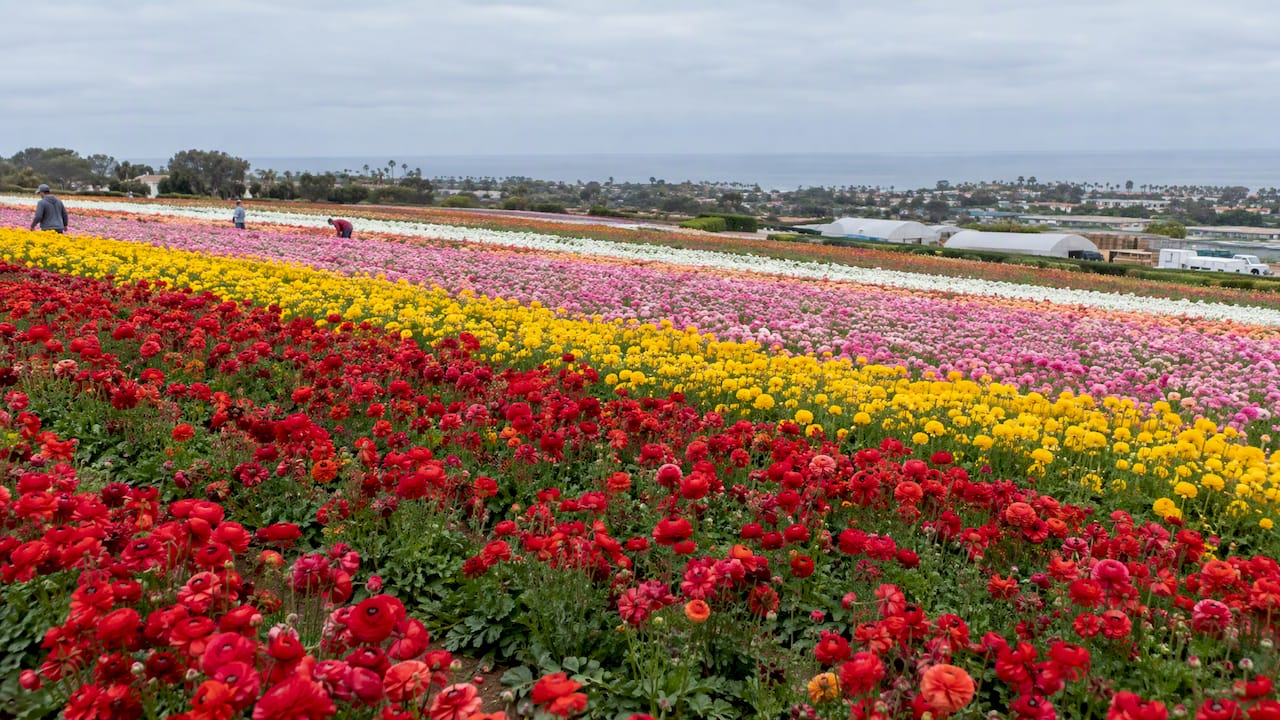
The Flower Fields at Carlsbad Ranch open for the 2026 season on March 1 and run through May 10, with roughly 80 million Tecolote® Giant ranunculus blooming across about 55 acres. That’s the main event: a hillside of color you can walk right through. Our one piece of advice before anything else: book your timed ticket early for peak weekends and aim for a morning slot, since the light is softer and the crowds haven’t arrived yet.
TL;DR:
- Timed tickets reserve an arrival window, and weekend slots can sell out days ahead; buy through the official page because add ons may be unavailable.
- Peak color arrives from late March through April, while wave planting every two weeks means early and late visits show different sections at their best.
- Weekday mornings are calmest, and parking is free; search The Flower Fields in your map app because the street address can misdirect drivers.
- The hillside paths are sloped dirt, so wear closed toe shoes; the wagon tour accommodates wheelchairs and walkers, and staff can assist at check in.
Table of Contents
- Dates, Hours, Address, and Parking
- How to Buy Tickets and What They Cost
- What You’ll See and Do on Site
- When the Blooms Peak and Why the Season Lasts So Long
- Footwear, Accessibility, and Photo Rules to Know Before You Go
- Local Tips for a Better Visit
- Special Events and Festivals During the Season
- Why This Spring Tradition Is Worth the Trip
- Plan Your Visit With SoCal Sights
- FAQ
- Sources
Dates, Hours, Address, and Parking
The 2026 season runs from March 1 through May 10, a full ten weeks of blooms. The farm sits at 5704 Paseo del Norte in Carlsbad, but we’d skip typing that address into your GPS. The official trip-planning page recommends searching “The Flower Fields” directly in your map app instead, since the raw street address can route some drivers toward service roads rather than the public entrance.
Parking is free, with two general lots feeding into the front gate. A few things to know before you go:
- Weekends fill up fast, especially in April and around Mother’s Day, so arrive early if you’re visiting on a Saturday or Sunday.
- The lots are designed for easy in-and-out flow, but midday arrivals on peak weekends should expect a short wait to park.
- Weekday mornings are consistently the calmest window for both driving in and finding a spot close to the entrance.
If you’re building a bigger coastal day out of this trip, our Southern California road trip guide has stop ideas for the drive up or down the coast.
How to Buy Tickets and What They Cost
Tickets are sold through the official Buy Tickets page, and we’d buy there directly rather than through a reseller. Entry runs on a timed system, so your ticket reserves a specific arrival window rather than a flexible all-day pass. That keeps the paths from feeling overcrowded, but it also means popular weekend slots can sell out days in advance.
Pricing is tiered by age, with adult tickets costing more than child tickets and kids under 3 getting in free. A few add-ons cost extra on top of general admission:
- The wagon ride tour, a relaxed way to see the whole farm without walking the slopes.
- The butterfly encounter, a separate paid experience some visitors add to their day.
- Specialty retail items like bulbs or bouquets, available at the on-site shop.
Same-day add-on purchases are often possible, but availability isn’t guaranteed on busy days. The official plan-your-trip page notes that cards are accepted for on-site purchases, so you’re not stuck relying on cash at the gate.
What You’ll See and Do on Site
The ranunculus fields are the reason most people come, and the scale is genuinely hard to picture until you’re standing in it: millions of blooms layered in color bands across 55 acres of hillside. Beyond the fields themselves, the official attractions list includes several extras built into your visit:
- The Sweet Pea Maze, a fragrant, winding path that’s popular with families.
- The Sculpture & Illusion Garden, a photo-friendly stop with playful visual tricks.
- A playground area for kids who need a break from walking.
- Blueberry picking, offered on a weekday schedule tied to the farm’s harvest calendar.
- A demonstration garden showing how different plants are grown and cared for.
- Live butterflies, available as the paid add-on mentioned above.
General admission covers the fields, maze, sculpture garden, playground, and demonstration garden. The wagon ride and butterfly encounter cost extra. Most visitors spend about two to three hours on site once you factor in photos, the maze, and a stop at the shop.
When the Blooms Peak and Why the Season Lasts So Long
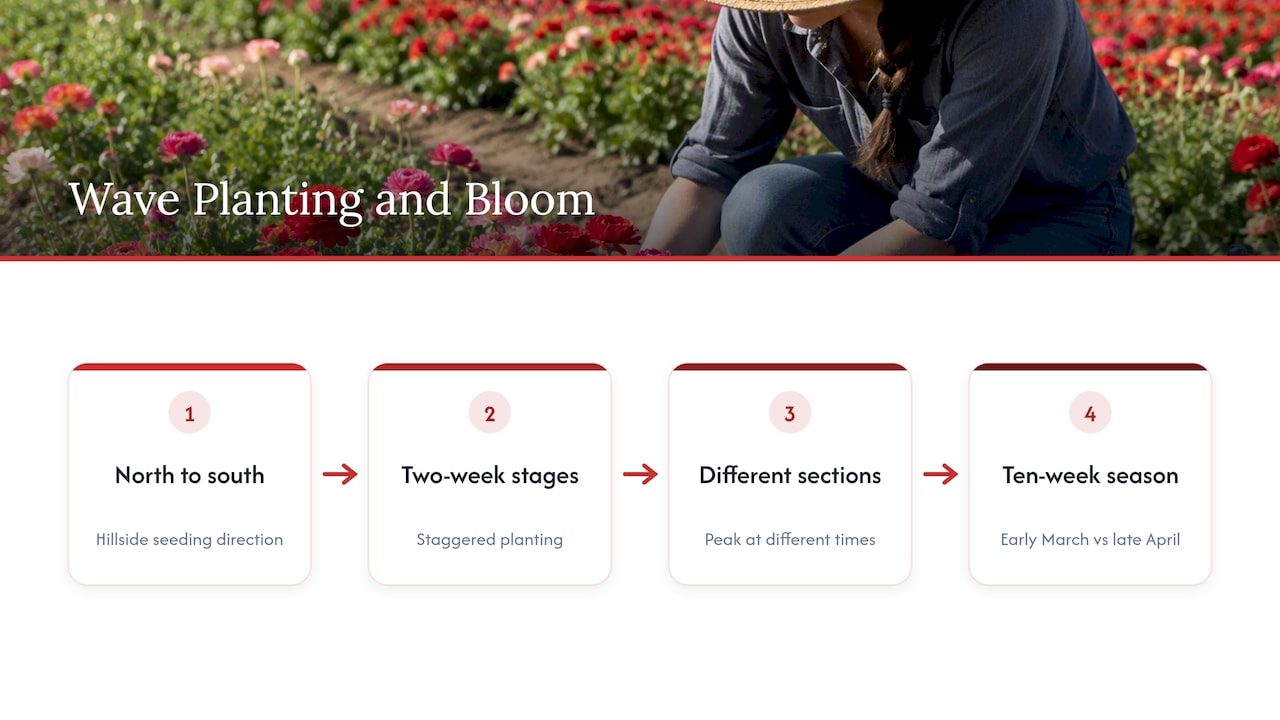
Peak color usually lands in late March through April, but the ten-week window exists because of how the farm plants its fields. Growers use a practice called wave planting, seeding the hillside from north to south in stages roughly every two weeks, according to local reporting from Axios San Diego. That staggered approach means different sections of the farm hit their peak at different points in the season, so an early-March visit and a late-April visit can look noticeably different.
Weather plays a role too. Cooler stretches can slow blooming, while warm, dry spells tend to push flowers open faster. Worth noting: this seasonal display is a planned agricultural cycle, not the kind of unpredictable desert “superbloom” that follows a wet winter. If you’re chasing that specific phenomenon, our superbloom status guide tracks where those conditions are showing up elsewhere in the region.
Footwear, Accessibility, and Photo Rules to Know Before You Go
The paths through the fields are sloped dirt, not pavement, so comfortable, closed-toe shoes make a real difference. Pack sun protection and water too, since there’s not much shade once you’re out among the rows.
A few practical notes to keep your visit smooth:
- Stay on the designated paths at all times and never step into the growing beds, both for your safety and the flowers’ sake.
- If mobility is a concern, the wagon tour is built to accommodate wheelchairs and walkers, and you can ask for check-in assistance at the customer service window.
- Skip the tripod-and-lens professional setup unless you’ve booked a shoot through the farm directly. The official photography policy allows casual phone and personal photos but restricts outside commercial shoots.
- Type “The Flower Fields” into your map app rather than the street address to land at the correct entrance and parking lot.
Pro Tip: Bring a wide-brim hat instead of sunglasses alone. The open hillside has almost no shade, and a hat keeps your face cool for the two or three hours you’ll likely spend wandering.
Local Tips for a Better Visit
Visitors are often advised to arrive at opening hour when the light is soft, the lines are short, and the fields feel less crowded. Midweek mornings typically offer a calmer experience than weekends.
Pair your visit with a short stop in Carlsbad Village for breakfast before you head over, or swing by a coastal viewpoint afterward since the beach is just minutes away. On busy weekends, use the lot entrance closest to the main road rather than circling for the closer one. And if you’re hoping to pick blueberries, remember that’s a weekday-only offering tied to the harvest schedule.
Special Events and Festivals During the Season
The ten-week run isn’t just static fields. The farm builds smaller seasonal moments into the calendar, from themed weekends tied to the blooming cycle to evening hours during certain stretches of the season when the light and temperature make for a different kind of visit. These events tend to draw heavier crowds than a typical weekday, so if you’re planning around one, book your timed ticket well ahead through the official ticketing page.
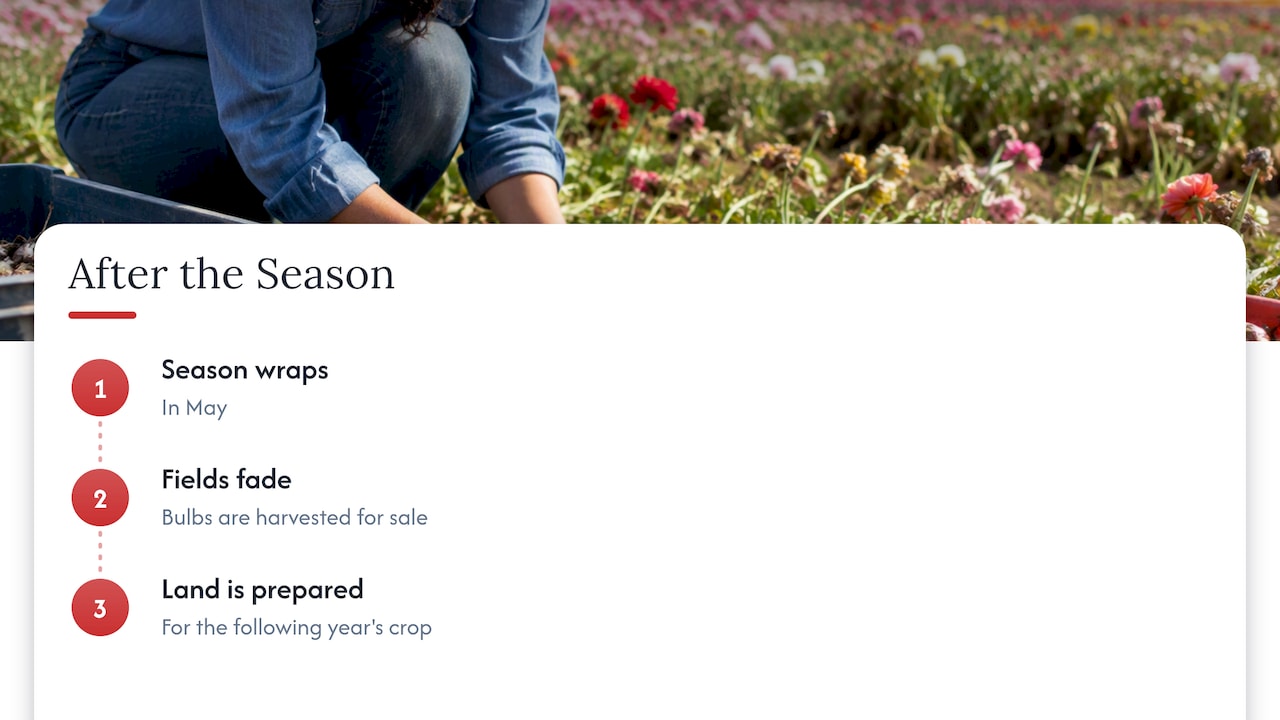
The farm’s rhythm follows its own agricultural calendar. Once the season wraps in May, the fields are allowed to fade, bulbs get harvested for sale, and the land is prepped for the following year’s crop, based on coverage from KPBS. That cycle is part of why the season has a firm start and end date each year rather than running indefinitely.
Why This Spring Tradition Is Worth the Trip
North County San Diego has plenty of pretty views, but there’s something about walking a hillside of ranunculus that feels different every year. We built SoCal Sights to help you spend your limited weekend hours on the places actually worth the drive, and this is one of them.
— Joshua
Plan Your Visit With SoCal Sights
We’ve spent a lot of time helping readers turn a single attraction into a full day worth remembering, and the Flower Fields are a perfect anchor for exactly that kind of trip. If you want a ready-made itinerary pairing this visit with nearby coffee shops, beaches, or a weekend getaway, our road trip guide has routes built around stops like this one.

If you’re planning a longer coastal stay, resort options like Omni La Costa sit close by for an overnight extension. And if you run a local business or event near Carlsbad, we’d love to feature you. Check out advertising with SoCal Sights to see how we help local spots reach visitors planning trips just like this one.
FAQ
What kind of flowers are in Carlsbad flower fields?
The main display is the Tecolote® Giant ranunculus, a large-bloom variety grown in color-blocked rows across the farm’s hillside. The farm also features a separate Sweet Pea Maze as part of general admission.
What flowers are in bloom during May?
Ranunculus blooms typically carry through early May before the 2026 season closes on May 10. Because the farm uses wave planting, some sections planted later in the cycle tend to peak closer to the season’s end.
Will there be a superbloom in California in 2026?
Carlsbad’s display is a planted agricultural bloom, not a desert superbloom, which depends on unpredictable winter rainfall in wildflower regions. For current superbloom conditions elsewhere in the state, our superbloom tracking guide covers where those patterns are showing up.
Where are wildflowers in California?
Beyond Carlsbad’s cultivated fields, California has several wild desert and mountain regions known for seasonal wildflowers, including Anza-Borrego Desert State Park. Our Anza-Borrego wildflower guide covers viewing conditions and timing for that area specifically.