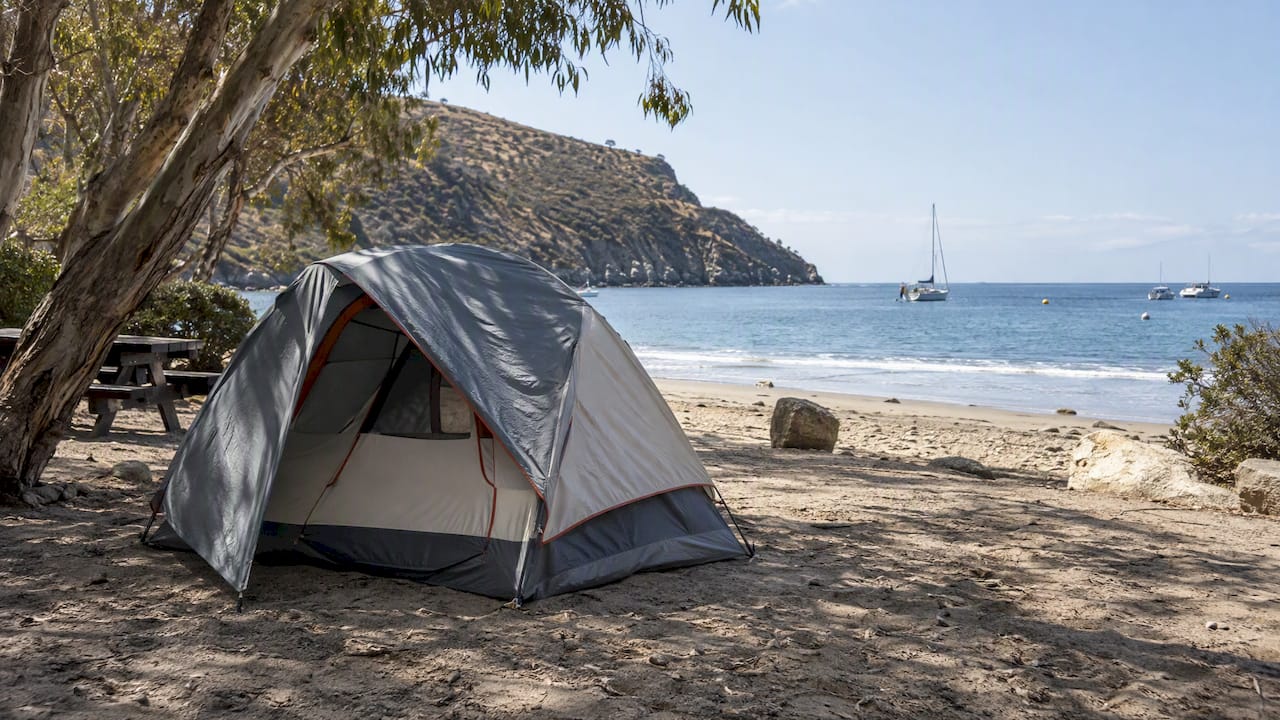
Camping on Catalina Island means picking one of five designated campgrounds, booking it ahead, and getting yourself and your gear there by ferry and on foot. Three are run by the Catalina Island Conservancy (Black Jack, Little Harbor and Parsons Landing), and two sit close to the island’s two towns (Hermit Gulch above Avalon and the campground at Two Harbors). I love this trip because you get a Southern California island at night, after the day-trippers have gone home. Here is how to choose a campground, book it, and show up ready.
TL;DR
- Catalina has five campgrounds. Hermit Gulch and Two Harbors are the easiest. Black Jack, Little Harbor and Parsons Landing are the hike-in, more remote options.
- Book early. The Conservancy says to reserve as early as you can, ideally in January, because sites fill fast.
- Fees are charged per person, per night. A free hiking permit from the Conservancy is required for hikers.
- Fires are allowed at Little Harbor, Two Harbors and Parsons Landing, but not at Black Jack. Water and firewood are ordered with your reservation.
- Pack for hills, wind and no shortcuts: you carry in what you need, and you carry out your trash.
Table of Contents
- The five Catalina campgrounds at a glance
- Hermit Gulch: the in-town option
- Two Harbors: the easy “real island” camp
- Black Jack: pines, ridgeline and no campfires
- Little Harbor: beachfront and easy to love
- Parsons Landing: the remote beach
- How to book a Catalina campsite
- What camping on Catalina costs
- Getting to the campgrounds
- Rules that keep Catalina wild
- What to pack for Catalina camping
- What to do once you are camped
- Our take on camping Catalina
- Reach Southern California travelers with SoCal Sights
- FAQ
- Sources
The five Catalina campgrounds at a glance
Most of Catalina is protected wilderness, so camping happens at a short list of designated sites. The Conservancy manages three of them along the Trans-Catalina Trail: Black Jack, Little Harbor and Parsons Landing. The other two are Hermit Gulch and Two Harbors. Here is how I would sort them.
| Campground | Setting | How you get there | Best for |
|---|---|---|---|
| Hermit Gulch | Canyon just above Avalon | Walk uphill from town | First-timers, families, an easy base for Avalon |
| Two Harbors | Village at the island’s narrow isthmus | Ferry to Two Harbors, then a short walk | Beginners who want a store, beaches and water sports nearby |
| Black Jack | Pines and eucalyptus, inland and high | Hike-in (or reach by trail) | Quiet nights, big views, trail hikers |
| Little Harbor | Sandy beachfront on the west side | Hike-in | Beach camping with room to roam |
| Parsons Landing | Secluded beach, primitive sites | Hike or kayak | Solitude and sunsets |
None of these is a drive-up campground. Even the easy ones involve a ferry and a walk, which is a big part of the charm.
Hermit Gulch: the in-town option
If you want camping without giving up Avalon’s restaurants, Hermit Gulch is the one. It is the only campground near the main town, and it makes a good first Catalina trip because you can wander down for dinner and be back in your tent by dark.
The Conservancy notes that for midweek stays at Hermit Gulch from November through March, you book by phone with the Catalina Island Company booking office at 310-510-4205. Outside that window, reserve online. Check the Catalina Island Company’s official page for the current fees and rental gear, since those change.
If Avalon is your focus, our Avalon-focused Catalina day trip and the Friday to Sunday Avalon weekend itinerary pair nicely with a night or two at Hermit Gulch.
Two Harbors: the easy “real island” camp
Two Harbors is the island’s small, laid-back village on the isthmus. It is my pick for people who want the quiet side of Catalina without a long backpack. You get a camp within walking range of a small village, beaches, and snorkeling and kayaking nearby. The Conservancy’s own trail guide treats Two Harbors as a key stop on the Trans-Catalina Trail, with Little Harbor sitting 5 miles away and Parsons Landing 6.5 miles in the other direction.
It is also the natural base if you want to try just one hike-in night. Sleep at Two Harbors, hike to a more remote beach for a night, and come back.
Black Jack: pines, ridgeline and no campfires
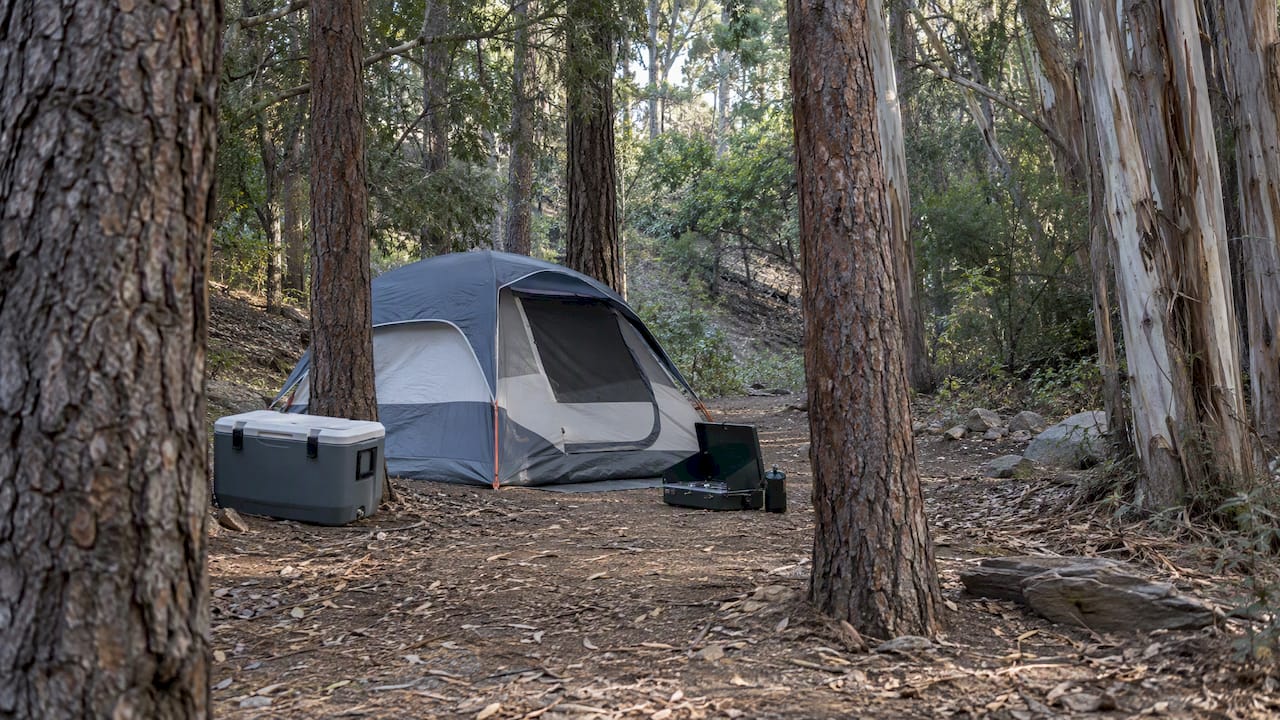
Black Jack sits among pine and eucalyptus trees near Mt. Orizaba, the island’s highest peak, at about 1,600 feet above sea level with eleven campsites. It feels completely different from the coast: cooler, quieter, and a long way from either town.
One rule to plan around: no fires are allowed at Black Jack, while they are allowed at Little Harbor, Two Harbors and Parsons Landing. Bring a stove and warm layers, because evenings up high can feel colder than you expect from a Southern California beach trip.
Little Harbor: beachfront and easy to love
Little Harbor is the one the Conservancy calls out as a blend of camping and beach fun, and it has a reputation to match. It sits about seven miles east of Two Harbors and 16 miles from Avalon, with a sandy beachfront and plenty of recreation. On the Trans-Catalina Trail, the stretch from Black Jack to Little Harbor is 8 miles, which gives you a sense of how much walking is involved from the interior.
What I like: you can drop your pack, then spend hours swimming, beachcombing, and watching the sunset from sand rather than a parking lot. Fires are allowed here, so campfire dinners are on the table (see the rules below).
Parsons Landing: the remote beach
Parsons Landing is the most secluded of the group. It is a beach camp about seven miles west of Two Harbors, and its eight primitive campsites each accommodate up to eight people. You get there by a moderately difficult hike or by kayak.
Be ready for primitive. There is no running water and only a pit toilet, so water comes from the lockers you order with your reservation. In return, you get a quiet beach and one of the best sunsets I know of in Southern California.
How to book a Catalina campsite
The booking rhythm matters more than anything else on this trip, so here is the order I would follow.
- Pick your nights and your campground. Decide whether you want the easy route (Hermit Gulch or Two Harbors) or a hike-in night.
- Book campsites first, then the ferry. The Conservancy advises planning and booking as early as possible, with January the best time to book because sites fill quickly. If you are stringing campgrounds together on consecutive nights, that is where it gets tricky. If your dates are taken, the Conservancy suggests trying the route in reverse.
- Order water and firewood with your reservation. On the trail, each locker has 2 gallons of water and one bundle of firewood when you book water.
- Get your free hiking permit. A mandatory, free hiking permit is required for all hikers on the island, provided by the Conservancy.
- Adjust numbers if plans change. Fees are per person, per night, and you can change the number of occupants after booking by calling or emailing the Conservancy’s office.
No spontaneous “find a spot and pitch a tent” camping here. Everything is reserved, and the permit is part of how rangers keep hikers safe: permits let rangers contact hikers in danger, for example during wildfires, damaging winds or heavy rain.
What camping on Catalina costs
Fees at every campground are charged per person, per night, not per site. Exact amounts change with the season and with the operator, so confirm them on the booking page when you reserve. Here is what I can tell you without guessing:
- Conservancy campsites (Black Jack, Little Harbor, Parsons Landing): Conservancy members get 50% off the campsite fees, for the number of people their membership level covers.
- Firewood and propane: a bundle of firewood costs $14 and a 16-ounce propane canister costs $16, and propane can be delivered to your campsite.
- Ferry: you also need round-trip ferry tickets from the mainland, so check the ferry operator’s current fares.
As a rule of thumb, budget for campsite fees for every person every night, plus ferry fares, plus food that costs island prices. The cheapest trips are the ones where you bring most of your food from the mainland.
Getting to the campgrounds
Catalina is an island, so every trip starts with a boat. Most campers ferry from the mainland to Avalon or Two Harbors, then travel from there.
To Hermit Gulch: ferry to Avalon and walk uphill from town. If your gear is heavy, ask about a luggage service at the landing, since a hilly walk with a full bag is no fun.
To Two Harbors: ferry directly to the village and walk to the campground. You still go up and down hills, so a small foldable wagon can help, though some sites are a bit of a haul.
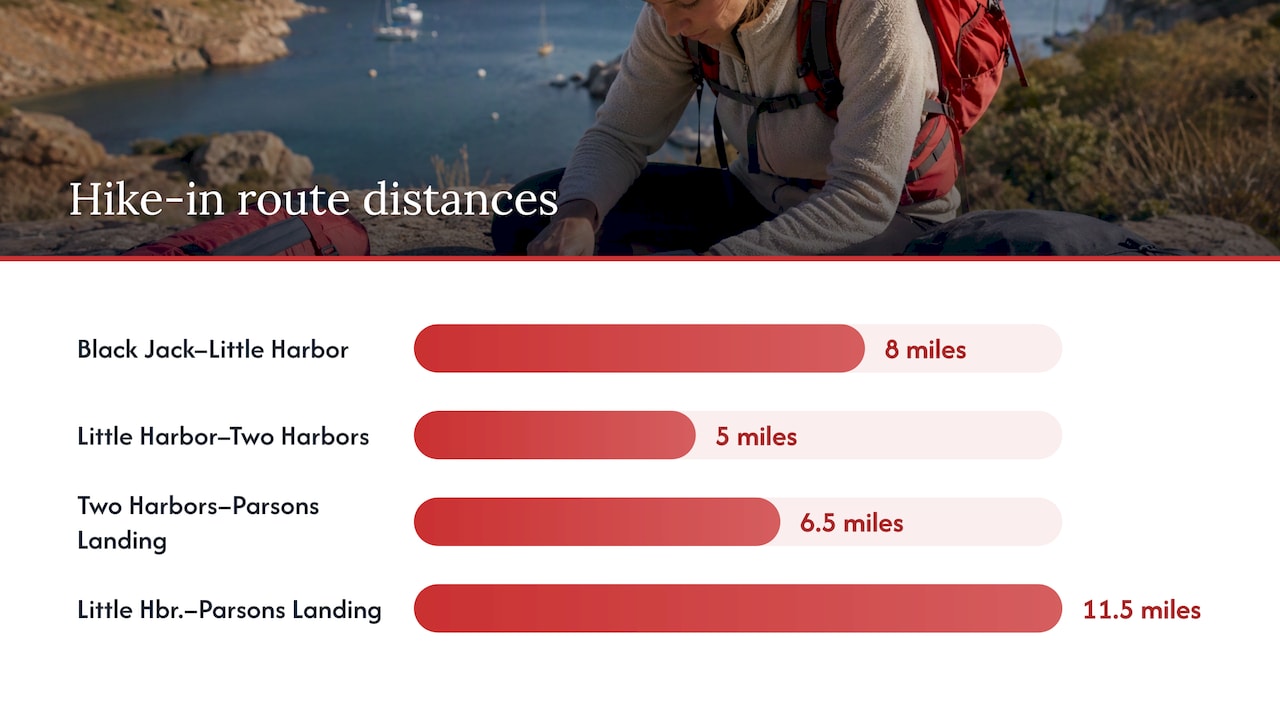
To the hike-in sites: you walk. A few distances from the Conservancy’s route breakdown are useful for planning a day’s effort:
- Black Jack to Little Harbor: 8 miles
- Little Harbor to Two Harbors: 5 miles
- Two Harbors to Parsons Landing: 6.5 miles
- Little Harbor to Parsons Landing: 11.5 miles
Those are real miles with real elevation, in sun. Start early and carry more water than feels sensible. If you would rather skip the trail, Parsons Landing can also be reached by kayak.
If you are comparing island camping trips, our guide to staging for Channel Islands camping walks through how to plan around boat schedules and cancellations, and much of that thinking applies here too.
Rules that keep Catalina wild
Catalina’s interior belongs to the Conservancy, and the rules are simple and worth following. Visitors to Conservancy lands must obey posted signs and instructions from rangers, and may not feed, approach or harass wildlife. The bison and foxes are wild, however relaxed they look.
If you bring a dog, the Conservancy requires that pets stay on a leash, that you collect all waste, and that vaccinations are current (rabies, distemper combo and Bordetella). Check the permits page before you go, since requirements are updated.
A few habits I follow on every trip:
- Store food in the provided lockers or your sealed bags, never in your tent.
- Pack out all trash.
- Keep fires small and only where allowed, in the provided rings.
- Stay on trails and give animals space.
What to pack for Catalina camping
This trip is easier if you pack for wind, sun and steep trail, and then trim. Here is my list.
Shelter and sleep
- A tent that handles wind, with good stakes
- Sleeping bag rated for cool nights, especially at Black Jack
- Sleeping pad and a small pillow
Food and water
- A compact stove and fuel (essential at Black Jack, where there are no fires)
- Pre-ordered water for sites without running water, plus a refillable bottle
- Simple meals you can cook in one pot
No matter where you camp, water is the thing that sneaks up on you. This packing list for remote campsites is a good reminder of how much to plan for each day when taps are far away.
Trail and safety
- Sturdy shoes and a hat
- A headlamp with spare batteries
- Sunscreen and a first-aid kit
- A printed or offline map
- Your confirmed permit and reservation details
Comfort extras
- A foldable wagon for the walk-up sites
- A warm layer, even in summer
- A small trash bag to pack out your trash
If you do not own camping gear, ask the campground operator what it rents. Some Avalon and Two Harbors options offer gear, which is a good way to try Catalina camping without a big purchase.
What to do once you are camped
The campground is the base, and the island is the activity.
- Hike a piece of the Trans-Catalina Trail. You don’t need to do all of it. A day hike from camp covers some of the best views.
- Swim and snorkel. Little Harbor and Two Harbors both put you right near the water.
- Kayak. Parsons Landing is reachable by kayak, and Two Harbors is a natural launch point.
- Watch the sunset from the sand. Beach camps make this the daily event.
- Stargaze. With no city glare, Black Jack and Parsons Landing get dark in a way coastal Southern California rarely does.
- Add a town day. Spend a day in Avalon for food and shops; our Catalina weekend itinerary shows one way to do it.
If you love getting away from the crowds, see our list of hidden Southern California beaches locals use for more quiet shoreline ideas back on the mainland.
Our take on camping Catalina
We built SoCal Sights because most travel guides send everyone to the same handful of places, and the best parts of Southern California tend to be the ones people mention to a friend. Catalina camping is one of those.
Our advice is to pick your campground for the kind of night you want, not the kind of trip you think you should take. A first-timer who sleeps at Hermit Gulch and wanders Avalon at dinner has a better trip than someone who overreaches on a long hike-in and spends the weekend exhausted.
We also think local knowledge beats information overload. That is why we focus on curated, community-driven picks, with logistics you can actually use: book early, order your water, and bring a stove. If you have a favorite Catalina site or a tip that worked for you, that is exactly the kind of thing we want to share.
Joshua
Reach Southern California travelers with SoCal Sights
If you run a local business, tour, rental shop or event that serves Southern California visitors and residents, SoCal Sights is built to put you in front of people looking for authentic things to do. Featured placements, advertising and memberships are available through our advertising and membership page.

We do not publish a price for it, so reach out through the page to learn what fits your business.
FAQ
Can you camp anywhere on Catalina Island?
No. Camping happens at designated campgrounds, and every site needs a reservation. Hikers also need the Conservancy’s free hiking permit. Plan your campground and dates before you board the ferry.
Which Catalina campground is best for beginners?
Hermit Gulch and Two Harbors are the easiest because they are the two that are not remote hike-in camps. Hermit Gulch keeps you close to Avalon, and Two Harbors gives you a quieter village feel with beaches nearby.
Are campfires allowed on Catalina?
Sometimes. Fires are allowed at Little Harbor, Two Harbors and Parsons Landing, but not at Black Jack. Order firewood with your reservation, since a bundle costs $14, and always follow posted signs and ranger instructions.
When should I book a Catalina campsite?
As early as you can. The Conservancy recommends booking in January because the campsites fill quickly, especially if you want consecutive nights along the trail. If your dates are taken, try the route in reverse.
Can I bring my dog camping on Catalina?
On Conservancy lands, dogs must be leashed, owners must collect all waste, and vaccinations must be current for rabies, distemper combo and Bordetella. Check the Conservancy permits page for the latest rules before you go.
Sources
- Catalina Island Camping, Catalina Island Conservancy
- Trans-Catalina Trail, Catalina Island Conservancy
- Catalina Island Permits, Catalina Island Conservancy