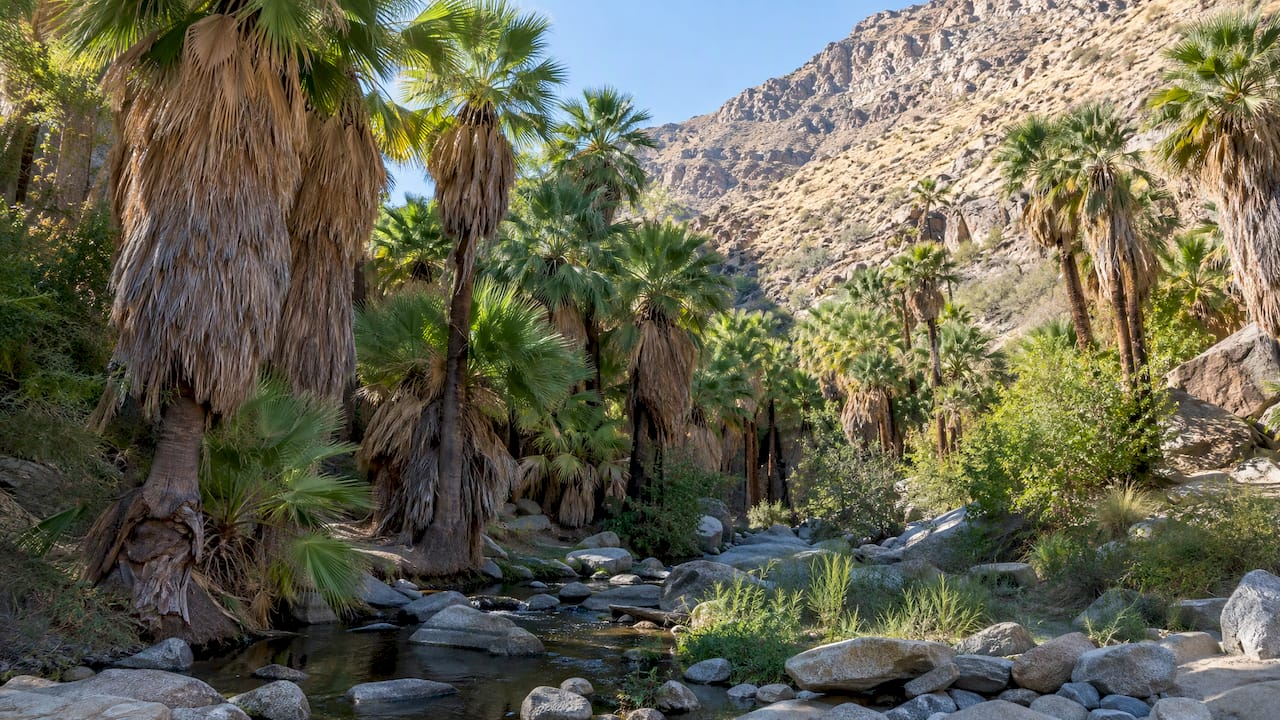
The best desert hikes in Palm Springs are the palm-filled canyons at Indian Canyons, a handful of ridge trails with big valley views, and a few longer routes in the hills around Palm Desert and Rancho Mirage. If you want shade, water and green, start with Andreas Canyon. If you want a workout and a view, pick a ridge trail. Whatever you choose, go early, bring more water than you think you need, and check the seasonal hours before you drive out.
I’ve spent plenty of mornings out here, and the thing I love most is how fast the scenery changes. One minute it’s bare rock and creosote, the next you’re under a canopy of fan palms next to a running creek. Below is how I’d sort the options, what each one costs in time and effort, and how to stay safe.
TL;DR
- Easiest and prettiest: Andreas Canyon at Indian Canyons is a 1.2-mile loop with about 200 feet of gain, running through a huge fan palm oasis.
- Most distinctive scenery: Palm Canyon, Murray Canyon and Victor Canyon each give you a different version of the oasis, from easy strolls to a waterfall destination.
- Hardest and most rewarding: the Art Smith Trail is 8.3 miles with 1,465 feet of gain, and Tahquitz Canyon packs 350 feet of climbing into 1.8 miles.
- Timing matters: hike at sunrise or late afternoon, and note that Indian Canyons runs a limited schedule in summer.
- Pack for heat: water, sun protection, real shoes and a plan someone else knows about.
Table of Contents
- How to choose your Palm Springs hike
- Indian Canyons: the hikes everyone asks about
- Fees, hours and seasonal closures at Indian Canyons
- Ridge and mountain hikes with the big views
- Coachella Valley hikes beyond Palm Springs
- When to go
- Staying safe on desert trails
- Make a day of it
- Run a local business near the trails?
- FAQ
- Sources
How to choose your Palm Springs hike
The Coachella Valley has a hike for nearly every mood, so it helps to decide what you want first.
You want shade and water. Go to Indian Canyons. The creeks and palm groves make it feel ten degrees cooler than the open desert, even if that’s partly in your head.
You want a short, scenic walk. Andreas Canyon is the classic. Victor Canyon is a good step up if you want a little more climbing.
You want a real workout. The ridge trails and the Art Smith Trail are for you. They’re exposed, so they belong in the cool part of the day and the cool part of the year.
You want something close to the pool. The trailheads on the edge of town, including the ones along the foothills, let you squeeze in a sunrise hike and be back for breakfast.
The quick comparison below uses the distances and elevation gains published by the managing agencies. Where a source doesn’t give a number, I’ve left it out rather than guess.
| Hike | Distance | Elevation gain | Difficulty | What you get |
|---|---|---|---|---|
| Andreas Canyon | 1.2-mile loop | 200 ft | Easy | Fan palm oasis, creek, rock formations |
| Victor Canyon | 2.7 miles | 365 ft | Moderate | Quieter canyon walking |
| Murray Canyon | 4.7 miles | 450 ft | Not rated | Creek crossings, waterfall at the end |
| Tahquitz Canyon | 1.8 miles | 350 ft | Strenuous | Rocky canyon climb |
| Art Smith Trail | 8.3 miles | 1,465 ft | Strenuous | Valley, mountain and Joshua Tree views |
Distances and gains come from Indian Canyons, the Tahquitz Canyon ticket page and the BLM Palm Desert and Rancho Mirage trail guide.
Indian Canyons: the hikes everyone asks about
If you only have time for one stop, make it Indian Canyons. It sits about five miles south of central Palm Springs on land belonging to the Agua Caliente Band of Cahuilla Indians, and it holds three main canyons: Palm, Murray and Andreas. A separate area, Tahquitz Canyon, is run on the same tribal lands.
Andreas Canyon
This is the one I send first-timers to. The trail is a 1.2-mile easy loop with around 200 feet of gain, following Andreas Creek through what the Indian Canyons site describes as the second largest California fan palm oasis in the world. You’ll see rock formations, sycamores, cottonwoods, willows and, of course, plenty of palms.
The loop is short, so you can slow down. Bring a camera, sit on a rock by the creek and let the desert go quiet around you. It’s a great pick for kids, grandparents and anyone who hasn’t hiked in a while.
Palm Canyon
Palm Canyon is the big one. The canyon stretches about 15 miles, which means you can treat it as a short stroll to the first grove or as a serious day out. Most visitors walk in as far as feels fun, then turn around. You don’t have to do the whole thing to get the payoff, because the palms start early.
Victor Canyon
Victor is listed at 2.7 miles and moderate, with about 365 feet of gain. If Andreas feels too short and Palm too open-ended, this is the in-between hike. Expect a bit more climbing and, usually, fewer people.
Murray Canyon
Murray Canyon is 4.7 miles with roughly 450 feet of gain. It’s the one to choose if you like a destination. The trail ends at Seven Sisters Waterfall, and travel reviewers note you may get your feet wet along the way. Wear closed-toe shoes you don’t mind soaking, and skip it if you’d rather keep your socks dry.
Tahquitz Canyon
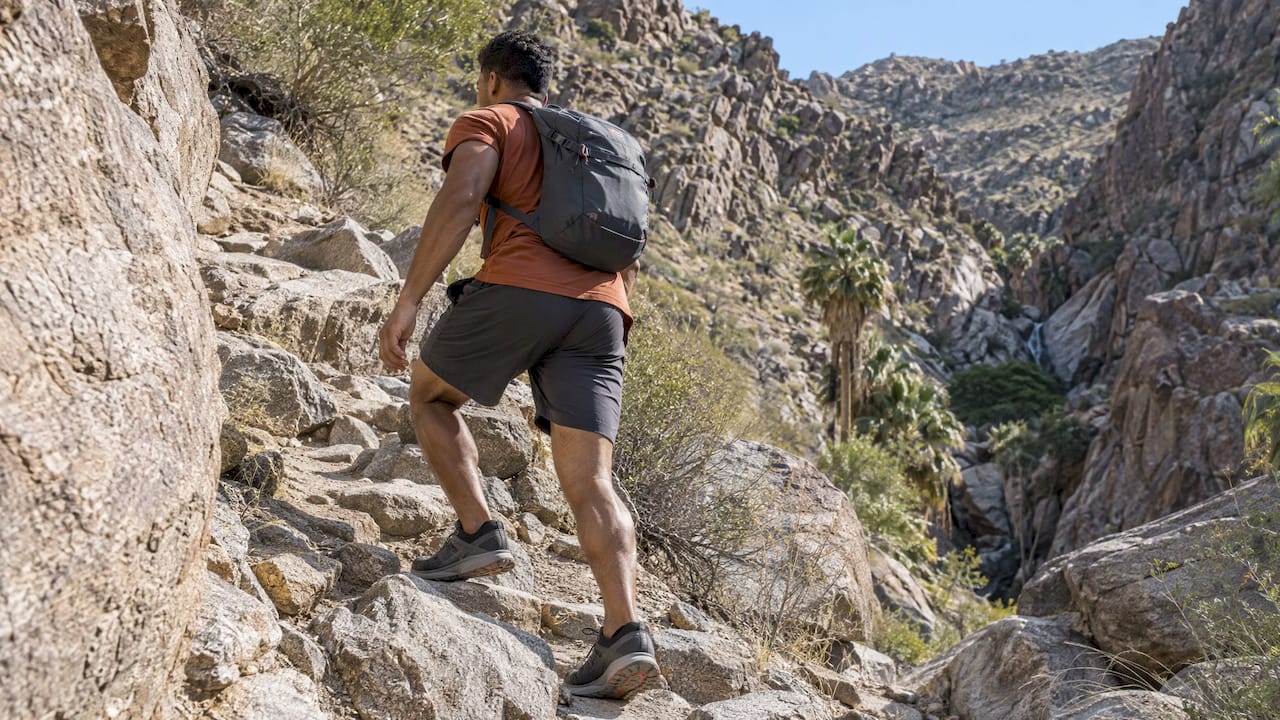
Tahquitz is a different animal: one trail, 1.8 miles, labeled strenuous, with about 350 feet of elevation gain, according to the official ticketing page. It’s short but steep and rocky, so start early and take it slowly. Check the ticket page for current hours and entry details before you go, since access here works differently from the main Indian Canyons gate.
Fees, hours and seasonal closures at Indian Canyons
Admission has been listed at $12 for adults, with lower prices for seniors, students and children 6 to 12, according to U.S. News. Prices can change, so confirm on the official site before you leave.
Here’s the pattern worth knowing:
- Indian Canyons is open daily from early October through early July, from 8 a.m. to 5 p.m., with the last vehicles admitted at 4 p.m., per the same U.S. News listing.
- In the hottest stretch, from early July to the end of September, visitors are only allowed Friday through Sunday.
- The canyons close on certain days for tribal ceremonies and observances, so check the Agua Caliente website the morning you plan to go.
Because this is managed tribal land, the rules are part of the experience. Stay on the marked trails, don’t pick plants and don’t disturb the creek beds. These places have been cared for for a very long time, and a few minutes of respect keeps them that way.
Ridge and mountain hikes with the big views
The canyons are the postcard, but the ridges give you perspective. Popular trails on the edge of town, like the South Lykken Trail, are known for sweeping views over downtown Palm Springs. They’re exposed, with very little shade, so sunrise is the right time.
For longer routes, the BLM’s trail guide for the Santa Rosa and San Jacinto Mountains National Monument is the best planning document I know. Two entries stand out:
- Art Smith Trail. At 8.3 miles with 1,465 feet of gain, it’s strenuous. You get views across the Coachella Valley to the Little San Bernardino Mountains and Joshua Tree National Park, plus hidden canyons and the occasional lush fan palm oasis, per the BLM guide.
- Hopalong Cassidy Trail. It’s known for panoramic views over Palm Desert’s neighborhoods and golf courses, and for the cross on the mountain. Great for people who like a viewpoint finish.
If you’re staying in Palm Desert, our Palm Desert things to do guide pairs nicely with these routes for what to eat and see after.
Coachella Valley hikes beyond Palm Springs
The valley is bigger than the city that gives it its name. Within an easy drive you’ll find preserves with their own palm oases, birding spots and flat desert walking, which suits mornings when you don’t want to climb. The trail guides that Google surfaces often mention Thousand Palms Oasis Preserve and Big Morongo Canyon Preserve for exactly this reason. I’d check each preserve’s own page for current hours, since these can shift.
If you have a spare day, Joshua Tree is close enough to combine with a Palm Springs stay. Our Joshua Tree itinerary lays out one- to three-day plans so you can decide how much of the park to squeeze in.
When to go
The short answer: fall through spring. Summer afternoons here are no joke, which is the whole reason Indian Canyons limits its summer schedule. Even in the cooler months, I like to be on the trail near sunrise.
A few seasonal notes from my own routine:
- October to April is prime hiking. Mornings are crisp, and midday is fine for shorter loops like Andreas.
- Late spring gets warm quickly. Move your start time earlier and pick shorter hikes.
- Summer is for sunrise-only outings or skipping the trails entirely. Spend afternoons at a pool, a museum or a cool restaurant. Our heat smart Palm Springs weekend guide has local picks for exactly that.
Staying safe on desert trails
The desert is forgiving when you prepare and unforgiving when you don’t. This is my checklist, and none of it is complicated.
- Start early, or finish late. Avoid midday heat. Pick your hike based on the temperature forecast, not on how much you want to do it.
- Carry more water than you think. Bring plenty for the whole outing, plus extra in the car. Sip steadily instead of waiting until you’re thirsty.
- Cover up. Hat, sunglasses, sunscreen and breathable long sleeves. Shade is rare on the ridge trails.
- Wear real shoes. Rocky trails and creek crossings are rough on flip-flops and fashion sneakers.
- Watch where you put your hands and feet. Snakes, spiders and scorpions look for shade in bushes, tall grass and rock crevices, so don’t reach into places you can’t see.
- Tell someone your plan. Share the trailhead, your route and when you’ll be back. Cell service drops out in canyons.
- Turn around early. Heat exhaustion creeps up. If you feel dizzy, nauseated or stop sweating normally, get to shade and call 911 if you don’t recover quickly.
If you’re hiking with an older relative or helping someone who lives alone, the extreme heat safety plan for solo agers is a clear one-sitting read on how to prepare for hot days. People over 65 and anyone with a heart condition or on medications that affect hydration should talk with their doctor before a strenuous desert hike.
Our take on desert hiking in Palm Springs
We built SoCal Sights because we kept watching visitors skip the places locals love most. Palm Springs is a perfect example. Most people see the same two or three trails on every list, and they’re great, but the region is full of quieter corners that reward you for looking.
Our approach is simple. We pick hikes by what you actually want from the day: shade, a waterfall, a workout or a view. Then we pair them with the stops that make the day feel complete, like a good lunch, a hot spring soak or a sunset drive. That’s what we mean by curated.
We also lean on community tips. Locals tell us which trailhead has parking at 6 a.m., which grove is quiet on Sunday and which spot is worth the extra mile. If you’ve got a favorite desert trail, we’d love to hear about it.
Joshua
Make a day of it
A hike is better with a plan around it. Here’s how I’d build three easy days.
The easy day. Andreas Canyon in the morning, then lunch in town and a slow afternoon by the pool. It works for families and first-timers.
The big views day. Hit a ridge trail at sunrise, then breakfast, then rest. If you still have energy later, drive to a viewpoint for sunset.
The waterfall day. Murray Canyon to Seven Sisters Waterfall, with dry shoes in the car. Plan on a half day.
After a long hike, a soak feels incredible. Our hot springs in Southern California list has options within reach of the desert. And if you’re thinking about wildflower season out here, see our Anza-Borrego wildflowers guide for a desert trip with a different kind of color.
Run a local business near the trails?
If you own a cafe, a shuttle, a gear shop, a hotel or a tour experience that serves Palm Springs hikers, we’d love to help people find you. SoCal Sights offers advertising, featured placements and memberships for Southern California businesses and event organizers, so readers planning a hike can discover you at the right moment. Pricing isn’t published, so reach out through the page below to ask about options.

Learn more on our advertise with SoCal Sights page.
FAQ
What is the best easy desert hike in Palm Springs?
Andreas Canyon at Indian Canyons is my pick. It’s a 1.2-mile loop with about 200 feet of gain, and it winds along a creek through a large fan palm oasis. Most people finish it in an hour or so, depending on how many photo stops they make.
Are the Indian Canyons open year-round?
They’re open daily from early October through early July and only Friday through Sunday from early July through September, according to U.S. News. They also close on some days for tribal ceremonies. Always check the Agua Caliente website the day you go.
How much does it cost to hike Indian Canyons?
Adult admission has been listed at $12, with reduced rates for seniors, students and children. Fees can change, so confirm the current price on the official site before you drive out.
What is the hardest hike near Palm Springs?
Of the routes covered here, the Art Smith Trail is the biggest challenge at 8.3 miles and 1,465 feet of elevation gain. Tahquitz Canyon is much shorter at 1.8 miles but is rated strenuous because of its steep, rocky climb. Start either one at sunrise and bring extra water.
What time of day is best for desert hikes in Palm Springs?
Early morning is best, and late afternoon works in cooler months. Midday sun on exposed ridge trails gets hot fast, so save that time for shade, lunch or a pool.
Sources
- Indian Canyons: Indian Canyons and Palm Canyon
- Hike the trails at Indian Canyons, U.S. News Travel
- Canyons Tickets, Tahquitz Canyon
- Palm Desert and Rancho Mirage Hiking Guide, Bureau of Land Management