If you’re chasing the best hot springs Southern California has to offer, here’s the short list: Deep Creek Hot Springs for adventurous hikers who don’t mind a sweaty approach, Remington Hot Springs for a mellow riverside soak near Bakersfield, Warner Hot Springs for roadside geothermal access without the hike, Gaviota Hot Springs for a coastal detour off Highway 101, Montecito Hot Springs for a short Santa Barbara trail with ocean views, Esalen Hot Springs for a bucket-list Big Sur experience (permission required), Beverly Hot Springs for an urban mineral spa inside LA city limits, and the Desert Hot Springs resort cluster (Two Bunch Palms, Miracle Springs, and others) for anyone who wants a bed, a robe, and zero dirt under their fingernails. I’ve personally made the trek to Deep Creek, and it’s exactly as rewarding and exhausting as everyone says.
Two numbers to keep in your back pocket before you plan anything: Warner Hot Spring has been recorded at roughly 138°F, hot enough to burn skin if you’re not careful, while Whites Point Hot Springs on the Palos Verdes coast runs closer to 115°F, a temperature most people find tolerable for a longer soak. That range tells you something important: not every “hot spring” in Southern California feels the same, and picking the right one matters as much as picking the right day to go. For current trail and closure information, the US Forest Service’s San Bernardino National Forest page and California’s state parks system are your best friends, and I’ll point you to specific pages throughout this guide.
Key Takeaways
Choosing the right Southern California hot spring comes down to matching your hiking tolerance and water-type preference to the correct category of site, whether that is backcountry, roadside, or resort.
| Point | Details |
|---|---|
| Match effort to site type | Deep Creek and Montecito demand real hiking; Warner and Beverly need none. |
| Verify water treatment | Ask resorts directly whether pools are naturally flowing geothermal or conventionally heated. |
| Respect temperature extremes | Warner runs near 138°F while Whites Point sits closer to 115°F, so know before you soak. |
| Check closures before departure | Confirm current trail status through USFS or state parks pages within a week of travel. |
| Plan your route with SoCal Sights | Socalsights curates itineraries and local updates so trip planning takes minutes, not hours. |
Table of Contents
- Natural Hot Springs Southern California Travelers Actually Visit
- How Do You Pick the Right Hot Spring for Your Trip?
- What Do You Need to Know Before You Go?
- Why I Trust This List (And Where the Gaps Are)
- Let SoCal Sights Handle the Trip Planning Part
- Where to Check Before You Head Out
- Sources
Natural Hot Springs Southern California Travelers Actually Visit
Southern California’s hot springs split into three rough categories: backcountry natural pools you hike into, roadside geothermal features you practically park next to, and managed resort spas where someone else handles the plumbing. Here’s how the major players stack up.
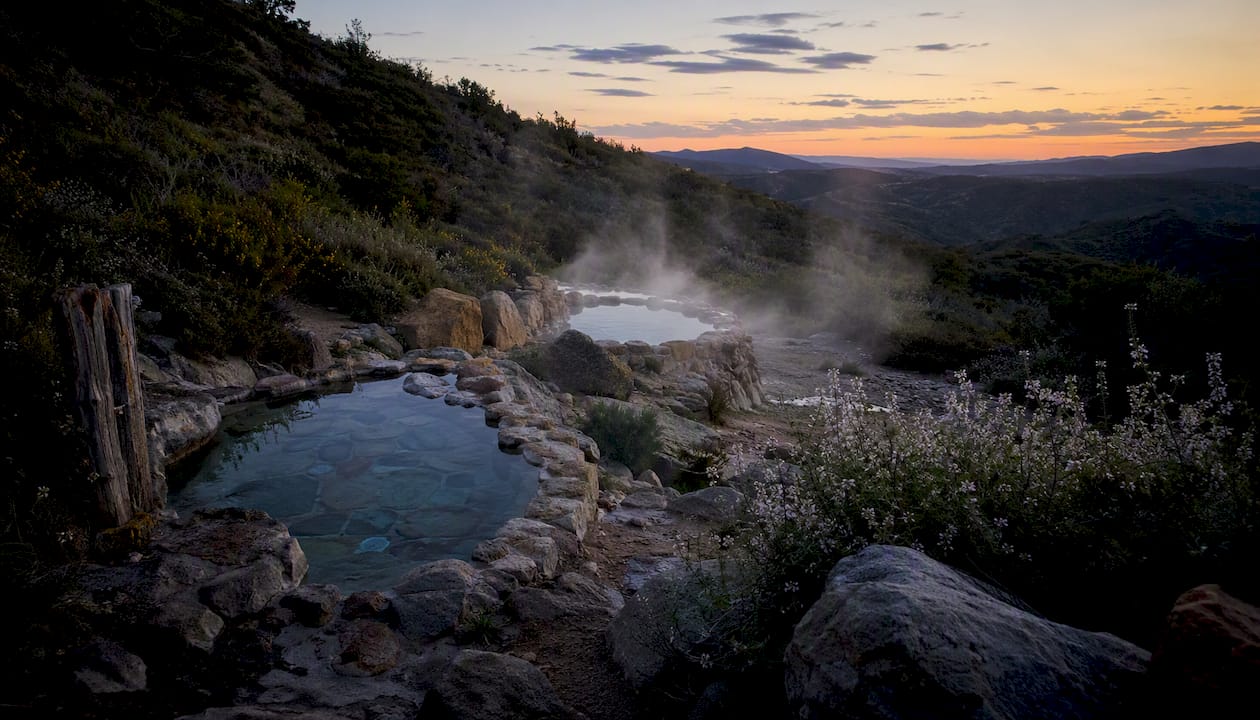
Deep Creek Hot Springs sits in the San Bernardino National Forest, tucked into a bouldered stretch of the Mojave River near Hesperia. It’s about 1.5 to 2 hours from Los Angeles, and getting there is half the story. Most visitors access the multiple soaking pools via Bowen Ranch or Bradford Ridge, with parking fees running anywhere from $5 to $30 depending on the lot. The Bowen Ranch route is a rugged dirt road tough on low-clearance cars, and the hike itself covers several miles of exposed desert trail. Clothing is optional in parts of the pool area, so know that before you bring the kids. Photo caption placeholder: sunlight hitting the terraced pools along Deep Creek’s riverbank.
Best for: self-sufficient hikers who treat the destination as part of the workout.
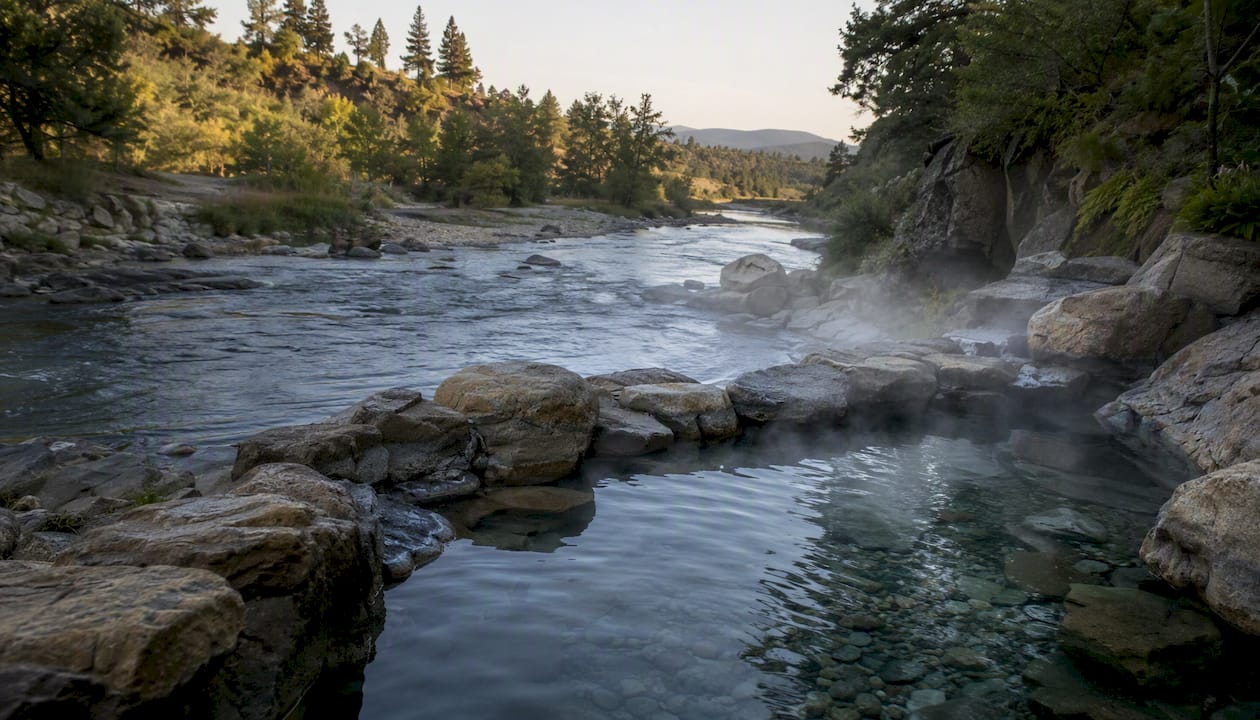
Remington Hot Springs, also known locally as Children of the Earth, sits along the Kern River near Bakersfield, a couple hours north of the LA basin. This one’s far gentler than Deep Creek. A short walk from a pullout parking area gets you to several rock-lined pools right at the river’s edge, and the temperature swings with the season since the pools mix with cold river flow. No facilities exist here beyond a dirt lot, so pack out everything you bring in. Photo caption placeholder: steam rising off Remington’s pools against the Kern River backdrop.
Best for: couples or small groups wanting a low-effort natural soak without a long approach.
Warner Hot Springs, up in San Diego County near the community of Warner Springs, is about as roadside as hot springs get. Access from the nearest road measures roughly 11 feet, and the water itself has been documented at up to 138°F, which is scalding by soaking standards. This isn’t a wade-in-and-relax spot. It demands respect and, frankly, a thermometer if you’re unsure. Photo caption placeholder: mineral deposits ringing Warner’s steaming source pool.
Best for: travelers who want to see a genuine geothermal feature without any hiking, and who understand the heat risk going in.
Gaviota Hot Springs lies just off US 101 near Santa Barbara, inside Gaviota State Park. The hike in is short, maybe 20 to 30 minutes on a modest trail, leading to small terraced pools with ocean views peeking through the hills. It’s popular enough on weekends that solitude isn’t guaranteed. Photo caption placeholder: layered stone pools with the Santa Barbara coastline in the distance.
Best for: day-trippers combining a coastal drive with a quick soak.
Montecito Hot Springs, above Santa Barbara in the Los Padres National Forest, requires a steeper scramble than Gaviota but rewards hikers with a series of small pools cut into the hillside. Trail conditions shift after wildfires and storms, since this area has seen both in recent years, so checking current status matters more here than almost anywhere else on this list. Photo caption placeholder: cascading pools framed by chaparral above Montecito.
Best for: fit hikers comfortable with rougher, sometimes overgrown terrain.
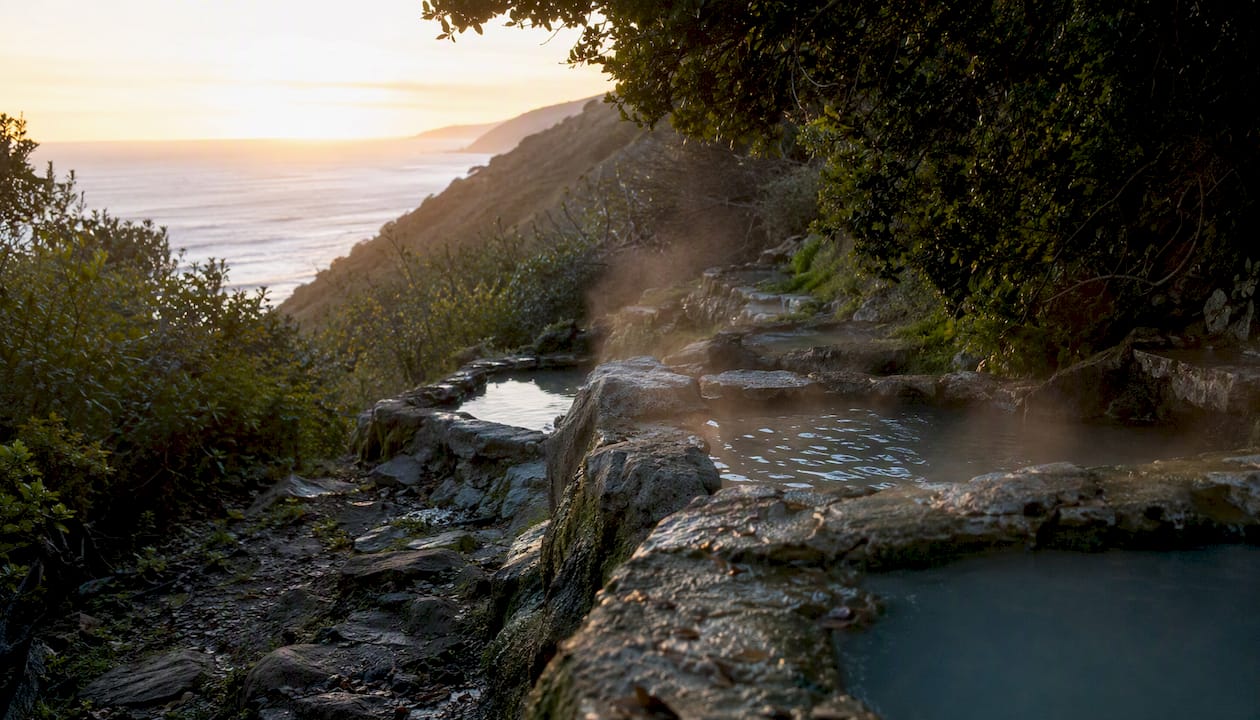
Esalen Hot Springs, perched on cliffs above the Pacific in Big Sur, is the most legendary and least accessible entry here. Public access has historically been limited to specific overnight or workshop bookings through the Esalen Institute, and it sits well north of the traditional Southern California boundary, more Central Coast than SoCal proper. Still, it earns a spot on nearly every serious hot springs list, so I’m including it with the caveat that it takes planning months ahead. Photo caption placeholder: cliffside pools overlooking the Big Sur coastline at dusk.
Best for: travelers planning a special-occasion trip who book access in advance.
Beverly Hot Springs, operating today as a spa in LA’s Koreatown neighborhood, is the only natural mineral thermal spa located within the city of Los Angeles itself. The water draws from a 2,200-foot artesian well, with pools running roughly 96 to 105°F. No hiking, no dirt roads, just a parking spot and a membership or day-pass fee. Photo caption placeholder: the spa’s tiled soaking room, calm and steam-filled.
Best for: urban dwellers who want mineral water benefits without leaving city limits.
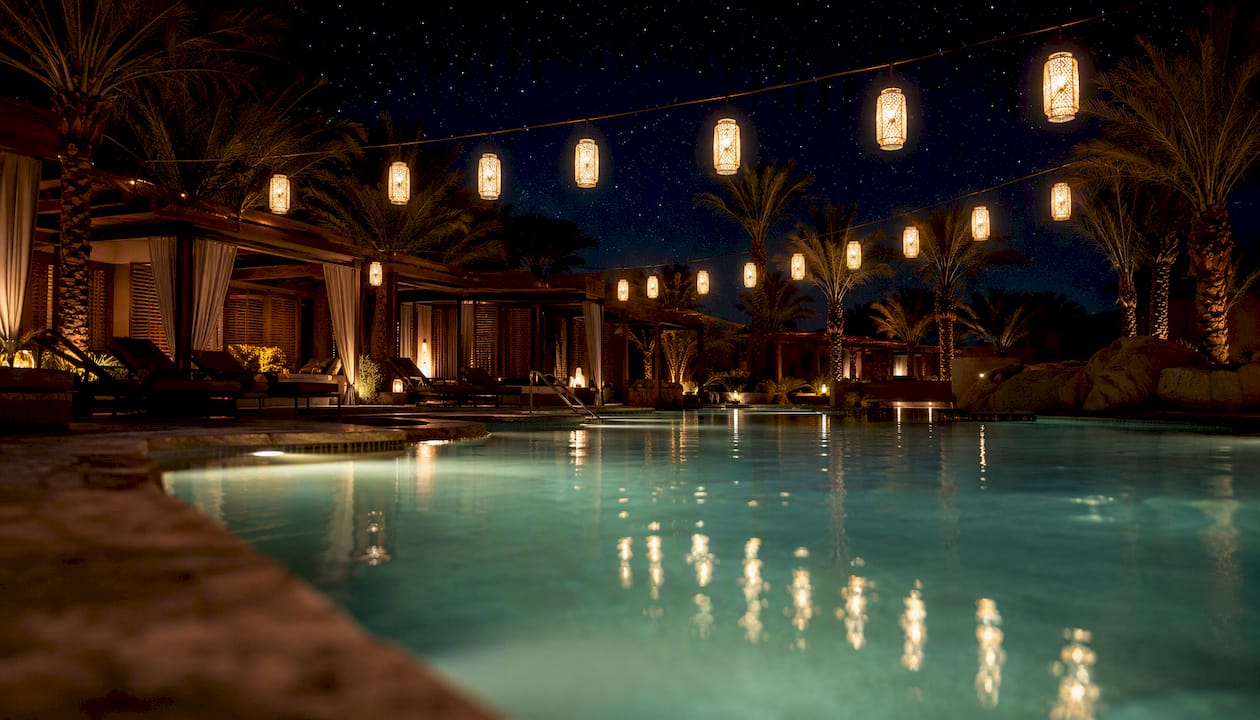
The Desert Hot Springs cluster, near Palm Springs, groups together resorts like Two Bunch Palms and Miracle Springs, each drawing from the same underground aquifer that made this stretch of the Coachella Valley famous. Pool counts and temperatures vary by property, but most offer several soaking options ranging from cooler lounging pools to hotter mineral tubs, plus on-site lodging, spa treatments, and restaurants. Photo caption placeholder: a resort pool deck at Desert Hot Springs glowing under string lights at night.
Best for: couples or solo travelers wanting a full overnight wellness getaway.
For a broader sense of how these fit into the wider LA hot springs conversation, Timeout’s roundup of options near Los Angeles lines up with much of what’s above, and adds resort names like Glen Ivy for readers who want an even more polished spa day.
How Do You Pick the Right Hot Spring for Your Trip?
Before you commit to a destination, run through this checklist:
- How far are you willing to hike? Deep Creek and Montecito demand real effort; Warner and Beverly require none.
- Do you want untreated mineral water or a resort pool? Backcountry springs and Beverly Hot Springs flow naturally from the ground. Resort pools, even at legitimate geothermal properties, sometimes blend in conventionally heated or chlorinated water, so ask directly which pools are naturally flowing before you book.
- What facilities do you actually need? If a restroom within reach is non-negotiable, cross backcountry sites off your list.
- What’s your clothing comfort level? Some natural pools operate clothing-optional; resorts do not.
- Are kids or pets coming along? Long hikes, hot water, and unsupervised riverbanks don’t mix well with small children. Most resort pools are far safer for families, and pets generally aren’t welcome at any of these sites, natural or managed.
Watch for a few red flags before you lock in plans. Seasonal closures hit backcountry trails hard, especially after wildfires or heavy rain. Water temperatures above 115°F or so demand real caution, since skin burns faster than most people expect. Some access roads cross private property or tribal land, and posted closures there aren’t suggestions. Parking scams pop up occasionally near popular trailheads, where someone charges a “fee” with no actual authority to do so. And any surface water in Southern California carries some water-borne illness risk, which we’ll cover more in the next section.
Pro Tip: If you’re torn between a backcountry hike and a resort stay, book the resort for your first visit to a new area and save the hike for a return trip once you know the terrain and season better.
Timing matters almost as much as the site itself. Overnight resort stays let you soak at golden hour and again after dark, when pools clear out and the whole experience feels different. Day hikers into backcountry springs, on the other hand, should aim for cooler months and early starts, since afternoon heat on exposed desert trails turns a fun outing into a survival exercise fast.
What Do You Need to Know Before You Go?
Check access status before you drive anywhere near a backcountry site. The US Forest Service’s San Bernardino National Forest page posts current trail and closure notices for the Deep Creek area, and California’s state parks system covers Gaviota. If your route crosses land tied to a tribal nation, sites like the Tolowa Dee-ni’ Nation’s official page model the kind of cultural context and permission information worth seeking out wherever a spring sits near tribal land, even if the specific nation differs by region.
Pack smarter than you think you need to. Sturdy footwear matters more at Deep Creek and Montecito than anywhere else on this list, since loose rock and uneven riverbeds cause most hiking injuries. Bring more water than feels necessary, layered clothing for temperature swings between trail and pool, basic first-aid supplies for heat exhaustion or minor scrapes, a real map or downloaded offline route (cell service disappears fast in these canyons), and something to pack out your trash. Fifteen to twenty minutes per soak is a reasonable ceiling in hotter pools; longer sessions risk overheating, especially if you’re not drinking water between dips.
Seasonal risk shifts by region and by month. Here’s a rough map of what closes when:
| Region/Site Type | Primary Risk | Typical Window | Where to Check |
|---|---|---|---|
| Backcountry desert springs (Deep Creek, Warner) | Extreme heat, dehydration | June through September | USFS forest pages |
| Coastal/hillside springs (Gaviota, Montecito) | Wildfire and storm trail damage | Varies by fire/storm season | State parks and USFS alerts |
| Riparian springs (Remington) | Flooding, breeding-season wildlife closures | Spring, following heavy rain | Local land manager sites |
| Resort properties (Desert Hot Springs, Beverly) | Minimal, but check for maintenance closures | Rare, spot-check before travel | Resort websites directly |
Some travel guides flag a real health concern worth taking seriously: warm surface water in certain natural hot springs can carry Naegleria fowleri, and guidance generally recommends avoiding head submersion in untreated sources. That’s not a reason to skip backcountry soaking altogether, but it is a reason to keep your head above water and skip the deep dunk, no matter how tempting it looks in someone else’s photo. Beyond personal safety, treat these places the way you’d want a stranger to treat your own backyard: pack out every scrap of trash, stay on established trails instead of cutting new paths through fragile riverbank vegetation, and resist the urge to stack rocks into “new” pools. These springs survive on the goodwill of the people who visit them.
Why I Trust This List (And Where the Gaps Are)
I’ve hiked into Deep Creek myself, and the thing that surprised me most wasn’t the pools, it was how much the approach shapes the experience. You earn that soak, and it changes how you value it compared to a resort spa you drove straight up to. That contrast is the whole reason this list mixes backcountry sites with managed resorts instead of picking a lane.
Here’s my honest take: most hot springs guides either romanticize the wilderness sites or oversell the resort experience, and both approaches shortchange readers. The backcountry crowd loves to downplay real risk, things like 138-degree water at Warner or Naegleria warnings in stagnant pools, because it dulls the adventure narrative. Meanwhile, resort marketing rarely admits that some of their “geothermal” pools are actually running through conventional heaters, which matters if you specifically want untreated mineral water. Ask the front desk directly which pools are naturally flowing before you book a stay, because the answer isn’t always obvious from the website copy.
. The sites flagged with firsthand notes in this guide reflect actual visits, not secondhand write-ups stitched together from other blogs… If you’ve soaked at one of these spots recently and conditions have changed, whether that’s a new closure at Montecito or a fee change at Deep Creek, and I’ll factor it into future updates. Southern California’s backcountry changes fast after fire season, and a guide that doesn’t stay current isn’t worth much.
Let SoCal Sights Handle the Trip Planning Part
Chasing down current trail conditions, comparing eight different sites, and figuring out which resort has an open room on your travel dates eats up an entire evening most people don’t have. Socalsights built its curated guides specifically so you don’t have to do that research yourself every single time.

Rather than piecing together outdated blog posts and forum threads, you get local knowledge that’s actually organized around how people plan real trips. That means:
- Curated regional guides that group hot springs with nearby food spots and lodging worth pairing with your soak
- Printable daycation checklists so you’re not scrambling for gear the morning you leave
- Local business updates when access conditions or hours shift at nearby restaurants, gear shops, or resorts
- Membership perks for local businesses near these springs, which means the recommendations you see come from people who actually operate in these areas
If you’re mapping out a full weekend rather than a single soak, browse the 100+ SoCal Sights collection for a broader set of stops worth building into your route, or check the daycation planning guide for a ready-made itinerary format you can adapt to whichever hot spring made your shortlist.
Where to Check Before You Head Out
- San Bernardino National Forest — US Forest Service: trail conditions and closure notices for the Deep Creek area, check the week before and again the night before if possible.
- California State Parks system pages: seasonal access updates for Gaviota State Park, worth a look a few days ahead of any trip.
- Tolowa Dee-ni’ Nation official site: a model for how tribal government pages handle access permissions and cultural sensitivity guidance where springs sit near tribal land.
- Glen Ivy Hot Springs official site: useful for comparing managed resort pricing and amenities against the Desert Hot Springs cluster.
- Resort or property websites directly for Two Bunch Palms, Miracle Springs, and similar Desert Hot Springs properties, since availability and day-pass policies change by season.
Sources
- Beverly Hot Springs Spa California — Hot Springs Guides
- Deep Creek Hot Springs California — Complete Guide — Finding Hot Springs
- Warner Hot Spring — SoakingSprings