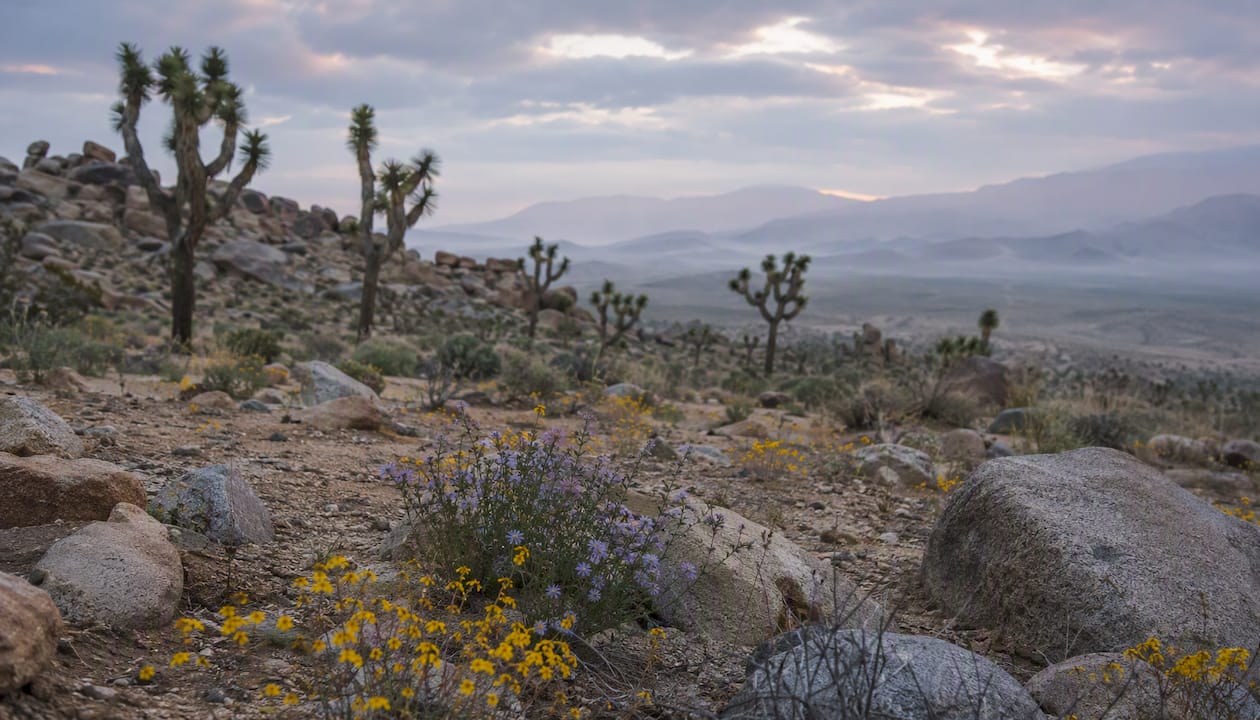
Plan on 1 full day if you want the highlights drive, or 2 to 3 days if you want the best hikes, sunset spots, and a real shot at stargazing without racing the clock. Either way, you’ll want a shortlist ready before you hit the gate: Hidden Valley, Keys View, Skull Rock, Arch Rock, Barker Dam, Cholla Cactus Garden, and Ryan Mountain cover the park’s greatest hits in one trip.
Here’s the fast version of everything else you need to know:
- Entrance fee: $30 per vehicle, good for 7 consecutive days, so a weekend trip and a day trip cost the same.
- Arrival timing: get to your first stop before 7:00 a.m., especially October through May, when popular lots fill by mid-morning.
- No services inside the park: fill your tank and grab food and water before you enter.
I run through the full day-by-day breakdown below, but that’s the skeleton. Build from there.
Key Takeaways
A well-planned Joshua Tree itinerary hinges on arriving before 7:00 a.m., choosing a direction and sticking to it, and matching trip length to your priorities: 1 day for highlights, 2 to 3 days for hikes and stargazing.
| Point | Details |
|---|---|
| Match days to goals | Plan 1 day for highlights, 2 days for hikes and sunset, 3+ days for oases and photography. |
| Arrive before 7:00 a.m. | Popular lots like Hidden Valley and Keys View often fill by mid-morning in peak season. |
| Budget the entrance fee | The $30 per-vehicle fee covers 7 consecutive days, so multi-day trips cost the same as a day trip. |
| Arrive self-sufficient | No gas, food, water, or lodging exist inside the park, and cell service is unreliable. |
| Use local guidance to pivot | SoCal Sights recommends flexible routing and lesser-known stops like Split Rock to dodge crowds. |
Table of Contents
- Your 1-Day Joshua Tree Itinerary: Hitting the Highlights
- Building a 2-Day Joshua Tree Itinerary With Hikes and Stargazing
- Planning a 3+ Day Joshua Tree Itinerary or Specialty Trip
- Entrance Fees, Hours, and Parking You Need to Know
- When Should You Visit Joshua Tree for the Best Experience?
- Where to Stay: Camping Inside the Park vs. Nearby Towns
- What to Pack for a Safe Desert Trip
- Local Tips From SoCal Sights to Skip the Crowds
- What Actually Matters When Planning a Joshua Tree Itinerary
- Plan Your Next Southern California Trip With SoCal Sights
- Frequently Asked Questions
- Sources
Your 1-Day Joshua Tree Itinerary: Hitting the Highlights
A single day at Joshua Tree works better than people expect, as long as you commit to a direction and don’t backtrack. The park runs a significant distance from the West Entrance near Joshua Tree Village to the North Entrance near Twentynine Palms, and a west-to-east flow lets you hit the best-known stops in a natural line without doubling back on Park Boulevard.
Start early. The park never closes, it’s open 24 hours a day, every day of the year, and getting to the West Entrance by 7:00 a.m. means you’ll park at Hidden Valley without circling the lot. It also buys you cooler hiking temperatures, which matters more than most first-timers realize once the sun climbs past 10:00 a.m.
Here’s a route that keeps you moving without feeling rushed:
- 7:00 a.m., West Entrance. Enter and head straight to Hidden Valley (about 15 minutes in). Walk the 1-mile loop trail through boulder formations that once hid cattle rustlers. Budget 45 minutes.
- 8:15 a.m., Barker Dam. A short drive over, then a flat 1.3-mile loop past a historic water tank and petroglyphs. Give it 45 minutes to an hour.
- 9:30 a.m., Cap Rock. A quick 5-minute pullover with a short interpretive loop. Fifteen minutes is plenty.
- 10:00 a.m., Skull Rock. Park at the small roadside lot or walk over from Jumbo Rocks Campground. The rock formation lives right off the road. Fifteen to twenty minutes.
- 10:30 a.m., Arch Rock (via Jumbo Rocks). A 1.4-mile round-trip walk to a natural rock arch. Plan on 45 minutes, longer if you’re taking photos.
- 12:00 p.m., Lunch and Cholla Cactus Garden. Eat what you packed (there’s no food inside the park) at a picnic spot, then walk the quarter-mile loop through a dense field of teddy bear cholla. Thirty to 45 minutes total.
- 2:00 p.m., Keys View. Drive up for panoramic views over the Coachella Valley toward the Salton Sea. Come back later for sunset if you have time to spare.
That itinerary covers roughly 25 to 30 miles of driving with stops, which typically eats up 5 to 6 hours including short hikes. If you’re doing a true day trip and want to end on the best possible note, loop back to Keys View for sunset instead of leaving after your afternoon visit.
Pro Tip: Keys View is the single most popular sunset spot in the park, and the lot is small. Arrive 45 to 60 minutes before sunset, especially on weekends, or you’ll be parking on the shoulder and walking in.
If Hidden Valley’s lot is full when you arrive, don’t panic and don’t wait around. Pivot to Barker Dam first, then loop back. Flexibility with order matters more than following any itinerary exactly.
Building a 2-Day Joshua Tree Itinerary With Hikes and Stargazing
Two days changes what’s possible. You get the same highlights from the 1-day plan, but you’re no longer rushing past Ryan Mountain or skipping Lost Horse Mine because the light’s fading. This is the itinerary I’d recommend for most first-time visitors, and it lines up with what a lot of experienced desert travelers already believe: two to three days tends to be the sweet spot for seeing the park’s highlights without feeling like you’re sprinting between parking lots.
Day 1 follows the 1-day route above, but slow it down. Add extra time at Hidden Valley and Barker Dam, then treat Keys View as your evening anchor rather than an afternoon add-on.
- Morning: Hidden Valley, Barker Dam, Cap Rock (unhurried pace)
- Midday: Skull Rock, Arch Rock, lunch
- Afternoon: Cholla Cactus Garden, then rest or grab dinner supplies in town
- Evening: Keys View for sunset, then stay for the stars
Joshua Tree’s remote location and minimal light pollution make it one of the better stargazing spots in Southern California, and Keys View or Cap Rock’s open sky work well for it. Bring a red-light headlamp so you don’t wreck your night vision or anyone else’s.
Day 2 is where the real hiking happens. Enter early again, this time targeting the park’s interior trails before the day heats up.
- Ryan Mountain (3 miles round trip, 2 to 3 hours). This is the best moderate hike in the park for the payoff. You’ll climb about 1,000 feet to a summit with 360 degree views across the whole basin. Start by 8:00 a.m. if you’re visiting between May and September.
- Lost Horse Mine. A wide, gently graded trail to a well-preserved 1890s gold mine. Less dramatic than Ryan Mountain but easier on tired legs.
- Cottonwood Spring (short loop, 30 to 45 minutes). A quieter stop in the park’s southern section, with a fan palm oasis that draws far fewer crowds than the northern attractions.
- Split Rock Loop (2 miles, 1 to 1.5 hours), optional. A lesser-known loop through boulder piles that most day-trippers skip entirely, which makes it a solid choice if you want quiet trail time after two busier stops.
If you’re camping inside the park, book early. Campgrounds fill fast on Recreation, sometimes months out for the busy October through May stretch, and several sites take reservations rather than first-come, first-served.
Pro Tip: Book your campsite the moment your travel dates are firm. Popular sites like Jumbo Rocks and Hidden Valley Campground routinely sell out weeks ahead during peak season.
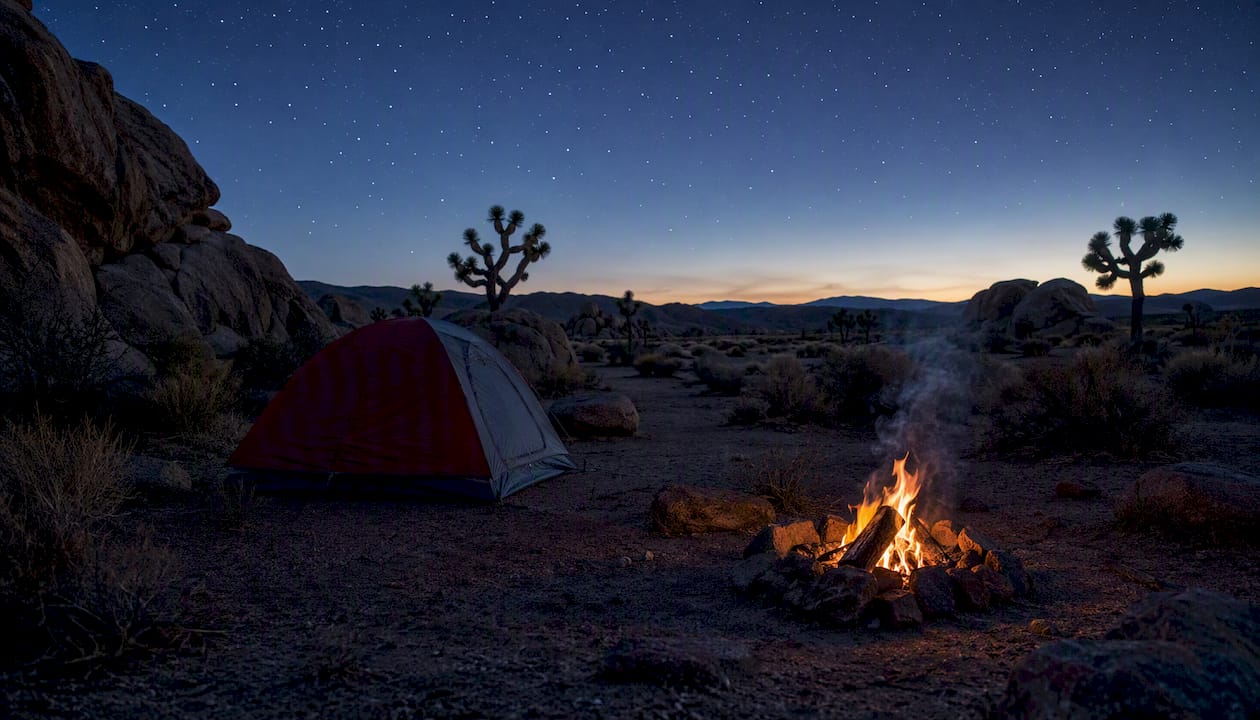
If climbing or photography is your focus rather than hiking, swap Ryan Mountain for extra time at Hidden Valley and Jumbo Rocks, which are both dense with established bouldering problems and classic rock faces.
Planning a 3+ Day Joshua Tree Itinerary or Specialty Trip
With three or more days, you can stop treating the park like a checklist and start treating it like a place worth lingering in. This is when Lost Palms Oasis, Cottonwood Spring’s quieter trails, and full-day photography or climbing sessions actually fit without cutting something else short.
A sample Day 3 layout: drive to the park’s southern Cottonwood section early, then hike Lost Palms Oasis Trail, a 7.2-mile round trip (4 to 5 hours) to the largest fan palm oasis in the park. It’s a longer, hotter hike than anything in the 2-day plan, so start at first light and carry more water than feels necessary.
- Morning: Cottonwood Visitor Center, then Lost Palms Oasis Trail
- Afternoon: Rest, or a shorter add-on like the Mastodon Peak loop nearby
- Evening: Head toward Pioneertown or Palm Springs for dinner if you’re staying outside the park
Photography-focused schedules revolve around light, not mileage. Golden hour at Cholla Cactus Garden (right after sunrise) turns the spines nearly luminous. Arch Rock and the Jumbo Rocks formations photograph best in late afternoon, when shadows carve out the boulder texture. Keys View at both sunrise and sunset gives two completely different color palettes over the same valley.
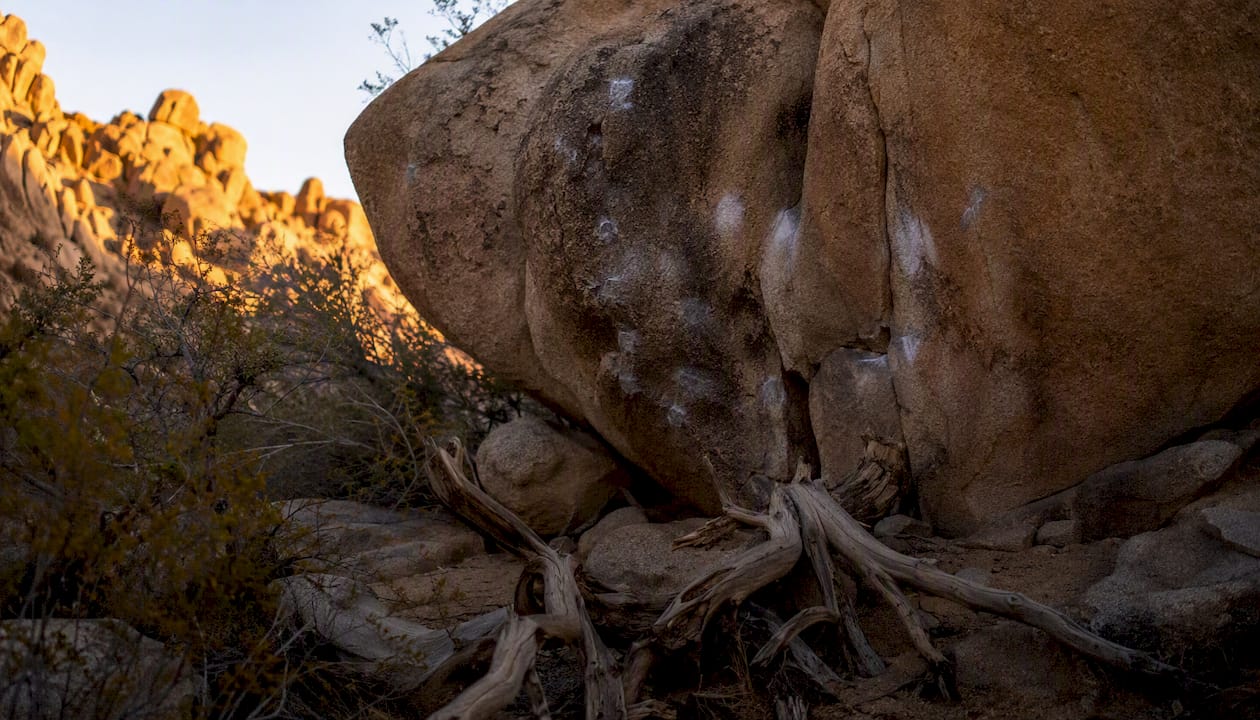
Climbing and bouldering draw visitors from well beyond Southern California, since the park’s granite formations support established routes across nearly every skill level. Hidden Valley and Real Hidden Valley remain the most concentrated bouldering zones. Check current conditions before you go, since closures for nesting raptors or extreme heat do happen.
Pro Tip: If Keys Ranch guided tours are running, book through recreation.gov well ahead. Slots are limited, and it’s one of the only ways to see the historic ranch homestead up close.
If you’ve got a rest day or want a change of scenery, Pioneertown’s Old West storefronts and Palm Springs’ restaurant scene are both under an hour away and make a good pressure valve between hiking days.
Entrance Fees, Hours, and Parking You Need to Know
The park runs on a simple fee structure: $30 per vehicle, valid for 7 consecutive days, so there’s no reason to rush a multi-day visit to save money. Annual and interagency passes are also sold through recreation.gov if you’re planning repeat trips.
Joshua Tree is open 24 hours a day, 365 days a year, but that doesn’t mean parking is unlimited. Peak season runs October through May, and popular lots like Hidden Valley and Keys View regularly fill by mid-morning on weekends.
- West Entrance (near Joshua Tree Village): best for the 1-day and 2-day itineraries above; closest to Hidden Valley and Keys View.
- North Entrance (near Twentynine Palms): good alternate start point if the West Entrance line looks long, especially early morning.
- South Entrance (near Cottonwood): best pick if you’re heading straight for Cottonwood Spring or Lost Palms Oasis on day 2 or 3.
If your first-choice lot is full, don’t circle. Move to your next planned stop and loop back later. Before you leave home, check the park’s current conditions page for closures or weather alerts, and remember the basics: no off-road driving, no removing rocks, plants, or wildlife, and pets are restricted to roads and campgrounds, not trails.
When Should You Visit Joshua Tree for the Best Experience?
October through April is the sweet spot for comfortable hiking temperatures, and it’s also the busiest stretch of the year. Spring weekends and holidays bring the heaviest crowds; weekday visits in November or February often feel noticeably quieter.
- Best time of day: early morning (before 9:00 a.m.) or late afternoon avoids both peak heat and peak parking pressure.
- Summer (June to September): brutally hot by midday, often past 100°F. Hike at dawn or skip strenuous trails entirely.
- Winter nights: can drop near freezing even when days feel mild, so pack layers regardless of the daytime forecast.
- Weather watch: sudden wind and dust events happen, particularly in spring, so check conditions the morning of your visit.
For crowd mitigation, arrive at your first stop by 7:00 a.m. and treat weekends in peak season as a reason to start even earlier than usual.
Where to Stay: Camping Inside the Park vs. Nearby Towns
Camping inside the park puts you steps from sunset views and dark skies, but most sites require reservations through recreation.gov, and popular campgrounds like Jumbo Rocks book out weeks or months ahead in peak season.
- In-park camping: best for 2-day-plus trips focused on stargazing and early trailhead access; book early, since there are no services inside the park to fall back on.
- Joshua Tree Village and Yucca Valley: closest towns to the West Entrance, with grocery stores, gas, and casual restaurants.
- Twentynine Palms: best base if you’re entering from the North Entrance or exploring the park’s eastern side.
- Palm Springs: roughly an hour from the West Entrance, worth it if you want a resort stay bookending a rougher day of hiking.
Choose in-park camping for night-sky access and early starts. Choose a nearby town if you want real meals, a shower, and a bed after a long hiking day.
What to Pack for a Safe Desert Trip
Joshua Tree is unforgiving if you show up unprepared, and rangers are blunt about it: hike during cooler morning or late-afternoon hours, and treat summer heat as a genuine hazard, not an inconvenience.
- At least 1 gallon of water per person per day, more for longer hikes
- Sun protection: hat, sunglasses, high-SPF sunscreen
- Layers for temperature swings between day and night
- Headlamp with a red-light setting for stargazing
- Closed-toe shoes, not sandals, for rocky trails
- First aid kit and extra snacks
- Full tank of gas, since there are no gas stations inside the park
- Offline maps downloaded before you enter, since cell service is limited to nonexistent through most of the park
Pro Tip: Screenshot your itinerary and a park map before you lose signal. You won’t get a second chance to look something up once you’re past the entrance station.
Stay on marked roads and trails, never feed wildlife, and pack out all trash, including anything that blows out of an open car window.
Local Tips From SoCal Sights to Skip the Crowds
A few lesser-known additions can turn a good trip into a great one. Split Rock Loop and the quieter pullouts along Geology Tour Road rarely see the crowds that Hidden Valley draws, and they photograph just as well. Early morning light hitting the boulder flats near Jumbo Rocks Campground, before the tour buses show up, is one of the best photo windows in the entire park.
Stock up in Yucca Valley or Joshua Tree Village before you enter. Once you’re inside, you’re on your own for food and water.
- Skip the crowded Hidden Valley lot at midday and try Split Rock instead
- Buy water and snacks in Yucca Valley, not at the last gas station before the gate
- Use flexible routing: if one lot is packed, pivot to a quieter stop and circle back later
- Check our SoCal Sights Adventure Overview for more curated Southern California day-trip ideas
Pro Tip: If you only remember one thing from local visitors, remember this: the park rewards flexibility. A rigid itinerary that ignores a full parking lot wastes more time than the pivot ever would.
What Actually Matters When Planning a Joshua Tree Itinerary
Most itineraries online treat Joshua Tree like a checklist to clear as fast as possible, cramming ten stops into a single day and calling it efficient. That’s backwards. The park’s best moments, Ryan Mountain’s summit view, the quiet at Cottonwood Spring, a clear night sky at Cap Rock, all require slowing down, not speeding up.
The conventional advice to “see everything in one day” undersells how much a rushed pace costs you. You’ll spend more time circling full parking lots than you save by skipping a second day. If I had to prioritize one thing, it’s this: pick a direction, commit to it, and build in slack for pivots when a lot is full. Rigid itineraries break the moment reality doesn’t cooperate, and in a park this popular, reality rarely cooperates on a tight schedule.
Two days beats one for almost every traveler. The extra day doesn’t just add stops, it changes the entire pace of the trip from a sprint to something you’ll actually remember.
Plan Your Next Southern California Trip With SoCal Sights
Socalsights is the alternative to generic trip-planning sites for exploring Southern California beyond the obvious stops: instead of a one-size-fits-all list, you get curated, locally-sourced recommendations built around how people actually spend a day or a weekend out here.

If this itinerary got you thinking about what else the region has to offer, our 100+ SoCal Sights collection rounds up community-favorite spots you won’t find on a standard tourist map, and our daycation guide is built for exactly the kind of tight, well-timed planning this Joshua Tree itinerary required. Whether you’re stitching together a weekend around the park or looking for what to do on your way back through Palm Springs or the Coachella Valley, start with the SoCal Sights Adventure Overview and build your next trip from there.
Frequently Asked Questions
How many days do I need for a Joshua Tree itinerary?
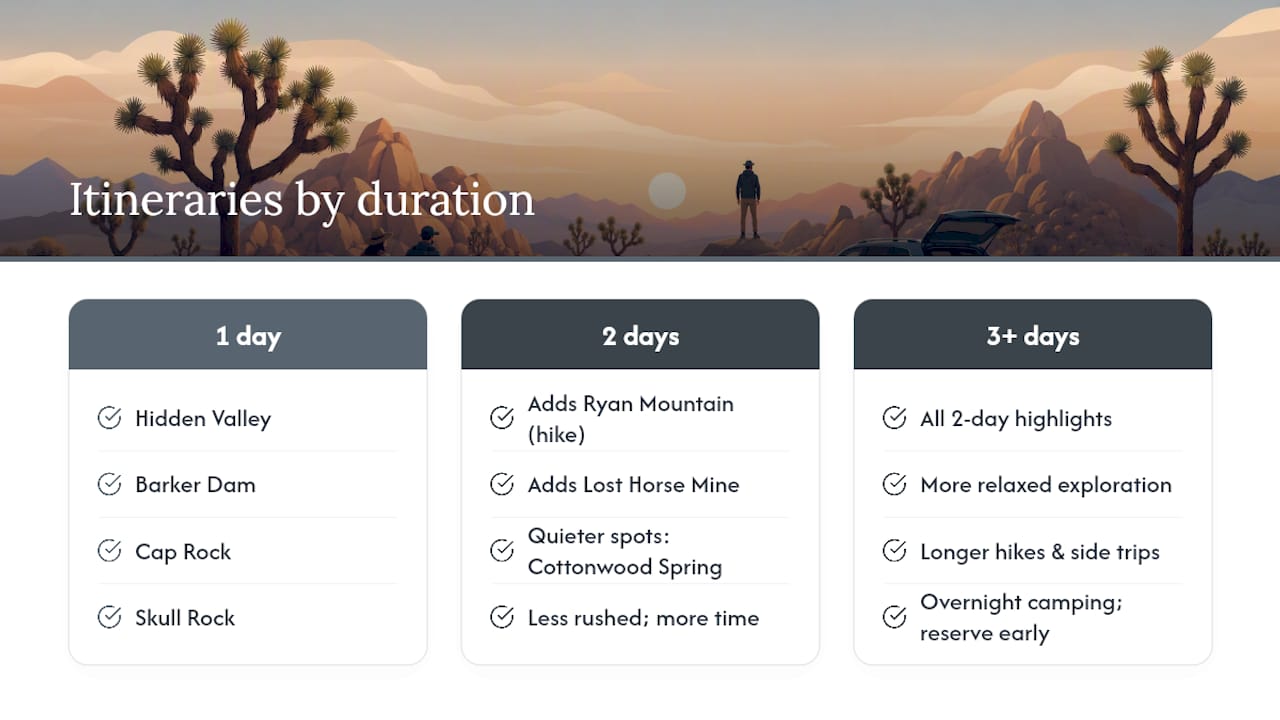
One full day covers the main highlights like Hidden Valley, Skull Rock, and Keys View. Two to three days lets you add Ryan Mountain, Lost Horse Mine, and quieter spots like Cottonwood Spring without rushing.
What’s the best 1-day itinerary for Joshua Tree?
Enter early through the West Entrance, hit Hidden Valley, Barker Dam, Cap Rock, Skull Rock, and Arch Rock in the morning, then Cholla Cactus Garden after lunch, and finish at Keys View for sunset.
Do I need a reservation to enter Joshua Tree National Park?
No day-use reservation is required, but campgrounds and some guided tours book through recreation.gov and fill up well ahead during peak season.
What is the entrance fee for Joshua Tree National Park?
The fee is $30 per vehicle, valid for 7 consecutive days, so a multi-day itinerary costs the same as a single day trip.
When is the best time to visit for photography or stargazing?
Golden hour just after sunrise or before sunset gives the best light for photography, while clear nights at Keys View or Cap Rock offer some of the best stargazing conditions in the region.
Is there food or water available inside the park?
No. The park has no restaurants, grocery stores, or gas stations inside its boundaries, so bring everything you need before entering.
Sources
Confirm current conditions before finalizing any itinerary. Start with the official fees and passes page, the plan-your-visit overview, and current conditions and closures. Book campgrounds and tours through recreation.gov. Curious about the terrain itself? The USGS ecology page explains why the Mojave and Colorado deserts collide here.
- Fees & Passes | Joshua Tree National Park (U.S. National Park Service)
- Goods & Services | Joshua Tree National Park (U.S. National Park Service)
- Recreation