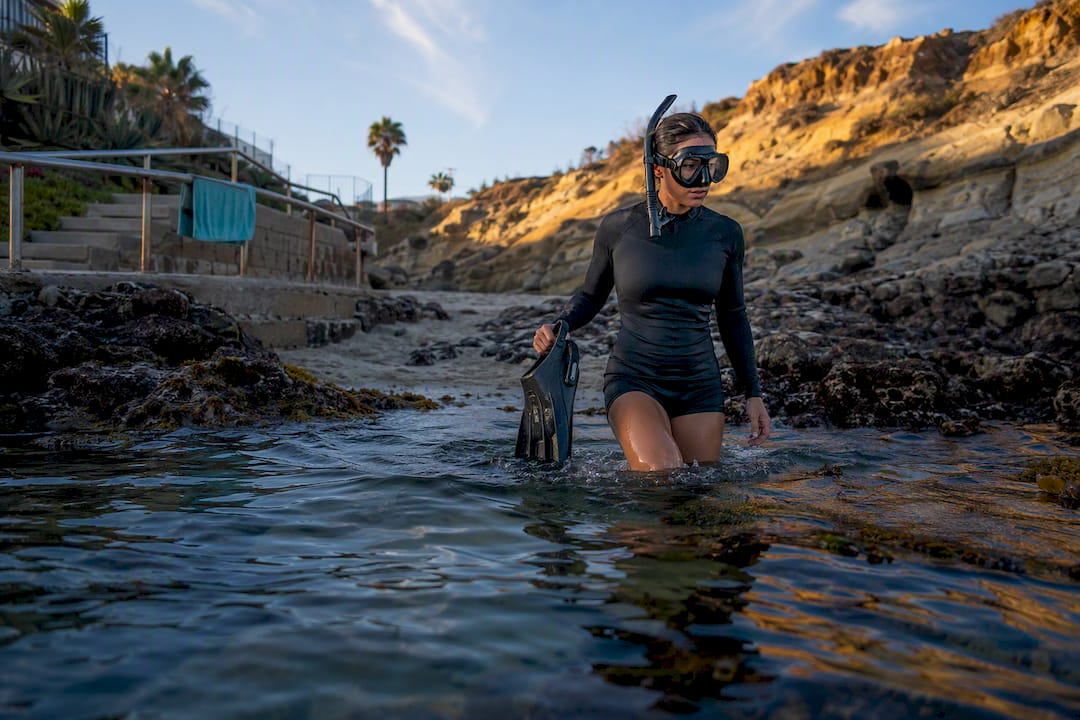
Yes, La Jolla is one of the best shore-access snorkeling spots in Southern California. Pick La Jolla Cove if you’re a confident swimmer chasing reef life and sea lions up close, or head to La Jolla Shores if you want a gentle sand-bottom entry and a good shot at spotting leopard sharks. Either way, check conditions with a lifeguard first, and if you’re new to snorkeling, a guided tour takes the guesswork out of your first outing.
TL;DR:
- Snorkelers with more water confidence should prioritize La Jolla Cove for reef exploration and sea lion sightings, while beginners and families are better suited for Shores’ sandy, sheltered entry.
- Conditions are best before 10 a.m. when the wind is calm, with late summer to early fall offering the warmest and clearest waters, though year-round snorkeling is possible with a wetsuit.
- Checking real-time surf and wind conditions with lifeguards is essential before entering, as changing weather can quickly turn ideal conditions into unsafe or murky water.
- Protecting the marine environment requires avoiding touching or removing marine life, sticking to reef-safe sunscreen, and respecting no-collection rules within the reserve.
- Experienced snorkelers should plan their visit early in the morning, especially if they want to explore the Cove’s caves, while beginners should focus on Shores’ calmer waters and easier access.
Table of Contents
- Where to Snorkel in La Jolla: Cove vs. Shores
- How Do You Know if Conditions Are Good for Snorkeling?
- Safety Rules and Marine Reserve Etiquette
- What Marine Life Will You Actually See?
- Gear, Rentals, and When to Book a Guide
- Getting There: Parking and Access Points
- Local Insider Tips From Joshua at Socalsights
- How Snorkelers Help Protect La Jolla’s Marine Ecosystem
- What Actually Matters When You Plan a La Jolla Snorkel Day
- Plan Your Full La Jolla Day With Socalsights
- Sources
Where to Snorkel in La Jolla: Cove vs. Shores
Ask any local where to go snorkeling in La Jolla and you’ll get one of two answers, and the right one depends entirely on your comfort in open water.
La Jolla Cove is the small, sheltered cove tucked below Scripps Park, and it’s the spot most people picture when they think of snorkeling here. You climb down a short set of stairs from the park, wade past a narrow strip of sand, and you’re immediately swimming over a rocky reef. There’s no long swim required to find something interesting. Sea lions haul out on the rocks just north of the Cove and often cruise right past snorkelers, and the kelp beds close to shore hold garibaldi, calico bass, and the occasional ray. It’s compact, it’s scenic, and it rewards people who are steady in the water.
La Jolla Shores is a different animal entirely. It’s a long, flat sandy beach with a gradual entry, which makes it far more forgiving for beginners and families. The stretch near the Marine Room restaurant is the classic entry point, and the sand flats just offshore are where leopard sharks gather, especially in warmer months. Shores is also the launch point most guided kayak-and-snorkel trips use, since the calmer water makes it easier to paddle out before dropping into the water.
A quick way to decide between them:
- Choose the Cove if you’re comfortable treading water over rocks, want reef structure, and are hoping to see sea lions.
- Choose Shores if you’re a beginner, snorkeling with kids, or specifically want a calmer, sandy-bottom experience.
- Bring a flotation vest to either spot if you tire easily. Just know the Cove’s protected zone restricts inflatable devices in certain areas, so check current rules before you strap one on.
- Go with a group at the Cove, since the reef access points can get crowded and current can shift quickly near the rocks.
Both beaches sit inside the San Diego-La Jolla Underwater Park, a protected reserve that’s the actual reason the water here holds so much life compared to open, unprotected coastline nearby.
How Do You Know if Conditions Are Good for Snorkeling?
Morning is almost always your best window. Wind tends to stay calm before 10 a.m., which keeps the surface glassy and visibility clear. Once the afternoon sea breeze kicks in, chop stirs up sand and cuts visibility fast, sometimes down to just a few feet.
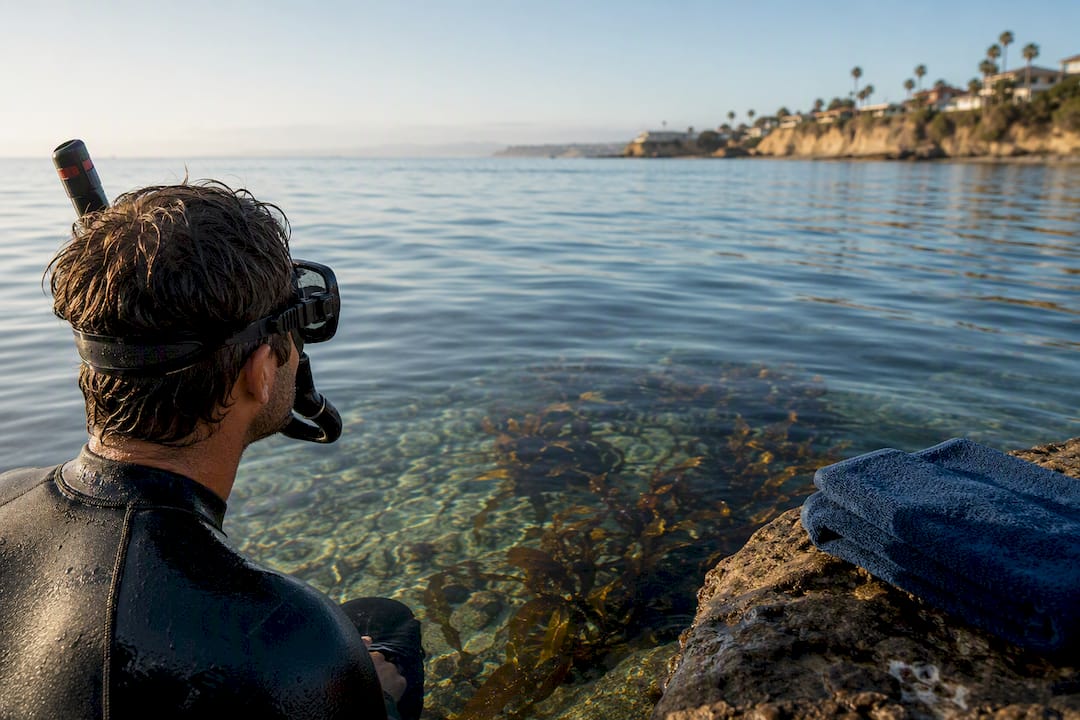
Seasonally, late summer into early fall (roughly July through September) brings the warmest water and often the calmest conditions, though La Jolla is snorkelable year-round with the right wetsuit. As a rough benchmark, swell under one to two feet is ideal. Anything larger starts to churn up the shallows and makes entries at the Cove genuinely tricky.
Before you check anything else, check surf and wind forecasts on Surfline, then confirm with lifeguards on the beach, since they see the water conditions in real time. Tides matter too. Low tide exposes more rock at the Cove and can expose cave entrances, but it also means shallower water and a rougher shorebreak at Shores. Locals often time visits around the mid to lower tide window, since it tends to balance visibility against wave energy.
Safety Rules and Marine Reserve Etiquette
The Underwater Park is a protected reserve, not a free-for-all reef. That status comes with real rules, and ignoring them can mean a citation or, worse, a hurt animal.
- Check with lifeguards before you get in. They track real-time visibility, rip currents, and any closures, and they’re the single best source of current conditions on the beach.
- Never snorkel alone. Currents near the Cove’s rocky points can shift fast, and having a buddy nearby matters if you get tired or disoriented.
- Skip inflatable flotation devices in restricted zones. Check posted signage, since some areas limit them to protect swimmers and marine life alike.
- Leave everything where you found it. No collecting shells, no touching kelp, and absolutely no taking marine life. Recreational snorkeling and kayaking are allowed in the reserve, but fishing and removing wildlife are restricted or banned outright.
- Enter and exit carefully. At the Cove, time your entry between wave sets and watch your footing on wet rock. At Shores, shuffle your feet through the sand flats rather than stepping down hard, both to keep your balance and to avoid startling anything buried nearby.
Pro Tip: If the water looks murky brown or you can’t see your fins while standing waist-deep, that’s your sign to wait it out on the sand rather than push into the water.
What Marine Life Will You Actually See?
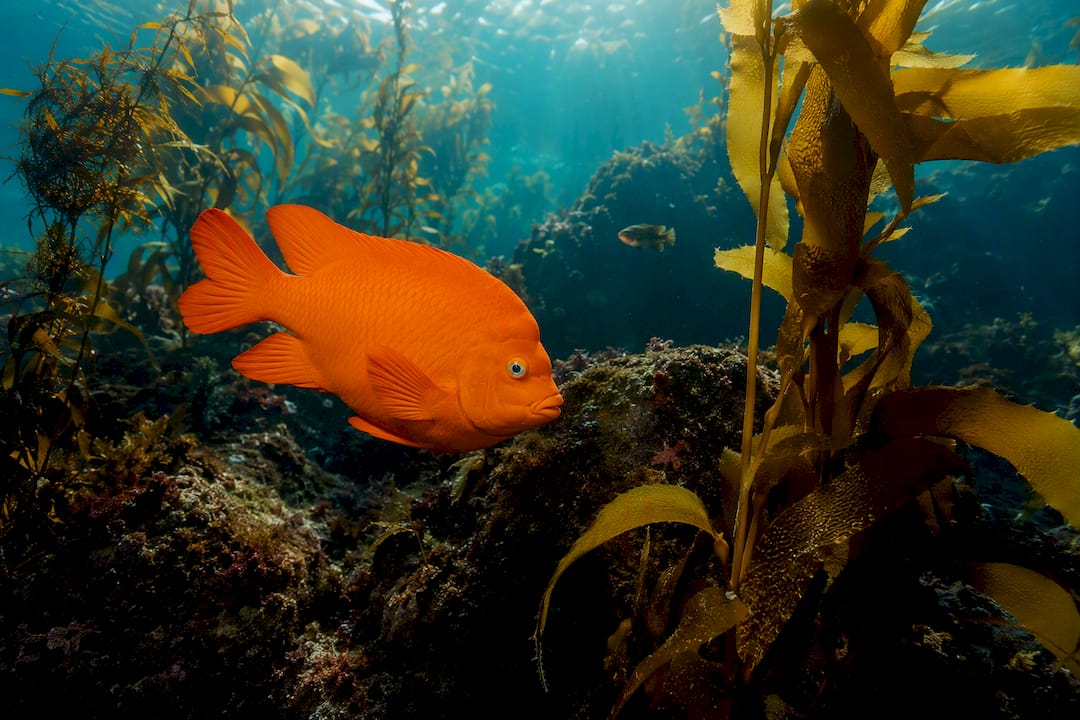
La Jolla’s protected waters mean sightings here are far more reliable than at your average open beach. The bright orange garibaldi, California’s state marine fish, is essentially guaranteed among the kelp at the Cove, and it’s fully protected, so admire it and move on. Leopard sharks are the headline act at Shores, gathering on the shallow sand flats in the warmer months. They’re completely harmless bottom feeders) that mostly ignore snorkelers entirely.
Beyond those two, expect rays gliding just above the sand, kelp bass hovering in the reef shadows at the Cove, and sea lions that often steal the show by swimming curious loops around groups of snorkelers. Keep your distance from the sea lions. They’re wild animals, not aquarium exhibits, and getting too close can stress them or provoke a defensive nip. Never touch or feed anything you see, and try to swim around kelp strands rather than through them. It keeps the habitat intact for the next person in the water.
Gear, Rentals, and When to Book a Guide
You don’t need much to snorkel La Jolla well, but fit matters more than most people expect. A leaky mask or loose fins can turn a great morning into a frustrating one.
- Mask and snorkel: Look for a silicone skirt that seals without pressing on your nose bridge.
- Fins: Full-foot fins work fine in warmer months; open-heel fins with booties give more control in colder water.
- Wetsuit: A shorty works for summer swims, but a full 3/2mm suit is worth it outside peak season, since the water rarely climbs past the mid-60s even in warm months.
- Defog and reef-safe sunscreen: Both are cheap insurance against a ruined session.
Shore-side rental shops near both beaches carry all of the above, and walk-up stands near the Shores parking lot are common in summer. If you’d rather skip the rental counter entirely, guided kayak and snorkel tours typically include a wetsuit, mask, snorkel, and a guide who knows exactly where the sea caves and calmer reef pockets are that day. A guide is worth the cost if you’re a first-timer, a weaker swimmer, or you specifically want to see the sea caves, since paddling out by kayak gets you to calmer water faster than swimming from shore.
Getting There: Parking and Access Points
Parking at the Cove is the tightest part of the whole plan. Street spots are metered and fill early, especially on weekends, so arriving before 9 a.m. genuinely makes a difference. Shores has more breathing room, with a larger lot near Kellogg Park and additional street parking along Camino del Oro.
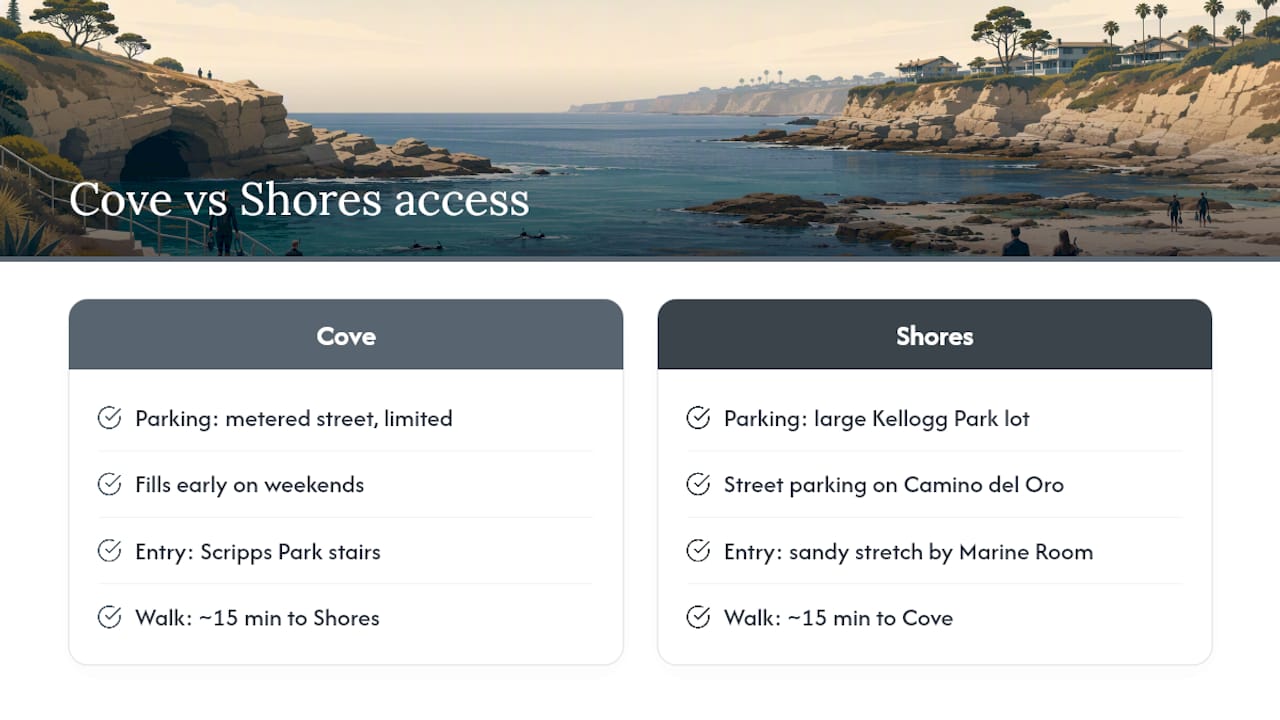
For entry points, use the stairs at Scripps Park for the Cove and the sandy stretch near the Marine Room for Shores. The two beaches are close enough to walk between in about fifteen minutes along the coastline, so it’s realistic to check both before deciding where to get in. If you’d rather skip parking altogether, San Diego MTS bus line 30 runs along the coast and stops within walking distance of both beaches.
Local Insider Tips From Joshua at Socalsights
I always tell people to hit the Cove right at sunrise, before the wind and the crowds show up. That first hour of calm water is when visibility is at its best, and it’s also when you’ll have the clearest shot at cave views if the tide is cooperating.
A trick for foggy masks: rub a drop of baby shampoo on the lens before you rinse it, since it works better than spit and lasts the whole session. After you’re done in the water, walk up to Scripps Park with something to eat and watch the pelicans, or check the tide charts and swing by the nearby tide pools if the tide’s low enough to expose them.
How Snorkelers Help Protect La Jolla’s Marine Ecosystem
The reason La Jolla’s water holds so much life comes down to protection, not luck. The reserve status limits fishing and collecting, and every snorkeler who respects that rule is part of what keeps the reef intact for the next visitor.
Small habits matter more than people assume. Sunscreen with oxybenzone or octinoxate breaks down coral and disrupts fish reproduction, so reef-safe formulas are worth the switch even in a temperate kelp forest like this one. Kicking through kelp strands snaps growth that takes years to recover, so swimming around clusters instead of through them protects the habitat that draws garibaldi and leopard sharks in the first place.
Staying off the rocks at low tide protects tidepool organisms that are easy to crush without realizing it. And the simplest rule carries the most weight: take nothing, leave nothing. Shells, rocks, and even dead kelp play a role in this ecosystem, and the reserve’s no-collection policy exists because removing even small amounts adds up across the thousands of people who visit every year. Snorkeling La Jolla responsibly isn’t complicated. It just means treating the water the way you’d want to find it next time.
What Actually Matters When You Plan a La Jolla Snorkel Day
Most guides to snorkeling in La Jolla treat the Cove and Shores as interchangeable, and that’s the biggest misconception in circulation. They’re not similar experiences with different scenery. They demand different skill levels, different entry techniques, and different expectations for what you’ll see.
The conventional advice to “just check the weather” undersells how fast conditions change here. Wind at noon can wreck visibility that was excellent at 8 a.m., and a swell that looks minor on a forecast site can still generate a rough shorebreak at the Cove’s rocky entry. Reading actual conditions, not just glancing at a forecast, is the skill that separates a great morning from a scrapped one.
If I had to prioritize one thing for a first-time visitor, it’s this: go early, and go with a plan for which beach fits your ability, not just which one looks better in photos. Confidence in the water matters more than gear, and the Shores’ sandy entry has saved plenty of beginners from a rough first impression the Cove might have given them.
— Joshua
Plan Your Full La Jolla Day With Socalsights
Snorkeling is usually just one piece of a great La Jolla day, and figuring out where to eat, park, and wander afterward can eat up as much planning time as the snorkel itself. Socalsights builds curated, locally sourced guides for exactly this kind of day trip, so you’re not stitching together tips from a dozen tabs to figure out logistics.

Our guides pull together the kind of detail that only comes from actually knowing the area: which lots fill up first, which nearby spots are worth a stop, and how to string a morning snorkel into a full day without wasted driving. If you’re mapping out your visit, start with our guide to fun activities near you for a full rundown of La Jolla and the surrounding coast, then build your day around it.