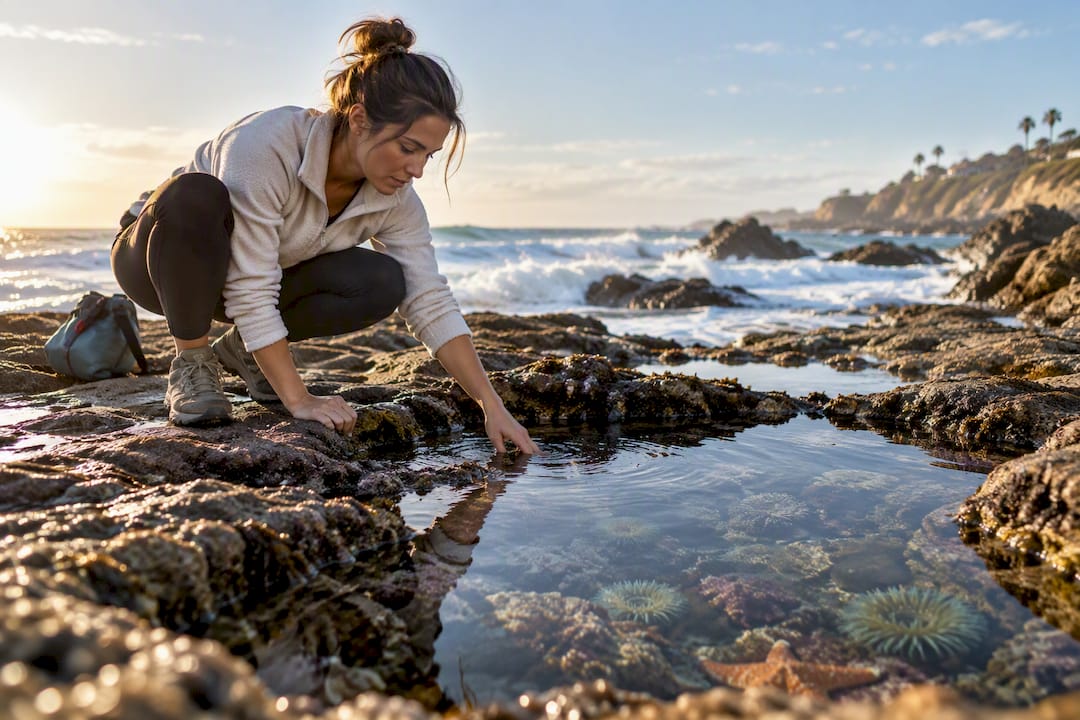
Your best bets are Crescent Bay, Shaw’s Cove, Heisler Park’s Rockpile, Treasure Island, Goff Island, and Wood’s Cove. The single rule that matters most: check the tide tables, aim for a negative low during daylight, and arrive 30 to 45 minutes before the water bottoms out. Laguna sits inside a Marine Protected Area, so look all you want, but nothing gets touched, flipped, or taken home.
TL;DR:
- Visiting during a negative low tide below 0.0 feet in daylight hours maximizes exposure of marine creatures and enhances the tidepool experience.
- The best tide pooling conditions are during winter mornings when negative low tides are most common, and arriving 30 to 45 minutes before the low tide peak is crucial.
- Legal regulations prohibit touching or removing marine life and rocks, with enforcement active and citations possible for violations in the Marine Protected Area.
- Picking a cove depends on current tide conditions, with Shaw’s Cove and Treasure Island offering higher species diversity during ideal low tides.
- Guided docent programs run by the Laguna Ocean Foundation provide valuable educational tours at multiple sites, enhancing safe and responsible tidepool visits.
Table of Contents
- Best Tide Pools in Laguna Beach: A Cove-by-Cove Guide
- How Do You Time a Tide Pool Visit in Laguna Beach?
- What Are the Rules for Visiting Laguna’s Tide Pools?
- Parking, Transit, and Getting to the Pools
- Insider Tips from Local Docents and Regular Visitors
- What Lives in a Tide Pool? A Quick Marine Biology Primer
- How Can You Observe Tide Pool Life Without Disturbing It?
- Are There Guided Tide Pool Tours in Laguna Beach?
- Why Stewardship Is the Real Story Here
- Official Resources to Check Before You Go
- Sources
- FAQ
Best Tide Pools in Laguna Beach: A Cove-by-Cove Guide
Every cove in Laguna has its own personality, and picking the right one depends on how much walking you want to do and what you’re hoping to see. I’ve broken down the six spots that consistently show up on locals’ short lists, all pulled from the city’s official tide pool guidance.
- Crescent Bay (North and South): Beach access is easy, but the real tidepooling happens on the rocky points at either end of the cove. Expect anemones, hermit crabs, and the occasional sea star tucked into shady crevices. The north end reef gets slick, so watch your footing on the rockier corners.
- Shaw’s Cove (North and South): A stairway drops you onto sand, then you walk the rocks toward mussel beds thick enough to crunch underfoot. Divers love this cove for a reason. Peek into the darker crevices at low tide and you might spot an octopus tucked in tight.
- Heisler Park / Rockpile: This is the most convenient stop in town. Parking, restrooms, and a paved bluff-top path sit right above the pools, and the rock formations make for some of the best photos in Laguna.
- Treasure Island: A mix of stairs and a ramp gets you down to a wide, varied pool system below the Montage. Species diversity here tends to run higher than at the smaller coves, and the bluff trail above gives you a scouting view before you climb down.
- Goff Island: Also known as Table Rock Beach, this spot doubles as a protected snorkeling area. The tidepools themselves are less dense than Shaw’s or Crescent Bay, but harbor seals occasionally haul out nearby, which makes it worth the visit on a slow tidepool day.
- Wood’s Cove: Compact and easy to reach, with a smaller tidepool footprint that swimmers and snorkelers share more than dedicated tidepoolers do. Good option if you want a quieter, low-key stop.
The Laguna Ocean Foundation runs free docent programs at several of these sites, rotating locations depending on the day’s tide. If you see a small group gathered around a tidepool with someone pointing things out, that’s likely one of their sessions, and joining in for a few minutes is worth the detour.
How Do You Time a Tide Pool Visit in Laguna Beach?
Not all low tides are created equal. A regular low tide might leave a few inches of water sitting over the reef, while a negative low tide, anything below 0.0 feet, drains the pools enough to expose the crabs, snails, and anemones that make the trip worth it. Winter mornings tend to produce the lowest daylight lows of the year, which is why serious tidepoolers plan around them.
Here’s the exact sequence I use before heading out:
- Pull up NOAA’s tide predictions for the Laguna Beach station and scan the week ahead.
- Find a low tide that lands during daylight hours, ideally one rated below +2.0 feet.
- Plan to arrive 30 to 45 minutes before that low tide hits its lowest point.
- Check the surf report and lifeguard flag conditions the morning of your visit, since a big swell can cancel out an otherwise perfect tide.
Pro Tip: A tide of +1.5 feet on a calm day can outperform a -0.5 foot tide during a big swell, because churned-up water and shifting rocks hide more than they reveal.
High surf periods, common from late fall through early spring, can also close off certain rock areas entirely regardless of what the tide chart says. When in doubt, a five-minute check of the surf report saves you a wasted trip.
What Are the Rules for Visiting Laguna’s Tide Pools?
Laguna’s tidepools sit inside a Marine Protected Area, and that status carries real legal weight. It is unlawful to injure, take, or possess any marine life, rocks, or shells you find in the pools, and that includes the empty shell that looks abandoned. Enforcement is active, and rangers do issue citations.
Beyond the legal baseline, good tidepooling etiquette keeps the ecosystem intact for the next visitor:
- Look, don’t touch. Even a gentle poke can stress or injure a creature that has no way to escape your hand.
- Never flip over rocks. Whatever lives underneath depends on that exact spot staying dark and damp.
- Walk on bare rock or sand, not directly on mussel beds or anemone clusters.
- Keep your voice and your group size down near sensitive pools.
If you see a sign reading “Rocks Closed,” that’s a lifeguard’s call, usually tied to unstable surf, not a suggestion. Skip that section entirely, even if the tide looks perfect.
Pro Tip: Pack closed-toe water shoes rather than flip-flops. Wet rock covered in algae is slicker than it looks, and bare feet or sandals leave you one wrong step from a cut.
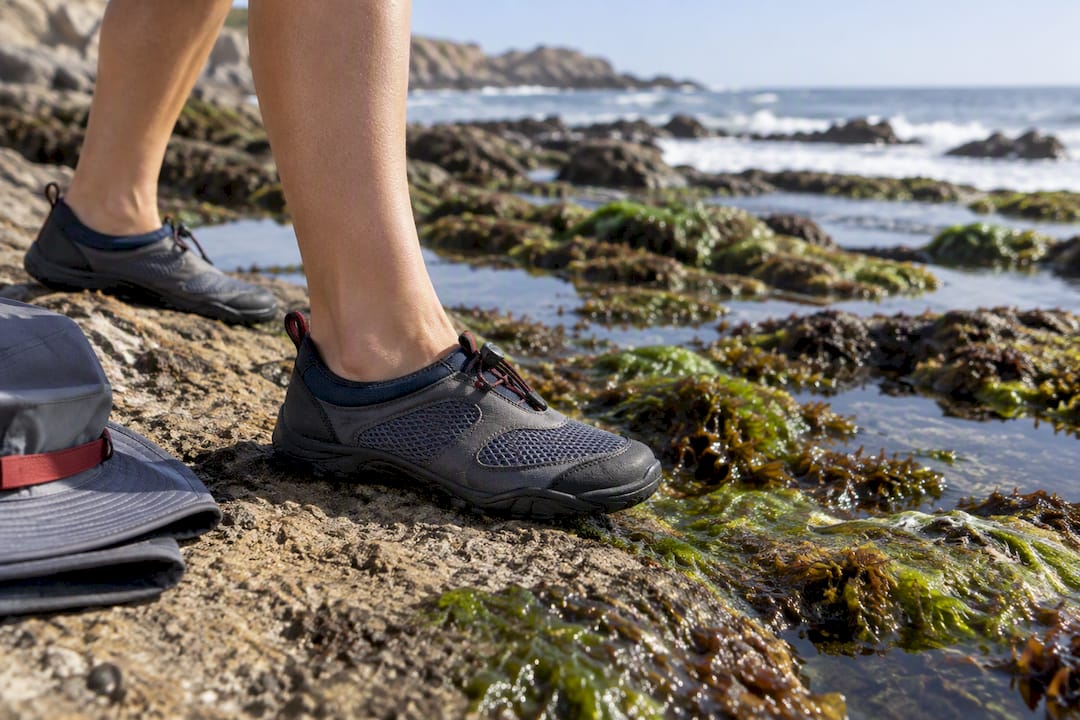
Bring sun protection too. Laguna’s coastal points offer almost no shade, and an hour of tidepooling under a midday sun adds up fast.
Parking, Transit, and Getting to the Pools
Parking is the single biggest headache in Laguna Beach, especially on weekends when every coastal lot fills before 10 a.m. The city’s mobile parking app shows real-time space availability and lets you pay without hunting for meters, which saves real time when you’re racing a tide window.
A few ways to make the logistics easier:
- Use the free Laguna Beach trolley or an OCTA bus route to skip the parking search entirely during summer months.
- Go on a weekday morning if your schedule allows. Crowds thin out dramatically outside weekends and holidays.
- Check access type before you go. Crescent Bay and Heisler Park have gentler paths, while Shaw’s Cove and Treasure Island involve stairs.
- If beach wheelchair access is needed, contact Laguna Beach Marine Safety ahead of your visit to confirm availability.
Earlier seasonal windows, think October through March, also tend to pair lower crowds with better negative low tides.
Insider Tips from Local Docents and Regular Visitors
The biggest mistake newcomers make is picking a “favorite” cove and sticking to it. Docents will tell you the best spot changes daily based on that day’s tide depth and surf, not on reputation. Shaw’s Cove might be dead calm and perfect on Tuesday and unworkable by Friday.
Prioritize negative low tides during daylight over any specific location. If Crescent Bay’s tide isn’t great this weekend but Treasure Island’s is, go where the water is lowest.
Pro Tip: If a wave surges toward you unexpectedly, stand your ground and let it pass rather than running across wet rock. Standing firm is safer than sprinting on a slick surface, and it’s the behavior local safety guidance consistently recommends.
Stay at least 150 feet from any seal hauled out on the rocks, keep group sizes small near sensitive pools, and skip the flash on close-up photos, since it startles skittish creatures like crabs and small fish.
What Lives in a Tide Pool? A Quick Marine Biology Primer
A tidepool is essentially a tiny ocean trapped between tides, and the creatures living there have adapted to survive extremes most marine animals never face: baking sun, crashing waves, and hours stranded without a full water covering. That’s what makes them such a rich teaching tool for kids and curious adults alike.
The intertidal zone breaks into rough bands. Higher up, you’ll find hardy barnacles and periwinkle snails that tolerate long dry spells. Lower down, closer to where the water always reaches, sea anemones, hermit crabs, and sea stars cluster because that zone stays wetter longer.
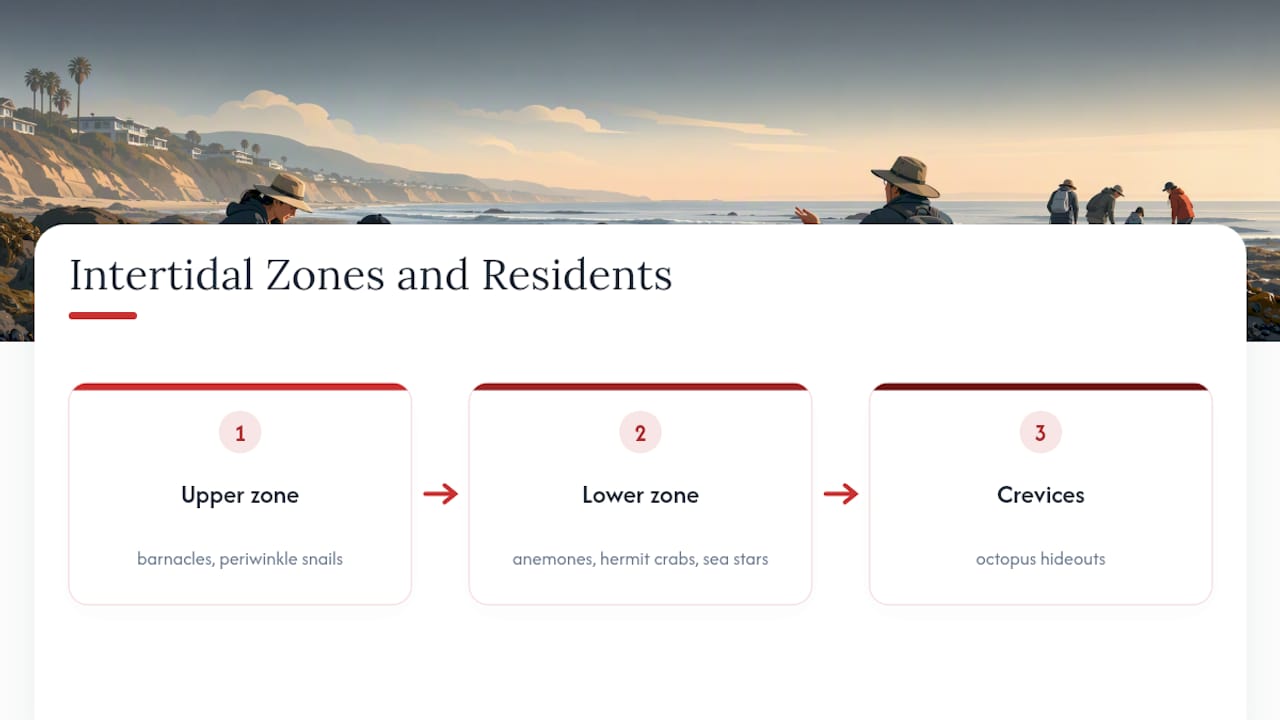
Anemones look like plants but are animals, close relatives of jellyfish, and their tentacles carry stinging cells used to catch tiny prey drifting by. Mussels and barnacles filter seawater for food, which is part of why healthy tidepools signal healthy water overall. Octopuses occasionally tuck into crevices at Shaw’s Cove, using their soft bodies to squeeze into gaps barely wider than a fist.
Every animal in that pool survives on a razor-thin margin of temperature, oxygen, and moisture. That’s the real reason the touching ban matters beyond the legal side. A single handprint can transfer oils and bacteria that a sea star or anemone has no way to filter out.
How Can You Observe Tide Pool Life Without Disturbing It?
Watching quietly does more for a tidepool’s health than most visitors realize. Beyond the no-touch rule, a handful of habits make a real difference in how much stress you put on the animals sharing that small patch of rock.
Photography is one of the best ways to engage without contact, but it has its own etiquette. Get low and shoot from the pool’s edge rather than leaning your body weight onto the rock shelf itself, since crushed algae and disturbed sediment can smother filter feeders nearby. Skip the flash. Bright bursts of light startle crabs and small fish enough that they’ll bolt for cover and stay hidden for the rest of your visit.
Noise travels differently underwater and along rock, so loud talking or shouting near a pool can send skittish creatures retreating. Keep your group’s volume down, especially with kids who get excited at the first sight of a hermit crab.
Move slowly and predictably. Sudden shadows or fast movement read as threats to animals that have survived millions of years by assuming anything fast-moving is a predator. Give other visitors room too. A crowded pool edge means more shifting weight on fragile rock and less room for anyone to actually see anything.
If you’re set on a close-up shot, a zoom lens or phone camera held steady beats crouching directly over the water every time.
Are There Guided Tide Pool Tours in Laguna Beach?
Yes, and they’re free. The Laguna Ocean Foundation runs docent-led education sessions at multiple tidepool sites around town, reporting that these programs reach more than 70,000 visitors a year. Docents show up with tide charts already checked, so joining one takes the guesswork out of your visit entirely.
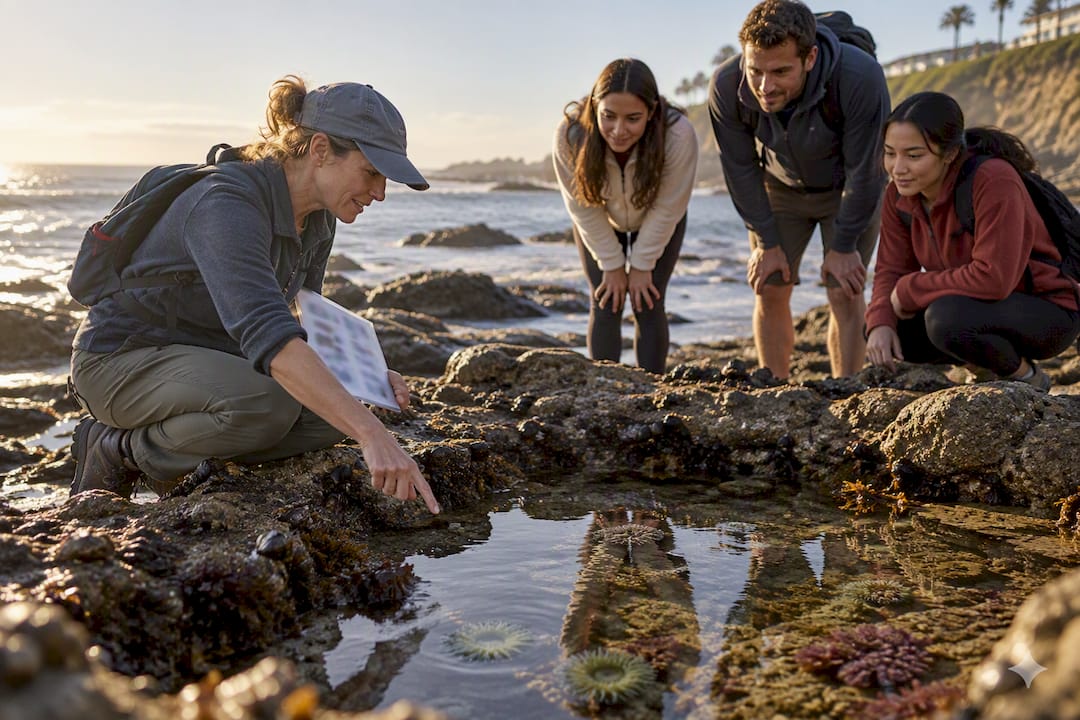
Sessions rotate based on which cove has the best tide that day, which lines up with the flexible, go-where-the-tide-is-best approach experienced tidepoolers already use. Schedules shift seasonally, so checking the foundation’s site before you head out beats showing up and hoping.
If you want a broader state park experience with interpretive programs nearby, Crystal Cove State Park runs its own year-round docent activities a short drive south, worth pairing with a Laguna trip if you’re making a full day of it.
Even without a formal tour, docents stationed at popular pools during low tide windows are usually happy to answer questions on the spot. Look for the volunteer badge and don’t be shy about asking what you’re looking at.
Why Stewardship Is the Real Story Here
I keep coming back to one number: 70,000-plus visitors a year pass through Laguna Ocean Foundation’s docent programs. That’s not a niche hobby. That’s a community that shows up to protect a few square miles of rock and water most people would walk past without a second look.
Follow the MPA rules, not because a sign says to, but because these pools recover slowly and don’t need our help disappearing faster. Download a local tidepool guide before you go, join a docent walk if the timing lines up, and share what you find, just not the animals themselves.
— Joshua
Official Resources to Check Before You Go
For real-time tide timing, use NOAA’s Laguna Beach station. For site lists and legal rules, check the city’s tide pool page. For docent schedules and site education, visit the Laguna Ocean Foundation. For a nearby state park option, see Crystal Cove State Park.
If you’re planning a bigger coastal itinerary, our guide to tide pools in San Diego covers similar timing strategies further south, and SoCal Sights’ full activity guide rounds out the rest of your day once the tide comes back in. Local businesses along the coast, from cafés to gear shops, can advertise directly with SoCal Sights to reach visitors planning trips just like this one.
Sources
- Tidepool education | Laguna Ocean Foundation
- Tide Pools, Research and Education | Laguna Beach, CA
- NOAA tide predictions
FAQ
Where Are the Best Tide Pools in Laguna Beach?
Crescent Bay, Shaw’s Cove, Heisler Park’s Rockpile, Treasure Island, Goff Island, and Wood’s Cove top the city’s official list. Heisler Park offers the easiest access, while Shaw’s Cove and Treasure Island reward the stair climb with denser marine life.
Can You Swim in the Laguna Beach Tide Pools?
Swimming isn’t the point of a tidepool visit, and wading into shallow rocky pools risks both injury and damage to fragile marine life. If you want to swim, Wood’s Cove and Goff Island have adjacent sandy or protected water better suited for it, with the tidepool areas kept for walking and observing.
How Do You Get to the Lesser-Known Tide Pools in Laguna Beach?
Goff Island and the quieter stretches of Wood’s Cove see fewer crowds than Heisler Park or Crescent Bay, and both have public beach access points listed on the city’s tidepool page. Arriving right at the 30 to 45 minute mark before low tide, rather than after, also helps you beat the crowds that gather once the water’s already dropped.
What’s the Best Tide Pool Spot in Orange County?
Within Laguna Beach specifically, Shaw’s Cove and Treasure Island consistently show the widest range of species. Just south, Crystal Cove State Park offers a comparable experience with its own docent-led programs if you want to extend the trip.
Do You Need a Negative Low Tide to See Tide Pool Life?
No, but it helps significantly. A regular low tide below +2.0 feet still exposes plenty of marine life, while a negative low tide drains the pools even further and reveals species you’d otherwise miss entirely, according to local docent guidance.