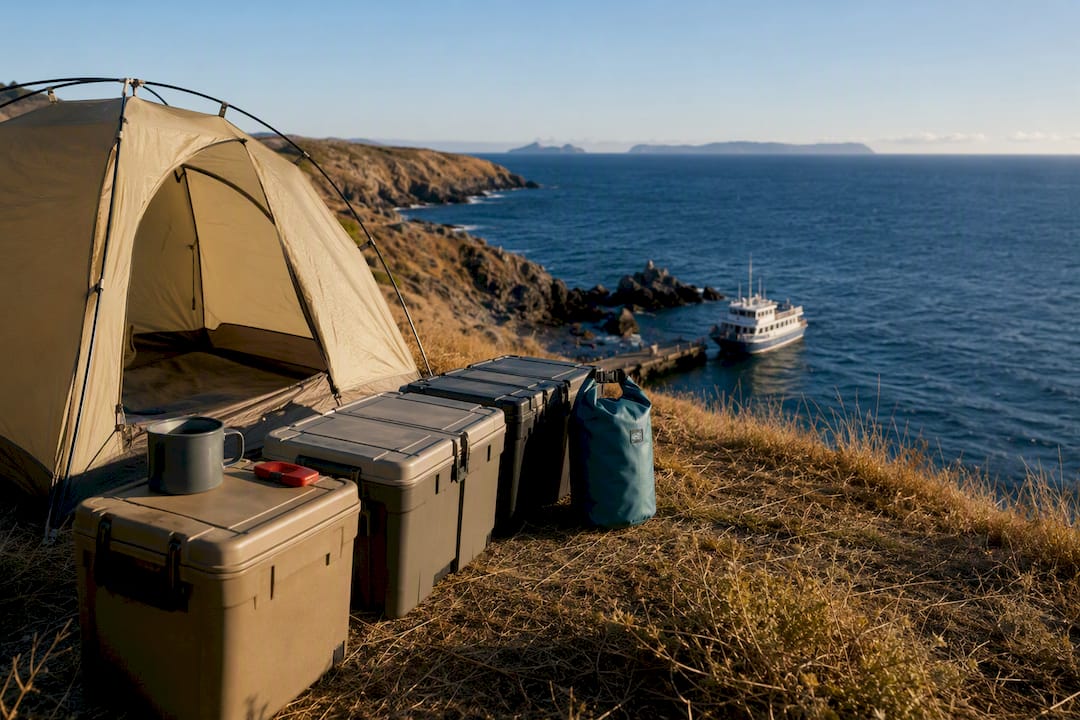
Yes, you can camp on all five Channel Islands year-round, but only with a confirmed campsite reservation and a matching boat ticket in hand. The catch most first-timers miss: booking one doesn’t guarantee the other, and every site is primitive with no stores, no rentals, and almost no cell signal. If you plan ahead and pack like you’re on your own out there (because you are), it’s one of the best camping trips in Southern California.
TL;DR:
- Only certain campsites have potable water, with Anacapa and Water Canyon on Santa Rosa offering the only reliable on-site sources.
- Booking both campsite and boat ticket separately and early is crucial, as availability frequently mismatches and cancellations happen often due to weather.
- Landings often require climbing ladders without on-island transport, so pack lightweight, manage gear carefully, and prepare for shore-only movement.
- Visitors should plan for wind, pack low-profile tents, extra stakes, and emergency supplies, as wind speeds can reach up to 30 knots without warning.
- Strict Leave No Trace practices are essential to protect fragile ecosystems, including staying on trails, packing out all trash, and observing wildlife from a distance.
Table of Contents
- Which Channel Island Should You Camp On?
- How Do You Reserve a Campsite and Boat Ticket?
- What Happens When You Land: Gear and Boat Logistics
- Packing Smart: Water, Wind, and Emergency Supplies
- How Many Days Should You Book for Each Island?
- Local Staging Tips for Channel Islands Camping
- What Permits and Rules Apply Beyond Reservations?
- What If You Need Medical Help on the Islands?
- How Do You Practice Leave No Trace on the Islands?
- What Wildlife Should You Watch For on the Islands?
- How Do You Handle Trash and Waste While Camping?
- A Trip Worth the Planning Effort
- Plan the Rest of Your SoCal Trip With SoCal Sights
- Sources
- FAQ
Which Channel Island Should You Camp On?
Each island has its own personality, and picking the right one changes everything about how your trip feels. Here’s the breakdown that actually matters for planning.
Anacapa has just 7 cliff-top sites reached by a staircase from the landing. There’s no potable water, so you’re carrying every drop in, but the payoff is a short boat ride and dramatic ocean views right from your tent door. It’s a great pick for a first trip or a quick overnight.
Santa Cruz Island offers two very different experiences. Scorpion Canyon Campground is the most beginner-friendly option in the park, with 25 individual sites plus group sites and, crucially, potable water on-site. Prisoners Harbor Campground, on the other side of the island, is far more primitive with no water and less foot traffic, better suited to campers who want solitude.
Santa Rosa Island’s Water Canyon Campground also has potable water, but it sits in one of the windiest corners of the park. Backcountry beach camping is limited and requires extra coordination. Check conditions before you book: wildfire damage closed Water Canyon Campground and parts of the backcountry through at least October 12, 2026.
San Miguel Island is the most remote and exposed campground in the park, with a steep hike from the landing and mandatory paperwork before you go.
Santa Barbara Island is small, windswept, and primitive, but it’s a solid choice for a short, low-key overnight if the seas cooperate.
Across all five islands, expect a standard site fee of roughly $15 per night, tent-only camping, bear-proof food storage lockers, and zero trash service. Whatever you bring in, you carry back out.
How Do You Reserve a Campsite and Boat Ticket?
Booking a Channel Islands camping trip is really two separate reservations that have to line up perfectly. Miss that detail and you’ll show up to a beautiful island with nowhere to pitch your tent, or a reserved site with no way to reach it.
- Reserve your campsite on Recreation.gov. Bookings open up to six months in advance, and most individual sites run about $15 per night.
- Book your boat seats immediately after, through Island Packers or another authorized concessionaire. Seats sell out independently of campsite availability, so confirming a site is no guarantee there’s a boat to get you there.
- Handle island-specific paperwork early. San Miguel requires a permit and liability waiver tied to the island’s history of unexploded ordnance, and private boaters must self-register at Nidever Canyon trail head rather than receive forms through a concessionaire.
- If your target dates are booked, try midweek travel, shoulder-season months, or a smaller group size. Smaller parties often find openings faster than groups of six or more.
- Build in a buffer plan. Sea conditions cause boat cancellations more often than most campers expect, so know your backup dates before you leave home.
Pro Tip: Book your boat and campsite in the same sitting if you can. Waiting even a day between the two is how most double-booking headaches happen.
What Happens When You Land: Gear and Boat Logistics
Getting off the boat is its own skill on some islands. Many landings use a live-boat transfer rather than a dock, which means climbing a ladder with your hands completely free, wearing close-toed slip-resistant shoes, and having your PFD on before you go. Crew stage your gear separately, so don’t try to carry a backpack up that ladder.
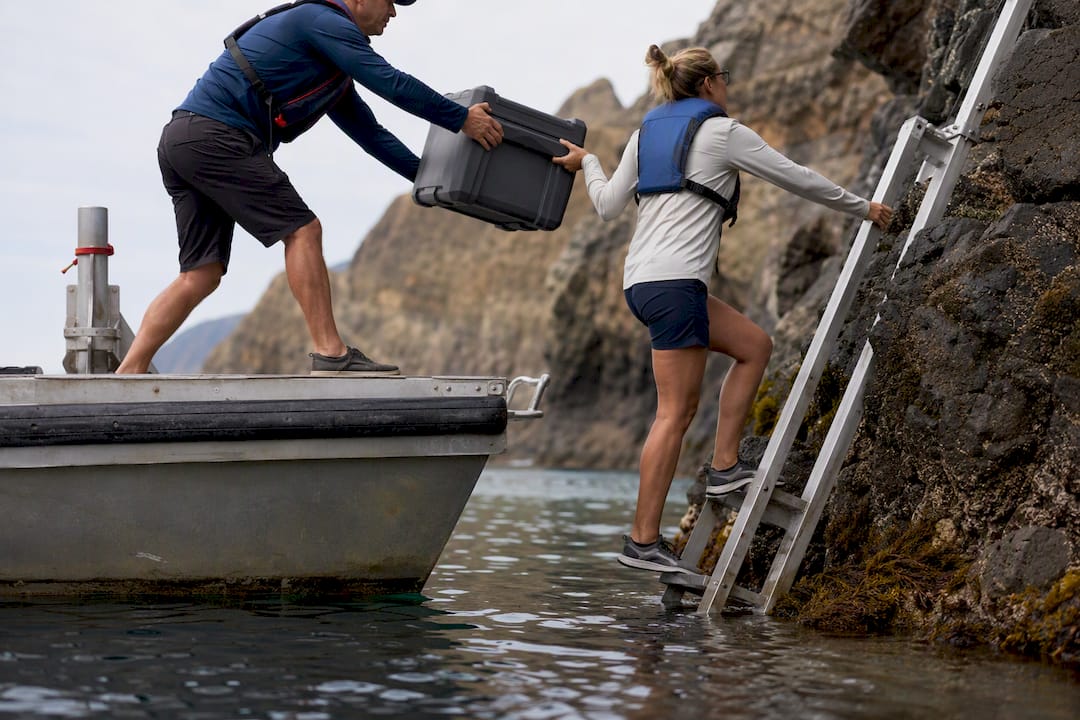
That’s why hard-sided containers, often called megabags or action packers, work better than duffel bags. Keep containers to a manageable weight (around 30 pounds is a good ceiling) so crew can load and unload them without a struggle.
Once you’re on land, everything moves by foot. Hikes from the landing to your campsite typically run a quarter mile to a mile and a half, depending on the island, and there’s no on-island transport of any kind. Pack accordingly.
Biosecurity rules apply everywhere in the park:
- Clean your shoes and gear before boarding to avoid introducing seeds or pests.
- Leave plants, soil, and untreated wood on the mainland.
- Skip the used cardboard boxes. They can carry invasive insects.
Packing Smart: Water, Wind, and Emergency Supplies
Water is the single biggest planning failure on Channel Islands camping trips. Only Scorpion Canyon and Water Canyon offer potable water; every other campground has none. Plan on at least one gallon per person per day, and pack more if you’re staying multiple nights on Anacapa, Prisoners Harbor, San Miguel, or Santa Barbara.
Wind is the second big variable, especially on the outer islands. Santa Rosa and San Miguel can see 30 knot winds without much warning, so a tall, flimsy tent is asking for trouble.
- Bring a low-profile dome tent rather than anything with a tall silhouette.
- Pack extra stakes and guyline cord, and tie off to picnic tables or provided windbreaks where available.
- Skip campfires entirely (they’re not allowed) and bring an enclosed gas camp stove instead.
- Store all food in the provided lockers, every time, even for a quick nap.
- Pack an extra day or two of food beyond your planned stay.
Pro Tip: Treat every Channel Islands trip like it might run a day long. Sea conditions cause cancellations often enough that extra food and a flexible mindset save the trip more than any piece of gear does.
That last point isn’t paranoia. Rangers and experienced visitors alike stress total self-reliance out there: no stores, no rental gear, no quick fix if you forgot something.
How Many Days Should You Book for Each Island?
Boat schedules dictate your itinerary more than your own preferences do, so plan the trip length around the island, not the other way around.
- Anacapa or Santa Cruz, 1 night. Scorpion Canyon is the most flexible option in the park for a quick overnight, thanks to frequent boat schedules and on-site water.
- Santa Rosa, 3 nights minimum. Boat access is less frequent, and the windy conditions mean you’ll want buffer time in case of delays.
- San Miguel, 4 nights or more. Between the steep hike, permit requirements, and limited boat schedule, this island rewards a longer, slower visit rather than a quick in-and-out.
A one-night Santa Cruz trip works well for beginners testing out beach camping Channel Islands style. A three-day Santa Rosa trip suits campers chasing solitude and willing to build in weather flexibility. A four-day San Miguel trip is for campers who’ve already done the easier islands and want the full backcountry experience.
Local Staging Tips for Channel Islands Camping
Most boats to the islands leave from Ventura or Oxnard, and getting there the night before beats a stressful morning drive. Staying nearby means you can be first in line for parking and loading, which matters when you’re hauling gear-filled containers down a dock.
Fill your water containers before you leave the mainland. Local outfitters near the harbor sell sturdy, stackable jugs that hold up better than the flimsy ones from a big-box store. If you’re already road-tripping through the region, our Channel Islands day trip guide covers similar staging logic for a shorter visit.
Midweek departures fill up slower than weekends, and checking the conditions page the morning of departure can save you from a wasted trip to the harbor.
What Permits and Rules Apply Beyond Reservations?
Channel Islands National Park charges no separate entrance fee. Your reservation and boat ticket cover your access, though the campsite fee itself functions as your park use fee for that stay.
Fishing is allowed in park waters under California Department of Fish and Wildlife regulations, and anyone fishing needs a valid state fishing license. Marine Protected Areas surround portions of several islands, including sections around Anacapa and Santa Barbara, where fishing and take of any kind is restricted or banned entirely. Check current MPA boundaries before you cast a line, since they don’t always match the island’s camping boundaries.
Collecting is where a lot of well-meaning campers slip up. Every rock, shell, piece of driftwood, and plant on the islands stays exactly where you found it. This isn’t just etiquette. It’s federal law inside a national park, and rangers do enforce it. That includes seemingly harmless souvenirs like sea glass or an interesting piece of kelp.
San Miguel’s permit and waiver process exists for a specific reason: parts of the island have a history tied to unexploded ordnance from past military use, and the waiver acknowledges you understand the restricted zones. Private boaters headed there need to self-register for that paperwork rather than assume a concessionaire will hand it to them.
What If You Need Medical Help on the Islands?
There are no hospitals, clinics, or resident medical staff on any of the five islands, and that fact should shape your first aid kit and your risk tolerance. Rangers stationed on some islands can respond to emergencies and coordinate evacuation, but response times depend entirely on weather, boat availability, and how far your campsite sits from the landing.
For a serious medical emergency, evacuation typically means a Coast Guard or park service boat, and rough seas can delay that response significantly. Cell service is spotty to nonexistent across most of the park, so don’t count on calling for help the way you would on the mainland.
Before you go, tell someone on the mainland your exact itinerary and expected return date. Pack a first aid kit sized for your group and trip length, including basics for cuts, sprains, and dehydration, since heat and rough terrain cause more problems on these islands than anything exotic. If anyone in your group has a medical condition that could flare up (asthma, allergies, a heart condition), pack their medication with a few extra days’ buffer in case your return boat gets delayed.
Know before you go which island you’re on and what the nearest ranger station is. That information matters more out here than it does almost anywhere else in Southern California.
How Do You Practice Leave No Trace on the Islands?
The seven Leave No Trace principles apply everywhere, but a few carry extra weight on the Channel Islands because the ecosystems here are unusually fragile and, in several cases, home to species found nowhere else on Earth.
Stay on designated trails, even when a shortcut looks tempting. The islands host endemic plants that recover slowly from foot traffic, and erosion on these slopes happens fast once vegetation gets disturbed.
Camp only in designated sites, never in the backcountry beyond marked boundaries (Santa Rosa’s limited backcountry beach zones being the exception, and only where explicitly permitted). Pack out every scrap of trash, including food scraps and fruit peels that would biodegrade fine on the mainland but disrupt the island’s balance without natural decomposers to handle them at scale.
Leave what you find. That covers shells, rocks, plants, and anything else that looks like a good souvenir. Respect wildlife by observing from a distance rather than approaching for a photo. And keep noise down, especially near seabird nesting areas, where a startled colony can abandon a whole nesting site over a single disturbance.
What Wildlife Should You Watch For on the Islands?
The Channel Islands are one of the most important seabird nesting grounds on the West Coast, and that status comes with real responsibility for campers. Several islands host nesting colonies of Scripps’s murrelet, Cassin’s auklet, and Western gull, and disturbing a nesting site, even unintentionally, can cause birds to abandon eggs or chicks.
Keep a wide distance from any nesting area you spot, and never approach a bird that appears injured or grounded. Report it to a ranger instead of handling it yourself.
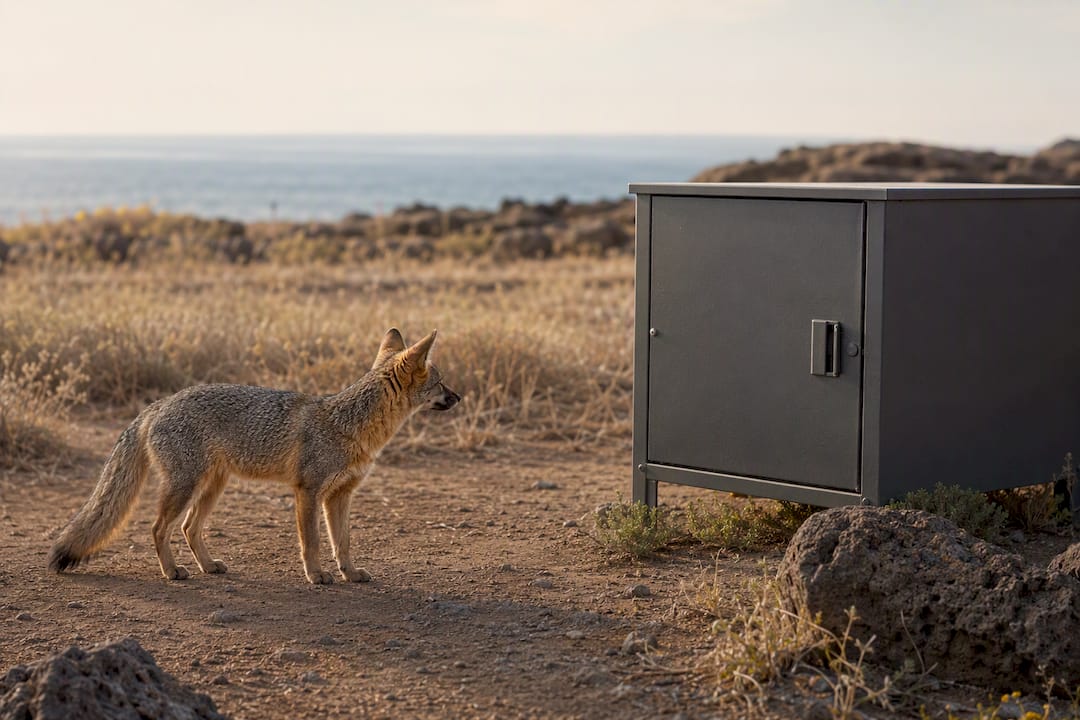
The island fox, found only on these islands and nowhere else, is curious and increasingly comfortable around campers, which is exactly the problem. Never feed a fox, and secure every scrap of food in the provided lockers, because a fox that learns campsites mean food becomes a fox that raids tents. Store trash the same way.
On the water and shoreline, you may spot seals or sea lions hauled out on rocks or beaches. Give them at least 50 yards of space; approaching a resting marine mammal is both dangerous and, in most cases, a violation of federal protections under the Marine Mammal Protection Act. Snakes and other small wildlife are generally harmless but worth watching for around rocky trail sections, particularly in warmer months.
How Do You Handle Trash and Waste While Camping?
Every one of the five islands runs on a strict pack-it-in, pack-it-out system, and there’s no exception for food waste, wrappers, or anything else you bring. None of the campgrounds offer trash pickup, so whatever you carry to your site leaves with you at the end of the trip.
Bring dedicated trash bags separate from your other gear, and double-bag anything with food odor to avoid attracting foxes or gulls overnight. A sealed, hard-sided container works even better for the last night, when you’re consolidating trash before the hike back to the landing.
Restroom facilities on most campgrounds are pit toilets, and they’re there specifically so campers don’t need to manage human waste themselves. Use them, and don’t wander off to improvise elsewhere, since the fragile soil and vegetation on these islands can’t absorb waste the way denser mainland terrain can. If you’re doing any backcountry camping where permitted (limited zones on Santa Rosa), follow standard wilderness waste protocols and pack out toilet paper rather than burying it.
Recycling isn’t available on the islands either, so anything you’d normally recycle at home goes in your trash bag and comes back with you. Plan your food packaging with that in mind. Fewer wrappers and containers means less to carry out on a hike that’s already loaded down with camping gear.
A Trip Worth the Planning Effort
The Channel Islands reward exactly the kind of camper willing to do the homework: reserve early, pack like nobody’s coming to help, and respect the closures when they happen. None of that logistics work is a reason to skip the trip. It’s the reason the islands still feel wild only a boat ride from the mainland. Book your dates, watch the conditions page, and go.
— Joshua
Plan the Rest of Your SoCal Trip With SoCal Sights
Booking a campsite and a boat ticket handles the logistics, but figuring out where to stage your trip, what to do with a free afternoon before departure, or where to grab a real meal near the harbor takes local knowledge that reservation sites don’t offer. That’s where SoCal Sights comes in, as a planning companion rather than a booking service.

We curate the kind of hidden-gem recommendations, staging tips, and community-submitted hacks that make a Channel Islands trip smoother on the mainland side, before you ever step on a boat. Our Channel Islands day trip guide breaks down timing and staging logic if you want a shorter visit first, and our membership page connects local businesses and event organizers with readers actively planning Southern California adventures like this one. If you run a business near the harbor towns that serve island campers, or you’re building out event content for outdoor travelers, consider listing on local platforms to boost your visibility.
Sources
- Camping – Channel Islands
- Plan Your Visit – Channel Islands National Park
- Santa Rosa Island fire recovery – Channel Islands NPS
FAQ
Which Channel Island Is Best to Camp On?
Scorpion Canyon Campground on Santa Cruz Island is the best starting point for most campers, since it has potable water on-site and frequent boat access. Anacapa is a close second for a quick, dramatic overnight if you’re comfortable carrying in all your own water.
How Expensive Is It to Get to Channel Islands?
Campsite fees run about $15 per night through Recreation.gov, but boat transportation through Island Packers is a separate cost booked apart from your site. There’s no separate park entrance fee beyond your reservation and boat ticket.
What Is the Best Month to Visit Channel Islands?
Late spring through early fall tends to bring calmer seas and fewer boat cancellations, though outer islands like Santa Rosa and San Miguel can see strong winds any time of year. Checking the current conditions page before you book matters more than picking a specific month.
How Many Days Do You Need for Channel Islands?
One night works fine for Anacapa or Scorpion Canyon on Santa Cruz Island. Santa Rosa generally needs three nights and San Miguel needs four or more, since boat access to those outer islands runs less frequently and weather delays are common.
Does SoCal Sights Handle Channel Islands Camping Reservations?
No, SoCal Sights isn’t a reservation service. Reservations go through Recreation.gov and Island Packers directly, while SoCal Sights offers local staging tips, itinerary ideas, and community-submitted planning advice to round out your trip.