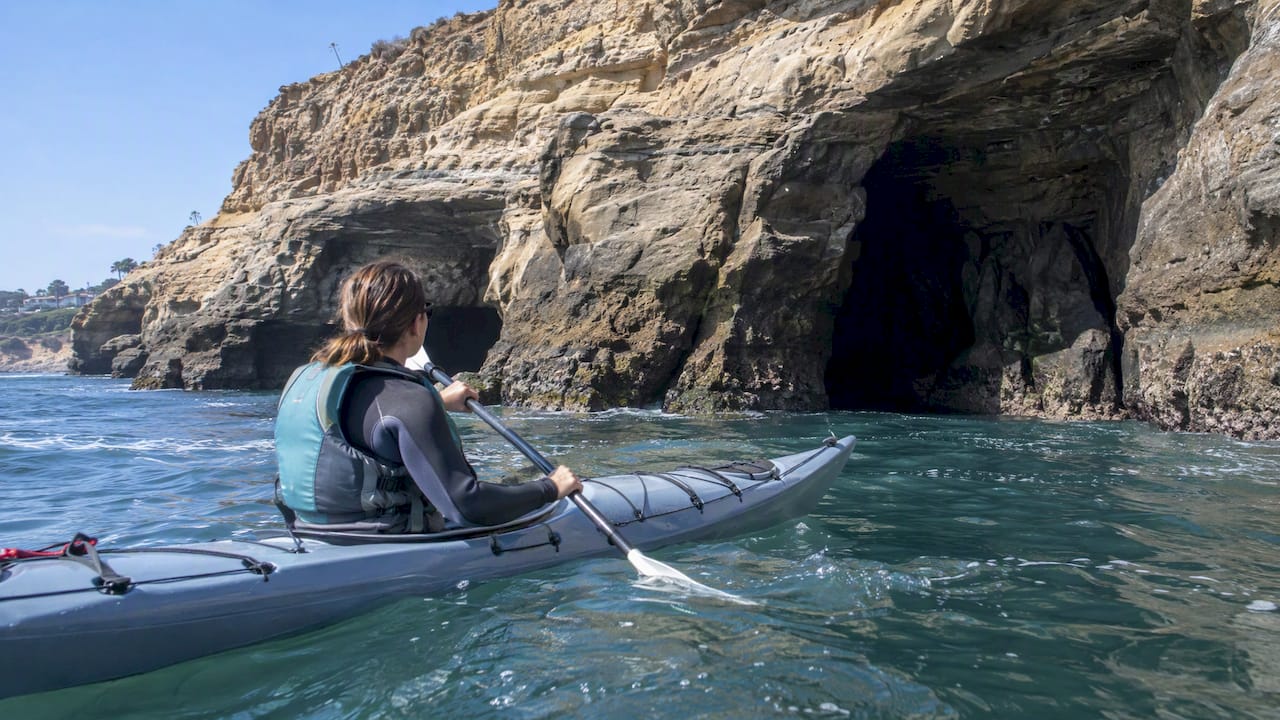
Seven sea caves, White Lady, Little Sister, Shopping Cart, Sea Surprize, Arch, Sunny Jim, and Clam, sit along the sandstone bluffs between La Jolla Cove and La Jolla Shores. Most visitors see them by walking the Sunny Jim land tunnel, booking a guided kayak tour, snorkeling from the Cove, or simply watching from the clifftop path. Since the caves sit inside a protected marine reserve, wildlife distance rules apply no matter which option you pick.
TL;DR:
- Visiting Sunny Jim by land is the easiest option with a ticketed tunnel, but it only grants access to one cave and involves stairs.
- Guided kayak tours provide the closest water-level views of ocean-facing caves and are safer than DIY trips due to real-time condition assessments.
- Water access to the caves depends heavily on calm swell and low tide, making early mornings and checking tide charts essential for safe visits.
- Marine reserve rules require maintaining at least 50 yards from seals and sea lions and avoiding cave entry during rough surf for safety and wildlife protection.
- Risks inside caves include surge, submerged rocks, and cold water, necessitating proper gear, guided trips, and respecting ocean conditions for safe exploration.
Table of Contents
- How do you choose the best way to see the caves?
- The seven caves, east to west
- How each access method actually works
- What rules protect you and the wildlife here
- When should you plan your visit?
- How old are the caves, and where does the Sunny Jim name come from?
- What should you pack and plan for?
- A few things I’ve learned from timing visits here
- What makes each cave worth seeking out
- What hazards should you watch for inside the caves?
- How is this area protected, and what can you do to help?
- Who are good guided tour providers, and what do they cost?
- How does weather change what you can see?
- Why visiting responsibly matters
- Plan the rest of your San Diego trip with us
- FAQ
- Sources
How do you choose the best way to see the caves?
Your pick really comes down to how close you want to get and how comfortable you are in the water. Each method has a different trade-off between ease, cost, and the kind of view you’ll walk away with.
- Sunny Jim via The Cave Store: a ticketed tunnel and stairway that gets you into one cave on dry land, ideal for families, kids, or anyone who’d rather skip the ocean altogether.
- Guided kayak tours: the closest look at the ocean-facing caves, led by someone who knows the swell patterns and entry points.
- Snorkeling or scuba from La Jolla Cove: a good option on calm days for underwater views of the reef and cave mouths.
- Bluff viewpoints or boat trips: the easiest choice when surf is up or you just want photos without getting wet.
Entering the other six caves on foot is rare and mostly limited to the lowest tides of the year, and even then it carries real risk from surge and slippery rock. Most locals treat DIY cave entry as something to skip in favor of a guide.
The seven caves, east to west
According to City of San Diego archival records, the seven caves run in this order, carved into sandstone roughly 75 million years old, with openings that face north toward Scripps Pier and La Jolla Shores.
- White Lady: ocean-facing, named for pale streaks of mineral staining on its walls, viewable mainly by kayak or boat.
- Little Sister: a smaller ocean-facing cave tucked near White Lady, best spotted from the water at low tide.
- Shopping Cart: ocean-facing, named for debris once lodged in its mouth, a popular kayak photo stop.
- Sea Surprize: a narrow ocean-facing opening that surprises paddlers with a sudden interior chamber.
- Arch (Arches): ocean-facing with a dramatic rock arch visible from both water and the clifftop trail.
- Sunny Jim: the only cave with a reliable land entrance, reached through a tunnel and staircase at The Cave Store.
- Clam: ocean-facing, named for its rounded, shell-like opening near the western edge of the cluster.
Sunny Jim stands apart as the one cave almost anyone can visit without a boat, snorkel gear, or paddling experience.
How each access method actually works
- Sunny Jim tunnel: buy a ticket at The Cave Store on Coast Boulevard, then walk down roughly 145 hand-carved steps through the tunnel to a platform inside the cave. Stairs make this option tough for strollers or wheelchairs.
- Guided kayak tours: most launch from La Jolla Shores or the Cove and paddle along the bluffs, pausing at cave mouths when swell allows. Guides read conditions in real time and know which caves are safe to approach that day, which is why we’d rather point readers toward guided kayak trips than a solo outing.
- Boat or coastal walk: view the caves from offshore or from the clifftop path above Coast Boulevard, a solid backup when the water’s too rough for anything else.
- Extreme low tide: a handful of days each year bring tides low enough to expose cave floors, but currents and slick rock make foot access genuinely rare and risky.
What rules protect you and the wildlife here
La Jolla Cove sits inside an ecological reserve, and City rules prohibit fishing or removing anything from the water or rocks. At Point La Jolla, the City recommends staying at least 50 yards from seals and sea lions hauled out on the rocks, since getting closer can count as harassment under federal law.
City reports describe a clear shift toward active management at the Cove, with expanded ranger presence and new signage rolled out through 2024 and 2025 to keep people and marine mammals apart. That means more visible enforcement than you might remember from past visits.
- Keep well back from hauled-out animals, even if they look unbothered by nearby swimmers.
- Watch for seasonal closures at Point La Jolla and Children’s Pool during pupping season.
- Skip cave entry entirely in rough surf, and lean on a guided tour when you’re unsure about conditions.
When should you plan your visit?
Water access to most of the caves depends on calm swell and a low tide, so checking a local tide chart before you go saves a wasted trip. Mornings tend to bring calmer water and thinner crowds, and arriving early also means an easier time finding parking near the Cove.
- Check tide charts and swell forecasts the morning of your visit, not days ahead.
- Aim for early morning, both for calmer conditions and lighter foot traffic.
- Expect heavier ranger presence and possible closures during pupping season.
- Check the lifeguard and City pages same-day for any posted closures.
How old are the caves, and where does the Sunny Jim name come from?
The caves formed as ocean waves wore away sandstone laid down roughly 75 million years ago, slowly hollowing out the openings we see today along the La Jolla bluffs. City archival records reference the cluster under the older name “Mammoth Caves,” with petitions and tunneling proposals dating back to the early 1900s.
Gustav Schultz is credited with carving the tunnel that now connects The Cave Store to Sunny Jim, giving visitors a dry route into one of the seven caves. Local lore ties some of the caves to smuggling during Prohibition, but we’d treat that as neighborhood storytelling rather than documented history unless archival records say otherwise.
What should you pack and plan for?
A little preparation goes a long way here, since the Cove gets busy and parking disappears fast on warm days.
- Reef-safe sunscreen, since you’re swimming or paddling near a protected reef.
- Water and sturdy water shoes for slippery rocks and tide pools.
- A dry bag for your phone or camera, especially on a kayak.
- Cash or a parking app, since street spots near the Cove fill up quickly.
Restrooms, showers, and a lifeguard station sit right at La Jolla Cove, but accessibility varies by method: Sunny Jim involves stairs, and kayak operators differ in what accommodations they can offer.
Pro Tip: Book your kayak tour or Sunny Jim ticket a day ahead on weekends, since both sell out by mid-morning once the parking lots fill.
A few things I’ve learned from timing visits here
When you call a kayak outfitter, ask about their cancellation policy for rough swell and whether the guide adjusts the route based on morning conditions, since that’s the detail that separates a great trip from a soggy, cave-less one. For quieter views, the clifftop path past the Cove toward Point La Jolla gets far less foot traffic than the main overlook. Pair your visit with nearby tide pools for a full coastal morning.
What makes each cave worth seeking out
Sunny Jim draws the most visitors simply because it’s the only cave you can walk into, and the view out through its mouth toward the open Pacific is worth the climb down. Arch stands out above water too, since its rock archway is visible from the clifftop trail even if you never get in a kayak or boat.
Shopping Cart and Sea Surprize reward paddlers willing to get close: Shopping Cart’s mouth narrows into a dim chamber, while Sea Surprize opens into a surprisingly roomy interior once you’re past the entrance. White Lady and Little Sister sit near each other and are often paddled as a pair, their pale mineral streaks and smaller openings making them easy to tell apart once you’ve seen both. Clam, the westernmost cave, rounds out the group with a shell-shaped opening that catches good afternoon light for photos.
Wildlife sightings vary by season and day, but the reef around these caves supports garibaldi, leopard sharks in shallow water nearby, and the seals and sea lions that haul out on the rocks above the waterline. None of that is guaranteed on any single visit, but it’s part of why guides keep paddling the same stretch of coast year after year.
What hazards should you watch for inside the caves?
Surge is the biggest risk: waves that look mild from shore can push a kayak or swimmer into cave walls, and the swell inside a cave often feels stronger than it did outside. Submerged rocks near cave mouths are another hazard, especially at low tide when they sit just below the surface.
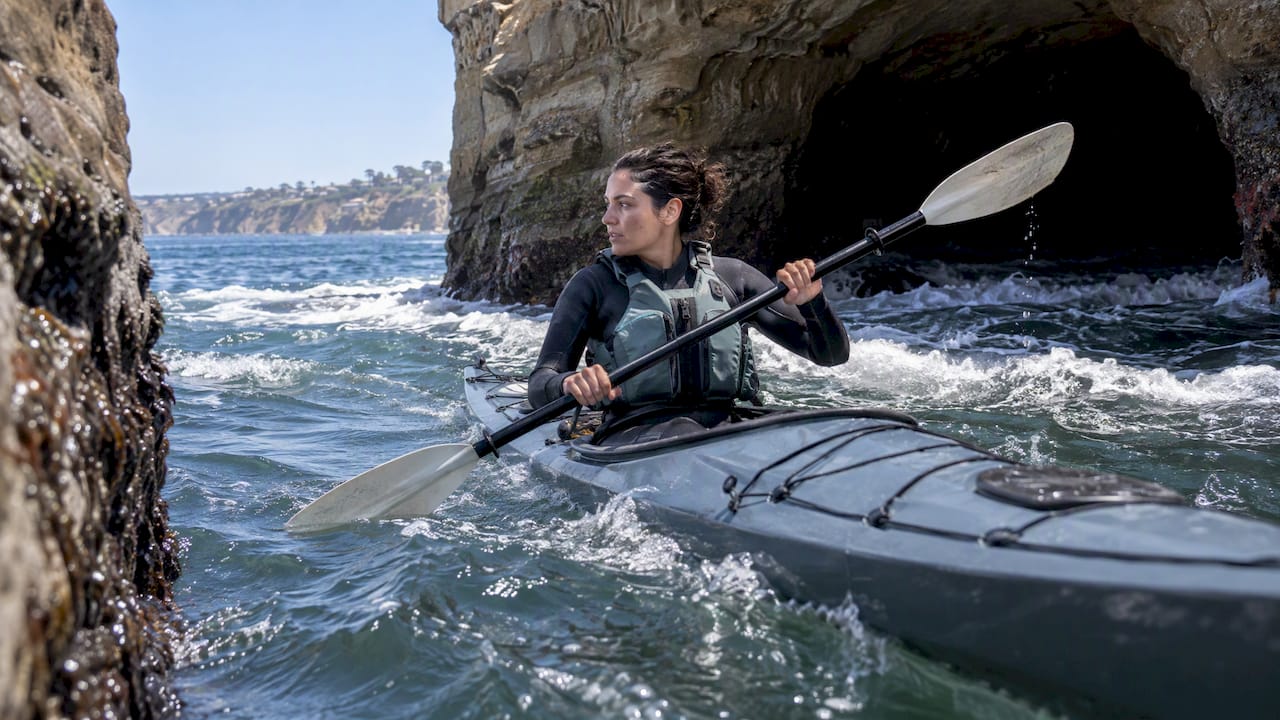
If you’re snorkeling or kayaking and a set of waves rolls in while you’re near a cave entrance, the safest move is to paddle or swim away from the opening rather than toward it, since backwash can trap you against rock. Anyone in distress near the Cove should signal the lifeguard tower rather than attempt a solo rescue, and lifeguard stations at the Cove are staffed specifically because conditions here can shift fast.
Cold water is an underrated risk too. Even on a warm day, Pacific water temperatures can bring on fatigue or mild hypothermia faster than swimmers expect, which is one more reason a wetsuit or guided tour with proper gear beats going it alone.
How is this area protected, and what can you do to help?
La Jolla Cove and the surrounding caves sit inside the La Jolla Underwater Park, an ecological reserve where City rules prohibit fishing and removing marine life or rocks. UC San Diego Sea Grant guidance frames distance from marine mammals as basic habitat protection, not just a courtesy, since repeated disturbance can push seals and sea lions off their haul-out spots for good.
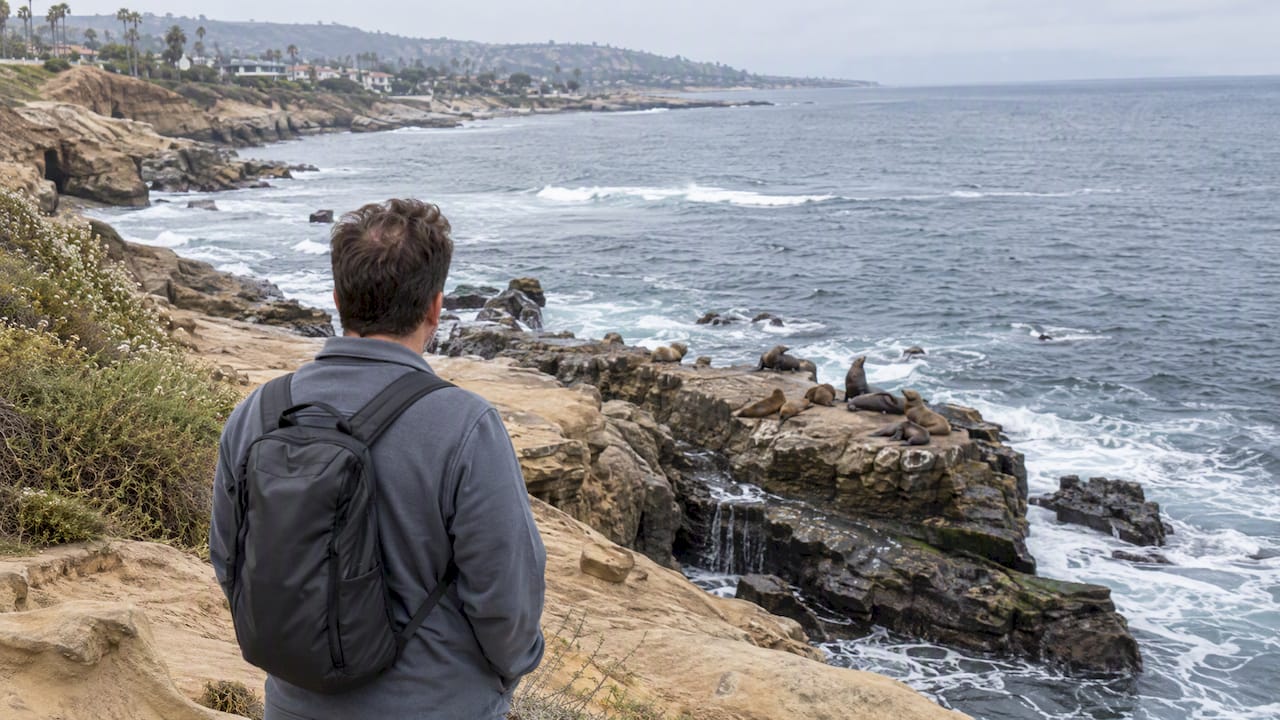
The simplest way to help is to keep your distance, pack out anything you bring in, and avoid touching rock, coral, or marine life even when it’s within easy reach. Choosing a guided tour also supports operators who already work within these rules and can model good practice for first-time visitors.
Who are good guided tour providers, and what do they cost?
Kayak outfitters based near La Jolla Shores and the Cove typically run tours lasting one to two hours, covering the ocean-facing caves when conditions allow. Options generally range from shared group tours to smaller private trips, with private bookings costing more for a guide’s full attention and a flexible route.
Snorkel tours, often paired with kayaking or run separately, tend to run shorter, usually under an hour in the water, and focus on the reef just outside the Cove rather than deep cave interiors. Before booking any operator, ask directly about group size, whether a guide enters caves on the day of your visit, and what their policy is if swell picks up, since the same outfitter might run a very different route in different conditions. We’d rather point you toward reading up on what a kayak trip includes before booking than guess which company fits your plans.
How does weather change what you can see?
Swell size matters more than sunshine here. A calm, glassy morning can make several caves accessible by kayak or snorkel, while a swell from a distant storm can shut down water access entirely, even on a sunny day. Wind also plays a role, since onshore wind chop can make paddling near cave mouths uncomfortable or unsafe well before the surf itself looks dangerous.
Winter tends to bring bigger, less predictable swell along this stretch of coast, while summer and early fall often offer calmer windows, though neither season guarantees good conditions on any single day. That’s the real reason to check tide and swell reports the morning of your visit rather than planning weeks out: the ocean here changes faster than a forecast can promise.
Why visiting responsibly matters
The mornings I’ve spent watching sea lions doze on the rocks above Sunny Jim, from a respectful distance, stick with me more than any closer photo would. Following the rules here isn’t a formality. It’s what keeps this coastline worth visiting.
— Joshua
Plan the rest of your San Diego trip with us
Once you’ve seen the caves, there’s a lot more of this coastline worth exploring, and that’s exactly what we built SoCal Sights to help with: real, specific recommendations instead of another generic list. If you run a local business or tour operation near La Jolla, advertising with SoCal Sights puts you in front of readers actively planning their visit. For a longer stay, check our San Diego weekend itinerary for ideas on where to go next, and consider grabbing The Gardens of Anuncia Tickets for a local cultural experience at The Old Globe.

FAQ
What are the seven sea caves in La Jolla?
The seven caves, listed east to west, are White Lady, Little Sister, Shopping Cart, Sea Surprize, Arch, Sunny Jim, and Clam. They sit along the sandstone bluffs between La Jolla Cove and La Jolla Shores.
Is visiting the La Jolla sea caves worth it?
Most visitors find the trip worthwhile, whether they walk into Sunny Jim, paddle past the others by kayak, or just watch from the clifftop. The combination of dramatic sandstone formations and regular wildlife sightings makes it one of the more memorable stops along this stretch of coast.
Can you enter the La Jolla caves without a tour?
Sunny Jim can be entered independently with a ticket from The Cave Store, no guide required. The other six caves are ocean-facing and best reached by guided kayak or snorkel tour, since entering them on foot is rare and depends on unusually low tides.
What are some other well-known sea caves along the California coast?
California’s coastline holds other notable sea cave clusters, including those around the Channel Islands, though each site has its own access rules and conditions. If a Channel Islands trip interests you, our Channel Islands day trip guide covers how to plan one.