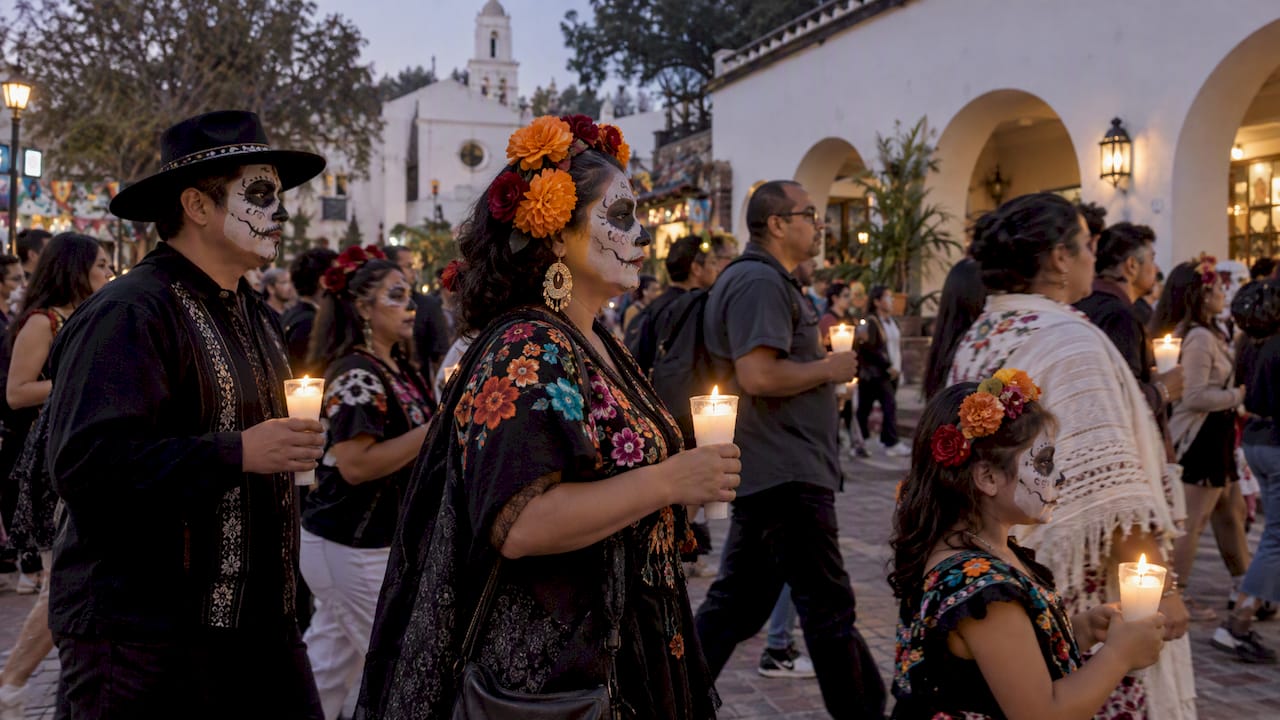
If you want free, family-friendly altars, head to Gloria Molina Grand Park. If you want the historic heart of the tradition, walk the nightly procession at Olvera Street. If you want a big ticketed cemetery festival with stages and vendors, Hollywood Forever is your pick. Most events cluster from late October through November 1 and 2, and we break down the details, costs, and etiquette below.
TL;DR:
- Grand Park displays more than 16 altars built by community members and offers participatory workshops; admission is free throughout its exhibition, which lasts several days.
- Olvera Street pairs nightly processions with community altars and a historic vendor market, while its festival programming is mostly free to attend.
- Hollywood Forever requires a paid ticket, and prices and availability can change, so buy tickets ahead because popular nights sell out quickly.
- Ask before photographing a personal altar, and contribute offerings only when organizers invite them; use Metro rail or rideshare near crowded downtown venues.
- Neighborhood pop ups may not appear on major calendars, so check local cultural centers and community groups on social media before the holiday.
Table of Contents
- 1. Where to celebrate Día de los Muertos around Los Angeles
- 2. What you’ll actually see at these events
- 3. How to join in respectfully
- 4. Hidden neighborhood altars worth seeking out
- 5. The roots of Día de los Muertos in Los Angeles
- 6. The role Latino communities play in shaping the celebrations
- 7. Local artists and vendors behind the festivities
- 8. How to get involved beyond just attending
- 9. What this holiday teaches us about looking closer to home
- Find more local events with our guides
- FAQ
- Sources
1. Where to celebrate Día de los Muertos around Los Angeles
Los Angeles doesn’t do Día de los Muertos halfway. We have altars in public parks, candlelit processions through historic plazas, and a cemetery festival that draws thousands. Here’s how the main options stack up.
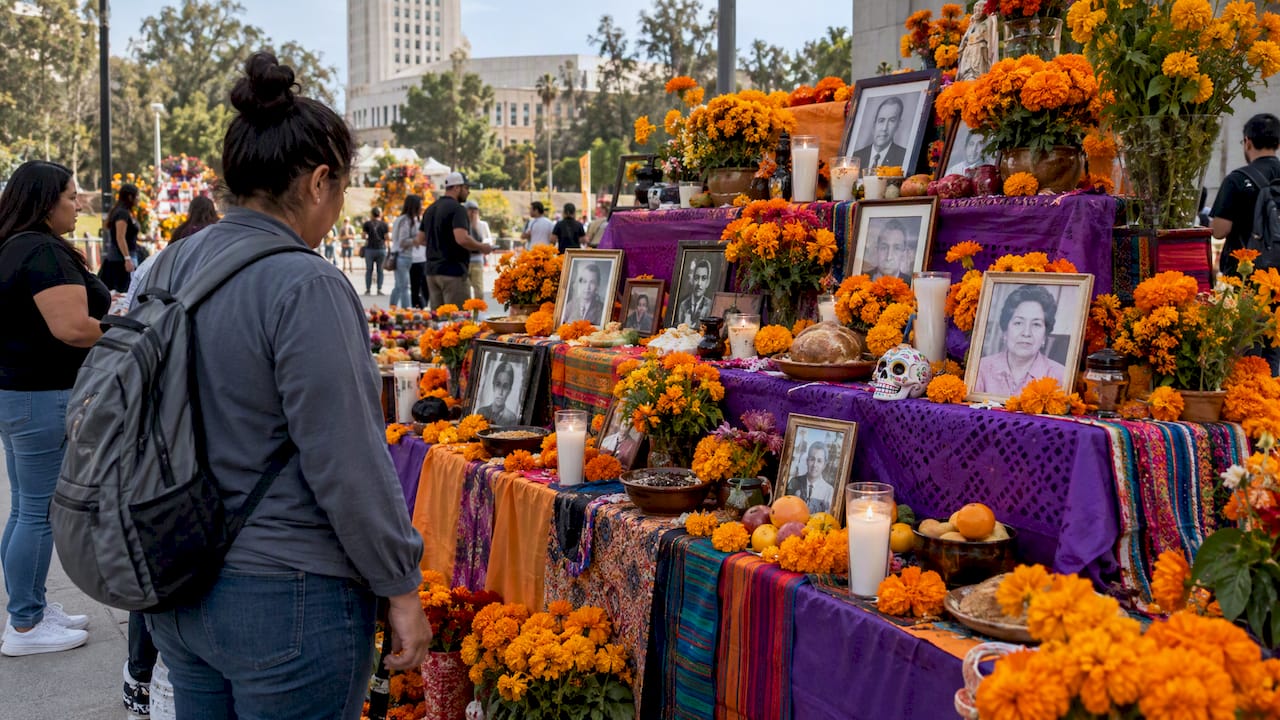
Gloria Molina Grand Park runs a free, multi-day Downtown Día de los Muertos exhibition in the heart of Downtown LA. The official Grand Park program features more than 16 community-built altars, hands-on workshops, and a closing Noche de los Muertos ceremony. It’s free admission, which makes it the easiest entry point if you’ve never been to one of these events before.
Olvera Street and El Pueblo host one of the longest-running celebrations in the city. The City of Los Angeles culture site describes a multi-day festival built around nightly processions, community altars, and a historic vendor market that has anchored the tradition in LA for generations.
Hollywood Forever Cemetery throws the biggest ticketed event in town. Ladayofthedead organizes a large-scale festival with multiple stages, altar displays, food and craft vendors, and programming that runs late into the night. This is the one to pick if you want music, crowds, and an all-out festival atmosphere rather than a quiet, reflective evening.
Beyond those three, dozens of smaller events pop up across Southern California every year, ranging from neighborhood altars to craft workshops at libraries and community centers.
A few cost notes worth keeping in mind:
- Grand Park and most Olvera Street programming are free to attend.
- Hollywood Forever requires a paid ticket, with prices and availability that may vary, so check the official site before you plan your night.
- Arrive early for free events if you want to see the altars without a crowd, and buy Hollywood Forever tickets ahead of time since popular nights sell out.
2. What you’ll actually see at these events
Every celebration centers on the ofrenda, or altar, built to welcome the spirits of loved ones back for a night. Families place photos, favorite foods, marigolds, and small personal items on tiered platforms, and the result is part memorial, part art installation.
Expect performances too. Aztec danza groups often open ceremonies with drums and feathered regalia, mariachi sets show up at several venues, and some festivals layer in contemporary bands and DJ sets once the sun goes down.
You can usually join in, not just watch. Common workshop options include:
- Sugar-skull decorating for kids and adults.
- Papel picado (cut-paper banner) making.
- Face painting styled after the calavera look.
Grand Park’s program features more than 16 community altars on display during its exhibition, which gives you a sense of how much community participation goes into a single event.
Some celebrations lean more ritual, like Olvera Street’s nightly processions, while others, like Hollywood Forever, lean more toward entertainment and spectacle. Knowing which mood you’re after helps you pick the right night.
3. How to join in respectfully
Altars are memorials, not photo props. Organizer guidance around Hollywood Forever’s event stresses that these displays represent real grief and real remembrance, so treat them with the same care you’d want for a loved one’s memory.
A few steps to keep your visit smooth and considerate:
- Ask before photographing a personal altar up close, especially one built by a family or small community group.
- Bring a small offering or token only if an event explicitly invites public contributions, never place items on a private ofrenda uninvited.
- Arrive during daytime hours for family-friendly workshops, and come back in the evening for processions and performances.
- Plan your transit ahead. Downtown events near Grand Park and Olvera Street get crowded, and street parking fills fast, so Metro rail or rideshare drop-off saves you a headache.
If you’re more interested in the visuals than the altars themselves, our guide to photo spots around Los Angeles has plenty of picturesque options that don’t require crowding someone’s memorial display.
Pro Tip: Bring cash in small bills. Many vendor stalls at Olvera Street and neighborhood pop-ups don’t take cards.
4. Hidden neighborhood altars worth seeking out
The big three events get the headlines, but some of the most moving celebrations happen at the neighborhood level, in church courtyards, library lobbies, and small community centers across the city.
- Boyle Heights community altars often appear at local cultural centers, built by residents rather than organizers, and they carry a personal weight the bigger festivals can’t replicate.
- Highland Park pop-up shrines show up in storefront windows and small plazas during the final week of October.
- East LA library branches frequently host sugar-skull workshops for families looking for a quieter, lower-key activity.
- Self-help graphics and small art collectives around Boyle Heights sometimes display community ofrendas alongside print exhibitions.
The best way to find these is to follow neighborhood cultural centers and community organizations on social media in the weeks leading up to the holiday, since many pop-ups aren’t listed on major event calendars at all. If you’re building a weekend around the holiday, pair a neighborhood altar visit with other offbeat LA experiences for a fuller day out.
5. The roots of Día de los Muertos in Los Angeles
Día de los Muertos traces back to Indigenous Mesoamerican ancestor-veneration practices, commonly observed around November 1 and 2. The holiday didn’t arrive in Los Angeles as a finished tradition, though. It was reshaped here.
Academic research from Rutgers documents how Chicano artists in Los Angeles built public Día de los Muertos practices in the 1970s, turning a private, home-based observance into community gatherings with public altars and processions. Those practices influenced visual elements that later spread well beyond the city.
Regina Marchi’s research specifically points to Los Angeles as a place where face painting and public ofrendas took on a civic, community-facing form that didn’t exist in the same way before. That matters if you’re new to these events, because a lot of what you’ll see at Grand Park or Olvera Street (public altars, open processions, communal art-making) reflects a distinctly Angeleno layer added on top of older Indigenous roots, not a straight import from one tradition.
Understanding that history changes how you experience the night. You’re not just watching a cultural import. You’re watching a tradition that was actively built and shaped in this city.
6. The role Latino communities play in shaping the celebrations
Los Angeles has one of the largest Latino populations in the country, and that community didn’t just adopt Día de los Muertos, it actively built the public version of the holiday we see today. The Chicano movement of the 1970s used altars and processions as a form of cultural expression during a period of significant political organizing, and that choice still shapes how the holiday looks in LA decades later.
Community groups continue to drive the programming at nearly every major event. Grand Park works with local artists and cultural organizations to curate its altar exhibitions, and Olvera Street’s festival grows out of a vendor community with a long local history. Smaller neighborhood altars, the kind you’ll find in Boyle Heights or Highland Park, exist entirely because residents choose to build them each year, with no studio or sponsor behind them.
This grassroots structure is part of why the celebrations feel different depending on which neighborhood you’re in. A ceremony in Boyle Heights reflects the families who live there, while a Downtown exhibition draws on citywide collaboration. Both are authentic expressions of the same holiday, shaped by the same communities that have kept the tradition alive and visible in Los Angeles for decades.
7. Local artists and vendors behind the festivities
Walk through any major Día de los Muertos event in Los Angeles and you’ll notice the handmade touch almost everywhere. Altar displays at Grand Park are built by local artists and community groups, not outside contractors, and each one reflects a different neighborhood’s style and story.
Vendors play just as big a role. Olvera Street’s market has hosted craft and food vendors as part of its festival programming for years, and that mix of goods, from papel picado banners to hand-painted calavera figures, gives the event its texture. Food specialties round things out: expect pan de muerto, elote, and other classic Mexican street food staples at nearly every major celebration.
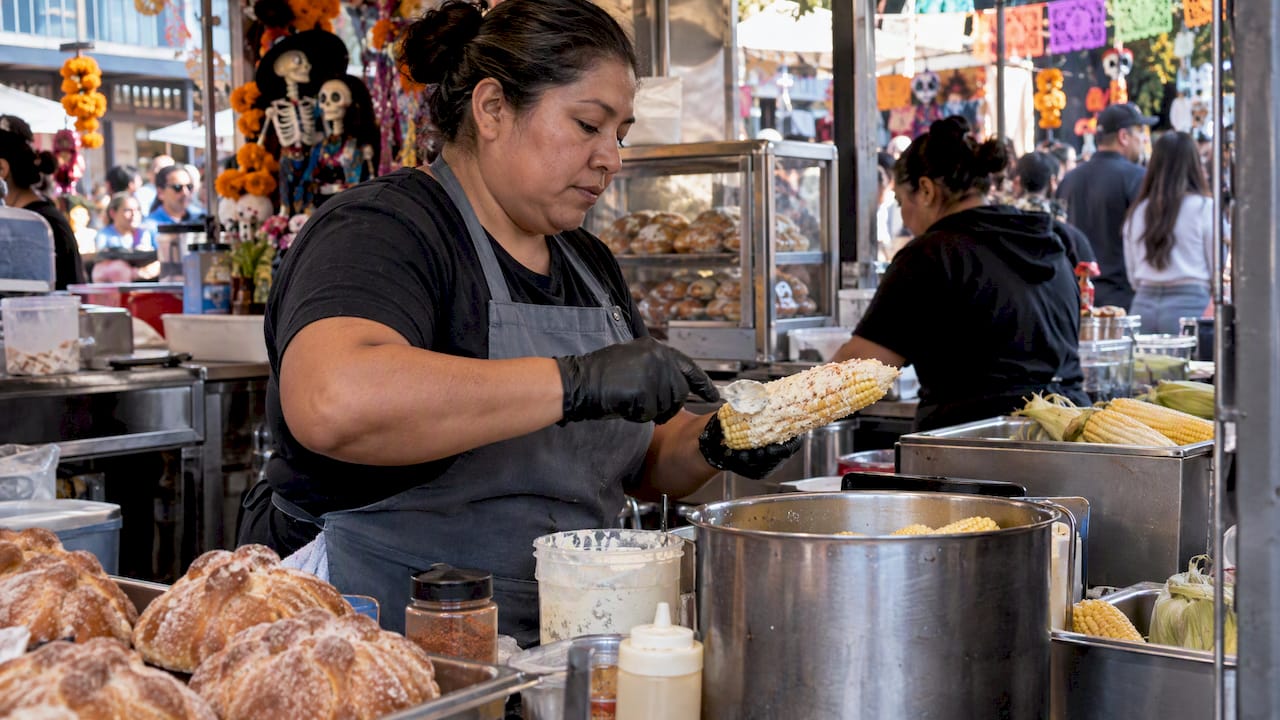
Hollywood Forever’s vendor rows lean a bit more toward artisan crafts and festival merchandise, reflecting its larger, more produced format. Either way, buying from these vendors supports the same local creative community that builds the altars and runs the workshops, which makes shopping at these events feel like part of the celebration rather than a side activity.
8. How to get involved beyond just attending
If you want more than a one-night visit, there are real ways to plug into these celebrations year over year. Grand Park’s program has included a mentorship-based altar-making initiative as part of its Downtown Día de los Muertos lineup, giving community members a hand in building the exhibition itself rather than just viewing it.
Community centers and cultural organizations across East LA and Boyle Heights regularly look for volunteers to help set up altars, run workshop tables, or staff information booths during the festival window. Libraries hosting sugar-skull or papel picado workshops often need extra hands too, especially for family-day events.
The easiest way in is to reach out directly to the organization behind an event you admire, whether that’s a neighborhood cultural center or one of the larger festival organizers, a few weeks before the holiday. Many of these groups run on community participation every single year, and showing up to help is often as simple as sending an email or showing up to a planning meeting.
9. What this holiday teaches us about looking closer to home
Every year, we end up at a small altar we didn’t plan on finding, tucked into a library lobby or a storefront window in a neighborhood we were just passing through. Those moments tend to stick with us more than the big festivals do.
That’s really the heart of what we do: the smaller, community-run events carry a kind of honesty that’s harder to find once a celebration scales up. Grand Park and Hollywood Forever are worth your time, but the neighborhood altar built by a handful of families often tells you more about what this holiday actually means.
— Joshua
Find more local events with our guides
We built our guides around exactly this kind of discovery: the hidden altars, pop-up workshops, and neighborhood events that don’t always make it onto the big festival calendars. If Día de los Muertos has you curious about what else is happening around the city, our guide to unique things to do in Los Angeles is a good next stop.
- We highlight community-submitted spots that mainstream guides tend to skip.
- Local businesses and event organizers can get featured through our membership and advertising page.
- Our picks update year to year as new neighborhood events and pop-ups take shape.
If you run a cultural event or a small business tied to local celebrations, reach out through our membership page to get in front of readers planning their Día de los Muertos weekend.
FAQ
For how many years has Día de los Muertos been celebrated?
Día de los Muertos descends from Indigenous Mesoamerican ancestor-veneration practices which long predate modern record-keeping. The public, community-centered version celebrated across Los Angeles today took shape more recently, largely through Chicano artists in the 1970s.
What are 5 symbols of Day of the Dead?
Common symbols include the ofrenda (altar), marigold flowers, calavera (skull) imagery, papel picado banners, and pan de muerto. You’ll see all five represented at major Los Angeles events like Grand Park’s Downtown exhibition and the Olvera Street festival.
How do I celebrate the Day of the Dead?
You can attend a public event like Grand Park’s free altar exhibition, the Olvera Street procession, or the Hollywood Forever festival, or build a small home altar with photos and favorite items of someone you’ve lost. Workshops at libraries and community centers also offer a hands-on way to join in, from sugar-skull decorating to papel picado making.
What are three traditions of the Day of the Dead?
Three core traditions are building ofrendas to welcome spirits home, holding processions through streets or plazas, and sharing food like pan de muerto as part of the remembrance. In Los Angeles, these traditions show up at events ranging from Olvera Street’s nightly procession to small neighborhood altars in Boyle Heights.
Sources
- Gloria Molina Grand Park’s Downtown Día de los Muertos
- Día de los Muertos | Hollywood Forever
- How Dia De Los Muertos festivities in the U.S. connect to questions of power, identity, history, inclusion, and resistance (Rutgers)
- 50 ways to celebrate Día de los Muertos in Southern California (LA Times)