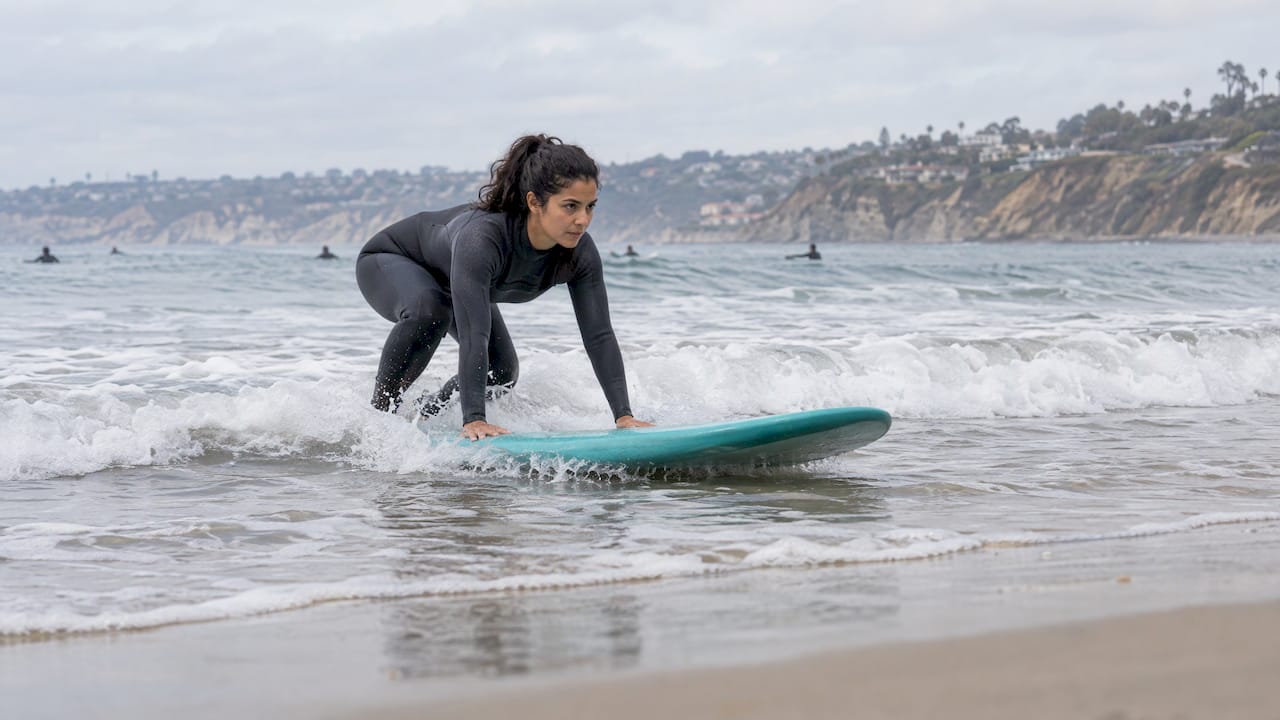
If you’re learning to surf in San Diego, start at La Jolla Shores, then move to Tourmaline Surfing Park in Pacific Beach once you’re catching whitewater and want your first green waves. San Elijo in North County is a good next step when you’re ready for a reef break. I’ll walk you through what makes each spot friendly, when to go, and the safety basics I’d want a friend to know before paddling out.
TL;DR
- La Jolla Shores is the classic day-one beach: a sandy bottom, a long stretch of beach and permanent lifeguard stations.
- Tourmaline Surfing Park is the place for your first unbroken waves, especially in the quieter stretch near Law Street.
- San Elijo’s Tippers is the mellow end of a reef break in Encinitas, good once you have some sand-bottom time.
- Check swell, wind and tide before you go, and always paddle out near a lifeguard tower.
- Know what a rip current looks like, and know the rule: swim parallel to shore, not against it.
Table of Contents
- What makes a beach good for learning to surf
- La Jolla Shores: the best first day
- Tourmaline Surfing Park: your first green waves
- San Elijo and Tippers: a step up into North County
- Other beaches people mention
- Quick comparison
- How to pick a session
- Where to learn: lessons and what a first one looks like
- Safety basics before you paddle out
- Parking, timing and making a day of it
- A simple plan for your first month
- Perspective: why we send beginners to the Shores first
- Want your business in front of San Diego visitors?
- FAQ
- Sources
What makes a beach good for learning to surf
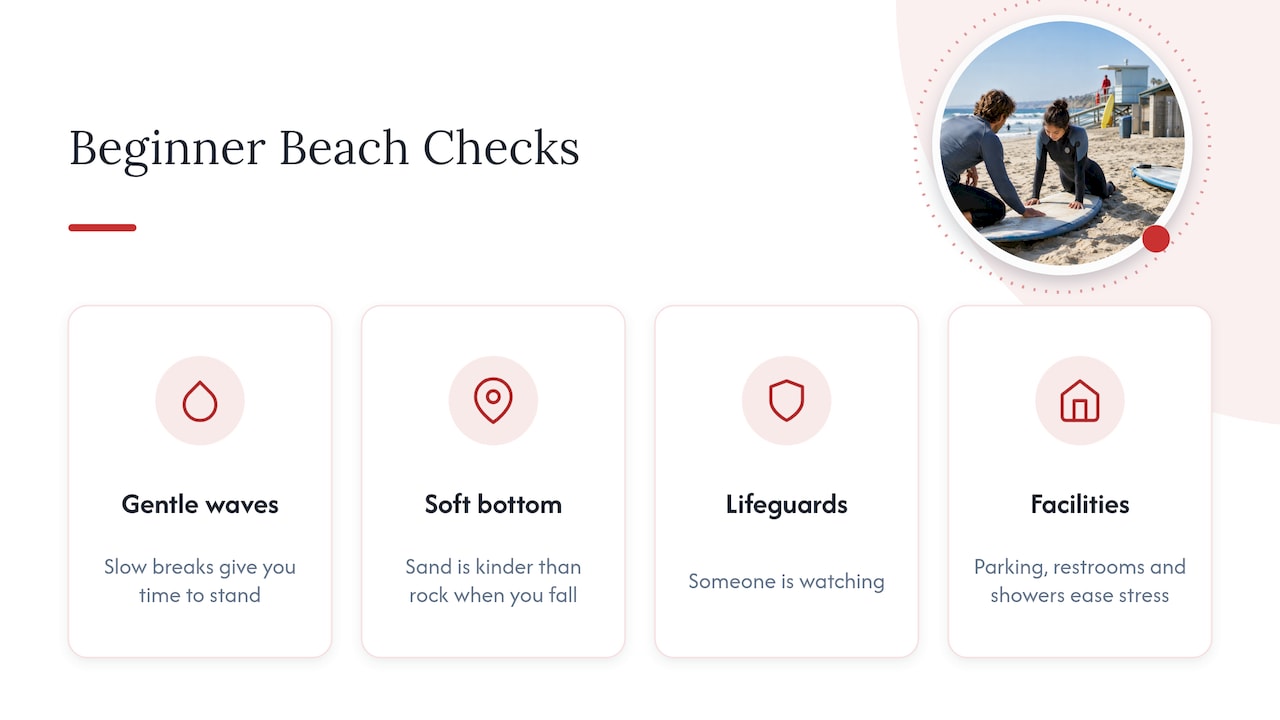
I look for four things when I send someone out for their first session: gentle waves, a soft bottom, lifeguards and easy logistics. Waves that break slowly give you time to stand up. Sand is a lot kinder than rock when you fall, and you will fall. Lifeguards mean someone is watching. And parking, restrooms and showers mean you’re not stressed before you even get in the water.
San Diego has plenty of beaches, but only a handful tick all of these boxes. Here are the ones I’d actually point you to.
La Jolla Shores: the best first day
If you only remember one name from this guide, make it La Jolla Shores. The City of San Diego describes it as a roughly one-mile sandy beach where summer waves are usually the gentlest of any San Diego beach, with permanent lifeguard stations, parking, restrooms and showers. That combination is hard to beat when you’re carrying a board and a bag and have no idea where anything is.
Surfline rates La Jolla Shores beginner-to-intermediate, with a sandy bottom. Its guide lists a west or west-northwest swell, east, southeast or south wind, and a medium tide as the best setup. It also notes the spot is less tide-sensitive than Mission Beach or Pacific Beach, which is a nice bonus when you can’t pick your schedule.
What to look for at the Shores
- Small, soft waves. Waist-high is plenty for a first session. Overhead days exist here too, and those are not for you yet.
- Light wind from the land. Offshore or light winds keep the surface cleaner and the waves easier to read.
- Medium tide. It’s the sweet spot Surfline lists for this beach.
- Water quality after rain. Surfline says it’s typically okay but can get dicey after rain. If it just poured, I’d wait a bit.
The Shores is also a busy place. Snorkelers, kayakers and swimmers share the water, so pay attention to which zone is for surfing (more on that below). If you’re curious about the other side of this beach, I wrote up local rules for La Jolla snorkeling and a guide to La Jolla’s seven sea caves, which makes a great post-surf adventure.
Tourmaline Surfing Park: your first green waves
Tourmaline, up in Pacific Beach, is where a lot of San Diego surfers cut their teeth. San Diego Magazine calls it a consistent beach break that suits beginners and longboarders, and it points beginners toward the less-crowded sections around Law Street down to the pier.
That’s good advice. The main peak at Tourmaline can be a crowd of experienced longboarders who know exactly where to sit. As a beginner, you’ll have a better time on the quieter stretch, where you can work on paddling, timing and standing up without feeling like you’re in anyone’s way.
A few things I’d do here:
- Arrive early so you aren’t circling for a spot with a board under your arm.
- Watch the lineup for ten minutes before you paddle out. Notice where people sit and where the waves break.
- Stay away from the busiest peak, and give anyone already riding a wave plenty of room.
One local-style tip on tide: a surf rental company’s spot guide suggests medium-high or high tide is best at Tourmaline, while medium tide suits La Jolla Shores. So if you’re doing both, plan the Shores for a different part of the day than Tourmaline.
San Elijo and Tippers: a step up into North County
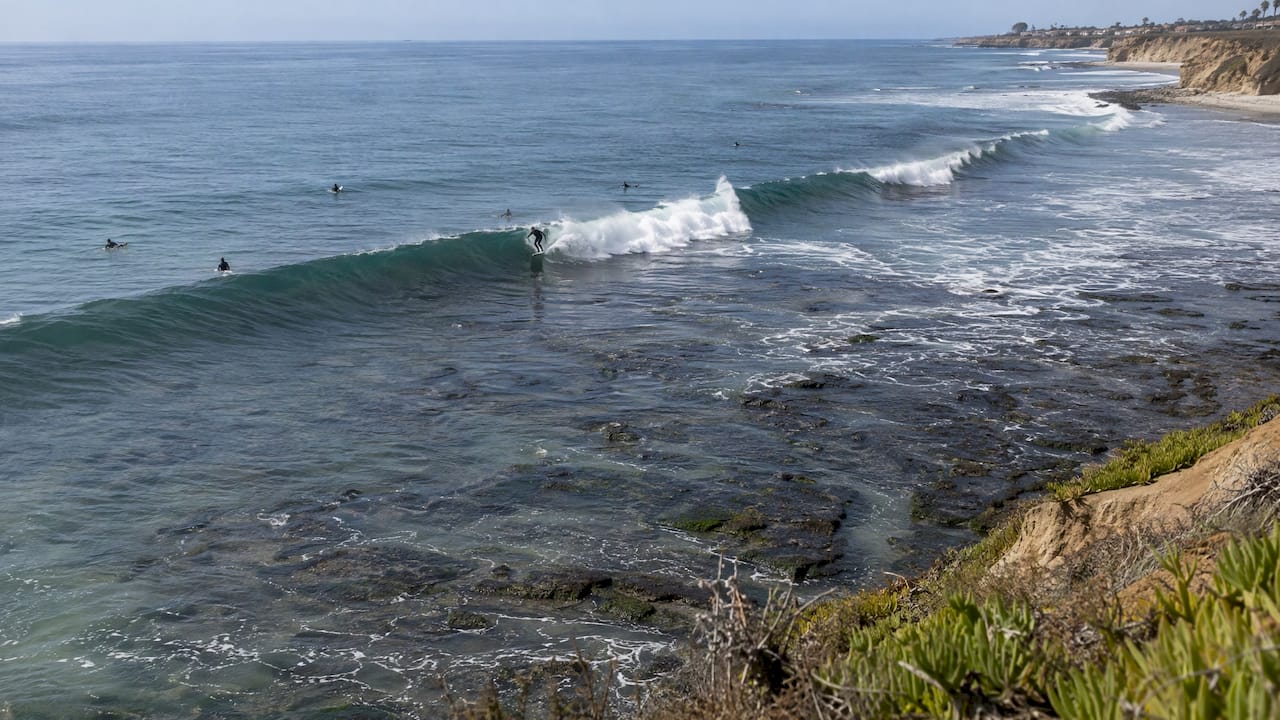
Once you’re comfortable standing up and turning, North County has some fun options. San Diego Magazine describes San Elijo as a consistent rocky reef break with peeling lefts and rights for surfers of all levels. Tippers is the mellow southernmost peak, and Pipes is the more advanced part of the break.
I’d call this a second-stage spot. A reef is different from a sandy beach: the bottom is harder and the waves break in more predictable places, which is great for learning to read a wave, but falls are less forgiving. Go with a friend who knows the break, or after a few lessons, and stick to Tippers.
If you’d rather spend a day exploring the coast around here than chasing waves, our San Diego weekend itinerary pairs nicely with a morning session.
Other beaches people mention
You’ll hear a few other names in surf shops and online forums: Mission Beach, Ocean Beach and the Oceanside Harbor area, for example. They can all work on the right day, and the city’s beaches have public parking lots at Mission Bay, Mission Beach, Ocean Beach, Pacific Beach and South Mission Beach, according to the City of San Diego’s beach regulations page. But I’d start at the Shores or Tourmaline, because they’re where beginners and their gear fit in most easily. Some of these other beaches also draw bigger crowds, which means a crowded lineup and less room to fall.
Quick comparison
| Spot | Bottom | Best for | What to know |
|---|---|---|---|
| La Jolla Shores | Sand | Day one, first lessons | Lifeguards, restrooms, showers; medium tide is best |
| Tourmaline Surfing Park | Sand (beach break) | First unbroken waves | Stay near Law Street toward the pier; busy main peak |
| San Elijo (Tippers) | Rocky reef | Progressing beginners | Mellow southern peak; Pipes is more advanced |
How to pick a session
Choosing the right day matters more than choosing the perfect beach. Here’s how I’d think about it.
Waves
Small and slow is the goal. If the surf looks like a wall of water to you, it is probably too big. Surfline lists waist-high to overhead at La Jolla Shores, and the lower end of that range is what you want.
Wind
Surfline lists east, southeast or south wind for La Jolla Shores. In general, light wind from the land keeps things tidy. Strong onshore wind chops everything up and makes paddling tiring.
Tide
Tide changes how and where waves break. At the Shores, medium tide is the pick. At Tourmaline, the higher end is better. If you only remember one rule, plan around the tide for the beach you chose, not the other way around.
Your experience level
Be honest about it. If you can’t yet paddle onto a wave and pop up on whitewater, you’re not ready for a reef break or a crowded peak. Spending a few sessions at the Shores is the fastest way to get there.
Check before you drive
Before I leave the house, I look at the forecast and then at a camera. You can compare what you see on live surf webcams with the forecast, which helps you spot whether the surf is smaller or messier than predicted. It’s an easy way to avoid a wasted trip.
Where to learn: lessons and what a first one looks like
There are a few ways to learn in San Diego: group lessons run by local surf schools, private instruction, or going out with a friend who surfs. For your first day, I’d go with an instructor. They’ll choose a beginner-friendly spot for the conditions, size a board for you and keep an eye on you in the water.
A typical first lesson includes a few basics:
- A beach briefing. You learn how to carry the board, how to lie on it and how to read the waves.
- Pop-up practice on sand. You rehearse going from lying to standing before you ever get wet.
- Whitewater time. You practice on waves that have already broken, which are slower and more forgiving.
- Water safety. Rips, lineup etiquette and how to fall safely.
Looking for gear? Beginners usually start on a soft, wide foam board and a wetsuit for comfort. A rental from a local shop is a fine way to start, and you can buy later once you know what you like. Since I’m not going to rank businesses here, ask the staff at a shop near your chosen beach what they recommend for the day’s conditions.
Safety basics before you paddle out
San Diego is a friendly place to learn, but the ocean is still the ocean. These are the things I would tell my own family.
Stay near lifeguards
The City of San Diego says to swim near lifeguards and use signs or ask which zone is for surfing. A checkered flag normally divides zones: one side is for surfboards, the other for swimmers. At permanent lifeguard stations, lifeguards are generally on duty from 9 a.m. to dusk. That’s one more reason to pick the Shores or a beach with a staffed tower. The same city page says the chance of drowning at a lifeguard-protected beach is much lower, at an estimated 1 in 18 million at USLA-affiliated locations.
Know rip currents
According to the City of San Diego, rip currents account for about 80% of lifeguard rescues at ocean beaches. If one catches you:
- Stay calm.
- Swim parallel to the shore until you’re out of the current.
- Wave to a lifeguard for help.
The city also points out that “rip tides” and “undertows” are misnomers: rip currents move seaward and don’t pull people under. That’s a useful thing to know, because it means you don’t have to fight it or panic.
Don’t dive in headfirst
In unknown water, check depth and look for obstructions, and enter feet first. The city’s summer safety page warns that diving in headfirst can cause serious injury. Even if you’re excited, wade in.
Etiquette in the lineup
Surf etiquette sounds fussy, but it’s mostly common sense:
- Don’t paddle in front of someone already riding a wave.
- Keep hold of your board. A loose board is a hazard to people around you.
- Sit on the shoulder of the crowd, not in the middle of it, while you’re learning.
- Say sorry when you mess up. Everyone’s been there.
Parking, timing and making a day of it
The best beginner beaches are popular, so a bit of planning goes a long way. Public parking lots are available at La Jolla Shores, Mission Bay, Mission Beach, Ocean Beach, Pacific Beach and South Mission Beach, per the city’s beach regulations. I’d still arrive early on weekends and summer days, when lots fill up. Early morning also tends to be calmer than afternoon, though always check the day’s wind and tide.
After you’re done, there are plenty of ways to round out the day without spending much. Our list of free things to do in San Diego is a good place to start. If the tide is low, tide pools in San Diego are a fun way to spend the rest of the morning. And if you’re a sunrise person, one of our best sunrise spots can make the early alarm worthwhile. For something off the main path, our guide to San Diego’s secret beaches is worth a look once you’ve got your sea legs.
Staying for the night? We also put together tips on beach camping in San Diego, including tide and fire rules.
A simple plan for your first month
Here’s how I’d build skills without rushing.
- Session one: Take a lesson at La Jolla Shores. Focus on paddling and popping up in whitewater.
- Sessions two to four: Return to the Shores on small days, medium tide. Practice turning your board toward the beach and catching waves earlier.
- Sessions five and beyond: Try the quieter stretch near Law Street at Tourmaline and aim for your first unbroken wave.
- Later: If you’re feeling steady, visit Tippers at San Elijo with someone who knows the break.
There’s no hurry. Surfing rewards time in the water more than anything else.
Perspective: why we send beginners to the Shores first
We built SoCal Sights around a simple idea: visitors and locals shouldn’t have to dig through endless lists to find the places that feel right. For learning to surf, that means pointing you to the beach where the odds are on your side, and then showing you what else is nearby once the session is done.
Our community-driven approach is the reason we like this topic. Locals know which stretch of Tourmaline is quiet on a Tuesday, and which corner of the Shores gets crowded with snorkelers. We want those details to reach you, rather than only the headline spots every mainstream guide repeats.
So our advice is simple: start where there are lifeguards, sand and room to fall, check the conditions, and treat each session as practice. Then explore. San Diego’s coast has far more to offer than waves.
Joshua
Want your business in front of San Diego visitors?
If you run a local business or organize events in Southern California, SoCal Sights is built to put you in front of people who are actively looking for things to do. We offer advertising, featured placements and memberships for local businesses and event organizers. You can read about it on our advertising page.

If you’d like to keep exploring first, our Southern California hidden gems guide is a good place to start.
FAQ
Is La Jolla Shores beginner surf friendly?
Yes. Surfline rates it beginner-to-intermediate, and it has a sandy bottom. The City of San Diego says its summer waves are usually the gentlest of any San Diego beach, and it has permanent lifeguard stations. Check conditions first, since water quality can get dicey after rain.
Where can I learn to surf in San Diego?
La Jolla Shores is the easiest place to start, followed by the quieter stretch of Tourmaline Surfing Park near Law Street. Many people book a lesson with a local surf school for their first session, so an instructor can pick the spot and board for the day.
What is the best tide for beginners?
It depends on the beach. Surfline lists medium tide as best at La Jolla Shores, and a local surf spot guide suggests medium-high or high tide at Tourmaline. Check the forecast for your chosen beach before heading out.
Is it safe to surf at a beach without a lifeguard?
I’d stick to beaches with a staffed lifeguard tower while you’re learning. San Diego lifeguards are generally on duty from 9 a.m. to dusk at permanent stations, and the city advises swimming near them and asking which zone is for surfing.
What should I do if I get caught in a rip current?
Stay calm, swim parallel to the shore, and wave to a lifeguard for help. The City of San Diego says rip currents move seaward and don’t pull people under, so there’s no need to fight them.
Sources
- La Jolla Shores | City of San Diego
- La Jolla Shores Surf Guide | Surfline
- Guide to San Diego Surf Spots | San Diego Magazine
- Beach Amenities and Regulations | City of San Diego
- Rip Currents | City of San Diego
- Summer Safety | City of San Diego
- Live Surf Webcams | GlobeWebcams