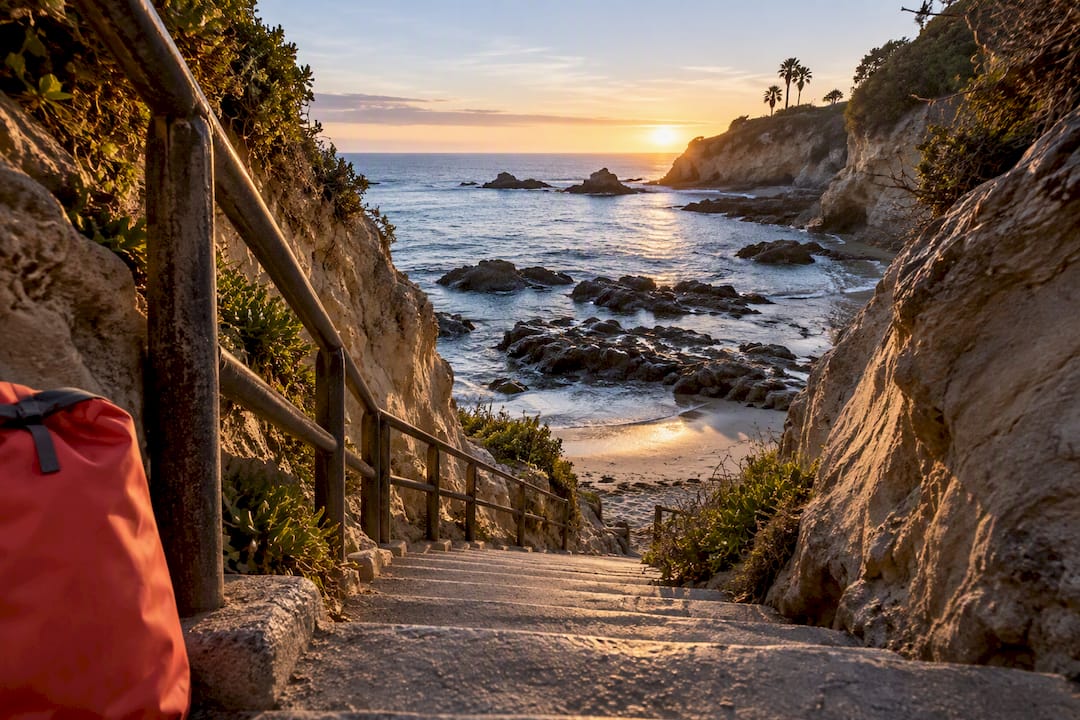
The best hidden coves in Laguna Beach are Thousand Steps Beach, Victoria Beach, Woods Cove, Shaw’s Cove, Diver’s Cove, Goff Cove, Fisherman’s Cove, and Totuava Beach. Every one of them rewards patience over convenience: check a tide chart before you leave home, arrive before 9 a.m. for parking, and don’t expect a lifeguard, a restroom, or a snack bar once you’re down on the sand.
TL;DR:
- Most of Laguna Beach’s hidden coves require arriving early, checking tide charts in advance, and being prepared for a long climb or scramble without facilities.
- Parking near these coves is limited, often permit-only, so using Heisler Park lots or the Laguna Beach Trolley can save time and reduce stress.
- Tide pools and rocky bottoms pose hazards, so visitors should stick to look-only principles, carry essentials, and plan for low tide conditions before entering.
- The coves are part of protected marine areas, making responsible behavior such as trash removal and avoiding rock stacking essential for preserving their fragile ecosystems.
- Visiting during low tide, early morning, and on weekdays offers a more secluded experience and better opportunities for photography and tide pool exploration.
Table of Contents
- Where to Find Laguna Beach’s Hidden Coves
- Getting to the Coves: Parking, Stairs, and Tide Crossings
- How Tides Turn a Nice Walk Into a Rescue Call
- The Best Time of Day (and Season) to Shoot These Coves
- Joshua’s Insider Notes on Timing and Parking
- Why These Coves Carry More History Than a Postcard Suggests
- What Lives in and Around These Tide Pools
- How Laguna Protects These Coves, and What You Can Do
- Where to Eat After a Morning at the Coves
- Snorkeling and Scrambling Safely in the Coves
- Why Responsible Visiting Matters for Laguna’s Hidden Coves
- Plan Your Next Cove Day With SoCal Sights
- Check These Before You Go
- Sources
- FAQ
Where to Find Laguna Beach’s Hidden Coves
Laguna Beach doesn’t hide its coves behind gates or “no trespassing” signs. It hides them behind stairs, bluffs, and tides. That’s the real reason these spots stay quiet even in a city that pulls in beachgoers from all over Orange County. Here’s what to expect from each one before you commit to the climb down.
- Thousand Steps Beach delivers the widest stretch of sand on this list and a genuine sea cave at the south end. The name suggests an exaggerated stair count, but the descent is long enough that parking at the top fills fast on weekends. Save some energy for the climb back up.
- Victoria Beach is famous for the Pirate Tower, a private stone turret built in the 1920s that photographs beautifully at low tide when the surrounding rock arches are exposed. Street parking near Victoria Drive is limited and heavily enforced, so this is not the cove to visit if you’re in a hurry.
- Woods Cove rewards anyone willing to poke around its tide pools and offshore rock formations. Access comes via a short stairway off Cliff Drive, and visitor accounts note that parking disappears quickly, especially once the morning fog burns off.
- Shaw’s Cove sits between Fairview and Cliff Drive and stays calmer than most because a rock reef breaks up the swell. It’s also a favorite for beginner tide-pooling, but the cove backs right up to private homes, so keep noise down and stick to the sand.
- Diver’s Cove, just below Heisler Park, is the most beginner-friendly spot on this list for snorkeling thanks to a rocky point that blocks a lot of wave action. A paved path connects it to the park above, and the Heisler Park lots make it one of the easier coves to reach without circling for parking.
- Goff Cove hides between Treasure Island and Christmas Cove, reached by a wooden stairway near the Montage Resort. It’s a good snorkeling spot on paper, but rocky bottoms and unpredictable currents make it less forgiving than Diver’s Cove for anyone new to open water.
- Fisherman’s Cove, also called Boat Canyon, is a small pocket beach near the Diver’s Cove condominiums with its own stairway entrance. At high tide, the dry sand nearly disappears, so this one only works on a falling or low tide.
- Totuava Beach is the quietest name on this list for a reason: there’s no public stairway at all. You reach it only at very low tide from Thousand Steps, or by passing through a rock arch near Table Rock when conditions allow. No facilities, no easy exit if you misjudge the water.
Getting to the Coves: Parking, Stairs, and Tide Crossings
Parking is the first hurdle, and Laguna Beach doesn’t make it easy on purpose. Much of the residential area near these coves runs on permit zones and metered spots that fill by mid-morning, especially in summer. The Heisler Park lots work well as a staging point for Diver’s Cove and Shaw’s Cove, since both are a short walk from the park itself. For coves farther south, like Victoria Beach and Thousand Steps, your best bet is finding legal street parking and accepting a longer walk.
Here’s a simple approach that saves most people a wasted trip:
- Check the tide chart for the Laguna Beach sector the night before, not the morning of.
- Park at Heisler Park or along Coast Highway before 9 a.m., especially on weekends.
- Use the Laguna Beach Trolley if you’re visiting more than one cove in a day. It runs seasonally and lets you skip re-parking between stops.
- Walk down slowly. Wet stairs and sandy steps are more slippery than they look.
- Build in a buffer of at least an hour before the tide turns, especially for low-tide-only spots like Totuava.
Pro Tip: Pack like you’re not coming back up for a while. Reef-safe sunscreen, real water (not a half-empty bottle), sturdy shoes for the rocks, and a bag for your own trash. Nobody’s selling snacks down there.
How Tides Turn a Nice Walk Into a Rescue Call
Every hidden cove on this list has one thing in common: the ocean decides when you get to leave. A cove that’s wide open sand at low tide can turn into a wall of water against the cliff two hours later, and the walk back the way you came stops being an option.
- Always check a tide chart before you go, not after you’re already on the sand.
- Build in an exit buffer well before high tide, especially for crossings at Totuava or Fisherman’s Cove.
- Treat tide pools as look-only. Many of these coves sit inside protected marine areas, and state and local guidance is clear that collecting shells, rocks, or sea life isn’t allowed.
- Don’t count on a lifeguard. None of these coves are patrolled the way Main Beach is, and local guides note that packing your own water and first-aid basics is standard practice here.
- Bring a friend, and tell someone else which cove you’re headed to and when you plan to be back.
Rocky bottoms are the other quiet hazard. A wave that looks harmless can still knock you into a reef shelf, and rip currents tend to build up near the rocky points that separate one cove from the next.
The Best Time of Day (and Season) to Shoot These Coves
Golden hour, low tide, weekday morning: hit all three and you’ll have most of these coves close to yourself. Low tide is what actually opens up the tide pools and sea arches worth photographing, so check the tide chart for the specific stretch of coastline before you plan a shoot.
- Shoot within an hour of sunrise or sunset for warm light on the sandstone bluffs.
- Time your visit to a falling tide so you’re not racing the water while you shoot.
- Weekdays clear out the crowds that pack Victoria Beach and Thousand Steps on weekends.
- Bring a small tripod, a polarizing filter to cut glare off wet rock, and a waterproof case if your phone is your only camera.
Joshua’s Insider Notes on Timing and Parking
I plan my Totuava and Diver’s Cove trips around a tide that’s still falling, not one that already bottomed out. That gives you a window instead of a countdown. For parking, skip the streets near Victoria Beach entirely on weekends and use the trolley instead. It’s free, it runs along Coast Highway, and it saves you from circling for forty minutes. Pair Diver’s Cove with Shaw’s Cove in one outing. They’re close enough to walk between at low tide, and you’ll cut your parking headaches in half.
— Joshua
Why These Coves Carry More History Than a Postcard Suggests
Victoria Beach’s Pirate Tower isn’t a theme park prop. A local resident built the stone turret in the 1920s as a private stairway down to the sand, and it’s stayed a private structure ever since, even as it became one of the most photographed features on the Orange County coast. That mix of private property and public curiosity defines a lot of these coves.
Laguna Beach itself grew up around an artist colony in the early 1900s, and the cove-by-cove geography is part of why. Steep bluffs kept development scattered rather than continuous, so instead of one long boardwalk, you get dozens of small pocket beaches, each with its own personality and its own tight little neighborhood watching over it. Woods Cove and Shaw’s Cove both sit below streets lined with homes that predate the city’s modern building codes, which is part of why parking stays so limited. There was never room designed for beach traffic in the first place.
That history is worth remembering when you’re standing on someone’s public access stairway sandwiched between two private homes. You’re not just visiting a beach. You’re passing through a neighborhood that’s protected these access points for a century, often against pressure to close them off entirely.
What Lives in and Around These Tide Pools
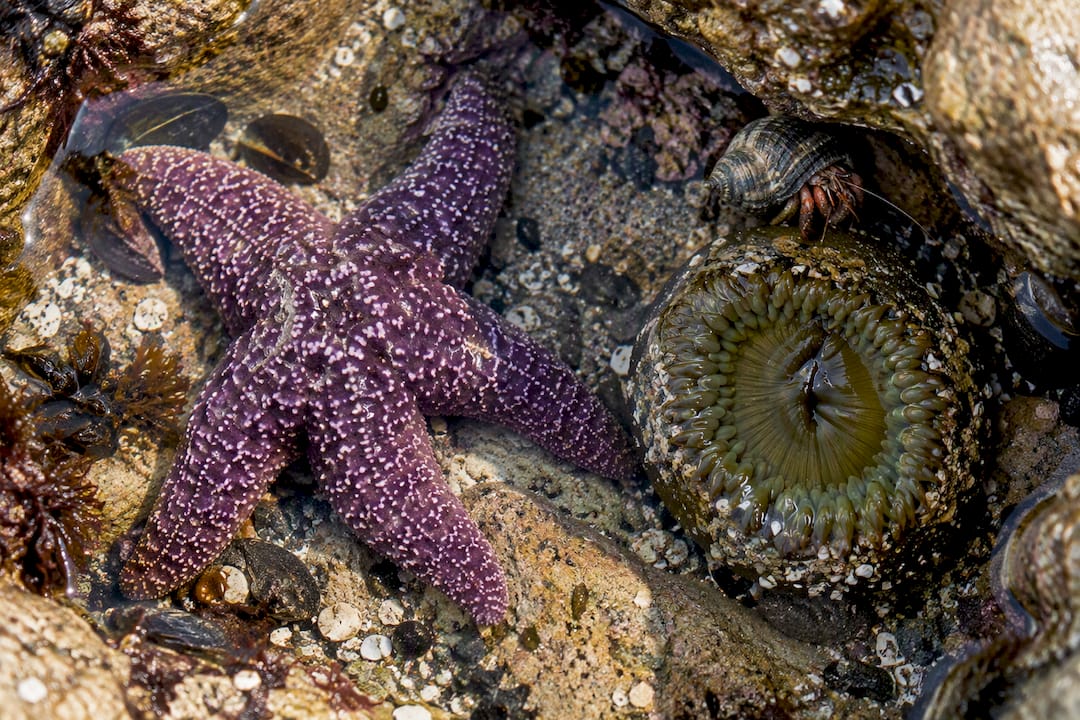
Low tide at Woods Cove or Shaw’s Cove turns a plain stretch of rock into a small ecosystem. Look for purple and ochre sea stars wedged into crevices, hermit crabs shuffling between empty shells, and anemones that close up tight the moment a shadow passes over them. Sculpins and small eels tend to hide in the deeper pools, and if you’re patient, you’ll spot California spiny lobster antennae poking out from under rock ledges.
Above the waterline, the bluffs support coastal sage scrub and pockets of wild buckwheat, both of which anchor the loose sandstone that these stairways cut through. Brown pelicans and cormorants use the offshore rocks near Goff Cove and Diver’s Cove as resting spots, and you’ll often see them diving for bait fish just past the break.
None of this is rare enough to make headlines, but it’s fragile enough that a single afternoon of foot traffic through a tide pool can flatten it for weeks. That’s the trade-off every visitor makes just by walking down the stairs.
How Laguna Protects These Coves, and What You Can Do
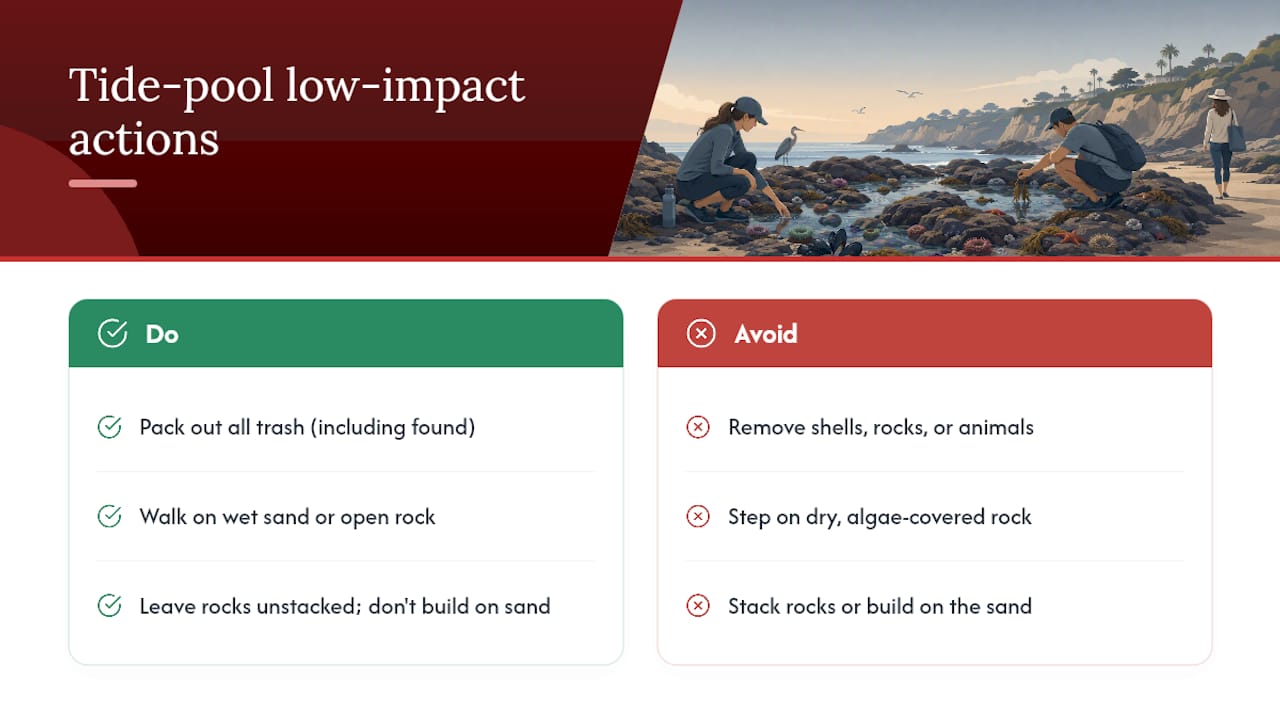
A lot of these coves sit inside designated marine protected areas, which is the main reason the “look, don’t touch” rule around tide pools isn’t just a suggestion. Removing shells, rocks, or animals disrupts a habitat that takes years to rebuild, and enforcement has gotten more visible as these coves have become more popular through social media.
The most useful thing you can do costs nothing: pack out every piece of trash you bring in, including anything you find that isn’t yours. Stick to wet sand and open rock when you’re walking through tide pool zones instead of stepping on the dry, algae-covered rock where organisms attach themselves. Skip the urge to stack rocks or build anything on the sand. It looks harmless, but it disturbs the small creatures living underneath.
If you’re new to reading a tide pool responsibly, our guide on tide-pooling etiquette in San Diego covers the same look-only principles that apply here, just with a different backdrop.
Where to Eat After a Morning at the Coves
Nothing pairs better with sandy shoes than a casual lunch spot that doesn’t require a reservation. Downtown Laguna Beach, a short drive or trolley ride from most of these coves, has a strip of casual restaurants along Coast Highway and Forest Avenue where you can grab a table without dressing up.
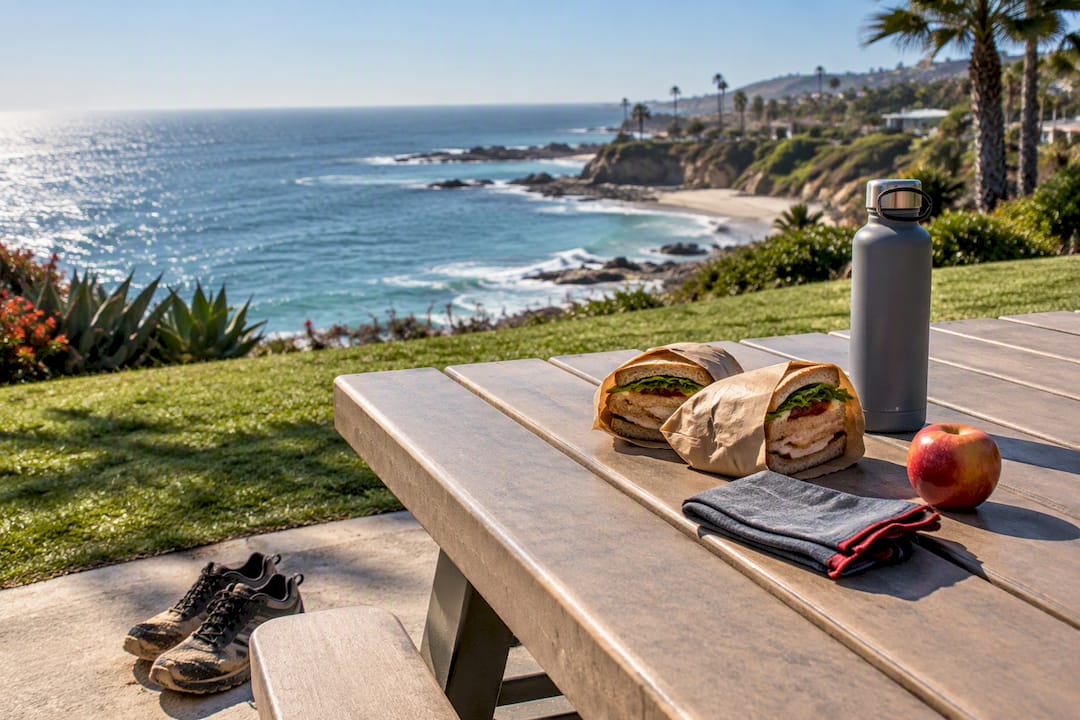
If you’d rather skip the sit-down route, pack a picnic and set up at Heisler Park itself. The grassy bluffs overlook the water, there are public tables, and you get a view of the coastline you just explored without needing to find another parking spot. It’s an easy way to close out a cove day, especially if you’re traveling with kids who’ve had enough stairs for one afternoon.
Snorkeling and Scrambling Safely in the Coves
Diver’s Cove is the one spot on this list built for beginner snorkeling, thanks to the rocky point that cuts down wave action before it reaches the cove. Even there, wear fins and keep an eye on the surface for boat traffic near the point. Goff Cove looks similar on a calm day, but its currents are far less predictable, and rocky bottoms have caught more than one distracted swimmer off guard.
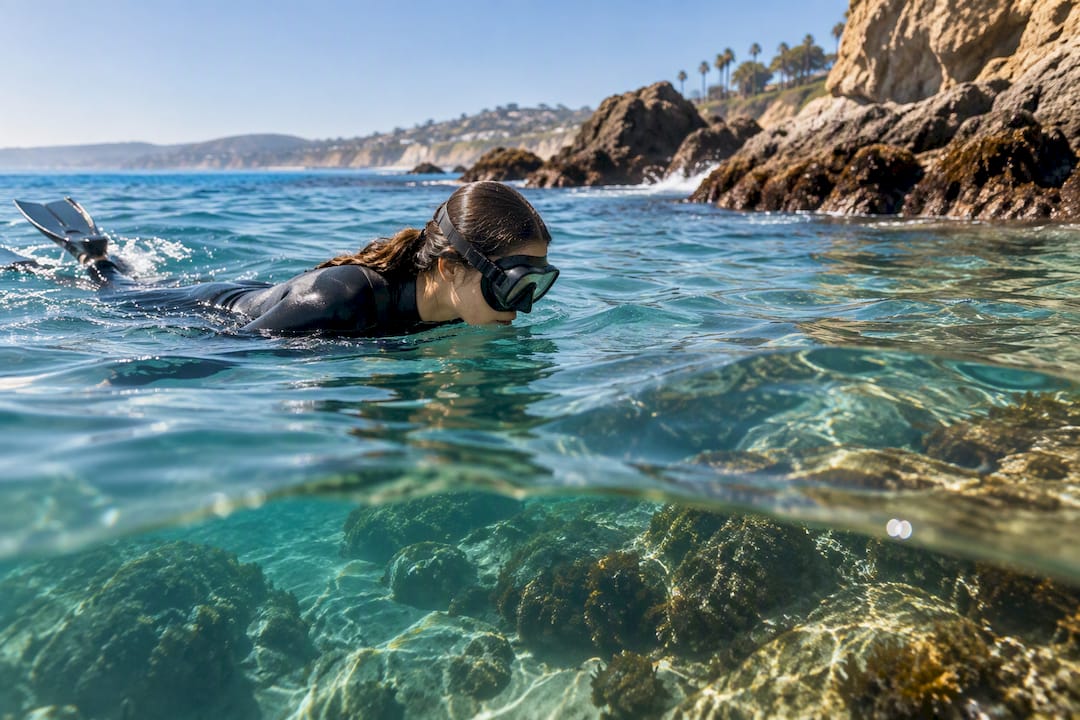
Rock scrambling between coves, especially routes toward Totuava, isn’t a casual walk. Wet rock gets slick fast, and a wrong step near the waterline can mean a cut that needs more than a bandage. Wear shoes with real grip, not sandals, and never attempt a scramble if swell is pushing water into narrow passages. A cave or arch that looks safe at low tide can fill completely within the hour.
Why Responsible Visiting Matters for Laguna’s Hidden Coves
These coves stay special because so few people treat them carelessly. Pack out what you bring, leave the tide pools exactly as you found them, and when you share a favorite spot, share the etiquette that comes with it instead of pinning the exact rock formation online for a crowd to descend on.
Plan Your Next Cove Day With SoCal Sights
This guide helps reduce guesswork when you’re staring at a tide chart trying to figure out which cove is actually worth the drive today. Curated guides pull together route suggestions, realistic parking notes, and low-tide windows for spots like these across Southern California, so you’re not piecing it together from five different tabs the night before.

Access points shift, stairways close for repair, and tide windows change with the seasons, so we keep our cove guides updated rather than letting them go stale. If you run a local business near Laguna Beach’s coastline, or you want your favorite hidden spot featured for other explorers to find responsibly, check out Advertise With SoCal Sights to see how a featured listing works. And if you’re already planning a bigger coastal trip, our breakdown of hidden gems in Long Beach is a solid next stop for building out a full weekend.
Check These Before You Go
Confirm access rules through the Laguna Beach facility directory, a current tide chart, and recent local guide notes.
Sources
- Goff Cove Beach | Parks and Recreation Facilities | Laguna Beach, CA
- Totuava Beach — 9 Essential Tips for a Safer, Stunning Hidden‑Cove Day (2025)
- Boat Canyon Beach at Fishermans Cove in Laguna Beach, CA – California Beaches
FAQ
What Are Some Secret Beach Spots in Laguna Beach?
Totuava Beach and Goff Cove are the two least crowded, since both require a stairway scramble or a low-tide crossing to reach. Totuava has no public stairway at all, which keeps foot traffic naturally low compared to stair-access spots like Woods Cove or Shaw’s Cove.
What Celebrity Lives in Laguna Beach?
Laguna Beach has a long history of drawing actors, musicians, and artists who value its low-key coastal setting, though specific current residents aren’t something we track or publish here. The city’s reputation as a quiet artist colony dating back to the early 1900s is part of why it’s remained a draw for people seeking privacy over publicity.
What Are Some Hidden Gems in Laguna?
Beyond the coves themselves, Heisler Park’s tide pools and the Pirate Tower at Victoria Beach count as two of the most overlooked spots, since most visitors stick to Main Beach and never walk the bluff trails. Pairing a cove visit with a picnic at Heisler Park is one of the easiest ways to see more of the coastline in a single trip.
What Are Some Hidden Beaches in Orange County?
Within Laguna Beach alone, Thousand Steps, Victoria Beach, Woods Cove, Shaw’s Cove, Diver’s Cove, Goff Cove, Fisherman’s Cove, and Totuava Beach cover the full range from easy stairway access to low-tide-only crossings. Each requires its own approach to parking and timing, which is exactly why checking a tide chart and arriving early matters more here than at Orange County’s larger, patrolled beaches.
Do I Need a Permit to Park Near These Coves?
Some residential streets near coves like Victoria Beach and Shaw’s Cove enforce permit parking, so metered lots or the Heisler Park lots are safer bets if you don’t have a local permit. The Laguna Beach Trolley is a free workaround during peak season if you’d rather skip the parking search entirely.