
Yes, a well-planned Catalina Island day trip is absolutely doable, and honestly, one of the easier island getaways in Southern California. Focus your time in Avalon since it has the most amenities and the most ferry options to get you home. Book your round-trip ferry seats and any timed activities before you go so you’re not scrambling for a way back at 5 PM.
TL;DR:
- Ferry fares vary by season, with prices higher during peak summer weekends, making early booking essential to secure availability and better rates.
- Helicopter transfers cost significantly more but save about 45 minutes compared to ferries, depending on weather conditions and demand.
- Avalon offers the most attractions, with activities like beach visits, golf cart tours, and shopping, allowing visitors to focus on a few key experiences.
- Two Harbors provides a quieter, nature-focused experience with limited ferry schedules, requiring careful planning of return trips.
- Most day trips cost primarily the ferry ticket, water activities, rentals, and meals, with costs fluctuating seasonally; packing essentials include sunscreen, water, and comfortable shoes.
Table of Contents
- How to get there: ferry, helicopter, and private boat options
- Getting around Avalon and Two Harbors once you land
- Two timed day trip itineraries that actually work
- The best things to do in Avalon on a short visit
- What to do in Two Harbors for a day visit
- Conservancy rules and safety basics for hiking the interior
- Why a Conservancy eco tour might be the smartest use of your time
- What a day trip actually costs and how to pack for it
- Where to park before you catch the ferry
- What ferry and helicopter tickets actually cost
- Accessibility for visitors with mobility needs or disabilities
- Focus beats ambition on a one-day trip
- Let SoCal Sights help you plan the rest of your Southern California days
- Sources
- FAQ
How to get there: ferry, helicopter, and private boat options
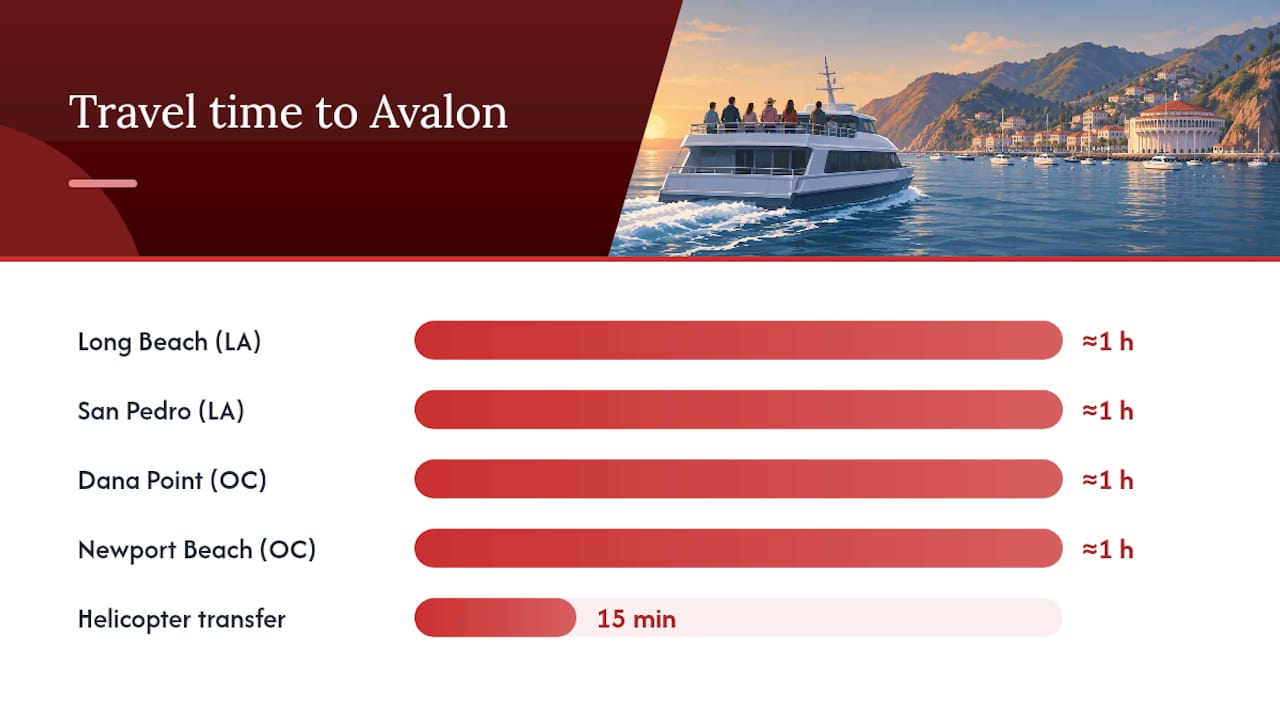
Most day trippers get to Catalina Island on Catalina Express, which runs round-trip service from Long Beach, San Pedro, and Dana Point. The Long Beach to Avalon route typically takes around an hour, and it’s the same story from the other ports, give or take a few minutes depending on conditions. Coming from Orange County, Newport Beach has its own operator, the Catalina Flyer, with similar timing.
Where you should depart from really comes down to where you’re starting your morning. Angelenos usually find Long Beach or San Pedro most convenient, while folks in Orange County or coastal San Diego often prefer Dana Point or Newport Beach to skip the freeway traffic north.
If you want to skip the boat entirely, a helicopter transfer gets you to Avalon in about 15 minutes instead of an hour on the water. It costs more and depends on weather conditions, but it’s a fun option if you’re short on time or just want the experience.
A few things to keep in mind before you book:
- Reserve your round-trip tickets in advance, since seats sell out fast on summer weekends and holidays according to Catalina Express.
- Arrive at the terminal at least 30 minutes before departure to check in and board.
- Print or download your tickets ahead of time, so you’re not fumbling with your phone at the dock.
- Check LoveCatalina’s visitor planning page for seasonal schedule changes before locking in your dates.
Private boat access is also an option if you or someone you know has a vessel, but for most visitors, the ferry is the simplest and most reliable way over.
Getting around Avalon and Two Harbors once you land
Avalon is small, walkable, and honestly one of the nicest things about the town. Crescent Avenue hugs the harbor and puts most shops, restaurants, and the Casino within a short stroll from where the ferry drops you off.
That said, golf carts are the classic way to explore beyond the main strip, and they’re rented by the hour. Book one early in the day since they go quickly, especially in summer, and note that some rental outfits cap trips at a couple of hours before you need to bring it back.
A few other things worth knowing:
- Taxis and bike rentals are available in Avalon for shorter hops if you don’t want a golf cart.
- Personal vehicles are heavily restricted on the island, so don’t plan to park your own car in Avalon.
- Two Harbors has far fewer services, so if you’re headed there, plan your transportation before you arrive rather than figuring it out on the fly.
Two timed day trip itineraries that actually work
Here’s the thing about Catalina: trying to do everything in one day is how people end up exhausted and disappointed. Pick one town, follow a schedule, and you’ll actually enjoy yourself.
Avalon full-day itinerary:
- Catch an early ferry (7:45 or 8:15 AM departure) so you land in Avalon by 9 AM.
- Spend the first hour wandering Crescent Avenue and grabbing coffee.
- Rent a golf cart around 10 AM for a loop through Avalon’s hillside neighborhoods.
- Head to Descanso Beach Club for lunch and beach time from noon to 2 PM.
- Book an afternoon activity, like a glass-bottom boat tour or snorkeling excursion, for 2:30 PM.
- Wrap up with souvenir shopping or a harbor-side drink around 4:30 PM.
- Board your return ferry no later than 6 PM to give yourself buffer room.
Pro Tip: Book your return ferry leg at the same time as your outbound trip, ideally for a departure at least an hour later than you think you’ll need, since missing it can turn your day trip into an unplanned overnight, per Catalina Express’ travel policies.
Two Harbors outdoor day itinerary:
- Depart San Pedro on an early sailing to reach Two Harbors by mid-morning.
- Rent a paddleboard or kayak and spend an hour or two on the water.
- Take a short hike along the isthmus for coastal views.
- Relax on a quiet beach before grabbing a light lunch.
- Head back to the dock early, since Two Harbors has far fewer return sailings than Avalon.
Two Harbors runs on a much thinner ferry schedule, so double-check timing before you commit to this route.
The best things to do in Avalon on a short visit
Avalon packs a lot into three square miles, according to LoveCatalina’s visitor FAQ, so picking two or three activities beats trying to cram in everything.
- Descanso Beach Club is worth a stop for beach access, cabanas, and food right on the sand. Give it one to two hours if you want to actually relax.
- Catalina Casino makes for a quick self-guided walk around the outside, or book ahead for a short guided tour if you want the full history.
- A golf cart loop through the hills above town is one of the best ways to see Avalon’s views without a lot of walking.
- Water activities like kayaking, snorkeling, or a glass-bottom boat tour let you see the harbor from a completely different angle.
- Crescent Avenue has dining and shopping for every budget, from casual seafood spots to sit-down restaurants with a harbor view.
Pick based on your energy level and your wallet. A beach afternoon and a golf cart loop is plenty for most people in a single day.
What to do in Two Harbors for a day visit
Two Harbors is Catalina’s quieter side, and it’s where you go for nature over nightlife. The isthmus setting means water on both sides, calm coves for paddleboarding and kayaking, and mellow hikes that don’t require serious gear.
- Paddleboard or kayak rentals are available right at the harbor for exploring the coves.
- Short, easy hikes offer coastal views without the commitment of a full backcountry trek.
- Quiet beaches here see a fraction of Avalon’s foot traffic, which is the whole appeal.
Just remember that ferry service to Two Harbors runs less frequently than to Avalon, so confirm your return time before you plan your day around it, and know that food and rental options are more limited here too.
Conservancy rules and safety basics for hiking the interior
If your day trip includes any hiking beyond the main towns, the Catalina Island Conservancy requires free permits for many of its wildlands trails, and getting one helps rangers know who’s out there in case something goes wrong.
Carrying approximately one gallon of water per person is recommended for a full day of hiking, since natural water sources on the island aren’t reliable for drinking, according to the Conservancy’s naturalist guide. That’s a lot to carry, but dehydration on an exposed trail is no joke.
A few more essentials:
- Stay on designated trails at all times, both for your safety and to protect fragile habitat.
- Cell service is spotty to nonexistent in the interior, so don’t count on your phone for navigation or emergencies.
- Keep a wide distance from bison. They can run fast and jump higher than you’d expect, and the Conservancy strictly prohibits feeding or approaching any wildlife.
- Check for current trail closures before you head out, since the Conservancy adjusts access for safety and habitat protection.
Why a Conservancy eco tour might be the smartest use of your time
If you only have a few hours and want real context on the island’s ecology, a guided eco tour is hard to beat. Conservancy eco tours are naturalist-led, run about two to three hours, and take you into interior landscapes that aren’t open to general visitors.
- Naturalist guides explain the island’s restoration work and native species in a way self-guided exploring can’t match.
- Private tours are available if you want full control over timing and route.
- Tours typically depart from the Trailhead Visitor Center in Avalon, making logistics simple on a tight schedule.
Pro Tip: Book your eco tour for the morning if possible, so you still have the afternoon free for the beach or shopping.
What a day trip actually costs and how to pack for it
Your main expenses are the round-trip ferry, any activities like an eco tour or water rentals, a golf cart rental, and lunch. Costs vary a lot depending on season and how many extras you add, so check current fares directly on Catalina Express before budgeting your day.
Pack light but smart:
- Sunscreen and a hat, since there’s not much shade on the water or in Avalon’s open areas.
- A gallon of water per person if hiking is on your agenda.
- Comfortable walking shoes, even if you plan on renting a golf cart.
- Motion-sickness medication if you’re prone to it, just in case the crossing is choppy.
- A light jacket for the sea breeze, which can catch you off guard even on a warm day.
Pro Tip: Spring and fall tend to bring smaller crowds and milder weather than peak summer, so if your schedule is flexible, those seasons make for a more relaxed visit.
Always confirm your return ferry time before you get too deep into your day. It’s the one mistake that turns a great trip into a stressful one.
Where to park before you catch the ferry
Parking at your departure port is worth sorting out before travel day, not after you’re already circling the block. Most ferry terminals, including Long Beach, San Pedro, and Dana Point, offer paid lots either on-site or within a short walk, and rates typically run higher during peak summer weekends and holidays.

If you’re departing early in the morning, arriving with some buffer time gives you a better shot at a close spot, especially during busy season when lots fill up fast. Some terminals also offer covered or secured parking for an added fee, which is worth considering if you’re leaving a car there all day.
If parking costs or availability are a concern, consider getting dropped off at the terminal instead, or check if your departure port has a rideshare pickup zone nearby. Newport Beach’s terminal, used by the Catalina Flyer, has its own nearby lots as well, though space can be tighter than at the larger Long Beach terminal.
Whichever port you choose, check the terminal’s own parking information ahead of time rather than assuming availability, since policies and rates can shift seasonally.
What ferry and helicopter tickets actually cost
Ferry fares change based on season, route, and how far ahead you book, so the most reliable move is checking Catalina Express’ schedule and fares page directly before your trip. Prices can shift on holidays and during peak summer weekends, and booking early often means better availability even if the price doesn’t change much.
Helicopter transfers cost significantly more than the ferry, which makes sense given the speed and convenience, cutting your travel time from about an hour to roughly 15 minutes each way. If time matters more to you than money, it’s worth pricing out directly with the operator, since availability depends heavily on weather and demand.
Whichever option you choose, book both legs of your trip together if you can. It’s a lot less stressful than trying to lock down a return seat once you’re already on the island and enjoying yourself.
Accessibility for visitors with mobility needs or disabilities
Avalon is generally more accessible than Two Harbors, thanks to its compact, walkable layout and paved streets along the harbor. Many restaurants, shops, and the Catalina Casino area are reachable without significant elevation changes, though some of Avalon’s hillside streets do get steep.

Ferries operated by Catalina Express and the Catalina Flyer accommodate passengers with mobility devices, but it’s worth calling ahead to confirm boarding procedures and any space limitations for wheelchairs or scooters. The same goes for golf cart rentals and guided tours, since availability of accessible options can vary by vendor and season.
Two Harbors, with its more limited infrastructure, presents more challenges for visitors with mobility needs, so it’s worth reaching out to specific tour operators or the Conservancy if you’re planning an eco tour and need accommodations. Calling ahead is always the safer bet over assuming a service will work for your situation.
Focus beats ambition on a one-day trip
If I could give one piece of advice, it’s this: pick a lane and stick to it. Avalon is the smarter choice for a single day, simply because it has more to offer in a compact space. Save Two Harbors, and definitely the Trans-Catalina Trail, a 38.5-mile route best spread over three to five days, for a return trip when you’re not racing a ferry schedule. For more on stretching a short window into a full day out, our Channel Islands day trip guide covers similar logistics.
— Joshua
Let SoCal Sights help you plan the rest of your Southern California days
Once you’ve nailed your Catalina day trip, there’s a whole coastline of hidden spots worth exploring, and that’s exactly what dedicated local guides aim to provide: curated itineraries, local tips, and recommendations from residents to help visitors discover worthwhile experiences.

- Curated guides help you avoid sold-out activities and last-minute scrambling, whether you’re island hopping or exploring the mainland.
- Community-submitted favorites surface spots that don’t show up in the typical guidebook.
- Local businesses can get featured directly to travelers planning their next Southern California outing.
If you run a business that caters to day-trippers or weekend explorers, check out advertising with SoCal Sights to get your spot in front of people actively planning their next outing.
Sources
- Catalina Island Conservancy naturalist guide (permits, water, safety)
- Catalina Express — Long Beach port information
- LoveCatalina visitor planning and transportation info
FAQ
Is it worth going to Catalina Island for a day?
Yes, a Catalina Island day trip is worth it if you focus on Avalon and plan your ferry and activity bookings ahead of time. You’ll get a real taste of the island’s beaches, harbor town, and water activities without needing an overnight stay.
Who is the billionaire in Catalina Island?
Catalina Island’s development history is tied to the Wrigley family, of chewing gum fame, who purchased a controlling interest in the island and shaped much of Avalon’s early growth, including the Catalina Casino. Today, most of the island’s interior is managed by the nonprofit Catalina Island Conservancy for conservation rather than private ownership.
How much does a one-day trip to Catalina Island cost?
Costs vary based on your ferry route, activities, and time of year, so check Catalina Express’ fares page directly for current pricing before you budget. Your main expenses will be round-trip ferry tickets, any tours or rentals you book, and meals in Avalon.
Do I need a US passport to go to Catalina Island?
No, you don’t need a passport to visit Catalina Island since it’s part of California and accessible entirely through domestic ferry or helicopter travel. A standard government-issued ID is typically sufficient for booking and boarding your ferry.