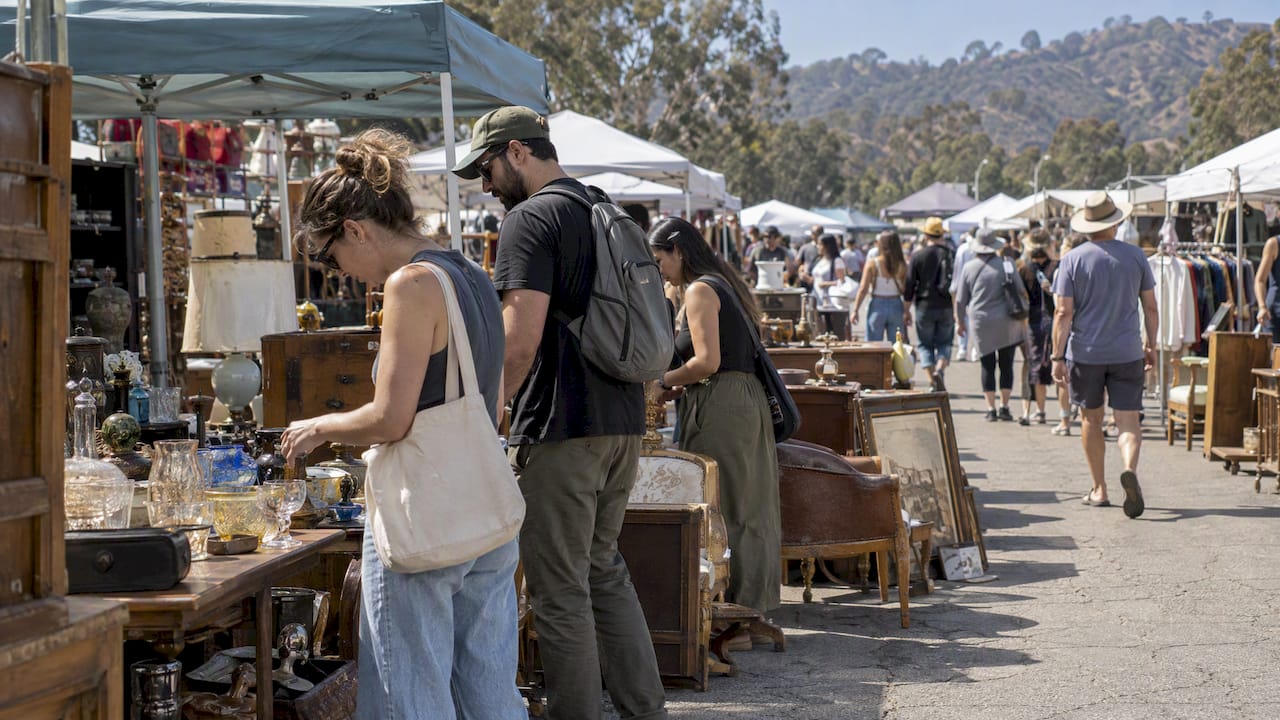
The best flea market in Los Angeles depends on what you’re hunting for. For sheer scale and antiques, it’s the Rose Bowl on the second Sunday of the month. For vintage fashion and people-watching, it’s the Melrose Trading Post every Sunday. For food, it’s Smorgasburg downtown. And for everyday bargains and a true neighborhood feel, it’s a swap meet like the one in San Fernando. I’ll walk you through each one, what it costs, when it’s open and how to shop it like a local.
TL;DR
- Biggest: the Rose Bowl Flea Market in Pasadena, second Sunday of every month, with more than 2,500 vendors.
- Best every-Sunday option: Melrose Trading Post at Fairfax High School, 9 a.m. to 5 p.m., $6 at the gate.
- Best for eating while you browse: Smorgasburg Los Angeles at ROW DTLA, Sundays 10 a.m. to 4 p.m., free entry.
- Best for bargains: the San Fernando Swap Meet, open five days a week, rain or shine.
- Bring cash, water, sun protection and comfortable shoes, and check each market’s official page before you drive, since prices and dates change.
Table of Contents
- Flea market or swap meet? Same hunt, different feel
- Your weekend calendar at a glance
- Rose Bowl Flea Market: the big one
- Melrose Trading Post: Sunday vintage with a purpose
- Smorgasburg Los Angeles: when you want to eat as much as shop
- San Fernando Swap Meet: the bargain hunter’s pick
- The monthly rotation: a fleas-on-every-Sunday trick
- How to shop like a regular
- Getting there and parking
- Our take: why LA fleas are worth the early alarm
- Run a market or a local business? Get seen by SoCal explorers
- FAQ
- Sources
Flea market or swap meet? Same hunt, different feel
In LA the two words overlap a lot. Generally, “flea market” points to vintage, antiques, handmade goods and curated vendors. “Swap meet” tends to mean a big, everyday-goods market: clothes, tools, phone cases, produce, snacks, often with a strong neighborhood character. Both are worth your time, and they scratch different itches.
L.A. Taco contributor Erick Huerta makes the case that swap meets reflect the communities around them, and buying there means supporting local sellers rather than chain stores. I agree with that. Some of my favorite Saturdays have started with a swap meet breakfast and ended with a bag of things I didn’t know I needed.
Your weekend calendar at a glance
Here’s the quick version. Details for each market follow.
| Market | Where | When | Entry |
|---|---|---|---|
| Rose Bowl Flea Market | Pasadena | 2nd Sunday of each month | Paid, varies by entry time |
| Melrose Trading Post | Fairfax High School, Hollywood area | Every Sunday, 9 a.m. to 5 p.m. | $6 cash at the gate |
| Smorgasburg Los Angeles | ROW DTLA, downtown | Every Sunday, 10 a.m. to 4 p.m. | Free |
| San Fernando Swap Meet | San Fernando | Tue, Thu, Fri, Sat, Sun | Check the market’s site |
Rose Bowl Flea Market: the big one
If you only do one, make it this. The Rose Bowl Flea Market runs the second Sunday of every month with more than 2,500 vendors selling antiques, vintage clothing, local art and specialty goods. Roughly 20,000 shoppers show up per event, so think of it as a day out, not a quick stop.
Next date: Visit Pasadena lists November 8, 2026, and the December date should fall on the 13th. Always double check the organizer’s calendar before you go.
Tickets: Visit Pasadena’s listing shows early VIP entry from 5 a.m. to 8:45 a.m. at $23.21 online and regular entry from 9 a.m. to 3 p.m. at $15.83 online, with children under twelve free with an adult. Older guides quote lower figures, which is a good reminder that gate prices move. Buy from the official source and trust the current number.
How to tackle it:
- Study the map before you arrive. The lot is huge, and clothing vendors cluster near the main entrance while antiques and furniture spread through the other lots.
- Decide if VIP is worth it. If you want first pick of furniture or rare vintage, the early hours are where the best pieces go. If you’re browsing for fun, regular entry is plenty.
- Wear a hat and plan to walk. Shade is limited and the walking adds up fast.
- Budget for parking. On-site parking is typically about $20.
Pasadena itself rewards a longer day. If you want to turn the flea into a full outing, our Pasadena hidden gems guide has community-vetted spots nearby for lunch and a wander.
Melrose Trading Post: Sunday vintage with a purpose
This is the market I send friends to when they want a reliable Sunday. The Melrose Trading Post sets up at Fairfax High School every Sunday, with handcrafted goods, vintage fashion, antique furniture and food. Hours are 9 a.m. to 5 p.m. according to a local flea guide.
Admission is $6 cash at the entrance, or $6 plus fees for a prepaid ticket. Children under 12 are free. The market is run by a nonprofit and the proceeds fund arts and leadership programs at the school, so your entry fee does something good.
It skews younger and fashion-forward: band tees, denim, jewelry, plants, vinyl, plus street food to keep you going. Expect crowds by midday. Go at opening for the best selection or in the last couple of hours when some sellers get flexible on price.
Smorgasburg Los Angeles: when you want to eat as much as shop
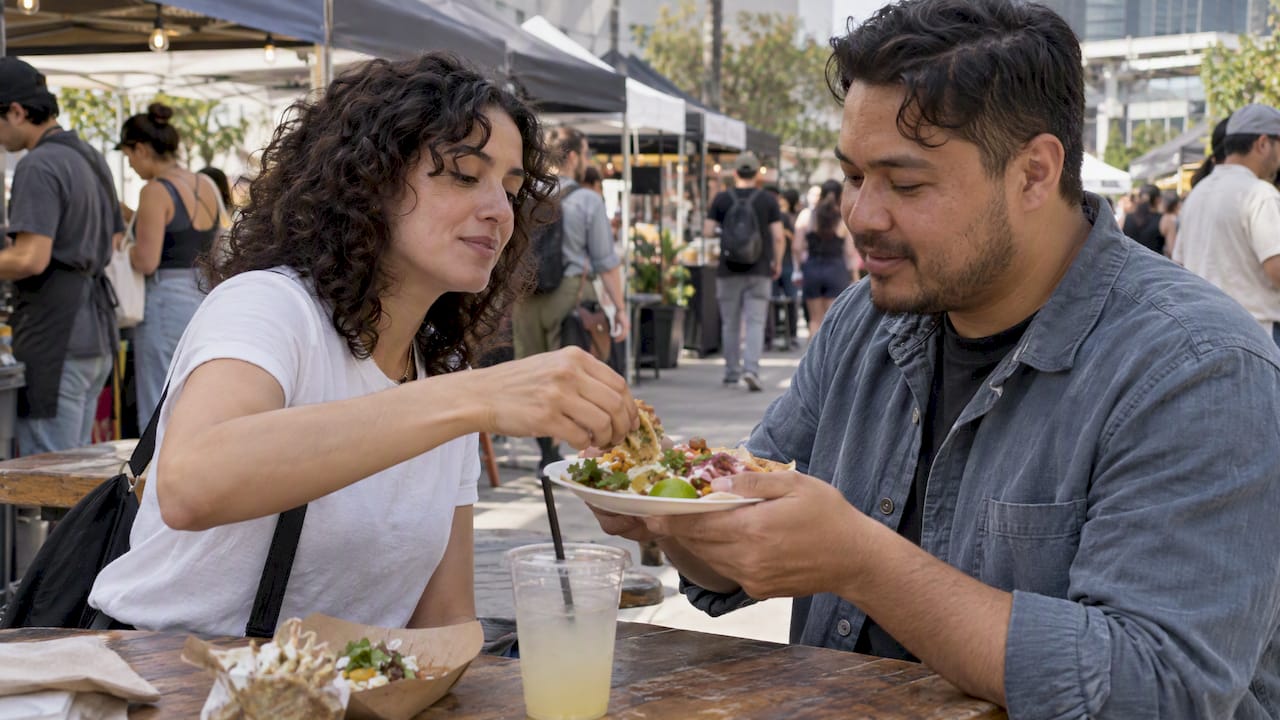
Not a classic flea market, but it belongs on this list. Smorgasburg Los Angeles takes over ROW DTLA at 777 S. Alameda St. every Sunday from 10 a.m. to 4 p.m. It has more than 90 food and shopping vendors and free entry, and weekly crowds run in the thousands.
My plan: eat first, then browse the shopping stalls with a snack in hand. Bring friends and share plates so you can try more. If you like the food-forward side of LA, our guide to food halls that launch chefs is a good next stop, and so is our rundown of night markets open now for after-dark options.
San Fernando Swap Meet: the bargain hunter’s pick
Head north to the Valley for something more everyday. The San Fernando Swap Meet covers 16 acres with about 1,000 vendor spaces, and it calls itself the largest outdoor swap meet in the San Fernando Valley. It’s open Tuesday, Thursday, Friday, Saturday and Sunday, rain or shine, and it reports more than 26,000 shoppers a week.
This is where you go for clothes, tools, houseware, party supplies, fresh fruit and a quick bite. The vibe is practical, lively and very local. Weekdays are calmer, weekends are packed.
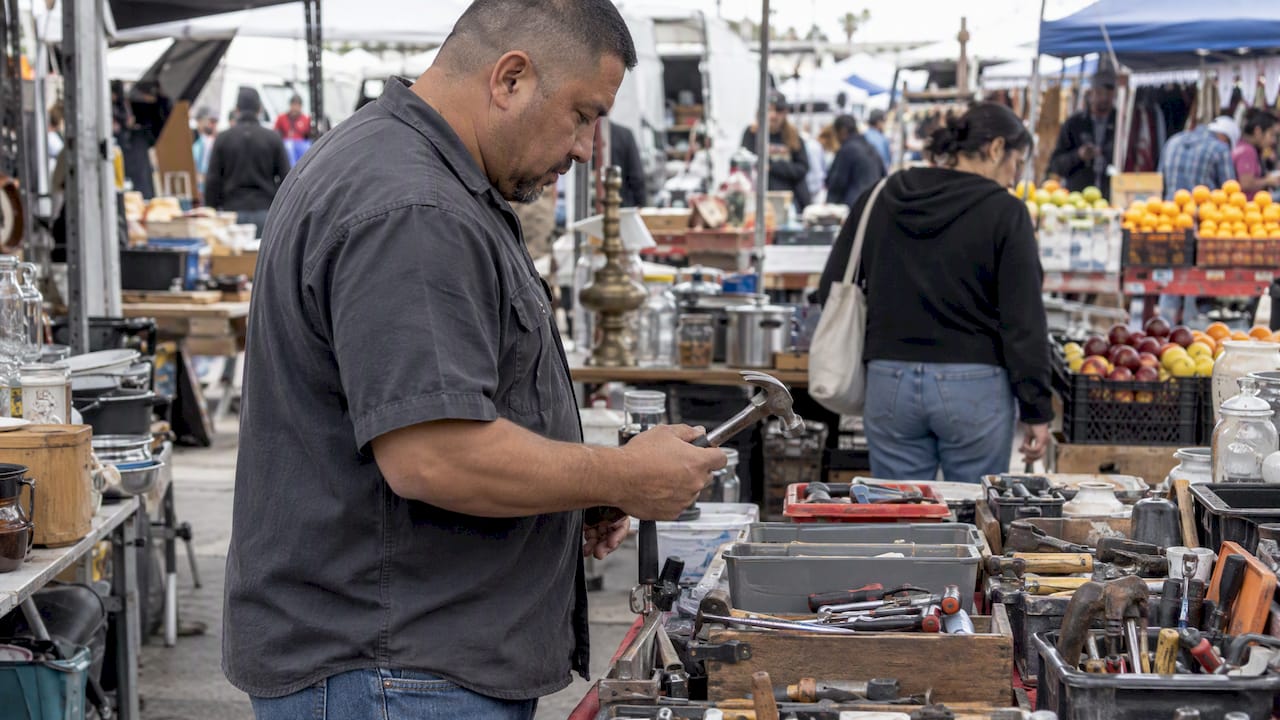
Swap meets elsewhere in Los Angeles County work the same way: big open-air lots, vendors selling at tiny margins, and a mix of languages on the signs. If you’re not sure which is closest, start with the market’s own website for hours and parking, since smaller swap meets change schedules more than the big events do.
The monthly rotation: a fleas-on-every-Sunday trick
Locals plan around a rhythm. In her LA Times Sunday itinerary, musician Jenny Lewis lays it out: the first Sunday is Pasadena City College, the second is the Rose Bowl, the third is Long Beach and the fourth is Topanga. She prefers the smaller first and fourth Sunday markets, and I get why: shorter lines, easier parking, more chatting with sellers.
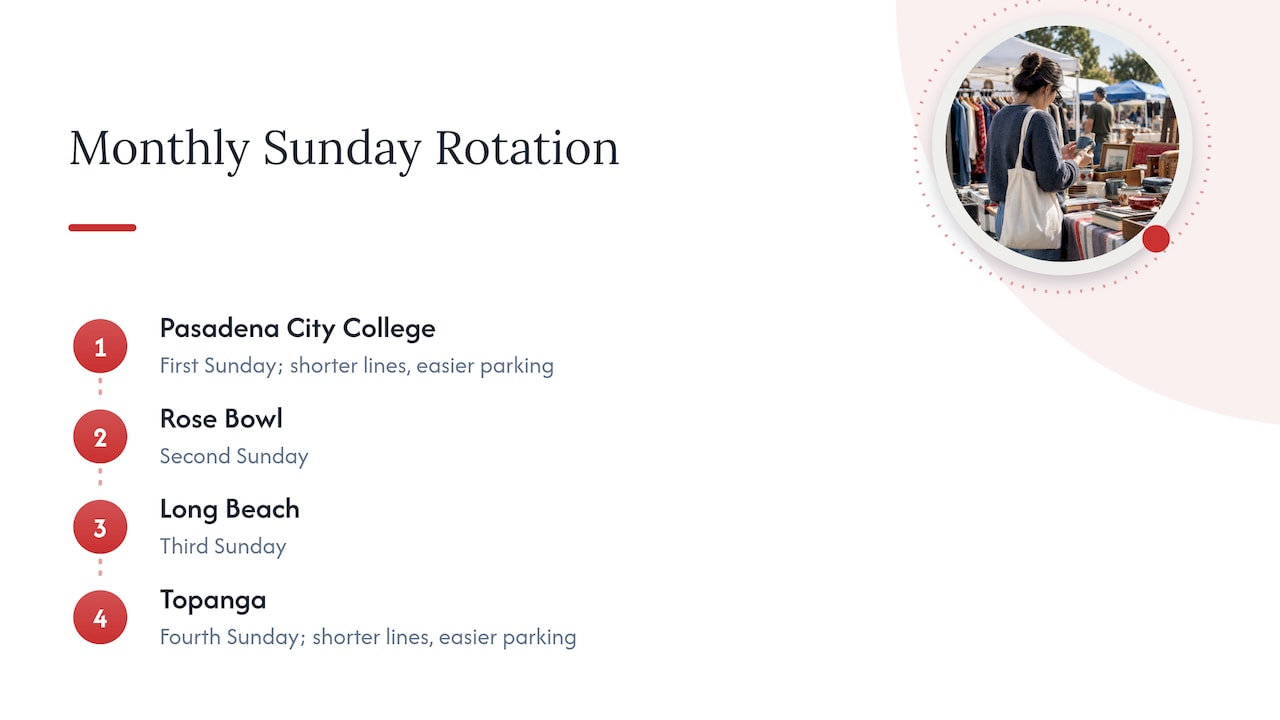
If you live here, that’s a built-in monthly ritual. If you’re visiting, match your trip to the Sunday that suits your style: huge and overwhelming (Rose Bowl) or smaller and slower (the others). Check each market’s official listing before you go, because rotating-schedule markets can shift.
If your weekend runs longer, pair a market with one of our offbeat picks or build a bigger plan from our weekend getaways from Los Angeles.
How to shop like a regular
Bring the basics. A local guide’s list says to pack water, cash, sun protection, comfortable shoes and snacks. I’d add a tote bag and small bills. Some vendors take cards or apps, many don’t, and some gates are cash only, like Melrose.
Haggle gently. Fair negotiation is part of the culture, but L.A. Taco’s advice is to be patient and respectful. Ask “is this your best price?” once, smile, and be ready to walk away kindly. Don’t lowball a handmade item that took hours.
Build rapport. Frequent visitors often get first look at the best pieces, like vintage textiles or mid-century finds that sellers set aside for people they recognize. Say hello, come back, remember names.
Hold your expectations loosely. Jenny Lewis describes flea marketing as going with an open heart and generous spirit, and I think that’s the secret. Go without a rigid shopping list and you’ll leave with something better.
Take a first lap. Walk the whole market before buying anything unless it’s a rare find. Prices and quality vary row by row.
Check the item. Look at stitching, joints and electrical cords on vintage goods, and test anything you plug in if the seller allows.
Getting there and parking
LA is a driving city, and flea markets are no exception. Rose Bowl and San Fernando have on-site parking, while Melrose has limited on-campus parking and fills early. Arrive early, carpool, or use a rideshare so you’re not circling blocks with a trunk full of lamps.
If you’re coming in from the airport, traveling with a group, or hauling bigger finds, booking a private chauffeur service in Los Angeles can save you the parking hunt. Otherwise, plan for a long walk back to the car and keep a blanket in the trunk to protect fragile pieces.
Our take: why LA fleas are worth the early alarm
We cover Southern California for people who’d rather find a place with a story than another tourist trap, and flea markets are about as close to that as it gets. A good market is a small economy of neighbors: someone’s grandmother’s glassware next to a young designer’s screen prints next to a taco stand with a line around the corner.
Our advice, after years of poking around SoCal: pick one market a month and go back. You’ll notice the regulars, learn which row has the best records, and start spotting the seller who always has the one thing you didn’t know you wanted. Skip the idea of a perfect itinerary. Go hungry, go early, bring cash, and let the day wander.
We also like that local markets keep small creators afloat. Organizers describing thriving pop-up markets point to connection between vendors and visitors as the reason they last. That’s the best reason to buy directly from the person who made it.
— Joshua
Run a market or a local business? Get seen by SoCal explorers
If you organize a market, pop-up or event, or run a shop or food spot that flea market crowds would love, you can reach the locals and visitors who read SoCal Sights. See the options on our Advertise With SoCal Sights page. We don’t publish a price there, so reach out through the page to learn what fits.
FAQ
What is the biggest flea market in Los Angeles?
The Rose Bowl Flea Market in Pasadena is the largest, with more than 2,500 vendors on the second Sunday of every month. It draws roughly 20,000 shoppers, so go early and bring a map.
Which LA flea market is open every Sunday?
The Melrose Trading Post at Fairfax High School runs every Sunday from 9 a.m. to 5 p.m., with $6 admission at the gate. Smorgasburg at ROW DTLA is also open every Sunday from 10 a.m. to 4 p.m., with free entry.
Where can I find swap meets in Los Angeles?
The San Fernando Swap Meet is a major one, open Tuesday, Thursday, Friday, Saturday and Sunday on 16 acres. Many other neighborhoods have swap meets, and each sets its own hours, so check the official site first.
Do LA flea markets take cards?
Some vendors do and many don’t, and some entrances are cash only, like Melrose. Bring small bills and use a nearby ATM before you arrive rather than inside the market.
Can I bargain at flea markets?
Yes, politely. Ask once for a better price, be respectful, and accept a no gracefully. Bargaining is more welcome on secondhand and bulk goods than on handmade pieces.
Sources
- Rose Bowl Flea Market, Visit Pasadena
- Rose Bowl Flea Market 2026 guide, NewsDeskly
- Melrose Trading Post tickets, TicketSource
- LA Flea Markets Guide, Gem
- Smorgasburg Los Angeles, Food Journal Magazine
- San Fernando Swap Meet
- The 11 Best Swap Meets and Fleas, L.A. Taco
- How to have the best Sunday in L.A., according to Jenny Lewis, Los Angeles Times
- A Good Used Book, LAist