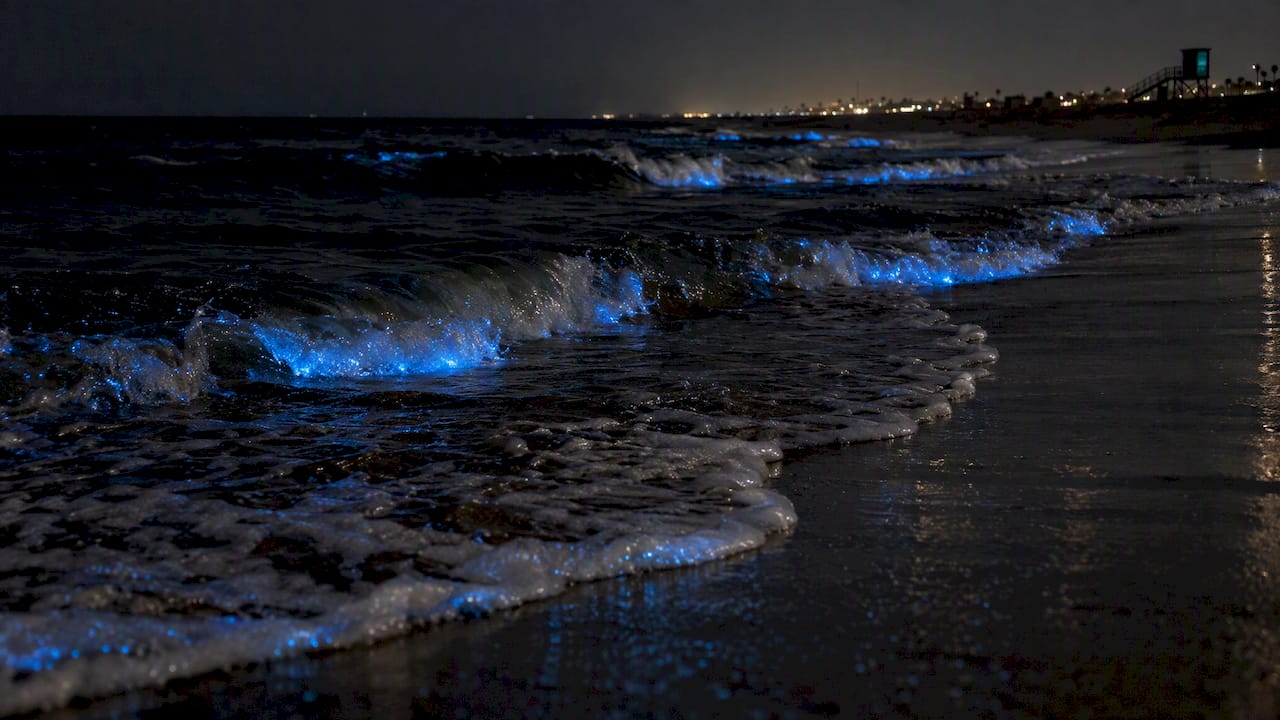
You can see bioluminescence in Orange County when a bloom of glowing plankton shows up offshore, and no one can promise the date. When it does, the best bets are Newport Beach, Laguna Beach (Crescent Bay and Crystal Cove get a lot of love) and Huntington Beach. Go to a dark stretch of sand at least two hours after sunset, check the surf report first, and keep your expectations flexible. I’ve stood on cold sand for an hour and seen nothing, and I’ve also watched a wave light up like a neon sign. That’s the deal.
TL;DR
- Orange County’s blue glow comes from microscopic dinoflagellates that light up when the water moves. They bloom unpredictably, so there is no guaranteed season or night.
- Newport Beach, Laguna Beach and Huntington Beach are the names that come up most. Pick a darker beach over a bright, crowded one.
- Arrive at least two hours after sunset. Local guidance suggests the window between 9 p.m. and 3 a.m.
- Most California red tides aren’t considered dangerous, but check CDPH alerts and OC beach advisories before you wade in.
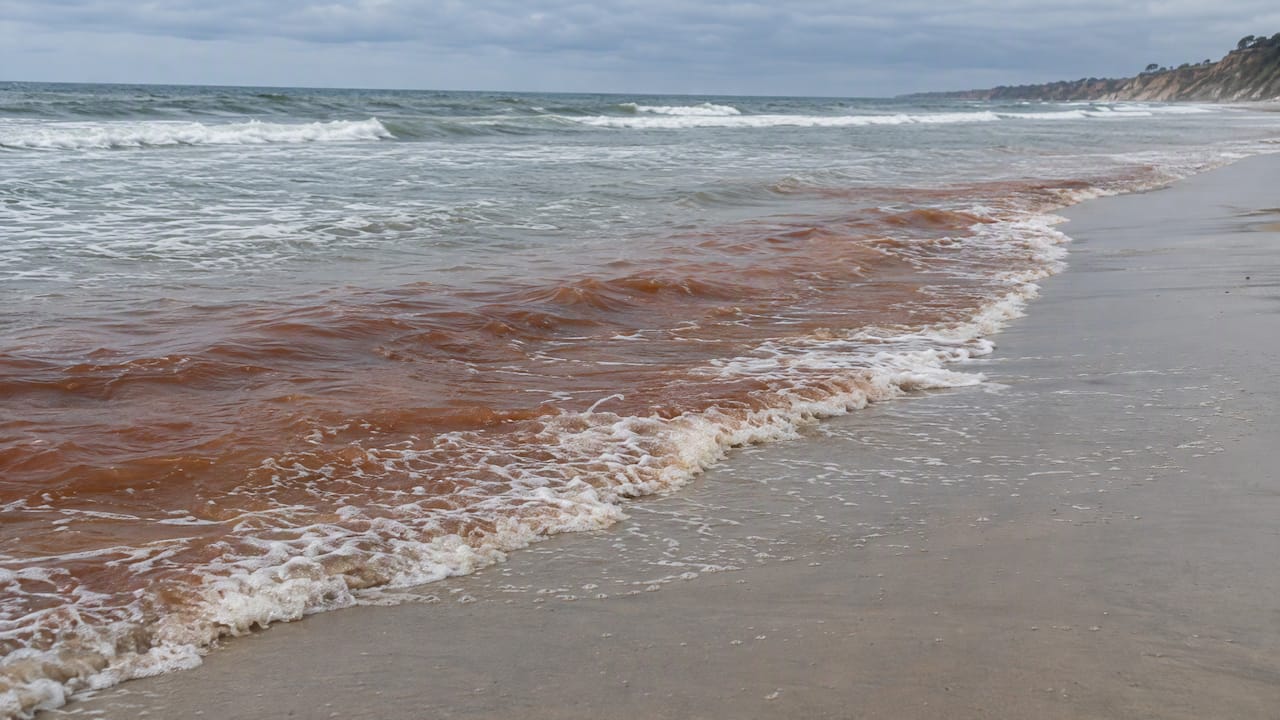
- Daylight reddish-brown water is a decent hint that a glow might follow after dark.
Table of Contents
- What is actually making the water glow?
- When bioluminescence shows up in Orange County
- Where to look: Newport Beach, Laguna Beach, Huntington Beach and more
- How to check before you go
- The best way to see it
- Is it safe to get in the water?
- Other places in the U.S. with glowing water
- A few ways to turn a glow hunt into a full night out
- What we think about chasing the glow
- Run a local business or event in Orange County?
- FAQ
- Sources
What is actually making the water glow?
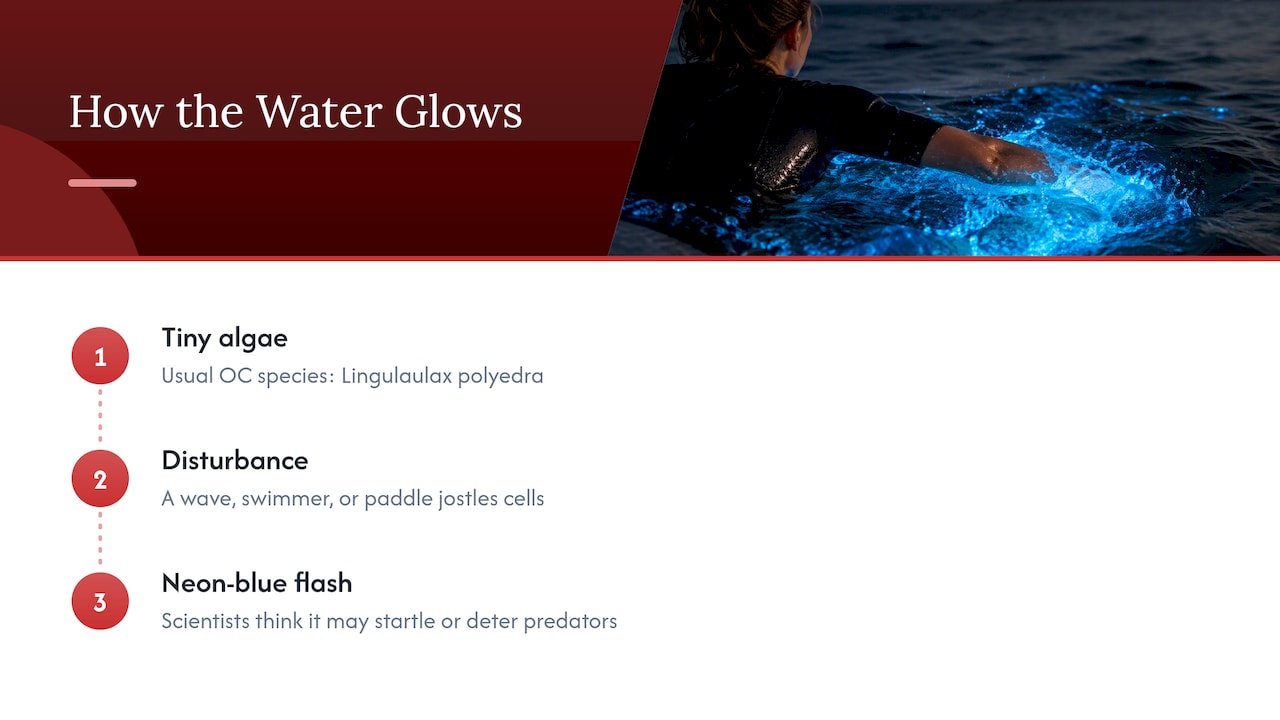
The blue light comes from tiny single-celled algae called dinoflagellates. In Orange County, the usual suspect is a species called Lingulaulax polyedra (formerly Lingulodinium polyedra). According to Scripps Institution of Oceanography, when these organisms get jostled by a breaking wave, a swimmer or a paddle, they give off a neon-blue flash. Scientists think it works as a way to startle or avoid predators.
So the glow isn’t a steady light. It’s a reaction. Wave crests that crash or churn are where it pops, which is why surf lines and wet sand footprints look the most dramatic. Calm, flat water may show only a faint shimmer where you splash.
Why it’s called a red tide too
Here’s the twist that surprises people. When the same organisms are packed in thick, the water often turns reddish-brown in daylight. That’s why these events are also called red tides, as Scripps explains. If you see rusty, tea-colored water at the beach in the afternoon, it’s worth coming back after dark.
What sets off a bloom
Nobody can schedule these. Warmer water, nutrients washed in by rainstorms and the way the ocean circulates all seem to play a part, according to reporting in the Los Angeles Times. The right mix of those things can be there one week and gone the next.
When bioluminescence shows up in Orange County
Short answer: it’s a gamble, but you can improve your odds.
Historically, Southern California red tides leaned toward late summer and early fall. In recent years, Scripps notes, they’ve most often happened in spring. The same page says past events have lasted anywhere from a few days to a few weeks, and sometimes a month or more. A local guide to OC glow spots also points out that sightings can happen at any time of year, with a better chance in warmer months.
Here’s how I think about it:
| Situation | What it means for your plans |
|---|---|
| Reddish-brown water in daylight | Good sign. Plan a night visit within a day or two. |
| Local reports and photos from the past 24 hours | Best signal. Go that same evening. |
| Spring or early fall with warm water | Better odds, but still no promise. |
| Nothing reported, flat seas, bright full moon | Low odds. Go for dinner instead. |
A streak can run for days or weeks, so if you hear that it’s “on,” you often have more than one night. Still, I wouldn’t wait. Intensity changes from night to night and from beach to beach.
Where to look: Newport Beach, Laguna Beach, Huntington Beach and more
Orange County has about 42 miles of coastline, and the glow doesn’t light up all of it evenly. Bloom patches drift. What follows is where people most often report seeing it, so treat it as a starting list, not a guarantee.
Newport Beach
Newport Beach gets named as one of the prime viewing spots in the county, and a 2026 Newport Beach Signal story on a national list of glowing-wave destinations puts the city in that conversation. Locals share photos of electric-blue waves along the shoreline whenever it happens. The beaches near the Balboa Peninsula are easy to reach, but they also have city lights. Walk away from the pier and the brightest streetlights if you can.
Laguna Beach
Laguna’s coves are naturally darker, with cliffs blocking a lot of light. Crescent Bay and Crystal Cove keep coming up in local enthusiast reports as favorites during active streaks, though it varies from week to week. Access is tight, though, and parking is limited. If you’re new to Laguna’s coves, my guide to Laguna Beach hidden coves, parking and tides covers the practical side. Stairs and uneven paths in the dark are no joke, so bring a headlamp with a red-light mode for the walk down.
Huntington Beach
Huntington Beach is wide and open, with long stretches of sand and big breaking waves, and breaking waves are exactly what make the glow flash. Reports have come from around the pier area north toward Sunset Beach. The wide shoreline gives you room to get away from the lit pier and fire rings, and a long walk north or south often makes the difference.
Dana Point and other options
The same Orange County guide lists Dana Point Harbor among spots worth trying. Harbors are calmer, so you may see glow mostly where oars, paddles or boat wakes disturb the water. Those guided by-boat outings are a popular alternative when the surf is quiet, and they are worth looking up if you don’t want to stand on a beach hoping.
If you want to round out a coastal weekend, my list of hidden Southern California beaches has quieter stretches that are often darker after sunset.
How to check before you go
Checking costs you five minutes and can save a two-hour round trip.
- Check the surf and tide reports. Local guidance says to look at them before heading out (Newport Beach Signal). Gentle surf is good, since you still want waves to break. Rough, dangerous surf is not worth it.
- Look for fresh reports. Social media posts and local outdoors groups from the last day are the most useful signal. Anything older than two days is background noise.
- Look at the water in daytime. Reddish-brown patches are a hint.
- Check beach advisories. The OC Health Care Agency runs ocbeachinfo.com, which lists current closures and warnings, and a hotline at (714) 433-6400.
- Check the moon. A bright full moon washes out the glow. A new moon is ideal.
Want a broader refresher on reading conditions before you go near the water? This ocean safety checklist is a handy rundown on conditions, closures and advisories.
The best way to see it
Timing matters more than gear.
- Wait for full dark. Scripps says displays are best seen from a dark beach at least two hours after sunset (Scripps). A local guide recommends the 9 p.m. to 3 a.m. window (Newport Beach Signal).
- Let your eyes adjust. Give it 15 or 20 minutes without checking your phone. You’ll see much more.
- Watch the breaking waves. The brightest flashes happen right as a wave crests and crashes.
- Walk the wet sand. Footsteps can leave brief blue glints, which is a fun bonus.
- Bring a jacket. Orange County nights by the ocean get cold, even in summer.
Don’t expect what you see in long-exposure photos. Cameras gather light for seconds, so a photo can look far brighter than what your eyes saw. To the naked eye, it’s usually a soft electric-blue flicker. That’s still magical.
If you want a second perspective on the same routine down the coast, I wrote about waiting two hours after sunset for bioluminescence in San Diego, and most of the advice carries over.
Is it safe to get in the water?
Getting your feet wet is a personal call. According to Scripps, most California red tides aren’t considered dangerous, but they can sometimes cause skin or eye irritation or breathing discomfort, especially for people with asthma. If you have asthma, or a child with it, stay on the sand and talk to your doctor if you’re unsure.
A few more things I keep in mind:
- Check the alerts first. The California Department of Public Health runs a Phytoplankton Monitoring Program that uses volunteer-collected samples to help warn the public about harmful algal blooms.
- Think about recent rain. After significant storms, runoff can affect Orange County waters, and health agencies advise against water contact for at least 72 hours, according to the OC Health Care Agency. Rain can also feed blooms, so the best glow nights sometimes come right when the water is least inviting.
- Skip night swimming. Dark water, rip currents and cold temperatures are a bad combination. Standing ankle-deep or on the sand gives you the same show.
- Go with someone. Beaches empty out late, and the cliffs near coves are hard to navigate in the dark.
Other places in the U.S. with glowing water
Orange County isn’t the only place to see this. Florida’s Space Coast lagoons and Puerto Rico’s famous bays are known for glowing water, and Southern California neighbors like San Diego see the same blooms we do. Those spots have different organisms and tend to be more predictable, while our OC blooms are the wild-card kind. That unpredictability is part of why a good night here feels like winning a small lottery.
A few ways to turn a glow hunt into a full night out
Since the glow can disappoint, I like to build an evening around it so the night works either way.
- Start with dinner or dessert early. Eat in Laguna, Newport or Huntington, then walk down at 9 p.m.
- Make it a date. Sand, stars and a possible light show beat most restaurant plans. My Orange County date ideas have more options for every budget.
- Mix in something daytime. The next morning, Laguna Beach tide pools are a great low-key follow-up, if you go early and check the tides.
- Try something offbeat. If the ocean doesn’t cooperate, offbeat things to do in Orange County gives you a plan B.
- Keep it cheap. Plenty of spots in my Orange County hidden gems under $20 work for a lazy beach day before the night shift.
What we think about chasing the glow
We’ve spent a lot of time exploring Southern California for SoCal Sights, and the thing we keep coming back to is that the best local experiences aren’t the ones you can reserve. Bioluminescence is a perfect example. It rewards people who pay attention: those who notice the rust-colored water at lunch, who read the surf report, who have a friend text them “it’s glowing at Crescent Bay.”
That’s why we built SoCal Sights around community tips. A single recent report from a local is worth more than any article, including this one. Our advice is to treat a glow hunt like a bonus. Plan a good evening, pick a dark beach, bring a warm layer, and if the waves light up, great. If they don’t, you still had a night at the beach. We’d rather you leave happy and a little curious than disappointed because you were promised a sure thing.
— Joshua
Run a local business or event in Orange County?
If you run a coastal tour, a restaurant near the beach or an evening event, the people searching for night-time ocean activities are exactly who we reach: visitors and locals looking for things to do that feel authentic. SoCal Sights offers advertising, featured placements and membership options for local businesses and event organizers.

You can see how it works on our Advertise With SoCal Sights page. If you’d rather browse first, our guide to local businesses in Southern California shows the kind of places we feature.
FAQ
Can you see bioluminescence in Orange County right now?
It depends on whether a bloom is offshore this week, and the only way to know is to check fresh local reports and surf conditions. Blooms can last days, weeks or more than a month, according to Scripps. If you see reddish-brown water in daylight, that’s a hint. Then head to a dark beach after full dark.
What time of night is best to see the glow?
Go at least two hours after sunset, when the sky is fully dark. Local guidance suggests the window from 9 p.m. to 3 a.m.. Give your eyes about 15 minutes to adjust, and avoid bright phone screens.
Is bioluminescent water dangerous to touch?
Most California red tides aren’t considered dangerous, but they can sometimes cause skin or eye irritation or breathing discomfort, especially for people with asthma (Scripps). Check CDPH alerts and OC beach advisories before you go in. If you have asthma or a medical condition, stay on the sand and ask your doctor.
Where is the best place to see bioluminescence in Newport Beach or Huntington Beach?
There’s no single best spot, because the glow shifts along the coast. In Newport Beach, walk away from pier and street lights. In Huntington Beach, use the long stretches of sand to get away from the lit pier and fire rings. Check recent photos and reports to see which beach is lit up that week.
Does it only happen in Orange County?
No. It shows up along much of the Southern California coast, including San Diego, and in other U.S. places such as Florida’s lagoons and Puerto Rico. Each place has its own organisms and its own timing. In Orange County, it comes and goes with blooms.
Sources
- FAQ: Red Tides and Bioluminescence off California, Scripps Institution of Oceanography
- Southern California’s bioluminescent waves are back, Los Angeles Times
- Newport Beach makes national list for bioluminescent waves, Newport Beach Signal
- Where to Find Bioluminescence in Orange County, Life is Good OC
- OC Ocean Water Quality Report 2023-2024, OC Health Care Agency
- Phytoplankton Monitoring Program, California Department of Public Health
- Ocean Safety Checklist: Beach and Water Activity Guide