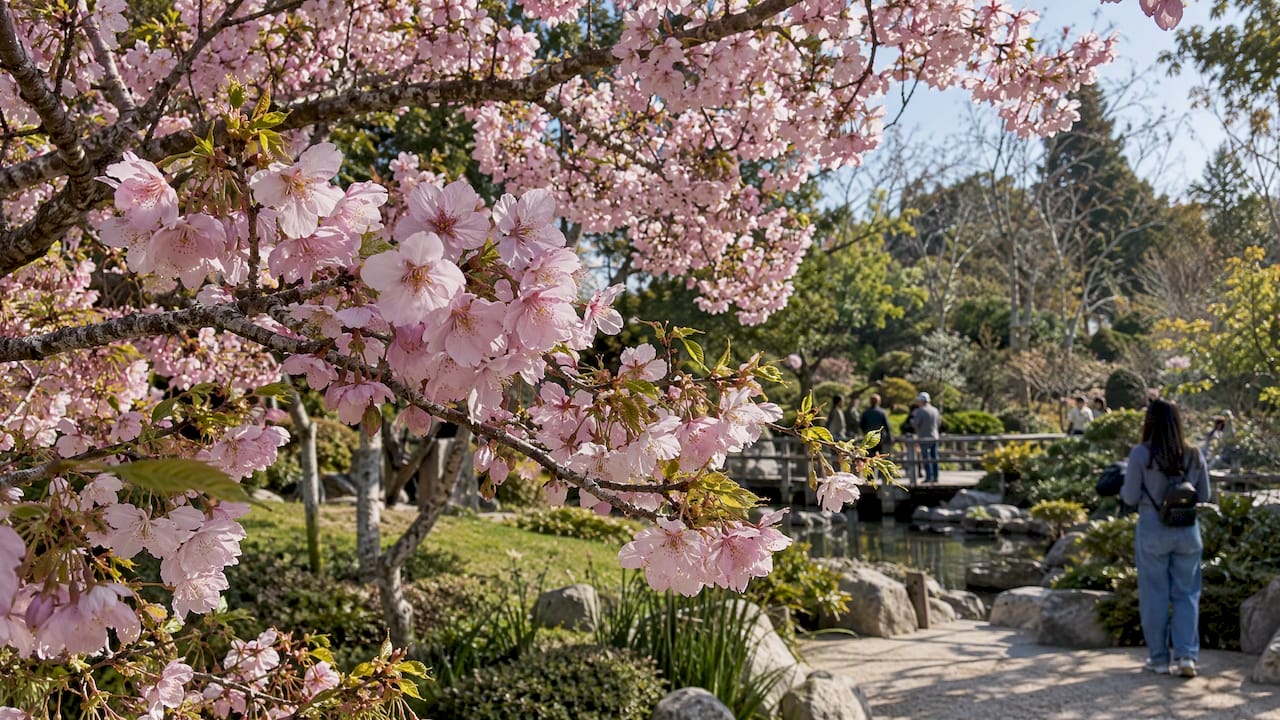
A popular spot for cherry blossoms in San Diego is the Japanese Friendship Garden in Balboa Park, which also hosts the city’s Cherry Blossom Festival. The catch is that festival dates are set in advance while peak bloom depends on the weather, so the two may not line up. Check the garden’s bloom updates before you buy tickets or plan your day.
TL;DR:
- The 2026 festival ran March 12–14 and March 19–21; local reporting listed admission at $18–$25, while official ticket prices can vary.
- The garden does not issue refunds when festival displays are sparse, so review its bloom percentage about a week before your visit.
- The free bridge near Plaza Panama overlooks the lower garden, so check tree coverage there before paying admission or entering the garden.
- Festival parking fills quickly, and parking is not included with admission; MTS Route 7 or Rapid 215 can help you avoid the hunt.
- Crowded paths and steep, narrow routes can challenge wheelchair, walker, or stroller access, so call the garden ahead to discuss accommodations and allow extra time.
Table of Contents
- 1. Where can you see cherry blossoms in San Diego?
- 2. Cherry Blossom Festival dates, tickets, and what to expect
- 3. When do cherry blossoms peak in San Diego?
- 4. Getting there: transit, parking, and crowds
- 5. Visitor tips for families, photographers, and accessibility
- 6. Where to eat near the cherry blossoms
- 7. How to build a fuller itinerary around your visit
- Why hanami is worth the planning
- Reach seasonal visitors with SoCal Sights
- FAQ
- Sources
1. Where can you see cherry blossoms in San Diego?
Balboa Park is the heart of local cherry blossom viewing, and the Japanese Friendship Garden is a notable local spot. Here are the spots worth your time, in the order we’d visit them:
- Japanese Friendship Garden & Museum (JFGM): The cherry grove sits in the lower garden, and that’s where the main display happens. It’s a notable choice because the trees are planted with paths, ponds and Japanese garden design all around them, so every photo has a story behind it.
- The bridge near Plaza Panama: This elevated spot gives you a free overview of the lower garden without going inside. It’s handy when you want to gauge how full the bloom is before paying for admission.
- Other Balboa Park viewpoints: Walk the rim of the canyon and you’ll find a few more angles looking down toward the garden. They’re good for wide shots with the park’s Spanish Colonial buildings in the frame.
- Neighborhood parks and streets: Cherry trees are planted in some local parks and public spaces around the county. Treat these as bonus finds rather than planned destinations, since bloom windows shift from tree to tree.
For quieter moments, go on a weekday morning or late in the afternoon. Mornings give soft light and thinner crowds at the garden, and the bridge is pleasant almost any time of day.
2. Cherry Blossom Festival dates, tickets, and what to expect
The 2026 festival ran across two separate weekends: March 12–14 and March 19–21. That multi-weekend format means you can pick the weekend that suits your schedule, or go twice if you like.
Here’s what to know before you go:
- Ticket types: The garden lists pre-sale, standard, day-of and Express Pass tickets, with price ranges shown on the official ticket page. Local reporting on the 2026 festival referenced admission of $18–$25, so buying ahead is usually the smarter move.
- Programming: Expect performances, a children’s area, food vendors, a beer and sake garden, merchant vendors, community art and seasonal features. It’s a celebration of hanami, the Japanese tradition of enjoying blossoms together.
- Hours: Public listings described festival days running from 10 AM to 5 PM or 6 PM, with a last admission time before closing. Check the ticket page for the exact schedule on the day you’re going, since hours can change.
- Official listing: The city also keeps an event page for the Cherry Blossom Festival at the Japanese Friendship Garden, which is useful for double-checking dates.
If you want to see the garden’s longer-running seasonal art, the garden has hosted community exhibits like the Sakura display across February through April in past years.
3. When do cherry blossoms peak in San Diego?
Peak bloom varies from year to year depending on the weather. A warm stretch can pull it earlier, and a cool one can push it back. Once a tree is fully open, its bloom window is short.
That’s why festival dates and peak bloom don’t always match. The garden is upfront about it: peak bloom is weather-dependent, and refunds aren’t issued if there’s little to no display during the festival. The programming stays lively either way, but if the blossoms are your main reason for going, timing matters.
The garden posts bloom percentage updates on its website, so you can check how open the trees are before you commit to a date. Source: Japanese Friendship Garden Q&A
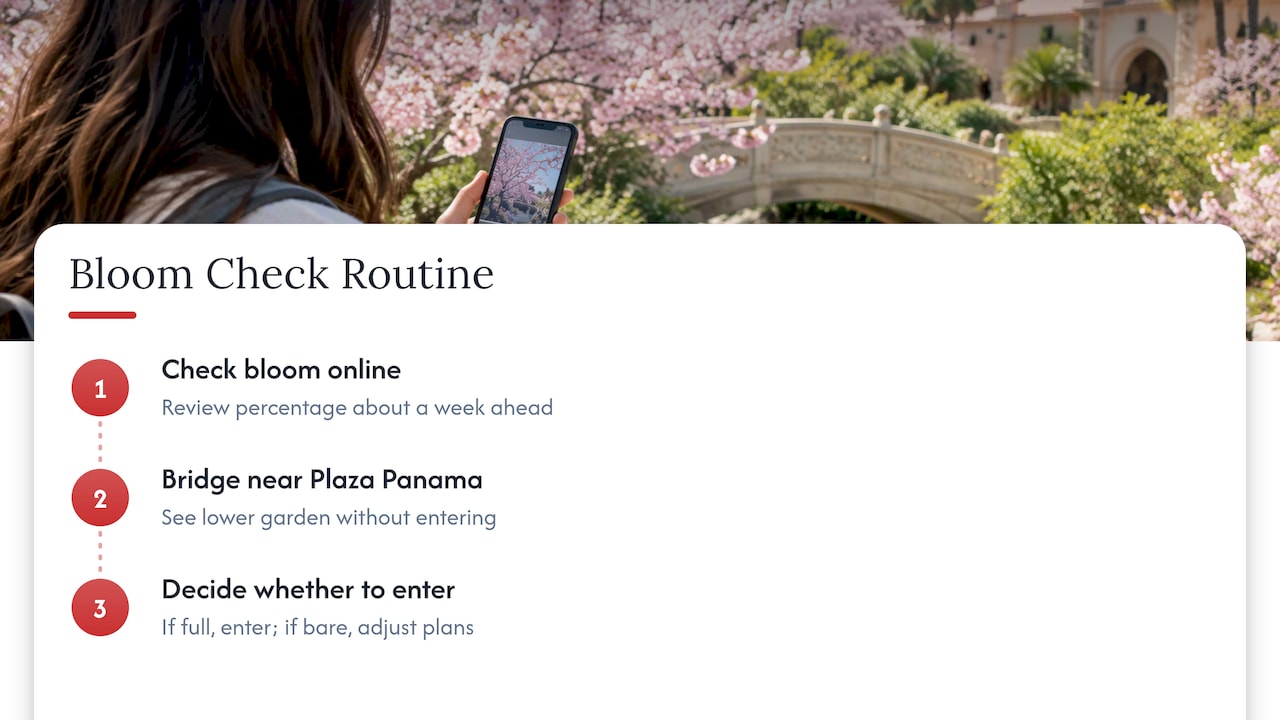
Here’s a simple routine. A week or so before your visit, check the bloom percentage. On the day, stop at the bridge near Plaza Panama first, since the garden notes it’s a useful elevated vantage for seeing the lower garden’s bloom without entering. If the trees look full, head in. If they’re still bare, you can adjust your plans.
4. Getting there: transit, parking, and crowds
Balboa Park gets busy during the festival, and parking is the first thing to go. San Diego’s transit agency recommends MTS Route 7 or Rapid 215 because parking in the park is heavily impacted during the event. Parking near the garden isn’t included with festival tickets either, so plan for that cost and the walk.
- Check your ticket and the festival hours, and note the last admission time.
- Take MTS Route 7 or Rapid 215 if you can, and skip the parking hunt.
- Arrive early, or aim for late afternoon before last admission, to dodge the thickest lines.
- Build in extra time to move between the garden’s paths, which slow down during peak hours.
- Call ahead if you need accessibility accommodations.
Pro Tip: The garden warns of extreme crowds and limited mobility at peak festival times, so if anyone in your group uses a wheelchair, walker or stroller, call ahead and plan for extra time on the paths.
5. Visitor tips for families, photographers, and accessibility
A little prep makes the day smoother, whether you’re chasing photos or wrangling kids.
- Pack smart: Layered clothing, water, sun protection and a small bag for purchases will cover most of what you need.
- Photographers: Early morning and late afternoon give the best light. A weekday or early entry helps you avoid crowds in your frame, and the bridge near Plaza Panama is a great spot for an overview shot.
- Families: Ask about admission for young children before you go, and think about a baby carrier instead of a stroller, since some garden paths are steep and narrow.
- Mobility: Crowded paths and limited flat routes can be tough. Move slowly, take breaks, and call the garden ahead of time to talk through your options.
- Pace yourself: The festival has a lot going on. Pick two or three things you want to see and let the rest be a bonus.
6. Where to eat near the cherry blossoms
Between the festival food vendors and Balboa Park’s own dining, you can eat well without leaving the area. Inside the garden, the festival has food vendors and a beer and sake garden, so you can graze while you walk. That’s the easiest option if you want to stay in the moment.
When you’re ready for a proper meal, walk out toward the park’s central spine. The area around the Prado and Plaza de Panama has cafes and sit-down spots, and there’s usually a place to grab coffee and a pastry before heading in. Weekday mornings are calmer, and a late lunch after the lunch rush works well.
If you’re making a full day of it, think about the order. A light snack before you go in keeps you from rushing, and a sit-down dinner afterward gives you something to look forward to once the crowds thin. Call or check hours ahead, since park restaurants change schedules around big events.
For a wider list of ideas, our guide to free San Diego picks and Balboa Park tips can help you stretch the budget, and our San Diego weekend itinerary covers coastal views and local flavor if you’re staying longer. We don’t name specific restaurants here because menus and hours shift, so we’d rather point you to what’s current than send you somewhere closed.
7. How to build a fuller itinerary around your visit
The cherry blossoms take a morning or an afternoon, not a whole day, so pair them with something else. Balboa Park itself is the obvious partner. Once you’ve seen the garden, wander the park’s other gardens, plazas and museum buildings, and you’ve got a full day without driving anywhere.
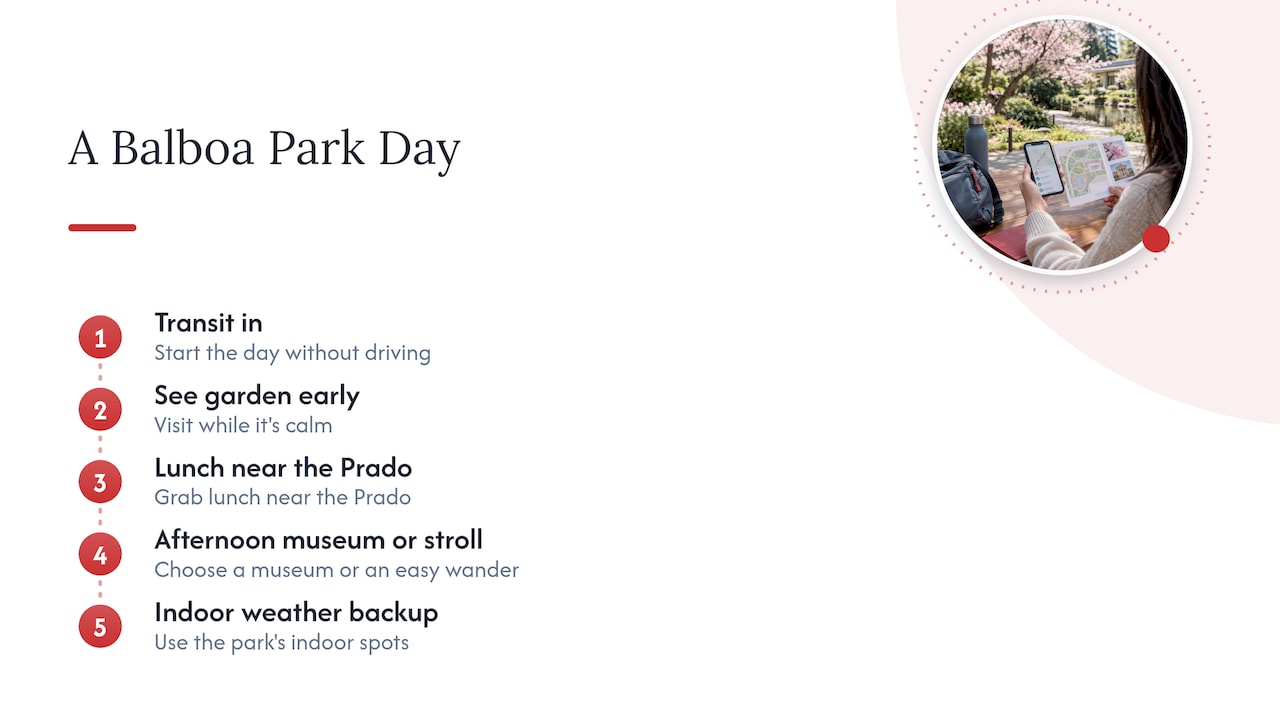
A simple plan looks like this: take transit in, see the garden early when it’s calm, grab lunch near the Prado, and spend the afternoon on a museum or a stroll. If the weather turns, the park’s indoor spots give you a backup.
Want to stretch it into a weekend? Our San Diego weekend itinerary pairs park time with coastal views. If you love flowers more than blossoms specifically, the Carlsbad Flower Fields are another seasonal option a short drive north, and Japanese garden fans heading up the coast can compare notes with our look at Japanese gardens in Los Angeles.
The trick is not to overschedule. One main event, one meal you’re looking forward to, and one easy wander is plenty.
Why hanami is worth the planning
I think of hanami as the one time of year when a whole city agrees to slow down and look at something beautiful together. Here in San Diego it’s a smaller, friendlier version of the big blossom celebrations, and that’s part of the charm. My tip: if you miss the festival weekend, go on a quiet weekday morning and watch the light hit the trees from the bridge. It costs nothing and feels like a secret. If you’ve got a favorite hidden spot or a photo you’re proud of, send it our way, because we love sharing what locals find.
— Joshua
Reach seasonal visitors with SoCal Sights

Festival season brings crowds looking for things to do, and we help local businesses and event organizers get in front of them. If you run a shop, food spot or event near Balboa Park, our Advertise With SoCal Sights membership puts you in front of people planning their days.
- Seasonal visibility for local vendors and organizers
- Featured placements next to guides readers already use
Visit our membership page to see how it works and get started.
FAQ
Where are there cherry blossoms in America?
Cherry blossoms grow in many parts of the country, with some of the best-known displays in the Washington, D.C. area. In Southern California, the Japanese Friendship Garden in San Diego’s Balboa Park is a top local spot, and it hosts a yearly Cherry Blossom Festival.
Is the Japanese Friendship Garden in San Diego dog friendly?
The garden’s official pages don’t give a clear answer, so check with the garden before you bring a dog. Call ahead or review the garden’s visitor policies, especially on festival days when the paths get crowded.
Can I grow cherries in San Diego?
Cherry trees can be tricky in San Diego’s mild climate because many varieties need cold winters. If you’re curious, ask a local nursery which flowering varieties suit our area, since ornamental blossom trees and fruiting cherries have different needs.
Why did they cancel the Cherry Blossom Festival?
We don’t have an official source that confirms a cancellation, so check the garden’s festival page for the latest status. The garden also explains that bloom timing and festival dates often don’t align, and that refunds aren’t given if blooms are limited.
Sources
- 2026 Cherry Blossom Festival — Japanese Friendship Garden
- Cherry Blossom Festival Tickets — Japanese Friendship Garden
- Q&A — Japanese Friendship Garden