Month: September 2026

  • Orange County Hidden Gems You Can Visit for Under $20

    Orange County Hidden Gems You Can Visit for Under $20

    Orange County hidden gems worth your time share three traits: they’re cheap or free, they’re rarely crowded, and you won’t find them on a hotel lobby flyer. This list covers the state parks, botanical preserves, tide pools, and tucked-away restaurants that make up the real Orange County, plus the budget tricks and access details that keep a visit smooth instead of stressful.


    TL;DR:

    • Most hidden gems in Orange County are free or low-cost, but parking fees at spots like Crystal Cove can add to the expense unless timed with low tide.
    • Accessibility is key, with parks like Peters Canyon offering free parking, paved trails, and early-morning birdwatching, while tide pools require checking tide charts.
    • Visitors can save money by visiting during weekdays, using rideshare or biking, and combining free nature stops with affordable local food markets.
    • Many spots, such as the Pirate Tower and Niguel Botanical Preserve, remain uncrowded because of limited signage, access restrictions, or timing, especially around low tide.
    • Planning ahead by checking official pages for closures, tide times, and parking helps maintain a smooth, budget-friendly visit to these low-profile destinations.

    Socalsights
    Find More Southern California Hidden Gems
    SoCal Sights helps locals and visitors discover curated activities, food spots, and unique itineraries beyond the usual travel guides.

    Explore SoCal Sights

    Table of Contents

    Orange County Hidden Gems Worth Tracking Down

    I’ve grouped these by what makes each one worth the drive. Some are wide-open nature spots, some are quiet gardens, and a couple are food finds that happen to sit next to a landmark. Here’s the full rundown.

    Crystal Cove State Park anchors this list for a reason. It covers nearly 4,000 acres of coastline, backcountry, and underwater habitat, and most visitors only ever see the sand. Beyond the beach, you’ve got a historic district of several dozens of restored 1920s cottages (some rentable, most just fun to walk past) and a stretch of protected marine water with named tide pool zones like Reef Point, Rocky Bight, Pelican Point, and Treasure Cove. Day-use parking runs about $15 per vehicle. Go on a weekday morning if you want the cottages and tide pools without a crowd.

    Niguel Botanical Preserve is the quietest garden in South County, and almost nobody outside Laguna Niguel knows it exists. It’s a free, publicly accessible collection of drought-tolerant and native plantings maintained as a community botanical preserve, and it’s the kind of place you can wander for 20 minutes on a lunch break or spend two hours photographing succulents. No entrance fee, minimal foot traffic, and shaded benches make it a solid pick for a slow afternoon.

    Peters Canyon Regional Park centers on a reservoir most Irvine residents drive past without ever stopping. The park has a network of trails looping the water, including sections of the paved Lake View Loop that stay flat and accessible for strollers or wheelchairs, plus steeper offshoots for anyone wanting a real workout. Birdwatchers show up early for herons and hawks. Parking is free at the main lot off Jamboree Road.

    Laguna Beach Pirate Tower, tucked into the Victoria Beach cliffs, is a stone turret built in the 1920s that looks like it wandered out of a fairy tale. It’s only reachable at low tide, and there’s no sign pointing you to it, which is exactly why it stays uncrowded.
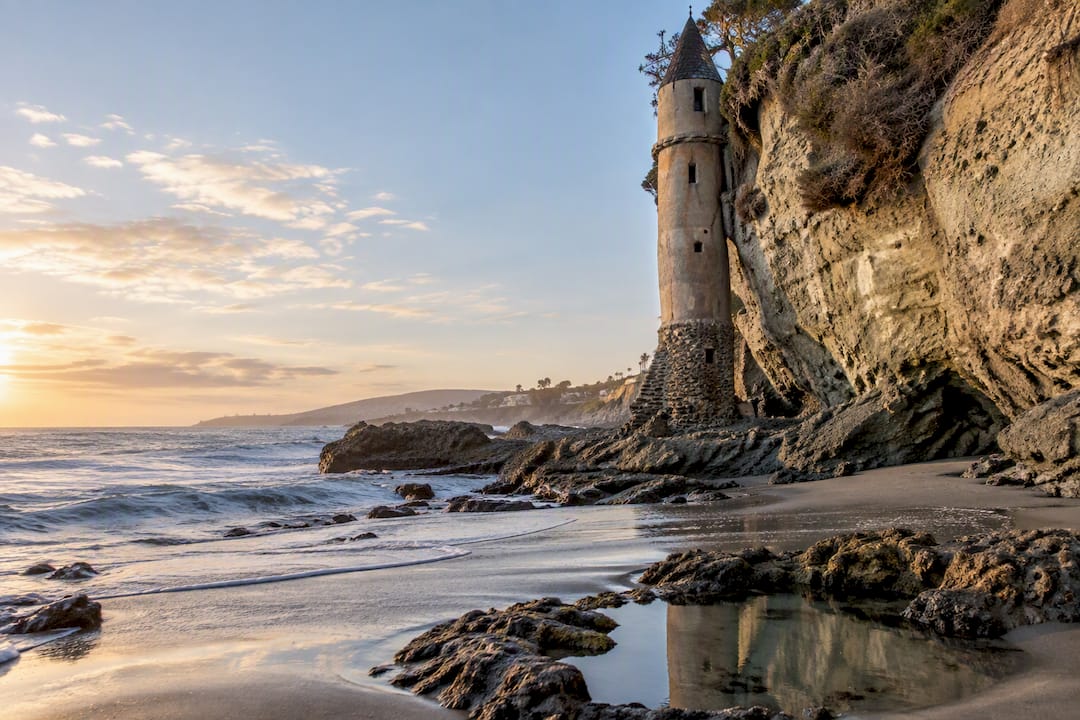
    Stone Pirate Tower on Victoria Beach

    Thousand Steps Beach in South Laguna is famous locally for its brutal staircase (closer to 200 steps than a thousand) and the payoff at the bottom: a wide, quiet beach that tourists staying near Main Beach rarely bother finding.

    Anaheim Packing House turns a 1919 citrus packing plant into a two-story food hall with dozens of vendors, and it’s routinely named a top pick in Orange County hidden-gem roundups for the sheer range of affordable food under one historic roof.

    Laguna Canyon Winery proves you don’t need rolling vineyards to taste good wine in OC. It’s an urban tasting room set right in Laguna Canyon, pouring flights without the Temecula drive.

    Jungle House, a private residence turned into an Instagram-famous jungle facade in Costa Mesa, isn’t open for tours, but it’s a free five-minute photo stop worth a detour if you’re already in the area.

    Sherman Library & Gardens in Corona del Mar packs koi ponds, a tropical conservatory, and rotating botanical displays into a small footprint. Admission is modest, and the on-site café makes it an easy pairing with a Crystal Cove morning.

    Koi pond and tropical conservatory garden

    The LAB Anti-Mall in Costa Mesa mixes independent shops, street art, and a food court that skips the usual mall chains entirely. Parking is free, and there’s no admission.

    Bolsa Chica Ecological Reserve near Huntington Beach and its Seal Beach counterpart give you wetlands, migratory birds, and boardwalk trails minutes from the sand, with zero entrance fee.
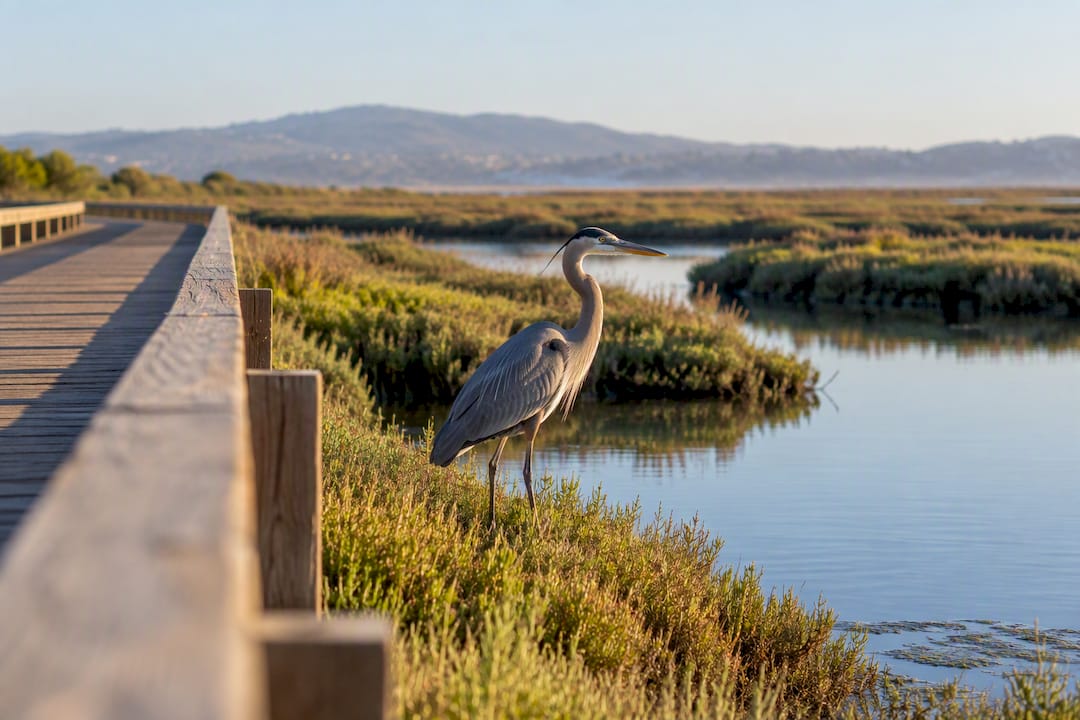
    Heron beside Bolsa Chica wetlands boardwalk

    Irvine Great Park, including its Farm + Food Lab, rounds out the list. The city-run programming mixes community farming, seasonal events, and open green space that functions as a hidden gem simply because most visitors never make it past the balloon ride.

    How to Visit Orange County Hidden Gems on a Budget

    Keeping these trips cheap comes down to timing and a little planning, not luck.

    1. Check the official park or preserve page the morning of your visit for closures, fee changes, or reservation windows.
    2. Look up the day’s tide chart if you’re heading to Crystal Cove or the Pirate Tower. Tide pools and the tower path are only safe and visible around low tide.
    3. Park free where you can. Peters Canyon, Niguel Botanical Preserve, Bolsa Chica, and The LAB all skip day-use fees; Crystal Cove is one of the few that charges (about $15).
    4. Consider rideshare or biking for spots near town centers, like the Anaheim Packing House or The LAB, to skip parking altogether.
    5. Bundle a free stop (a garden or reserve) with a cheap food stop (a market or food hall) so the whole day costs under $20 outside of gas.

    Pro Tip: Download a free tide chart app before you leave the house. Arriving 45 to 90 minutes ahead of low tide gets you the best tide pool viewing at Crystal Cove and safe passage to the Pirate Tower, and it means you won’t be circling for parking once the lot fills up.

    Where Locals Actually Eat Near These Spots

    Skip the boardwalk tourist traps and try these instead.

    • Darkroom, tucked into an unmarked business park, is proof that some of Orange County’s best food hides where you’d least expect it. Local food coverage points to this as deliberate positioning: a seasonal, technique-driven menu that skips flashy tourist real estate on purpose. Call ahead since reservation policies and hours run differently than a typical storefront.
    • Anaheim Packing House doubles as your food-hall home base if you’re bouncing between Central OC stops. Dozens of vendors means you can grab a $6 taco or a $20 tasting flight in the same building.
    • A neighborhood farmers market (check Irvine, Laguna Beach, or Corona del Mar’s weekly schedules) is the cheapest, most authentic way to snack your way through a garden or reserve visit without sitting down anywhere.

    Nature Spot Access, Safety, and Seasonal Notes

    Tide pools at Crystal Cove are only worth the trip around low tide, so check a tide chart before you go, and expect the lot to fill early on weekend low-tide mornings. Peters Canyon’s Lake View Loop stays paved and flat near the entrance, while the outer trails climb and turn to dirt, so pick your route based on who’s walking with you. Fire season can trigger sudden trail closures at both Peters Canyon and Crystal Cove’s backcountry, so a quick check of the OC Parks or state park page the morning of your visit saves you a wasted drive.

    How Socalsights Finds These Spots

    We build these lists from a mix of park and preserve authorities, local reporting, and tips submitted by people who actually live here. A place makes the cut when it’s authentic, low-cost or free, and genuinely accessible, not just Instagram-bait with a parking nightmare attached. Community submissions matter as much as official sources; locals tend to know which trail floods first or which lot fills by 9 a.m.

    — Joshua

    Skip the Guesswork With a Ready-Made OC Route

    This platform offers readers curated plans to avoid piecing together information from many sources. Instead of cross-referencing park hours, tide charts, and parking fees yourself, our curated guides map the stops, the timing, and the budget hacks in one place.

    Socalsights

    Browse the types of SoCal Sights we curate, from single-day lists to multi-stop routes, or grab a Southern California road trip itinerary if you want to string Orange County’s hidden gems together with stops further up the coast. If you’re extending the trip north, our unique things to do in Los Angeles list picks up right where this one leaves off. Start with the full collection of 100+ SoCal Sights and pick your next stop.

    Sources

    FAQ

    What are some hidden gems in Orange County?

    Standouts include Crystal Cove State Park’s tide pools and historic cottage district, the Niguel Botanical Preserve, Peters Canyon Regional Park, the Laguna Beach Pirate Tower, and food finds like Darkroom and the Anaheim Packing House. Most of these cost little to nothing beyond gas and, at Crystal Cove, a parking fee.

    What is the most beautiful place in Orange County?

    Crystal Cove State Park regularly tops that conversation thanks to its nearly 4,000 acres of coastline, marine conservation area, and tide pools at Reef Point, Rocky Bight, Pelican Point, and Treasure Cove. Sherman Library & Gardens is the answer if you want beauty without sand in your shoes.

    What are California’s best kept secret spots?

    Within Orange County, the Niguel Botanical Preserve, Peters Canyon Reservoir, and the Laguna Beach Pirate Tower rank among the least crowded, and all three cost nothing to visit. Statewide, secret spots tend to follow the same pattern: public land with no marketing budget behind it.

    Where do billionaires live in Orange County?

    Newport Beach, Newport Coast, and parts of Laguna Beach hold some of Orange County’s wealthiest residential enclaves, though none of that changes how you access the public parks and beaches nearby. Crystal Cove sits right next to some of that coastline and remains open to anyone willing to pay the roughly $15 day-use parking fee.

  • 5 Photo Ready Mural Routes in Los Angeles With Current Maps

    5 Photo Ready Mural Routes in Los Angeles With Current Maps

    Your best bet for street art in Los Angeles is a self-guided loop through the Arts District, Venice, Melrose, Echo Park, and South LA or Compton, using a current mural map rather than an old blog post since walls change fast. Pull up something like LA Mural Map before you go, wear shoes built for walking, and bring a charged phone. That combination beats any single “best mural” list.


    TL;DR:

    • Most murals are temporary; using real-time community-submitted maps and checking artist social media helps ensure the murals are still visible.
    • Combining neighborhood visits with local businesses and cultural sites offers a richer experience beyond just snapping photos of murals.
    • Walking loops in the Arts District, Venice, Melrose, and Boyle Heights allow for efficient viewing of diverse street art styles within time-sensitive visits.
    • Photographers should aim for golden hour light, use HDR or wide-angle lenses, and avoid reflections for the best mural images.
    • Respect property boundaries, ask permission when needed, and report damage to support the integrity and sustainability of LA’s street art scene.

    Socalsights
    Find More Hidden SoCal Gems
    Explore curated local recommendations for unique activities, food spots, and lesser-known attractions across Southern California.

    Explore SoCal Sights

    Table of Contents

    Where to Find Street Art in Los Angeles: Neighborhood Hotspots

    Each neighborhood has its own personality, and that shapes how you should plan your visit. Some areas reward a slow morning wander. Others are best knocked out in a tight hour before you head to lunch.

    The Arts District in Downtown LA is where warehouse walls turn into canvases the size of parking lots. Plan on a 1 to 2 hour walking loop through the streets east of Alameda, where you’ll find dense clusters of large-scale pieces packed close enough together that you barely need to drive between them.

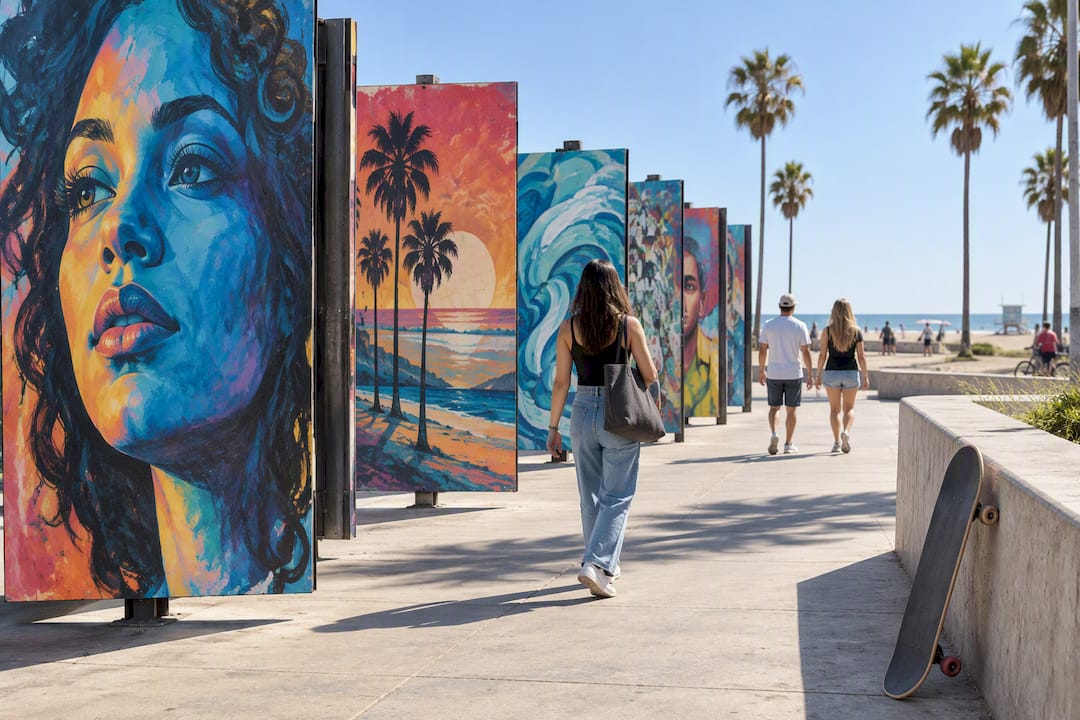
    Venice pairs its murals with the boardwalk, so you get street art and people-watching in one stop. The Venice Art Walls near Venice Beach rotate regularly, which makes them worth checking even if you visited a year ago.

    Colorful mural panels near Venice Beach

    Melrose and Fairfax offer street-level, Instagram-famous walls tucked between boutiques and coffee shops. These pieces tend to be smaller and more colorful, built for foot traffic rather than freeway views.

    Echo Park, Boyle Heights, and East LA carry some of the city’s most culturally rich work. Expect murals that tell community stories rather than chase likes, often tied to local history or family narratives.

    South LA and Compton round things out with civic and commissioned pieces that reflect neighborhood renewal, including newer freeway-adjacent projects tied to public investment.

    If you’re mapping out your day, consider:

    • Half-day trip: Arts District only, paired with lunch nearby
    • Full-day route: Arts District in the morning, Melrose midday, Venice at sunset
    • Photo-focused morning: Echo Park and Boyle Heights before 10 a.m., when light is soft and streets are quiet

    Pairing a mural walk with a sunset stop at the end of the day rounds out the trip nicely.

    How Do You Find Current Murals Around the City?

    Murals in LA don’t last forever. A wall you saw featured online last year might already be painted over, so the map you use matters as much as the neighborhood you pick.

    Start with LA Mural Map, a community catalog that documents murals neighborhood by neighborhood and relies on submissions to stay current. StreetArtCities offers a broader, global database that’s useful for cross-checking a specific piece. Some neighborhoods also maintain their own specialized maps through local arts councils.

    A few practical habits will save you a wasted trip:

    • Check the artist’s Instagram for recent posts tagging the mural’s location.
    • Look for coverage from local outlets like LAist or PBS SoCal, which often document murals when they’re painted or restored.
    • Cross-reference against OpenStreetMap-based tools, which many mural map sites use to build shareable route links you can send to friends before a trip.
    • If you find a mural that’s been painted over or damaged, submit an update through the map’s community form so the next visitor doesn’t waste a trip.

    Which Artists and Murals Should You Prioritize?

    Some names come up again and again when locals talk about the city’s best current work. Here’s where to start.

    1. Robert Vargas. Vargas is behind a freehand mural in Downtown LA that stretches past 60,000 square feet, an “opus” project painted without grids or projections. Seeing a piece at that scale up close changes how you think about what a single artist can pull off with a brush and a wall.
    2. Mr. B Baby. Known for wings murals across East LA, his work invites you to step into the frame and pose, part of a wave of interactive pieces that turn a wall into a photo op with substance. A recent Wingstop-sponsored series placed his wings across several neighborhoods, including Boyle Heights and Echo Park.
    3. Mike Norice. Norice has painted more than 20 murals across South LA aimed at breaking stereotypes and building community identity. His work tends to sit on small-business facades, so chatting with the shop owner nearby often gets you backstory you won’t find on any map.
    4. Anthony Lee Pittman. Pittman’s “Los Angelitos” mural in Compton reflects local themes tied to civic renewal, and it’s a good anchor point if you’re building a South LA route.

    Round out any list with the classics: Venice Art Walls, the Container Yard near ROW DTLA, and the ever-changing walls along Melrose.

    What Are the Best Photography Tips for Street Art?

    Golden hour, roughly an hour after sunrise or before sunset, gives murals warm, even light without the harsh shadows midday sun creates. Overcast days are underrated too, since flat light removes glare and lets colors read true on your camera.

    A few gear notes:

    • A wide-angle lens helps with massive Arts District walls, but for anything larger than your frame, shoot vertical panels and stitch them later.
    • On a smartphone, turn on grid lines and shoot in HDR mode for murals with bright colors against shadowed brick.
    • Always ask before shooting inside a business or if the mural sits on private property with someone nearby, especially for anything beyond a quick personal photo.

    Pro Tip: Reflections off nearby cars or windows can wreck an otherwise perfect mural shot. Shift your angle a few feet left or right before you snap the photo instead of trying to fix it later.

    Pair these habits with our guide to Instagram-ready photo spots around the city for more location ideas.

    How Do You Get Around LA’s Mural Neighborhoods?

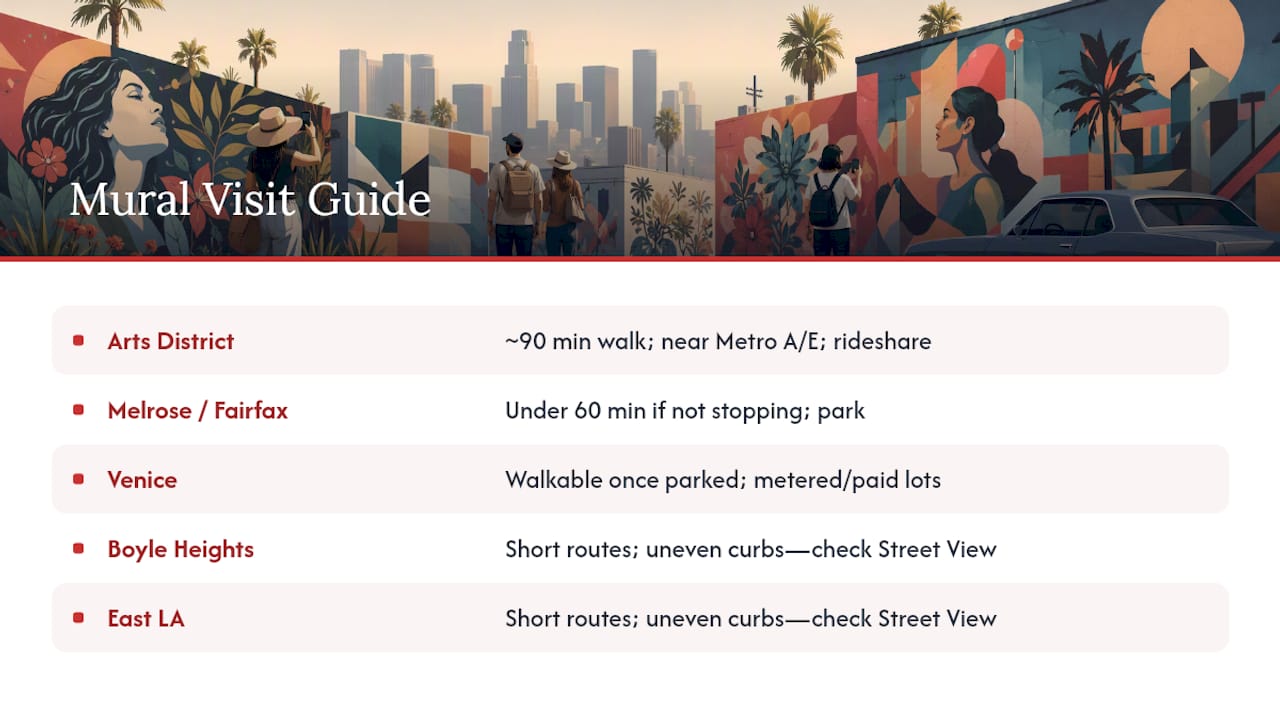
    Metro’s A and E lines get you close to Downtown Arts District murals, while rideshare covers the last mile well in most neighborhoods. Venice and Melrose are more walkable once you’re parked, but expect metered or paid lots near busy blocks.

    Budget your time by density: the Arts District rewards a slow 90 minute walk, while Melrose and Fairfax can be knocked out in under an hour if you’re not stopping for coffee. Sidewalk conditions vary block to block, and wheelchair users should expect some uneven curbs in older sections of Boyle Heights and East LA, so scouting via Street View beforehand helps.

    Los Angeles mural route planning comparison

    Stick to daylight visits, stay on public sidewalks, and treat residential blocks with the same courtesy you’d want in your own neighborhood.

    Commissioned murals, the ones you’ll see featured on maps and in this guide, are legal works created with property owner permission or through city and nonprofit arts programs. Unauthorized graffiti on private or public property without consent is a different matter entirely and isn’t something this guide covers or endorses; if you’re unsure about a specific wall’s status, that’s a question for a local arts organization, not a travel guide.

    A simple respect checklist keeps every visit clean:

    • Don’t climb on murals or structures to get a better angle.
    • Leave plaques, signage, and artist credits untouched.
    • Ask permission before any commercial photo or video shoot.
    • Credit the artist by name when you share photos online.
    • If you spot vandalism or damage to a mural, report it through the community map rather than attempting to fix or clean it yourself.

    How Socal Sights Keeps This Guide Fresh

    We lean on local tips as much as official maps, since murals shift faster than most guides update. Community members flag new walls, retired pieces, and small details, like which coffee shop has the cleanest bathroom near the Arts District loop or where you can actually park free for an hour in Venice. This piece was put together with input from Joshua, a Socalsights contributor who tracks the city’s changing wall art alongside the rest of our local sights coverage.

    What Actually Matters When You’re Chasing Murals

    Most guides treat street art like a checklist: hit these ten walls, snap ten photos, move on. That approach misses the point. The murals worth your time, Norice’s South LA work, Vargas’s downtown scale, Pittman’s Compton pieces, exist because artists were trying to say something about the neighborhood they painted in, not because they photograph well.

    Conventional advice also overrates having the “complete” list of murals and underrates timing. A mural map from six months ago can send you to a blank wall, since pieces get retired or painted over constantly. The smarter move is treating any list, including this one, as a starting point rather than gospel, then verifying with a current map before you drive across town for one wall.

    If you prioritize one thing, make it neighborhood immersion over mural counting. Spend real time in the Arts District or Boyle Heights, talk to a shop owner, notice how the art sits in its actual context. That’s the difference between a photo dump and a trip you’ll actually remember.

    — Joshua

    Want a Ready-Made Mural Route Instead of Building Your Own?

    Planning five neighborhoods, cross-checking maps, and figuring out parking takes real time, time most visitors would rather spend actually looking at murals. Membership programs offer local businesses and event organizers opportunities to reach sightseers and photographers using similar guides, while readers can access curated itineraries and printable route maps based on local knowledge.

    Socalsights

    Instead of piecing together five different neighborhood maps and hoping the information is current, a printable route pulls it into one page you can use offline, without cell service gaps in the Arts District throwing off your plans. If you run a local business or event near one of these mural corridors, you can also reach this exact audience by advertising with Socalsights. Check out the membership page to see current options for getting your spot in front of visitors already planning their next LA mural trip.

    Where to Verify Mural Status and Learn More

    A handful of resources cover what this guide can’t fit in full:

    • LA Mural Map catalogs murals neighborhood by neighborhood and takes community submissions to stay current.
    • StreetArtCities maintains a large global database useful for locating individual works outside LA’s borders too.
    • LAist and PBS SoCal regularly publish artist interviews and project background on major murals as they go up.
    • OpenStreetMap and MapLibre power many of the route-building tools behind mural map sites, letting you generate shareable links for a planned walk.

    Sources

    FAQ

    Which LA Street Has the Best Street Art?

    No single street wins outright, but the blocks east of Alameda in the Arts District pack in the highest density of large-scale murals within walking distance. Melrose Avenue between Fairfax and La Brea is the strongest pick for smaller, street-level walls.

    Where Is the Arts District in LA?

    The Arts District sits in Downtown Los Angeles, generally bounded by Alameda Street to the west and the LA River to the east. It’s reachable by Metro’s A Line and walkable once you’re there, with most major murals clustered within a few blocks of each other.

    Commissioned murals created with property owner permission are legal, while unauthorized graffiti on property without consent typically is not. Laws and enforcement vary by city and property type, so treat any specific legal question as one for a local arts organization rather than a general travel guide.

    Which US City Is Considered the Best for Street Art?

    Los Angeles ranks consistently among the top American cities for street art, thanks to its density of large-scale murals, active artist community, and ongoing public investment in commissioned work. Other cities like Philadelphia and Miami also carry strong reputations, but LA’s combination of scale, climate for outdoor art, and neighborhood variety keeps it near the top of most lists.

  • Arrive Before 9 AM: Laguna Beach Hidden Coves, Parking & Tides

    Arrive Before 9 AM: Laguna Beach Hidden Coves, Parking & Tides

    The best hidden coves in Laguna Beach are Thousand Steps Beach, Victoria Beach, Woods Cove, Shaw’s Cove, Diver’s Cove, Goff Cove, Fisherman’s Cove, and Totuava Beach. Every one of them rewards patience over convenience: check a tide chart before you leave home, arrive before 9 a.m. for parking, and don’t expect a lifeguard, a restroom, or a snack bar once you’re down on the sand.


    TL;DR:

    • Most of Laguna Beach’s hidden coves require arriving early, checking tide charts in advance, and being prepared for a long climb or scramble without facilities.
    • Parking near these coves is limited, often permit-only, so using Heisler Park lots or the Laguna Beach Trolley can save time and reduce stress.
    • Tide pools and rocky bottoms pose hazards, so visitors should stick to look-only principles, carry essentials, and plan for low tide conditions before entering.
    • The coves are part of protected marine areas, making responsible behavior such as trash removal and avoiding rock stacking essential for preserving their fragile ecosystems.
    • Visiting during low tide, early morning, and on weekdays offers a more secluded experience and better opportunities for photography and tide pool exploration.

    Socalsights
    Discover More Southern California Gems
    SoCal Sights shares curated local recommendations for hidden attractions, food spots, activities, and unique Southern California itineraries.

    Explore SoCal Sights

    Table of Contents

    Where to Find Laguna Beach’s Hidden Coves

    Laguna Beach doesn’t hide its coves behind gates or “no trespassing” signs. It hides them behind stairs, bluffs, and tides. That’s the real reason these spots stay quiet even in a city that pulls in beachgoers from all over Orange County. Here’s what to expect from each one before you commit to the climb down.

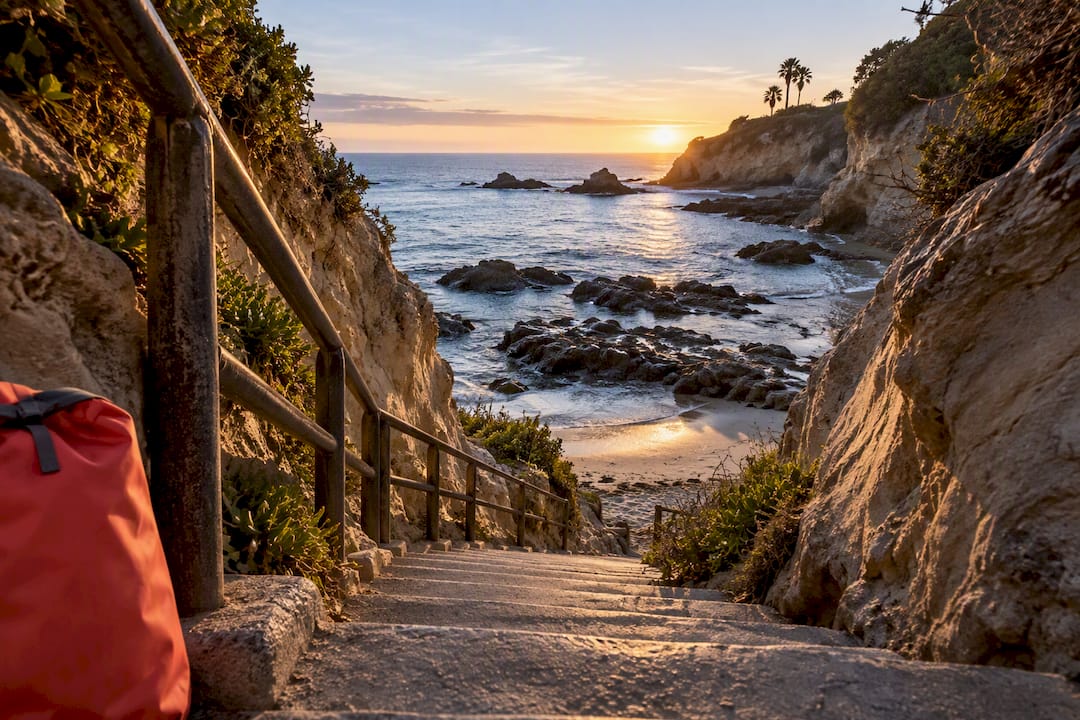
    • Thousand Steps Beach delivers the widest stretch of sand on this list and a genuine sea cave at the south end. The name suggests an exaggerated stair count, but the descent is long enough that parking at the top fills fast on weekends. Save some energy for the climb back up.
    • Victoria Beach is famous for the Pirate Tower, a private stone turret built in the 1920s that photographs beautifully at low tide when the surrounding rock arches are exposed. Street parking near Victoria Drive is limited and heavily enforced, so this is not the cove to visit if you’re in a hurry.
    • Woods Cove rewards anyone willing to poke around its tide pools and offshore rock formations. Access comes via a short stairway off Cliff Drive, and visitor accounts note that parking disappears quickly, especially once the morning fog burns off.
    • Shaw’s Cove sits between Fairview and Cliff Drive and stays calmer than most because a rock reef breaks up the swell. It’s also a favorite for beginner tide-pooling, but the cove backs right up to private homes, so keep noise down and stick to the sand.
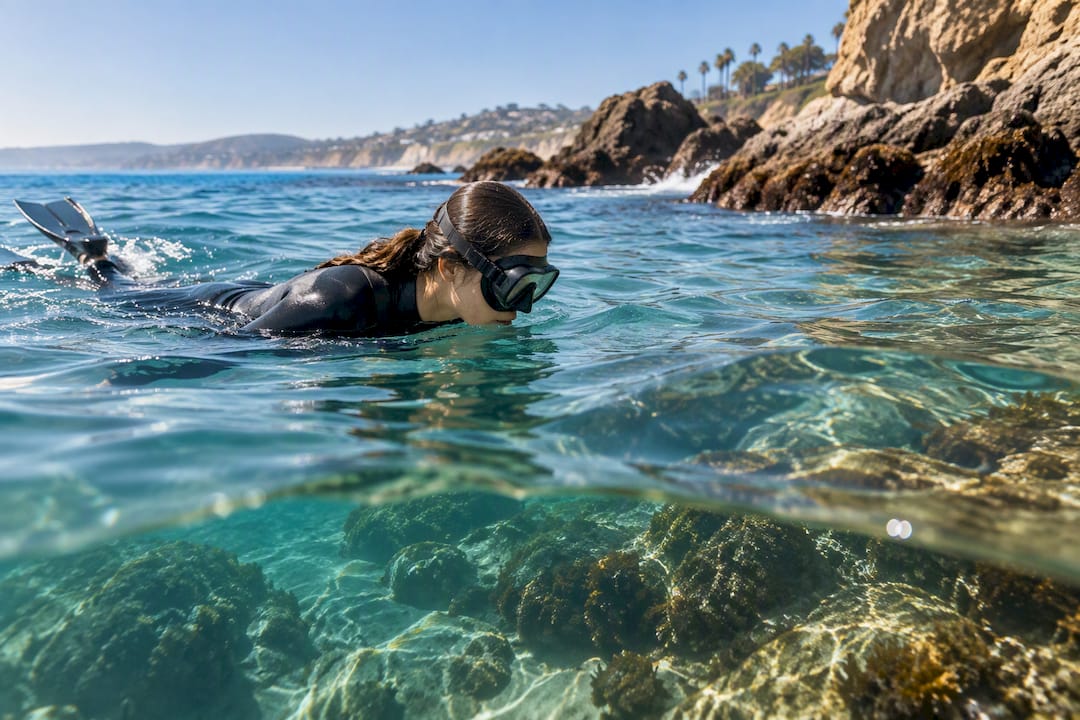
    • Diver’s Cove, just below Heisler Park, is the most beginner-friendly spot on this list for snorkeling thanks to a rocky point that blocks a lot of wave action. A paved path connects it to the park above, and the Heisler Park lots make it one of the easier coves to reach without circling for parking.
    • Goff Cove hides between Treasure Island and Christmas Cove, reached by a wooden stairway near the Montage Resort. It’s a good snorkeling spot on paper, but rocky bottoms and unpredictable currents make it less forgiving than Diver’s Cove for anyone new to open water.
    • Fisherman’s Cove, also called Boat Canyon, is a small pocket beach near the Diver’s Cove condominiums with its own stairway entrance. At high tide, the dry sand nearly disappears, so this one only works on a falling or low tide.
    • Totuava Beach is the quietest name on this list for a reason: there’s no public stairway at all. You reach it only at very low tide from Thousand Steps, or by passing through a rock arch near Table Rock when conditions allow. No facilities, no easy exit if you misjudge the water.

    Getting to the Coves: Parking, Stairs, and Tide Crossings

    Parking is the first hurdle, and Laguna Beach doesn’t make it easy on purpose. Much of the residential area near these coves runs on permit zones and metered spots that fill by mid-morning, especially in summer. The Heisler Park lots work well as a staging point for Diver’s Cove and Shaw’s Cove, since both are a short walk from the park itself. For coves farther south, like Victoria Beach and Thousand Steps, your best bet is finding legal street parking and accepting a longer walk.

    Here’s a simple approach that saves most people a wasted trip:

    1. Check the tide chart for the Laguna Beach sector the night before, not the morning of.
    2. Park at Heisler Park or along Coast Highway before 9 a.m., especially on weekends.
    3. Use the Laguna Beach Trolley if you’re visiting more than one cove in a day. It runs seasonally and lets you skip re-parking between stops.
    4. Walk down slowly. Wet stairs and sandy steps are more slippery than they look.
    5. Build in a buffer of at least an hour before the tide turns, especially for low-tide-only spots like Totuava.

    Pro Tip: Pack like you’re not coming back up for a while. Reef-safe sunscreen, real water (not a half-empty bottle), sturdy shoes for the rocks, and a bag for your own trash. Nobody’s selling snacks down there.

    How Tides Turn a Nice Walk Into a Rescue Call

    Every hidden cove on this list has one thing in common: the ocean decides when you get to leave. A cove that’s wide open sand at low tide can turn into a wall of water against the cliff two hours later, and the walk back the way you came stops being an option.

    • Always check a tide chart before you go, not after you’re already on the sand.
    • Build in an exit buffer well before high tide, especially for crossings at Totuava or Fisherman’s Cove.
    • Treat tide pools as look-only. Many of these coves sit inside protected marine areas, and state and local guidance is clear that collecting shells, rocks, or sea life isn’t allowed.
    • Don’t count on a lifeguard. None of these coves are patrolled the way Main Beach is, and local guides note that packing your own water and first-aid basics is standard practice here.
    • Bring a friend, and tell someone else which cove you’re headed to and when you plan to be back.

    Rocky bottoms are the other quiet hazard. A wave that looks harmless can still knock you into a reef shelf, and rip currents tend to build up near the rocky points that separate one cove from the next.

    The Best Time of Day (and Season) to Shoot These Coves

    Golden hour, low tide, weekday morning: hit all three and you’ll have most of these coves close to yourself. Low tide is what actually opens up the tide pools and sea arches worth photographing, so check the tide chart for the specific stretch of coastline before you plan a shoot.

    • Shoot within an hour of sunrise or sunset for warm light on the sandstone bluffs.
    • Time your visit to a falling tide so you’re not racing the water while you shoot.
    • Weekdays clear out the crowds that pack Victoria Beach and Thousand Steps on weekends.
    • Bring a small tripod, a polarizing filter to cut glare off wet rock, and a waterproof case if your phone is your only camera.

    Joshua’s Insider Notes on Timing and Parking

    I plan my Totuava and Diver’s Cove trips around a tide that’s still falling, not one that already bottomed out. That gives you a window instead of a countdown. For parking, skip the streets near Victoria Beach entirely on weekends and use the trolley instead. It’s free, it runs along Coast Highway, and it saves you from circling for forty minutes. Pair Diver’s Cove with Shaw’s Cove in one outing. They’re close enough to walk between at low tide, and you’ll cut your parking headaches in half.

    — Joshua

    Why These Coves Carry More History Than a Postcard Suggests

    Victoria Beach’s Pirate Tower isn’t a theme park prop. A local resident built the stone turret in the 1920s as a private stairway down to the sand, and it’s stayed a private structure ever since, even as it became one of the most photographed features on the Orange County coast. That mix of private property and public curiosity defines a lot of these coves.

    Laguna Beach itself grew up around an artist colony in the early 1900s, and the cove-by-cove geography is part of why. Steep bluffs kept development scattered rather than continuous, so instead of one long boardwalk, you get dozens of small pocket beaches, each with its own personality and its own tight little neighborhood watching over it. Woods Cove and Shaw’s Cove both sit below streets lined with homes that predate the city’s modern building codes, which is part of why parking stays so limited. There was never room designed for beach traffic in the first place.

    That history is worth remembering when you’re standing on someone’s public access stairway sandwiched between two private homes. You’re not just visiting a beach. You’re passing through a neighborhood that’s protected these access points for a century, often against pressure to close them off entirely.

    What Lives in and Around These Tide Pools

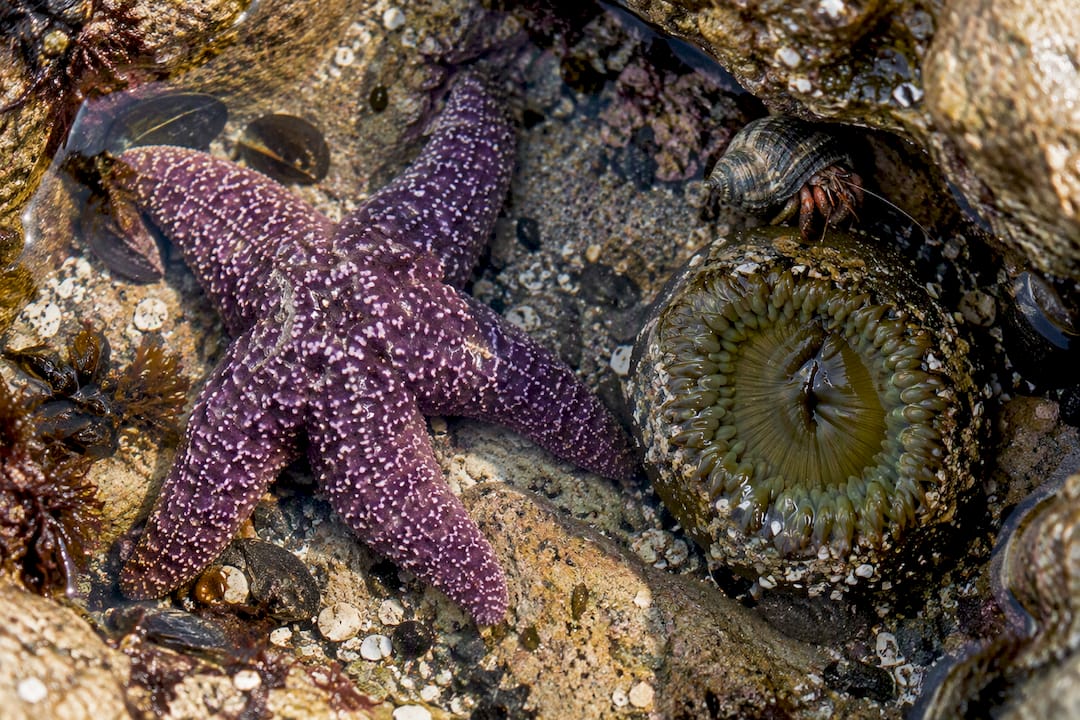
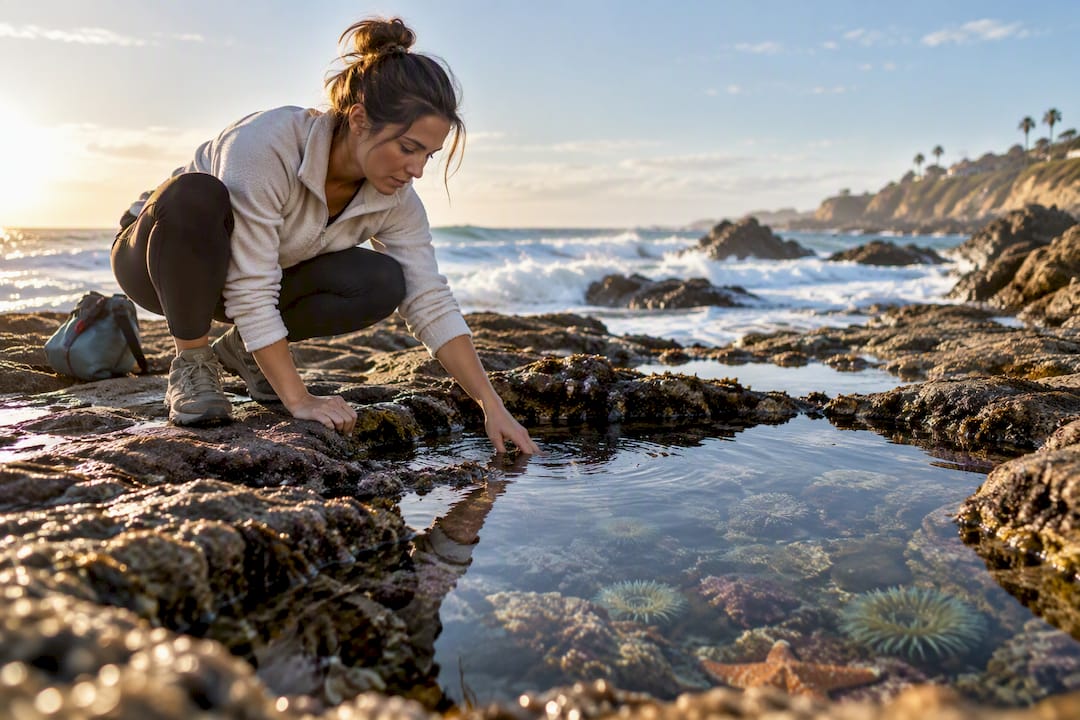
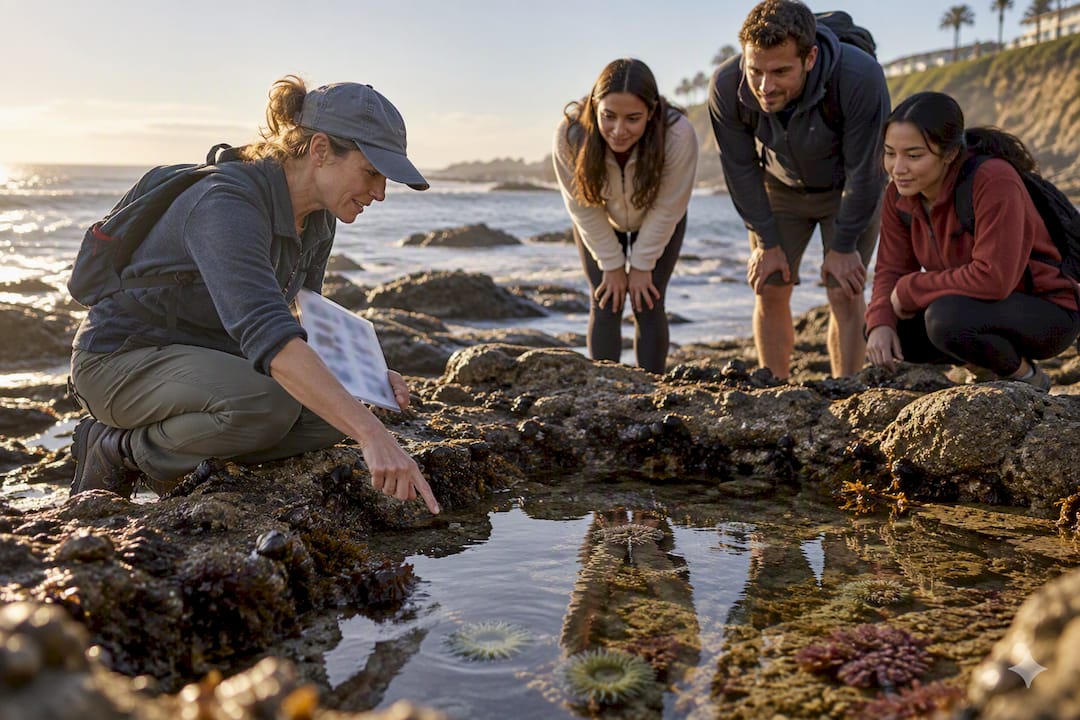
    Low tide at Woods Cove or Shaw’s Cove turns a plain stretch of rock into a small ecosystem. Look for purple and ochre sea stars wedged into crevices, hermit crabs shuffling between empty shells, and anemones that close up tight the moment a shadow passes over them. Sculpins and small eels tend to hide in the deeper pools, and if you’re patient, you’ll spot California spiny lobster antennae poking out from under rock ledges.

    Sea star and anemone in a Laguna tide pool

    Above the waterline, the bluffs support coastal sage scrub and pockets of wild buckwheat, both of which anchor the loose sandstone that these stairways cut through. Brown pelicans and cormorants use the offshore rocks near Goff Cove and Diver’s Cove as resting spots, and you’ll often see them diving for bait fish just past the break.

    None of this is rare enough to make headlines, but it’s fragile enough that a single afternoon of foot traffic through a tide pool can flatten it for weeks. That’s the trade-off every visitor makes just by walking down the stairs.

    How Laguna Protects These Coves, and What You Can Do

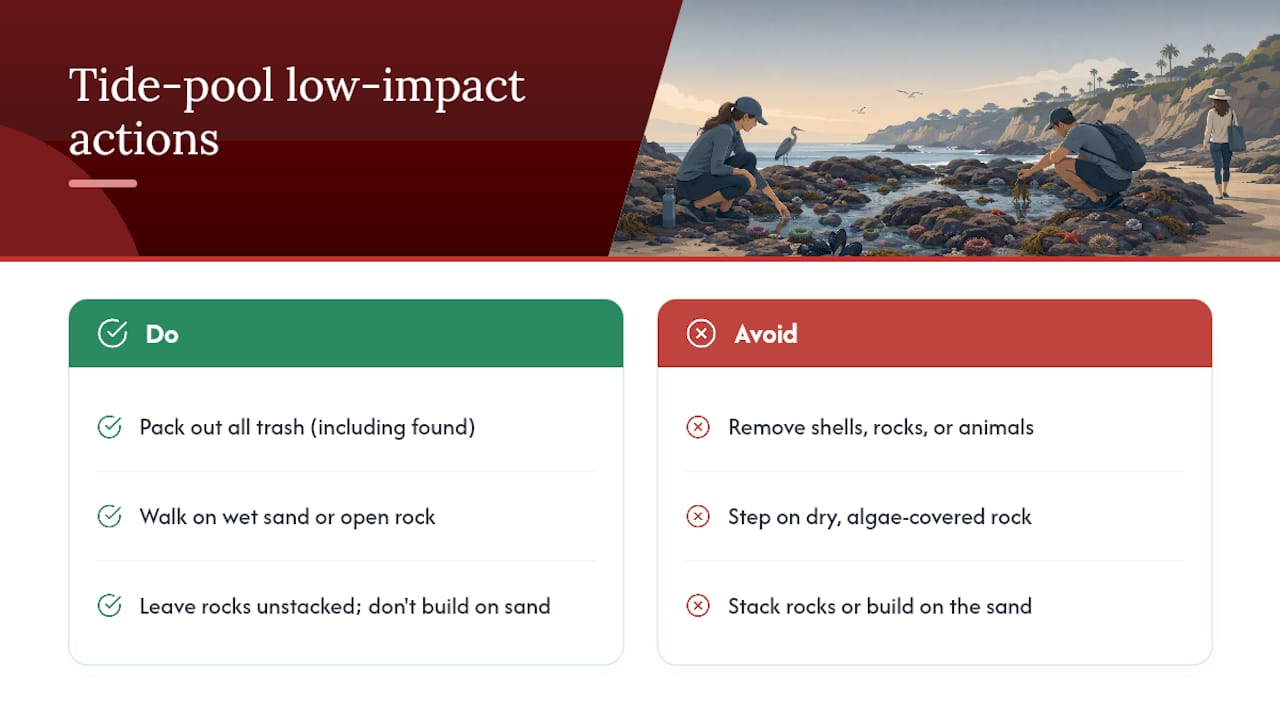
    A lot of these coves sit inside designated marine protected areas, which is the main reason the “look, don’t touch” rule around tide pools isn’t just a suggestion. Removing shells, rocks, or animals disrupts a habitat that takes years to rebuild, and enforcement has gotten more visible as these coves have become more popular through social media.

    The most useful thing you can do costs nothing: pack out every piece of trash you bring in, including anything you find that isn’t yours. Stick to wet sand and open rock when you’re walking through tide pool zones instead of stepping on the dry, algae-covered rock where organisms attach themselves. Skip the urge to stack rocks or build anything on the sand. It looks harmless, but it disturbs the small creatures living underneath.

    Three responsible tide-pool visiting practices

    If you’re new to reading a tide pool responsibly, our guide on tide-pooling etiquette in San Diego covers the same look-only principles that apply here, just with a different backdrop.

    Where to Eat After a Morning at the Coves

    Nothing pairs better with sandy shoes than a casual lunch spot that doesn’t require a reservation. Downtown Laguna Beach, a short drive or trolley ride from most of these coves, has a strip of casual restaurants along Coast Highway and Forest Avenue where you can grab a table without dressing up.

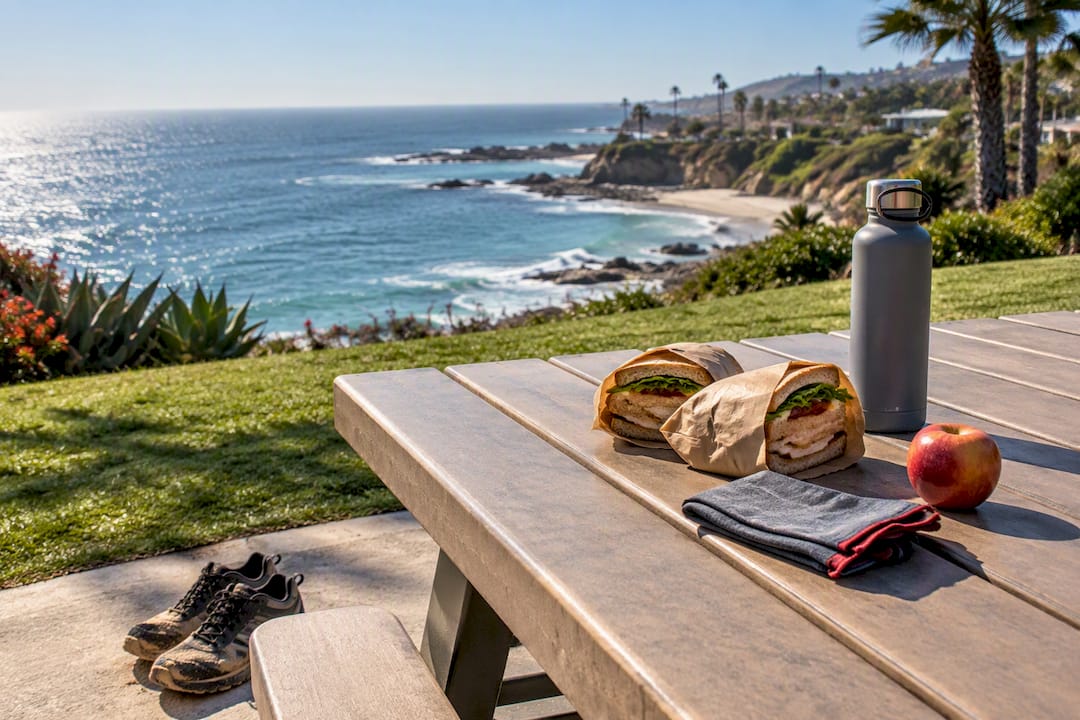
    If you’d rather skip the sit-down route, pack a picnic and set up at Heisler Park itself. The grassy bluffs overlook the water, there are public tables, and you get a view of the coastline you just explored without needing to find another parking spot. It’s an easy way to close out a cove day, especially if you’re traveling with kids who’ve had enough stairs for one afternoon.

    Picnic table overlooking Laguna coastline

    Snorkeling and Scrambling Safely in the Coves

    Diver’s Cove is the one spot on this list built for beginner snorkeling, thanks to the rocky point that cuts down wave action before it reaches the cove. Even there, wear fins and keep an eye on the surface for boat traffic near the point. Goff Cove looks similar on a calm day, but its currents are far less predictable, and rocky bottoms have caught more than one distracted swimmer off guard.

    Beginner snorkeler exploring Diver's Cove shallows

    Rock scrambling between coves, especially routes toward Totuava, isn’t a casual walk. Wet rock gets slick fast, and a wrong step near the waterline can mean a cut that needs more than a bandage. Wear shoes with real grip, not sandals, and never attempt a scramble if swell is pushing water into narrow passages. A cave or arch that looks safe at low tide can fill completely within the hour.

    Why Responsible Visiting Matters for Laguna’s Hidden Coves

    These coves stay special because so few people treat them carelessly. Pack out what you bring, leave the tide pools exactly as you found them, and when you share a favorite spot, share the etiquette that comes with it instead of pinning the exact rock formation online for a crowd to descend on.

    Plan Your Next Cove Day With SoCal Sights

    This guide helps reduce guesswork when you’re staring at a tide chart trying to figure out which cove is actually worth the drive today. Curated guides pull together route suggestions, realistic parking notes, and low-tide windows for spots like these across Southern California, so you’re not piecing it together from five different tabs the night before.

    Socalsights

    Access points shift, stairways close for repair, and tide windows change with the seasons, so we keep our cove guides updated rather than letting them go stale. If you run a local business near Laguna Beach’s coastline, or you want your favorite hidden spot featured for other explorers to find responsibly, check out Advertise With SoCal Sights to see how a featured listing works. And if you’re already planning a bigger coastal trip, our breakdown of hidden gems in Long Beach is a solid next stop for building out a full weekend.

    Check These Before You Go

    Confirm access rules through the Laguna Beach facility directory, a current tide chart, and recent local guide notes.

    Sources

    FAQ

    What Are Some Secret Beach Spots in Laguna Beach?

    Totuava Beach and Goff Cove are the two least crowded, since both require a stairway scramble or a low-tide crossing to reach. Totuava has no public stairway at all, which keeps foot traffic naturally low compared to stair-access spots like Woods Cove or Shaw’s Cove.

    What Celebrity Lives in Laguna Beach?

    Laguna Beach has a long history of drawing actors, musicians, and artists who value its low-key coastal setting, though specific current residents aren’t something we track or publish here. The city’s reputation as a quiet artist colony dating back to the early 1900s is part of why it’s remained a draw for people seeking privacy over publicity.

    What Are Some Hidden Gems in Laguna?

    Beyond the coves themselves, Heisler Park’s tide pools and the Pirate Tower at Victoria Beach count as two of the most overlooked spots, since most visitors stick to Main Beach and never walk the bluff trails. Pairing a cove visit with a picnic at Heisler Park is one of the easiest ways to see more of the coastline in a single trip.

    What Are Some Hidden Beaches in Orange County?

    Within Laguna Beach alone, Thousand Steps, Victoria Beach, Woods Cove, Shaw’s Cove, Diver’s Cove, Goff Cove, Fisherman’s Cove, and Totuava Beach cover the full range from easy stairway access to low-tide-only crossings. Each requires its own approach to parking and timing, which is exactly why checking a tide chart and arriving early matters more here than at Orange County’s larger, patrolled beaches.

    Do I Need a Permit to Park Near These Coves?

    Some residential streets near coves like Victoria Beach and Shaw’s Cove enforce permit parking, so metered lots or the Heisler Park lots are safer bets if you don’t have a local permit. The Laguna Beach Trolley is a free workaround during peak season if you’d rather skip the parking search entirely.

  • Arrive 30–45 Min Early: Laguna Beach Tide Pools, Timing, MPA, Docents

    Arrive 30–45 Min Early: Laguna Beach Tide Pools, Timing, MPA, Docents

    Your best bets are Crescent Bay, Shaw’s Cove, Heisler Park’s Rockpile, Treasure Island, Goff Island, and Wood’s Cove. The single rule that matters most: check the tide tables, aim for a negative low during daylight, and arrive 30 to 45 minutes before the water bottoms out. Laguna sits inside a Marine Protected Area, so look all you want, but nothing gets touched, flipped, or taken home.


    TL;DR:

    • Visiting during a negative low tide below 0.0 feet in daylight hours maximizes exposure of marine creatures and enhances the tidepool experience.
    • The best tide pooling conditions are during winter mornings when negative low tides are most common, and arriving 30 to 45 minutes before the low tide peak is crucial.
    • Legal regulations prohibit touching or removing marine life and rocks, with enforcement active and citations possible for violations in the Marine Protected Area.
    • Picking a cove depends on current tide conditions, with Shaw’s Cove and Treasure Island offering higher species diversity during ideal low tides.
    • Guided docent programs run by the Laguna Ocean Foundation provide valuable educational tours at multiple sites, enhancing safe and responsible tidepool visits.

    Socalsights
    Find More Hidden SoCal Gems
    SoCal Sights shares curated local recommendations for unique activities, food spots, and lesser-known Southern California attractions.

    Explore SoCal Sights

    Table of Contents

    Best Tide Pools in Laguna Beach: A Cove-by-Cove Guide

    Every cove in Laguna has its own personality, and picking the right one depends on how much walking you want to do and what you’re hoping to see. I’ve broken down the six spots that consistently show up on locals’ short lists, all pulled from the city’s official tide pool guidance.

    • Crescent Bay (North and South): Beach access is easy, but the real tidepooling happens on the rocky points at either end of the cove. Expect anemones, hermit crabs, and the occasional sea star tucked into shady crevices. The north end reef gets slick, so watch your footing on the rockier corners.
    • Shaw’s Cove (North and South): A stairway drops you onto sand, then you walk the rocks toward mussel beds thick enough to crunch underfoot. Divers love this cove for a reason. Peek into the darker crevices at low tide and you might spot an octopus tucked in tight.
    • Heisler Park / Rockpile: This is the most convenient stop in town. Parking, restrooms, and a paved bluff-top path sit right above the pools, and the rock formations make for some of the best photos in Laguna.
    • Treasure Island: A mix of stairs and a ramp gets you down to a wide, varied pool system below the Montage. Species diversity here tends to run higher than at the smaller coves, and the bluff trail above gives you a scouting view before you climb down.
    • Goff Island: Also known as Table Rock Beach, this spot doubles as a protected snorkeling area. The tidepools themselves are less dense than Shaw’s or Crescent Bay, but harbor seals occasionally haul out nearby, which makes it worth the visit on a slow tidepool day.
    • Wood’s Cove: Compact and easy to reach, with a smaller tidepool footprint that swimmers and snorkelers share more than dedicated tidepoolers do. Good option if you want a quieter, low-key stop.

    The Laguna Ocean Foundation runs free docent programs at several of these sites, rotating locations depending on the day’s tide. If you see a small group gathered around a tidepool with someone pointing things out, that’s likely one of their sessions, and joining in for a few minutes is worth the detour.

    How Do You Time a Tide Pool Visit in Laguna Beach?

    Not all low tides are created equal. A regular low tide might leave a few inches of water sitting over the reef, while a negative low tide, anything below 0.0 feet, drains the pools enough to expose the crabs, snails, and anemones that make the trip worth it. Winter mornings tend to produce the lowest daylight lows of the year, which is why serious tidepoolers plan around them.

    Here’s the exact sequence I use before heading out:

    1. Pull up NOAA’s tide predictions for the Laguna Beach station and scan the week ahead.
    2. Find a low tide that lands during daylight hours, ideally one rated below +2.0 feet.
    3. Plan to arrive 30 to 45 minutes before that low tide hits its lowest point.
    4. Check the surf report and lifeguard flag conditions the morning of your visit, since a big swell can cancel out an otherwise perfect tide.

    Pro Tip: A tide of +1.5 feet on a calm day can outperform a -0.5 foot tide during a big swell, because churned-up water and shifting rocks hide more than they reveal.

    High surf periods, common from late fall through early spring, can also close off certain rock areas entirely regardless of what the tide chart says. When in doubt, a five-minute check of the surf report saves you a wasted trip.

    What Are the Rules for Visiting Laguna’s Tide Pools?

    Laguna’s tidepools sit inside a Marine Protected Area, and that status carries real legal weight. It is unlawful to injure, take, or possess any marine life, rocks, or shells you find in the pools, and that includes the empty shell that looks abandoned. Enforcement is active, and rangers do issue citations.

    Beyond the legal baseline, good tidepooling etiquette keeps the ecosystem intact for the next visitor:

    • Look, don’t touch. Even a gentle poke can stress or injure a creature that has no way to escape your hand.
    • Never flip over rocks. Whatever lives underneath depends on that exact spot staying dark and damp.
    • Walk on bare rock or sand, not directly on mussel beds or anemone clusters.
    • Keep your voice and your group size down near sensitive pools.

    If you see a sign reading “Rocks Closed,” that’s a lifeguard’s call, usually tied to unstable surf, not a suggestion. Skip that section entirely, even if the tide looks perfect.

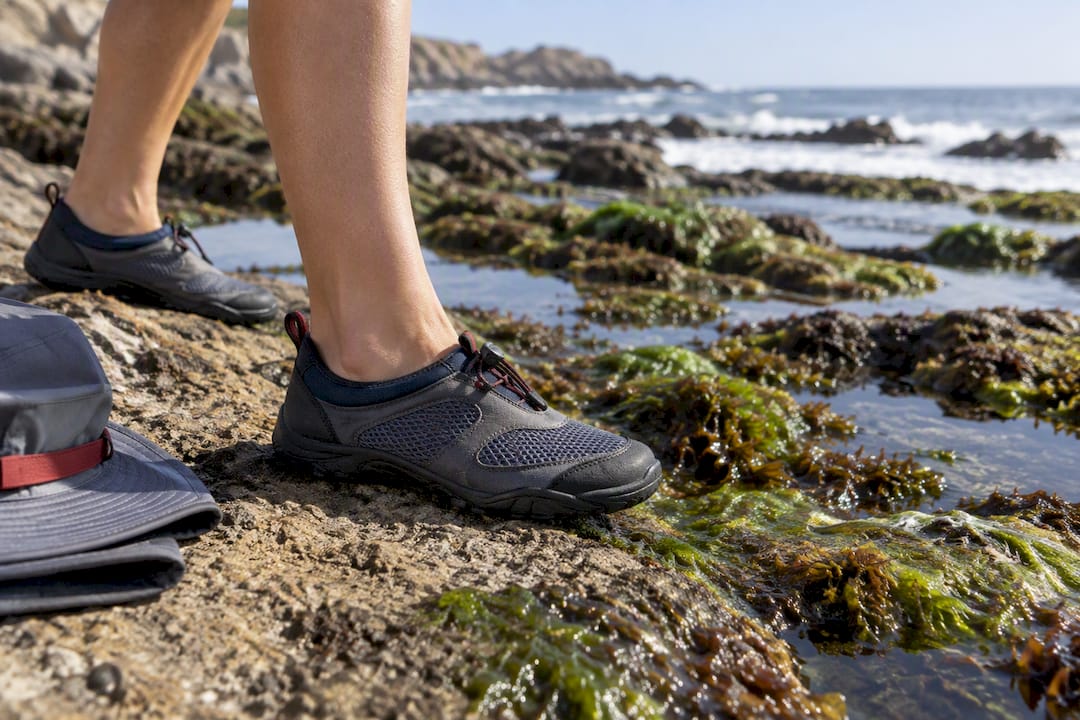
    Pro Tip: Pack closed-toe water shoes rather than flip-flops. Wet rock covered in algae is slicker than it looks, and bare feet or sandals leave you one wrong step from a cut.

    Closed-toe water shoes beside algae-covered rocks

    Bring sun protection too. Laguna’s coastal points offer almost no shade, and an hour of tidepooling under a midday sun adds up fast.

    Parking, Transit, and Getting to the Pools

    Parking is the single biggest headache in Laguna Beach, especially on weekends when every coastal lot fills before 10 a.m. The city’s mobile parking app shows real-time space availability and lets you pay without hunting for meters, which saves real time when you’re racing a tide window.

    A few ways to make the logistics easier:

    • Use the free Laguna Beach trolley or an OCTA bus route to skip the parking search entirely during summer months.
    • Go on a weekday morning if your schedule allows. Crowds thin out dramatically outside weekends and holidays.
    • Check access type before you go. Crescent Bay and Heisler Park have gentler paths, while Shaw’s Cove and Treasure Island involve stairs.
    • If beach wheelchair access is needed, contact Laguna Beach Marine Safety ahead of your visit to confirm availability.

    Earlier seasonal windows, think October through March, also tend to pair lower crowds with better negative low tides.

    Insider Tips from Local Docents and Regular Visitors

    The biggest mistake newcomers make is picking a “favorite” cove and sticking to it. Docents will tell you the best spot changes daily based on that day’s tide depth and surf, not on reputation. Shaw’s Cove might be dead calm and perfect on Tuesday and unworkable by Friday.

    Prioritize negative low tides during daylight over any specific location. If Crescent Bay’s tide isn’t great this weekend but Treasure Island’s is, go where the water is lowest.

    Pro Tip: If a wave surges toward you unexpectedly, stand your ground and let it pass rather than running across wet rock. Standing firm is safer than sprinting on a slick surface, and it’s the behavior local safety guidance consistently recommends.

    Stay at least 150 feet from any seal hauled out on the rocks, keep group sizes small near sensitive pools, and skip the flash on close-up photos, since it startles skittish creatures like crabs and small fish.

    What Lives in a Tide Pool? A Quick Marine Biology Primer

    A tidepool is essentially a tiny ocean trapped between tides, and the creatures living there have adapted to survive extremes most marine animals never face: baking sun, crashing waves, and hours stranded without a full water covering. That’s what makes them such a rich teaching tool for kids and curious adults alike.

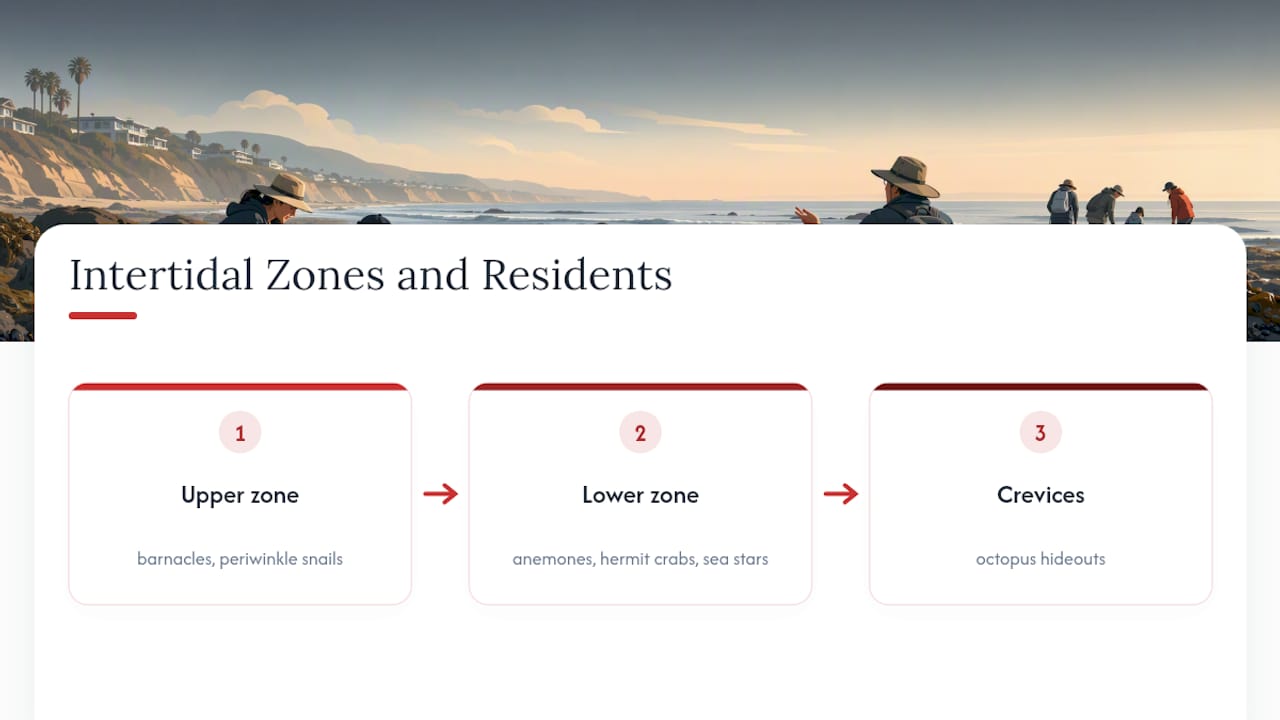
    The intertidal zone breaks into rough bands. Higher up, you’ll find hardy barnacles and periwinkle snails that tolerate long dry spells. Lower down, closer to where the water always reaches, sea anemones, hermit crabs, and sea stars cluster because that zone stays wetter longer.

    Intertidal bands and tide pool species

    Anemones look like plants but are animals, close relatives of jellyfish, and their tentacles carry stinging cells used to catch tiny prey drifting by. Mussels and barnacles filter seawater for food, which is part of why healthy tidepools signal healthy water overall. Octopuses occasionally tuck into crevices at Shaw’s Cove, using their soft bodies to squeeze into gaps barely wider than a fist.

    Every animal in that pool survives on a razor-thin margin of temperature, oxygen, and moisture. That’s the real reason the touching ban matters beyond the legal side. A single handprint can transfer oils and bacteria that a sea star or anemone has no way to filter out.

    How Can You Observe Tide Pool Life Without Disturbing It?

    Watching quietly does more for a tidepool’s health than most visitors realize. Beyond the no-touch rule, a handful of habits make a real difference in how much stress you put on the animals sharing that small patch of rock.

    Photography is one of the best ways to engage without contact, but it has its own etiquette. Get low and shoot from the pool’s edge rather than leaning your body weight onto the rock shelf itself, since crushed algae and disturbed sediment can smother filter feeders nearby. Skip the flash. Bright bursts of light startle crabs and small fish enough that they’ll bolt for cover and stay hidden for the rest of your visit.

    Noise travels differently underwater and along rock, so loud talking or shouting near a pool can send skittish creatures retreating. Keep your group’s volume down, especially with kids who get excited at the first sight of a hermit crab.

    Move slowly and predictably. Sudden shadows or fast movement read as threats to animals that have survived millions of years by assuming anything fast-moving is a predator. Give other visitors room too. A crowded pool edge means more shifting weight on fragile rock and less room for anyone to actually see anything.

    If you’re set on a close-up shot, a zoom lens or phone camera held steady beats crouching directly over the water every time.

    Are There Guided Tide Pool Tours in Laguna Beach?

    Yes, and they’re free. The Laguna Ocean Foundation runs docent-led education sessions at multiple tidepool sites around town, reporting that these programs reach more than 70,000 visitors a year. Docents show up with tide charts already checked, so joining one takes the guesswork out of your visit entirely.

    Docent teaching visitors beside Laguna tide pool

    Sessions rotate based on which cove has the best tide that day, which lines up with the flexible, go-where-the-tide-is-best approach experienced tidepoolers already use. Schedules shift seasonally, so checking the foundation’s site before you head out beats showing up and hoping.

    If you want a broader state park experience with interpretive programs nearby, Crystal Cove State Park runs its own year-round docent activities a short drive south, worth pairing with a Laguna trip if you’re making a full day of it.

    Even without a formal tour, docents stationed at popular pools during low tide windows are usually happy to answer questions on the spot. Look for the volunteer badge and don’t be shy about asking what you’re looking at.

    Why Stewardship Is the Real Story Here

    I keep coming back to one number: 70,000-plus visitors a year pass through Laguna Ocean Foundation’s docent programs. That’s not a niche hobby. That’s a community that shows up to protect a few square miles of rock and water most people would walk past without a second look.

    Follow the MPA rules, not because a sign says to, but because these pools recover slowly and don’t need our help disappearing faster. Download a local tidepool guide before you go, join a docent walk if the timing lines up, and share what you find, just not the animals themselves.

    — Joshua

    Official Resources to Check Before You Go

    For real-time tide timing, use NOAA’s Laguna Beach station. For site lists and legal rules, check the city’s tide pool page. For docent schedules and site education, visit the Laguna Ocean Foundation. For a nearby state park option, see Crystal Cove State Park.

    If you’re planning a bigger coastal itinerary, our guide to tide pools in San Diego covers similar timing strategies further south, and SoCal Sights’ full activity guide rounds out the rest of your day once the tide comes back in. Local businesses along the coast, from cafés to gear shops, can advertise directly with SoCal Sights to reach visitors planning trips just like this one.

    Sources

    FAQ

    Where Are the Best Tide Pools in Laguna Beach?

    Crescent Bay, Shaw’s Cove, Heisler Park’s Rockpile, Treasure Island, Goff Island, and Wood’s Cove top the city’s official list. Heisler Park offers the easiest access, while Shaw’s Cove and Treasure Island reward the stair climb with denser marine life.

    Can You Swim in the Laguna Beach Tide Pools?

    Swimming isn’t the point of a tidepool visit, and wading into shallow rocky pools risks both injury and damage to fragile marine life. If you want to swim, Wood’s Cove and Goff Island have adjacent sandy or protected water better suited for it, with the tidepool areas kept for walking and observing.

    How Do You Get to the Lesser-Known Tide Pools in Laguna Beach?

    Goff Island and the quieter stretches of Wood’s Cove see fewer crowds than Heisler Park or Crescent Bay, and both have public beach access points listed on the city’s tidepool page. Arriving right at the 30 to 45 minute mark before low tide, rather than after, also helps you beat the crowds that gather once the water’s already dropped.

    What’s the Best Tide Pool Spot in Orange County?

    Within Laguna Beach specifically, Shaw’s Cove and Treasure Island consistently show the widest range of species. Just south, Crystal Cove State Park offers a comparable experience with its own docent-led programs if you want to extend the trip.

    Do You Need a Negative Low Tide to See Tide Pool Life?

    No, but it helps significantly. A regular low tide below +2.0 feet still exposes plenty of marine life, while a negative low tide drains the pools even further and reveals species you’d otherwise miss entirely, according to local docent guidance.

  • Photo Ready Sunset Spots in Los Angeles With Parking and Transit Tips

    Photo Ready Sunset Spots in Los Angeles With Parking and Transit Tips

    For a classic ocean horizon, head to Santa Monica Pier or Palisades Park. For the best skyline view, go to Griffith Observatory. If you want cliff-top drama and don’t mind a short walk, pick Point Dume or Baldwin Hills Scenic Overlook. Whichever you choose, get there 30 to 45 minutes before sunset. Sundown in LA is a fast show, and the best colors show up after the sun disappears.


    TL;DR:

    • Santa Monica Pier and Palisades Park offer easy access to classic ocean sunsets, with nearby public transit and minimal planning required.
    • Griffith Observatory provides iconic city skyline views and Hollywood Sign scenery, but parking fills early and crowds are high.
    • Hillside spots like Baldwin Hills Overlook and Mulholland Drive turn sunsets into panoramic shows with fewer visitors, though some locations involve uneven terrain or limited amenities.
    • Sunset hikes at Baldwin Hills, Point Dume, or Runyon Canyon deliver better angles and solitude, but require arriving early and bringing proper gear.
    • Coastal fog and seasonal differences impact colors, with winter sunsets appearing more dramatic, and summer evenings often softer and longer.

    Socalsights
    Find More Hidden Southern California Gems
    Explore curated local recommendations for memorable activities, food spots, and unique itineraries beyond Los Angeles’s famous sights.

    Table of Contents

    Best Sunset Spots in Los Angeles Near the Ocean

    If you want that classic California postcard shot, the coast is where you go. Los Angeles gives you two very different flavors of ocean sunset: the busy, festive pier scene and the quiet, cliff top hush. Both are worth your evening, just for different reasons.

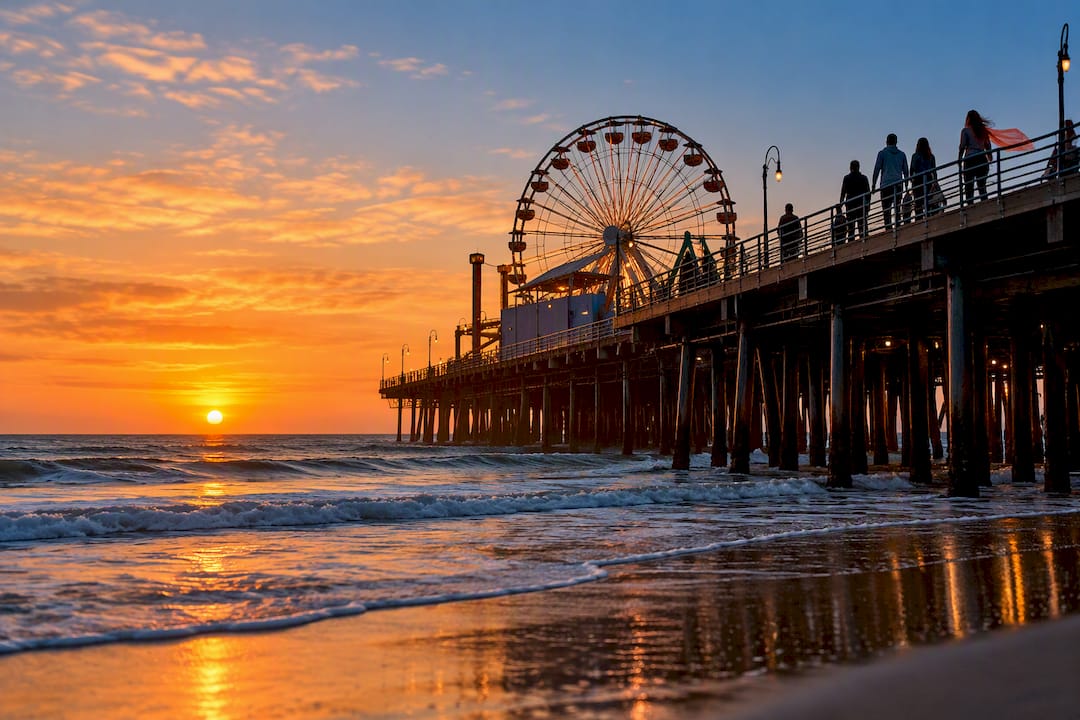
    Santa Monica Pier and Palisades Park sit right next to each other, which makes this the easiest coastal sunset to pull off with zero planning. The Pacific Wheel Ferris wheel at Pacific Park lights up right as the sky turns orange, and its silhouette against the water is one of the most photographed shots in the city. You can catch the Expo Line light rail straight to Downtown Santa Monica Station and walk five minutes to the bluffs, which beats fighting for a parking spot. If you’d rather drive, the pier’s public parking structures fill up fast on weekends, so budget extra time or park a few blocks inland and walk. Palisades Park, just above the pier along Ocean Avenue, gives you a grassy, palm-lined perch with zero admission and benches for settling in.

    Point Dume in Malibu is the spot for readers who want drama over convenience. This bluff sits high above the Pacific, and the moderate walk out to the point rewards you with 180 degree views that make the whole ocean look like it’s on fire at dusk. It’s quieter than the pier scene, which makes it a favorite for couples and serious photographers who don’t want strangers wandering into their frame. Parking at Westward Beach fills early on summer evenings, so arrive with daylight to spare.

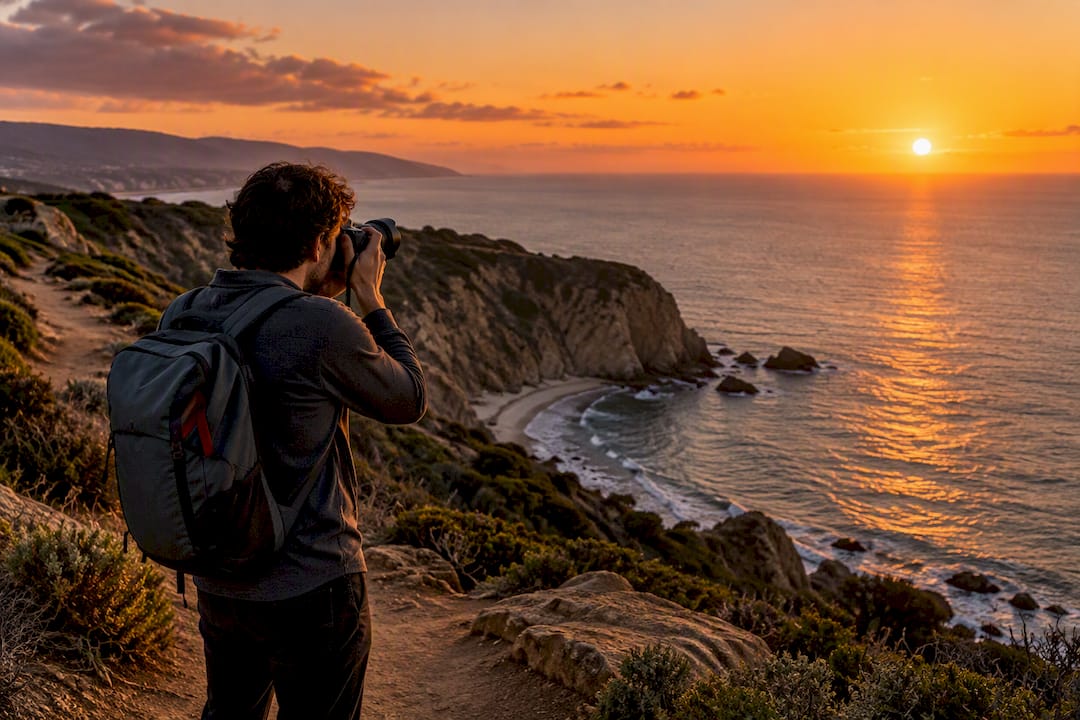
    Point Dume bluff overlooking sunset ocean

    Manhattan Beach Pier delivers a softer, more residential version of the pier experience. Pastel skies, a laid back South Bay crowd, and a walkable downtown right behind you make this a natural pick for families who want dinner and a sunset in the same trip.

    El Matador State Beach is the one to save for a special evening. Getting down requires a set of wooden stairs, and the payoff is a beach scattered with sea stacks and rock arches that frame the sun perfectly. The narrow lot fills quickly, and there’s no lifeguard on duty, so keep an eye on the tide line as you shoot.

    A few quick notes before you go:

    • Santa Monica and Manhattan Beach piers get crowded on weekends, arrive 45 minutes early for a good rail spot.
    • Point Dume and El Matador both involve uneven terrain, wear shoes you can actually walk in.
    • Check tide charts before visiting El Matador since high tide shrinks the usable sand.
    • Metered parking near the Santa Monica Pier runs through the evening, so keep coins or a payment app handy.

    Best Sunset Views in LA From the Hills and Skyline

    Ocean sunsets get all the postcards, but Los Angeles has an entirely different sunset experience built into its hills: watching the sky turn pink while a carpet of city lights flickers on below you. This is the version locals tend to prefer once they’ve done the beach thing a few times.

    Griffith Observatory is the reliable heavyweight here. Its west facing terraces line up perfectly with the setting sun, and once it’s down, you get the Hollywood Sign, the Downtown skyline, and the whole basin lighting up in front of you. The observatory’s official site is worth checking before you go, since the parking lot regularly fills an hour or more before sunset on clear evenings. If the lot is full, the shuttle from the Greek Theatre lot is your backup, and it runs frequently enough that the wait rarely eats into golden hour.

    Baldwin Hills Scenic Overlook offers something different: a 360 degree view that takes in both the ocean haze to the west and the skyline to the east. You can drive straight to the top lot for a small fee, or earn the view on foot.

    A few more hilltop options worth knowing:

    • Mulholland Drive has several unmarked turnouts above the Valley and above Hollywood that stay nearly empty even on weekends.
    • Barnsdall Art Park, perched above Hollywood Boulevard, gives you a free, low-key overlook with picnic tables and almost no tourists.
    • Runyon Canyon’s East Ridge trail adds a short climb but rewards you with a wide, unobstructed skyline view without the Griffith crowds.

    Crowd level runs highest at Griffith Observatory, moderate at Baldwin Hills, and lowest at the Mulholland turnouts and Barnsdall. None of these require more than a short walk from parking, except the East Ridge route at Runyon, which we cover next.

    Sunset Hikes in Los Angeles Worth the Climb

    Some of the best sunset views in LA come with a small physical toll, and that’s part of the appeal. A short climb thins out the crowd and usually buys you a better angle than anyone parked at the bottom.

    1. Baldwin Hills Scenic Overlook staircase. The climb runs about a mile up 282 steps to the summit, which is steep enough to feel like a real workout but short enough to finish before the light fades. If stairs aren’t your thing, the drive-up lot at the top of Hetzler Road costs $2 per hour or $6 for the full day, and the park stays open daily from 8:00 AM until sunset.
    2. Point Dume Cove Trail. This loop covers roughly 1.1 miles with a modest elevation gain, starting from the Westward Beach parking lot. The trail climbs to the bluff top before dropping back toward the cove, giving you both the cliff view and beach access in one outing.
    3. Temescal Canyon Overlook. A moderate out and back trail in Pacific Palisades that trades ocean proximity for elevation, putting you above the coastline haze on clearer evenings.
    4. Runyon Canyon East Ridge. A steady, exposed climb with little shade, best started with plenty of daylight left since the trail has no lighting.

    Every one of these trails gets genuinely dark fast once the sun drops, and LA’s canyon trails don’t have streetlights waiting for you. A headlamp is the single most useful item you can bring on any sunset hike, since phone flashlights drain batteries and leave one hand full. If you want more trail options before committing to an evening hike, check our guide to the best hikes in Los Angeles sorted by difficulty.

    Pro Tip: Start your climb 45 to 60 minutes before sunset, not 30. The extra buffer means you’re not racing the light on the way up, and you’ll have time to scout your framing before the sky starts changing.

    The Best Sunset Spot for Tonight, by What You Want

    Not every evening allows for a scouting trip. If you’ve only got one shot at a Los Angeles sunset this visit, match your pick to what you actually want out of it.

    • Want the iconic, unmistakably LA shot? Griffith Observatory. Skyline, Hollywood Sign, and a sunset all in one frame.
    • Want the classic beach sunset without a car? Santa Monica Pier and Palisades Park, both reachable by rail.
    • Want a romantic, quieter coastal view and don’t mind driving? Point Dume or El Matador State Beach.
    • Want solitude over convenience? Skip the pier and observatory crowds for a Mulholland Drive turnout or Barnsdall Art Park.

    The tradeoff is consistent across the city: the easiest spots to reach are also the most crowded, and the quietest spots ask a little more of you, whether that’s a drive, a climb, or both.

    Timing, Gear, and Safety for a Los Angeles Sunset

    Arrive 30 to 45 minutes before official sunset time and plan to stay another 10 to 20 minutes after the sun disappears. The afterglow, that stretch where the sky deepens into pink and purple after the sun itself is gone, is often the best part of the whole show, and it’s the part most visitors miss because they leave too early.

    Winter sunsets tend to run crisper and more dramatic, while summer evenings usually bring softer, longer fades. Coastal fog and marine layer can mute a sunset entirely on some summer evenings, so if you’re coastal-bound in June or July, check a local forecast first.

    What to bring:

    • A headlamp if you’re doing any hike, since canyon trails go dark within minutes of sunset.
    • A light layer, even in summer. Ocean breezes drop the temperature fast once the sun is down.
    • Water, especially for the Baldwin Hills staircase or Runyon’s East Ridge.
    • A small blanket or sitting pad if you’re claiming a spot on grass or bluffs early.

    If you’re headed to Baldwin Hills, remember the park closes at sunset and top-lot parking runs $2 per hour or $6 for the day. Check hours ahead of time for any spot on a schedule, since closures shift seasonally.

    Photography Tips for Shooting an LA Sunset

    You don’t need a professional camera to get a strong sunset shot in Los Angeles. You need good timing and a couple of habits.

    Golden hour, the 20 to 30 minutes before sunset, gives you warm, soft light that’s forgiving on phones and cameras alike. The real color payoff often comes in the 10 minutes after the sun is gone, when the sky shifts through pink, orange, and purple.

    On your phone:

    • Tap the horizon to set exposure, then drag down slightly to keep the sky from blowing out.
    • Turn HDR on for scenes with both bright sky and dark foreground, like a silhouette shot.
    • Use a person, pier railing, or tree branch as a foreground silhouette to add depth.

    With a camera:

    • Bring a tripod for anything shot after the sun sets, since shutter speeds slow down fast in low light.
    • Bracket your exposures if your camera supports it, then blend for a full dynamic range shot.
    • At cliff-top spots like Point Dume or El Matador, keep gear strapped down. Ocean gusts have taken more than a few tripods over the edge.

    Ocean scenes reward wide shots that include reflections on wet sand. City scenes, like the view from Griffith Observatory, do better with a slightly longer lens that compresses the skyline against the sky. For more location ideas built specifically around photography, see our guide to LA’s best photo spots.

    Pro Tip: If you’re shooting El Matador or Point Dume, get your silhouette shots first while the sun is still visible, then switch to wide landscape shots for the afterglow. Trying to do both at once means you’ll miss one or the other.

    How Weather and Season Change the Colors

    Los Angeles sunsets change noticeably with the calendar. Winter air tends to be drier and cleaner, which produces sharper, more saturated colors and crisper cloud edges. Summer sunsets often stretch out longer with softer, more pastel fades, partly because of the coastal marine layer that rolls in during the warmer months.

    Clouds are your friend here, within reason. A sky with scattered or broken cloud cover, rather than a totally clear one, tends to produce the most vivid color because the clouds catch and scatter the light. If you check a forecast and see “partly cloudy” for sunset, that’s often a better sign than “clear.” Give it 10 to 20 minutes after the sun actually drops below the horizon. That’s frequently when the sky puts on its best display, well after most casual visitors have already packed up and left.

    Sunset Spots That Work for Families and Group Hangouts

    Some of these locations handle a crowd of kids, coolers, and folding chairs a lot better than others. Palisades Park is the easiest pick for a family group. It’s flat, grassy, and has plenty of bench seating, plus the Santa Monica Pier’s arcade and rides are a two minute walk away if the kids get restless before the sky finishes changing.

    Manhattan Beach Pier works well for the same reason. Wide sidewalks, a walkable downtown, and enough space on the sand for a group blanket setup make it forgiving for families juggling strollers or beach gear.

    Baldwin Hills Scenic Overlook is a strong option for a group that wants a shared activity built into the evening. The staircase climb turns the outing into a mini group challenge, and the summit has enough open space for several families to spread out without feeling cramped. If some of your group would rather skip the stairs, the drive-up lot means nobody gets left out.

    Griffith Observatory can work for larger groups too, but go in expecting company. Weekend crowds mean you’ll want to stake out your spot on the terraces early and keep younger kids close, since the railings and drop-offs demand attention.

    Skip El Matador and Point Dume for big groups. The narrow stairs, limited parking, and uneven cliff terrain make both spots better suited to smaller parties of two or three.

    Accessible Sunset Viewing Options in Los Angeles

    Not every great sunset spot in LA requires stairs or a hike, and that matters if you’re visiting with a wheelchair, a stroller, or a mobility limitation of any kind.

    Santa Monica Pier and Palisades Park are your most accessible options. Both sit at street level with paved paths, ramps, and accessible parking near the pier entrance, and you can get an unobstructed ocean view without walking more than a few hundred feet from a drop-off point.

    Griffith Observatory’s main terraces are also reachable without stairs from the primary parking areas, though the lot itself can require a longer walk when it’s full and you’re parked along the access road. Calling ahead or checking the observatory’s official visitor information before you go is worth it if mobility is a concern, since shuttle drop-off points can change.

    Baldwin Hills Scenic Overlook has a real advantage here that a lot of visitors miss: the drive-up lot at the top of Hetzler Road gets you the same 360 degree view as the staircase climbers, without a single step. That $2 per hour or $6 daily parking fee buys you full access to the summit view.

    Wheelchair user at Baldwin Hills overlook

    Point Dume, El Matador, and the Runyon Canyon East Ridge all involve uneven terrain, stairs, or steep grades that make them difficult or unsafe for visitors with mobility limitations. If dramatic coastal cliffs are the goal but stairs aren’t an option, Palisades Park’s bluff-top views offer a comparable, flat-access alternative.

    Food, Restrooms, and Other Amenities Near Sunset Spots

    Santa Monica Pier wins on amenities by a wide margin. You’ve got restrooms, dozens of food options from casual to sit-down, and enough coffee shops along the Third Street Promenade to fuel an entire evening before or after your sunset.

    Manhattan Beach Pier’s downtown strip offers a similar setup on a smaller scale: casual restaurants, a few coffee shops, and public restrooms right near the pier entrance.

    Griffith Observatory has restrooms and a small café inside the building itself, which is a nice option if you want a snack before heading to the terraces. Just know that the café tends to close before the observatory grounds do, so plan food before sunset rather than after.

    Baldwin Hills Scenic Overlook is more bare-bones. There are restrooms near the main lot, but don’t expect food vendors, so bring water and snacks if you’re settling in for a while.

    Point Dume and El Matador have the least infrastructure of the bunch. Both are limited to portable restrooms or none at all, and the nearest real food options mean a drive back into Malibu proper. Plan accordingly if you’re bringing kids or staying past dark.

    A Local’s Honest Pick for an Underrated LA Sunset

    My personal favorite isn’t on most lists: the quiet turnouts along Mulholland Drive above the Cahuenga Pass, where you get the Valley haze turning gold on one side and Hollywood lighting up on the other, with maybe two other cars around. It’s not dramatic in the way El Matador is, but it feels like the city showing itself off just for you.

    Wherever you go, pack out what you bring in, keep noise down near residential overlooks like Mulholland, and give other visitors room to enjoy their own view. For more spots like this one, our guide to offbeat things to do in LA has a few more that rarely make the standard lists.

    — Joshua

    Want a Ready-Made Sunset Itinerary?

    Scouting parking, hike difficulty, and timing for every spot on this list takes real legwork, and that’s exactly the kind of local detail Socalsights was built to hand you already sorted. A Socalsights membership gets you curated routes, printable maps, and insider timing notes for sunset spots and dozens of other Southern California outings, so you’re not cross-referencing five browser tabs the night before your trip.

    Socalsights

    If you’re building out a longer visit around your sunset plans, our guide to unique things to do in Los Angeles pairs well with an evening at any of these spots. Check the membership page to see what’s included and start planning your next Los Angeles evening with a route already mapped out for you.

    Sources

    Conditions change, especially at state parks and public overlooks, so confirm details before you head out:

    FAQ

    Where does the sun set in Los Angeles?

    The sun sets over the Pacific Ocean for coastal spots like Santa Monica, Malibu, and Point Dume, and behind the western hills and skyline for inland spots like Griffith Observatory and Baldwin Hills. Your exact view depends on whether you’re facing open ocean or the city basin.

    Where are the prettiest sunsets in the US?

    Los Angeles is regularly named among the country’s best sunset cities, and local guides consistently point to Griffith Observatory, Point Dume, Palisades Park, and Baldwin Hills as standout spots. The mix of ocean horizon and hillside skyline views gives LA more variety than most single-coast or single-skyline cities.

    Why are sunsets in LA so beautiful?

    Los Angeles benefits from a coastal marine layer, hillside elevation changes, and air particulates that scatter light into deeper oranges and pinks. Winter sunsets tend to look crisper and more dramatic, while summer evenings often bring longer, softer color fades.

    What is the golden hour in Los Angeles?

    Golden hour is the 20 to 30 minute window before sunset when light turns warm and soft, ideal for both phone and camera photography. It’s followed by the afterglow, the 10 to 20 minutes after sunset when the sky often deepens into its most vivid pinks and purples.

    Does Socalsights have sunset spot itineraries?

    Yes, Socalsights members get curated routes and timing notes for sunset spots along with other Southern California outings through the Socalsights membership. For current pricing and plan details, please refer to the membership page on the appropriate website.

  • Reserve Before You Go: Free Museum Days Los Angeles 2026

    Reserve Before You Go: Free Museum Days Los Angeles 2026

    Yes, free museum days are alive and well in L.A. for 2026. You’ve got three main paths to free admission: recurring free hours that certain museums offer every week, program-based perks like Bank of America’s monthly cardholder benefit, and the citywide SoCal Museums Free-for-All on February 22. Before you head out to any of them, pull up the museum’s own website and lock in a timed reservation if one’s required. That single step saves you from standing in a line that goes nowhere.


    TL;DR:

    • Most major museums in L.A., including Getty and MOCA, require advance reservations, especially during special free days or events.
    • County residents can often access free hours from 3 to 5 p.m. on weekdays, but parking and add-ons usually cost extra.
    • The Bank of America Museums on Us program allows one free visit per month with a valid card and photo ID, excluding special exhibitions.
    • The February 22, 2026, SoCal Museums Free-for-All offers free general admission at dozens of institutions, but reservations are strongly recommended for popular sites.
    • Visitors should verify and book ahead of time, bring appropriate IDs, and understand exclusions to fully benefit from free museum days in Los Angeles.

    Socalsights
    Discover More Southern California Gems
    Find curated ideas for authentic activities, food spots, and lesser-known attractions across Southern California.

    Table of Contents

    Free Museum Days Los Angeles 2026: The Calendar at a Glance

    Here’s what your year looks like if you’re chasing free admission across the city. I’ve flagged whether you need to reserve ahead, because that’s the detail that trips up more visitors than anything else.

    1. Every day, Getty Center and Getty Villa — Free entry, but a timed-entry reservation is required. Parking runs separately, so don’t assume the whole visit is free.
    2. Monday through Friday, 3 to 5 p.m., Natural History Museum of Los Angeles County — Free for L.A. County residents with ID. Add-on attractions and parking are excluded.
    3. First full weekend of every month, Bank of America Museums on Us — One free general-admission visit per eligible cardholder at participating LA museums. Card and photo ID required. Special exhibitions are excluded.
    4. February 22, 2026, SoCal Museums Free-for-All — Dozens of Southern California museums, including MOCA, open with free general admission for one day. Reservations recommended, and some sites require them.
    5. Rotating weekdays and evenings, Autry Museum of the American West — Combines Bank of America days with its own scheduled free-admission windows. Check site for the current month’s slate.
    6. Select fall dates, Hammer Museum — Hosts occasional free public celebration events tied to new exhibitions, open to everyone, no membership needed.
    7. Ongoing, standing free-admission museums — A handful of LA institutions, including The Broad and the Hammer’s general collection, are free year round with no special day required at all.

    Almost every line item above comes with the same asterisk: general admission is what’s free. Ticketed traveling exhibitions, special installations, and parking structures tend to run on their own pricing, so treat any “free day” as a floor, not a blank check for the whole visit.

    Museum-By-Museum Notes for 2026 Free Admission

    Some museums make this simple. Others bury the details three clicks deep on their website. Here’s the rundown for the venues that come up again and again when people search for free museum days in L.A.

    • Getty (Getty Center and Getty Villa): Always free to enter, but you need a free timed reservation booked online in advance. Parking costs extra at both locations.
    • Natural History Museum of Los Angeles County (NHM): L.A. County residents get in free Monday through Friday from 3 to 5 p.m., plus separate windows for teachers, military, and EBT cardholders. Parking and the butterfly pavilion or other add-ons cost extra.
    • LACMA: Offers free general admission to L.A. County residents on select weekday evenings, though specific exhibitions may carry their own ticket price. Check the museum’s site for the current schedule before you go.
    • MOCA: Participated in the 2026 Free-for-All on February 22, with advance reservations required for that day. Otherwise, general admission is free every day of the week at both MOCA locations.
    • Autry Museum of the American West: Runs Bank of America cardholder days alongside its own scheduled free-admission hours, and joined the regional Free-for-All too.
    • Norton Simon Museum: Free admission on the first Friday evening of most months, with regular admission the rest of the time. Parking is free on-site regardless of the day.
    • Hammer Museum: General admission is free every single day, no reservation or special program needed, plus occasional free celebration events tied to new shows.
    • The Broad: Standing free general admission, though timed tickets are recommended for popular exhibitions and same-day walk-up spots can run out fast.
    • Academy Museum of Motion Pictures: Offers free admission to visitors 17 and under, plus occasional community free days announced on its site. Regular tickets apply to the special exhibition galleries.
    • Skirball Cultural Center: Free on Thursdays for general admission, with a small parking fee that applies every day of the week.
    • Huntington Library, Art Collections, and Botanical Gardens: Free admission the first Thursday of the month with advance reservations, since capacity fills quickly for that slot.
    • Fowler Museum: Free general admission every day at UCLA, no reservation required for most visits.
    • Museum of Latin American Art (MOLAA): Free admission on Sundays, plus rotating community-day programming throughout the year.

    Notice the pattern? Reservations matter most at the busiest sites (Getty, Huntington, MOCA on event days), while smaller or university-affiliated museums like the Fowler tend to stay walk-up friendly.

    Major Free-Admission Programs That Matter This Year

    Three programs cover most of what you’ll actually use in 2026, and each has its own rulebook.

    1. Bank of America Museums on Us. Eligible Bank of America, Merrill, or Bank of America Private Bank cardholders get one free general-admission visit during the first full weekend of every month. You need your card and a photo ID, and the benefit covers you, not a group. Special exhibitions are excluded, so a blockbuster traveling show still costs extra.
    2. LA County resident after-3 windows. NHM’s Monday through Friday, 3 to 5 p.m. resident benefit is the model most museums follow when they run similar programs. Bring government ID showing your L.A. County address. Some museums now let you upload ID during online reservation, which speeds up entry considerably.
    3. Category-based benefits. Teachers, active military, and EBT cardholders qualify for free or reduced admission at several museums, NHM included, though the exact rules vary by site. Verify your eligibility documentation on the museum’s page before you drive over, since front-desk staff can’t waive the requirement on the spot.

    The advance-planning insight from MOCA’s Free-for-All applies across all three programs: treat the Bank of America benefit as strictly individual and non-transferable, and reserve early whenever a museum offers the option.

    The SoCal Museums Free-for-All: Your Big Day to Plan Around

    February 22, 2026 is the single biggest free museum day on the Southern California calendar. Dozens of museums across the region, MOCA and the Autry among them, open their doors with free general admission for everyone, no card or ID benefit required.

    The catch is the same one that shows up everywhere else in this guide: general admission is free, but ticketed special exhibitions and paid add-ons usually aren’t. Some venues, including the Autry, may also switch parking to its normal rate for the day even though admission itself stays free, so check the parking policy separately from the admission policy.

    If you’re planning to hit more than one museum that day, reserve ahead wherever a museum allows it, and pick your first stop based on which one requires the earliest arrival to guarantee entry. Popular sites like MOCA and the Huntington fill their reservation slots fast on Free-for-All weekend, so lock in your first museum a few weeks out and treat everything after that as a bonus stop.

    Three-step museum reservation planning process

    How to Plan Your Free Museum Visit Without Getting Surprised

    A little prep turns a free museum day from a gamble into a sure thing. Here’s the order I’d work through it in.

    • Check the museum’s official site the week of your visit, since free-day rules shift more often than people expect.
    • Reserve a timed entry slot if the museum offers or requires one, especially at Getty, Huntington, and MOCA on event days.
    • Confirm what’s excluded: special exhibitions, add-on attractions, and parking are the three most common surprise charges.
    • Bring the right ID for the benefit you’re using, whether that’s a government ID for residency, your Bank of America card plus photo ID, or a teacher, military, or EBT card.
    • Arrive 15 to 30 minutes before opening on popular free days, since capacity limits can close entry even with a reservation in hand.
    • Take Metro or ride-share when you can. Parking lots at Getty, LACMA, and the Natural History Museum fill early on free days, and Metro’s B and D Lines drop you within walking distance of several major museums.
    • Call ahead about accessibility needs. Every museum on this list offers ADA-compliant access and services like wheelchairs or sensory-friendly hours, but confirming specifics before you go saves a headache once you’re there.

    Pro Tip: Pair a free morning museum visit with a nearby coffee stop and save your second museum for the early afternoon lull, usually between 1 and 3 p.m., when the entry lines thin out before the after-school and evening crowds show up.

    How We Verified This 2026 Free Museum Guide

    Every date and policy here was checked against the museums’ own pages, including NHM, Getty, Bank of America, MOCA, and the Autry. Local Southern California sources have covered the scene extensively, and this guide draws on that same on-the-ground approach. Museum policies shift without much warning, so recheck the official site the day before you go.

    Why the “Just Show Up” Advice Fails You in 2026

    Most roundups of free museum days treat every listing the same, as if a standing free-hours policy and a once-a-year event carry equal risk. They don’t. The Getty’s timed reservation and the Free-for-All’s single February date both punish anyone who shows up assuming a free day means a walk-up day.

    Why the "Just Show Up" Advice Fails You in 2026 — overview diagram

    The conventional advice, “check if it’s free,” misses the real question: what do you need to bring, and did you book it in time? Bank of America’s benefit gets denied at the door more often for a missing photo ID than for actual ineligibility. The NHM resident window gets missed constantly because visitors show up at 5:15 p.m., not realizing the free window already closed.

    If I had to rank priorities for 2026, reservations come first, documentation second, and exclusions third. Skip any of those three and you’ll either get turned away or hit with a surprise charge for the one exhibition you actually wanted to see. Plan around all three, and free museum days in L.A. deliver exactly what they promise.

    — Joshua

    Let Socalsights Handle the Planning Legwork

    Chasing down reservation windows, ID rules, and exclusion fine print across a dozen museum websites eats into the time you’d rather spend actually looking at art. This guide focuses on the hidden-gem side of Southern California that mainstream guides skip, applying a local, community-driven approach to planning around free museum days too.

    Socalsights

    A Socalsights membership connects you with curated itineraries and local tips built by people who actually live here, not a generic travel algorithm. Pair your museum day with a stop from our guide to unique things to do in Los Angeles or extend the outing with ideas from our local activities guide. Visit the relevant membership pages for itinerary support and reservation reminders before your next free museum day.

    Sources

    FAQ

    What museums in L.A. are free?

    The Hammer Museum and The Broad offer free general admission every day, while others like the Getty and Fowler Museum are also free but may require a reservation. Several more, including NHM and MOLAA, offer free admission on specific days or hours rather than year round.

    Are L.A. museums free after 3 p.m.?

    The Natural History Museum of Los Angeles County offers free admission to L.A. County residents Monday through Friday from 3 to 5 p.m., with valid ID required. This particular window doesn’t extend to every museum, so check each site individually.

    Which Los Angeles museums are free with a Bank of America membership?

    Bank of America’s Museums on Us program covers one free general-admission visit at participating museums during the first full weekend of each month, including the Autry Museum of the American West. Bring your eligible card and a photo ID, since special exhibitions are excluded from the benefit.

    Is the Getty Museum in L.A. free?

    Yes, the Getty Center and Getty Villa are both free to enter every day, but you typically need to book a free timed-entry reservation online first. Parking is charged separately and isn’t included in the free admission.

    Do I need a reservation for the SoCal Museums Free-for-All on February 22, 2026?

    Some participating museums, including MOCA, required advance reservations for the 2026 event, while others allowed walk-up entry. Check each museum’s individual page ahead of the date, since requirements vary site by site and popular locations fill their slots early.

  • Beat the 11 AM–2 PM Rush: San Diego Family Activities Locals Use

    Beat the 11 AM–2 PM Rush: San Diego Family Activities Locals Use

    If you only have time for a few big swings, hit Balboa Park for museums and green space, the San Diego Zoo for the animal wow factor, and La Jolla Cove for tide pools and easy beach play. Add LEGOLAND for kids under 10 who love rides, or SeaWorld if marine shows are the draw. Pick based on your kid’s age and energy that day, then use the itineraries below to build the rest of the trip around it.


    TL;DR:

    • Visits to Balboa Park and its nearby museums provide the most compact, stroller-friendly museum experience with minimal rushing, especially for first-time visitors.
    • The San Diego Zoo is best enjoyed early in the morning and requires at least four hours to see highlights and experience attractions like the Skyfari tram.
    • Tide pools at La Jolla Cove are safest and most interesting during low tide, requiring careful timing and water shoes for slippery rocks.
    • Booking tickets online in advance and arriving early at popular attractions prevent long lines and help manage parking difficulties, especially near Balboa Park and La Jolla.
    • Small neighborhood parks, community events, and free indoor activities offer budget-friendly alternatives to major tourist spots, often with fewer crowds and a more relaxed pace.

    Socalsights
    Find More Family-Friendly Hidden Gems
    SoCal Sights shares curated Southern California activities, food spots, and itineraries for authentic experiences beyond the usual attractions.

    Table of Contents

    Family Activities San Diego: Top Attractions Worth Your Time

    San Diego has an unusual advantage over most vacation cities: the big attractions and the free ones sit close together, so you rarely have to choose between splurging and saving. I’ve grouped the following by what each place actually delivers for kids, not just by fame, because a few of the most talked about spots are better suited to certain ages than others.

    1. Balboa Park

    This is the park I send every first time visitor to, hands down. It has more than a dozen museums clustered around walkable plazas, plus the San Diego Zoo sits right on its northern edge. Bring a stroller, because the paths are flat and wide, and plan a half day minimum if you want to see even two museums without rushing toddlers through exhibits.

    2. San Diego Zoo

    Arrive at opening if you can. The zoo sprawls across a canyon, and the animal activity (and your kids’ patience) peaks in the cooler morning hours before crowds and heat set in. Budget four to six hours, and don’t skip the Skyfari aerial tram, which doubles as a rest stop that still feels like an attraction.

    3. San Diego Zoo Safari Park

    Located about 35 minutes north in Escondido, this sister park trades zoo enclosures for open-range savanna where giraffes and rhinos roam close to the road. It suits kids around six and up better than toddlers, mostly because the safari tram tours and larger walking distances reward longer attention spans. If your family already did the zoo, this feels different enough to be worth a second day.

    4. La Jolla Cove and tide pools

    Check a tide chart before you go. Low tide reveals sea stars, anemones, and hermit crabs in shallow pools that toddlers can peer into safely with a grown up’s hand nearby, while the cove itself is calm enough for gentle wading. Bring water shoes. The rocks are slippery, and bare feet turn a magical moment into a meltdown fast.

    Child examining La Jolla tide pool

    5. LEGOLAND California

    Carlsbad’s LEGOLAND is built almost entirely for kids under 10, with ride heights and pacing that make it one of the few theme parks where a five-year-old doesn’t feel like an afterthought. If your children have outgrown Duplo blocks and are angling for roller coasters, this park will feel a little young. For the LEGO obsessed six-year-old, it’s close to perfect.

    6. SeaWorld San Diego

    The marine shows and up close animal encounters still draw families, though it’s worth noting the park has shifted its programming over the years in response to public pressure around orca exhibits. Younger kids tend to respond best to the sea lion and dolphin encounters, while the bigger rides skew toward older siblings.

    7. USS Midway Museum

    Docked at the Embarcadero, this retired aircraft carrier turns naval history into a hands-on adventure with flight simulators and cockpits kids can actually climb into. It plays best for school age kids who can handle stairs and ladders. Strollers are tough to navigate below deck, so plan accordingly if you have a napping toddler in tow.

    8. Belmont Park

    Entry to this Mission Beach boardwalk is free, and you only pay for the rides you choose, which makes it an easy stop even on a tight budget. The wooden Giant Dipper roller coaster has been running since 1925, and the arcade and mini golf give younger kids something to do while older siblings ride.

    9. Fleet Science Center and Birch Aquarium

    Both are the move when fog rolls in or the kids need an indoor reset. The Fleet Science Center in Balboa Park mixes hands on exhibits with an IMAX theater, while Birch Aquarium at Scripps up in La Jolla pairs tide pool touch tanks with ocean science exhibits that make the beach trip you just took feel a little more educational in hindsight.

    Best Neighborhoods for a Family Home Base

    Where you sleep shapes your whole trip more than most people plan for. San Diego is spread out, and a 25-minute drive can turn a spontaneous afternoon into a scheduling headache with tired kids in car seats.

    • Downtown and the Embarcadero puts you next to the USS Midway, harbor cruises, and Seaport Village, with flat, stroller friendly sidewalks along the water.
    • Balboa Park and Uptown centers you near the museum cluster, several playgrounds, and the Botanical Building, and it’s roughly equidistant from downtown and the beaches.
    • La Jolla is the pick for tide pool families and gentle beach walks, though parking fills fast on weekends and tide timing matters more here than anywhere else in the city.
    • Mission Beach and Pacific Beach put Belmont Park and a wide, lifeguard staffed boardwalk right outside your door, with casual, kid tolerant dining scattered every block.
    • North County and Carlsbad makes sense if LEGOLAND or the seasonal flower fields are a priority, since both areas are a slog from downtown during traffic hours.

    For lodging, prioritize a room with a small fridge or kitchenette and in unit laundry if you’re staying more than three nights. Free breakfast sounds minor until you’ve tried to get four people fed and out the door by 9 a.m. without it. Parking is the other quiet cost. Many downtown and La Jolla hotels charge daily parking fees on top of the room rate, so factor that into your budget before you book.

    If a beach vacation is really the goal and the crowds at the popular spots feel like too much, it’s worth browsing quieter stretches of San Diego coastline that don’t show up on every list.

    Museums With Real Family Programming

    The museums that keep kids engaged aren’t just the ones with dinosaur bones. They’re the ones running actual scheduled family programs you can plan a visit around.

    • Fleet Science Center rotates hands-on exhibits regularly and runs IMAX showings throughout the day, so check the schedule before you go to time your visit around a film your kids will sit through.
    • San Diego Natural History Museum in Balboa Park has kid focused trails and exhibits that hold up well for elementary age children who like fossils, wildlife, and things they’re allowed to touch.
    • San Diego Museum of Art runs Family Art Adventures on the second and fourth Saturdays of each month, free with museum admission, which makes it one of the easiest recurring dates to build a Balboa Park morning around.
    • Museum of Contemporary Art San Diego hosts monthly family programming with a playful, activity based structure that works well for kids who find traditional galleries slow.
    • Birch Aquarium runs tide-pool touch displays and scheduled feeding times that give a visit natural pacing, since kids tend to stay more engaged when there’s a specific moment to watch for.
    • Maritime Museum and USS Midway both lean interactive, with cockpits, engine rooms, and ship decks kids can explore, best suited to ages six and up who can manage stairs comfortably.

    Because these programs run on repeat monthly schedules rather than one-off events, it’s worth building your Balboa Park day around whichever Saturday lines up with Family Art Adventures if art is even a mild interest for your kids.

    Outdoor Time: Beaches, Tide Pools, and Trails

    San Diego’s outdoor activities for families work best when you plan around tides and trails rather than just picking a beach and hoping.

    • La Jolla Cove tide pools are only fully exposed during low tide windows, so check a tide chart the night before and aim to arrive within an hour of the lowest point.
    • Torrey Pines State Natural Reserve has several kid manageable trails with ocean views, though parking fills early on weekends. Arriving before 9 a.m. saves you a long wait, and the California State Parks site has current access rules worth checking before you go.
    • Sweetwater Marsh and the Living Coast run guided Sweetwater Safari Hikes that hand out backpacks loaded with magnifying glasses and binoculars, turning a simple nature walk into a scavenger hunt kids actually stay interested in.
    • Bioluminescence and whale watching are seasonal. Whale watching runs roughly December through April, while bioluminescent waves show up unpredictably in warmer months, so treat either as a bonus rather than the centerpiece of a day.
    • Beach safety basics matter more here than people expect: pick lifeguard-staffed beaches, reapply sunscreen more than you think you need to, and scout for shade and restroom access before you settle in for the afternoon.

    Pro Tip: If your kids are tide pool obsessed, a dedicated guide to San Diego’s best tide pool spots breaks down exactly which pools stay shallow enough for younger kids and which ones require sturdier footing.

    Free and Budget-Friendly Family Fun

    A full week in San Diego doesn’t have to mean a full week of ticket prices. Some of the best family days here cost nothing beyond gas and sunscreen.

    Kids Free San Diego is a seasonal program that a rotating group of attractions participate in, typically offering free or discounted child admission with a paying adult, though participating venues and dates shift year to year, so check current listings before building a day around it.

    • San Diego History Center offers Free Tuesday admission for some groups and periodically runs family programs like its History Explorers series, which is worth checking if a rainy or overly hot day lands on a Tuesday.
    • Neighborhood street fairs and farmers markets pop up constantly across the city, and the City of San Diego’s official events calendar is the most reliable place to catch ones happening during your visit, since a lot of these never make it onto national travel sites.
    • Free playgrounds and picnic spots are scattered through Balboa Park, Mission Bay Park, and most beach communities, and a picnic lunch packed from a grocery store easily beats paying theme park prices for a mediocre sandwich.
    • Belmont Park’s boardwalk costs nothing to walk through, and you can let kids window shop the arcade and ride a couple of attractions without committing to a full day pass.

    Small, community-run events tend to draw thinner crowds than the major tourist hubs anyway, and they’re frequently the kind of thing you only hear about by checking local listings rather than a national “best of” article.

    Sample Family Itineraries for San Diego

    These are built to flex. If a kid melts down or naps longer than planned, cut the last stop and pick it back up the next day.

    1. The one-day plan

    Start at La Jolla Cove for tide pools during the morning low tide window, then walk or drive the short distance to Birch Aquarium for a couple of hours indoors once the sun gets strong. Finish with an early dinner in La Jolla or head downtown for a sunset harbor cruise if energy allows.

    2. The three-day plan

    Day one covers Balboa Park: hit one or two museums in the morning, break for lunch on the plaza, and save the afternoon for the San Diego Zoo next door, or split the zoo into its own half day if your kids move slowly through exhibits. Day two is beach and boardwalk. Spend the morning at Mission Beach or Pacific Beach, then let older kids loose at Belmont Park in the afternoon. Day three heads downtown for the USS Midway in the morning, followed by lunch at Seaport Village and a relaxed harbor walk before dinner.

    3. The five-day plan

    Layer the three-day plan above, then add a full day trip north to Carlsbad for LEGOLAND, or swap in the San Diego Zoo Safari Park if your kids are older and animals beat rides. Give day five over to a slow beach morning with no schedule, then a low-key evening back near your hotel. If you want a more detailed North County day trip breakdown, this guide to day trips from San Diego covers Carlsbad options in more depth, and a broader San Diego weekend itinerary can help you rearrange the order based on your flight times.

    For rainy or unusually hot days anywhere in this plan, swap the outdoor stop for Fleet Science Center or Birch Aquarium, both of which absorb a weather surprise without wrecking the day.

    Ticket, Parking, and Dining Logistics

    The details that actually derail a family day usually aren’t the big decisions. They’re parking, timing, and whether anyone remembered snacks.

    • Book timed-entry tickets for the San Diego Zoo, Safari Park, and LEGOLAND online in advance, especially during summer and school holidays, since walk-up lines run long and official attraction sites post real-time schedule changes you won’t see anywhere else.
    • Parking at Balboa Park is free in most lots but fills by mid morning on weekends, so arriving before 10 a.m. saves real frustration.
    • La Jolla parking near the cove is limited and metered. A short walk from a side street usually beats circling for a spot right at the water.
    • Downtown and the Embarcadero are walkable enough that a ride-share or the trolley can save you the parking fees most hotels charge.
    • Stroller access is solid at Balboa Park and the Embarcadero, but tougher aboard the USS Midway and on some Torrey Pines trails, so plan a baby carrier as backup.
    • Family dining works best at casual, counter-service spots near the big attractions rather than sit-down restaurants that test a toddler’s patience. Packing snacks for the car ride between stops avoids a hangry meltdown at the worst possible moment.
    • Sun protection matters year-round here, not just in summer. San Diego’s marine layer burns off by midday even on mild-looking mornings.

    Hidden Gems Locals Actually Take Their Kids To

    The big list attractions earn their reputation, but some of the best family afternoons I know of come from smaller, quieter spots that rarely make it onto national roundups.

    Neighborhood library story times and small community centers across the city run free weekend programs that rotate seasonally, and they’re an easy way to fill a slow morning without spending anything. Pocket parks in North Park and South Park often have splash pads that stay far less crowded than the big beach days everyone else is having. Seasonal pop-up events, like holiday tree lightings in smaller neighborhoods or spring plant sales at community gardens, tend to draw a local crowd rather than a tourist one, which usually means shorter lines and friendlier pacing for young kids.

    Children playing at neighborhood splash pad

    The trick to finding these is checking neighborhood-level sources rather than city-wide “top ten” lists. SoCal Sights tracks a rotating set of these smaller finds precisely because they don’t show up consistently anywhere else, and our approach to curation leans on community submitted picks as much as our own scouting.

    Pro Tip: If you want a weekend with fewer crowds, search for events posted within the last two weeks rather than evergreen “best of” lists. Local community calendars update constantly, and a lot of the best small family events only get posted a few days ahead of time.

    A Local’s Quick Take on Family Time in San Diego

    My honest favorite low-key family outing here isn’t any of the headline attractions. It’s an early morning at La Jolla Cove during a good low tide, followed by a slow breakfast at a nearby café before the crowds show up. No tickets, no lines, no schedule to manage. Just a kid crouched over a tide pool for twenty minutes straight, completely absorbed.

    If there’s one thing I’d tell every parent booking a San Diego trip, it’s to front-load the big ticketed attractions early in the morning and save the free stuff for afternoons when energy and patience are already fading. Crowds at the zoo and LEGOLAND peak between 11 a.m. and 2 p.m., and the value gap between a 9 a.m. arrival and a noon arrival is bigger than most guides let on.

    — Joshua

    Let SoCal Sights Help You Build the Rest of the Trip

    This guide offers an alternative to generic “top 10” travel roundups by highlighting neighborhood-level picks and seasonal events. Instead of a static list, you get neighborhood-level picks, updated seasonal events, and itineraries built around how families actually move through a city, not how a tourist board wants you to.

    Socalsights

    Once you’ve locked in your must-do attractions from this guide, the harder part is usually filling the gaps between them without burning out your kids or your patience. That’s where our local activities guide comes in handy, since it’s built to surface smaller, community-sourced picks near wherever you’re staying rather than repeating the same ten attractions every site already covers. If you’re staying near the beach, our guide to quieter San Diego beaches is worth a look before you commit to the crowded main strips, and if you’re weighing a broader Southern California family trip, our family bucket list ideas organized by age and budget can help you plan beyond just San Diego. Browse the guide, save a few picks that fit your kids’ ages, and build your own version of the itinerary above.

    Sources

    FAQ

    What are some fun things to do with kids in San Diego today?

    If you’re planning something last minute, check the City of San Diego events calendar first, since neighborhood fairs and pop-up events often aren’t listed anywhere else. Beyond that, Balboa Park, La Jolla Cove tide pools, and Belmont Park all work well for a same-day, low-planning outing.

    What is a good 3-day itinerary for San Diego with kids?

    A solid three-day plan pairs Balboa Park and the San Diego Zoo on day one, a beach day at Mission Beach or Pacific Beach with Belmont Park on day two, and the USS Midway plus a downtown harbor walk on day three. This sequencing groups nearby attractions together so you’re not driving across the city each morning.

    What are some fun things to do in San Diego for 5 days with kids?

    Extend the three-day plan above with a full day trip to LEGOLAND in Carlsbad or the San Diego Zoo Safari Park in Escondido, then close with a slow, unscheduled beach morning on day five. This keeps the trip from feeling like a checklist and gives kids recovery time before travel days.

    What are the most family-friendly areas in San Diego?

    Balboa Park and Uptown offer the most central base for museum-heavy trips, while La Jolla suits families prioritizing tide pools and calmer beaches. Mission Beach and Pacific Beach work best for families wanting boardwalk activities and casual dining within walking distance of the sand.

    Are there good free family activities in San Diego?

    Yes. Balboa Park’s outdoor spaces, Belmont Park’s free boardwalk entry, and rotating museum free days like the San Diego History Center’s Free Tuesday all cost nothing beyond transportation. Checking the city’s events calendar regularly also turns up free neighborhood festivals throughout the year.

  • Three Timed Ojai Day Trip Itineraries to Catch the Pink Moment

    Three Timed Ojai Day Trip Itineraries to Catch the Pink Moment

    Arrive by mid-morning, spend a couple of hours wandering downtown and grabbing lunch, then pick either a short trail or an olive oil tasting before heading to a viewpoint for the pink moment at sunset. A single day covers Ojai’s highlights comfortably. If you want to add a winery, a longer hike, or a lazy morning at the farmers market, plan on staying overnight instead. Aim to roll into town between 9:30 and 11:00 a.m.


    TL;DR:

    • Arriving early (8:30-9:00 a.m.) allows for hiking before the crowds and ensures enough time for a full day of activities.
    • The full-day schedule balances sightseeing, tasting, and scenic drives, with opportunities to extend your visit with additional stops or a longer hike.
    • The relaxed itinerary suits late risers, skipping outdoor activities and sunset viewing, and fitting into a narrow, leisurely afternoon.
    • Key attractions like Bart’s Books, Libbey Park, and Ojai Olive Oil are best enjoyed with flexible time to avoid rushing, especially during weekends or busy hours.
    • Planning your visit around the pink moment at sunset requires arriving at sunset-viewing spots at least 15 minutes early and checking the weather forecast for optimal visibility.

    Socalsights
    Find More Authentic Southern California
    SoCal Sights shares local recommendations for hidden gems, food spots, activities, and unique itineraries across Southern California.

    Explore SoCal Sights

    Table of Contents

    Ojai Day Trip Itinerary: Three Ways to Spend Your Day

    There’s no single “right” way to do an Ojai day trip. Your ideal schedule depends on how early you can leave, how much walking you want to do, and whether the pink moment is a must-see or a nice bonus. Here are three itineraries built around real start times, not wishful thinking.

    The relaxed schedule (arrive 10:30–11:00 a.m.)

    This one is for late risers or anyone driving up after a slow breakfast at home.

    1. 10:30–11:00 a.m.: Arrive downtown, park near the Arcade.
    2. 11:00 a.m.–12:30 p.m.: Browse Bart’s Books and the Arcade shops.
    3. 12:30–1:30 p.m.: Lunch at a patio spot near downtown.
    4. 1:30–2:30 p.m.: Short walk through Libbey Park or a quick stop at Ojai Olive Oil Company.
    5. 2:30–3:30 p.m.: Coffee or dessert, light shopping, then head back before evening traffic builds.

    This version skips the hiking and the sunset chase. It suits visitors who’d rather enjoy a slower pace than pack in five stops.

    The full-day schedule (arrive 9:30–10:00 a.m.)

    This is the itinerary most first-time visitors should follow, and it’s the one that actually delivers on the “day trip” promise.

    1. 9:30–10:00 a.m.: Arrive and grab a pastry and coffee downtown.
    2. 10:00–10:45 a.m.: Bart’s Books, then a lap through the Arcade.
    3. 10:45–11:30 a.m.: Farmers market (Sundays only) or a quick stop at the Ojai Valley Museum.
    4. 11:30 a.m.–12:30 p.m.: Lunch at a garden-patio restaurant.
    5. 12:30–1:30 p.m.: Ojai Olive Oil Company tasting, or a 30 to 45 minute walk at Ojai Meadows Preserve.
    6. 1:30–3:00 p.m.: Downtown or Highway 150 scenic drive, more browsing, or a second short trail.
    7. 3:00–5:00 p.m.: Free time, coffee break, or an early dinner reservation.
    8. Sunset (varies by season): Head to Libbey Park or a highway overlook for the pink moment before driving back.

    This schedule gives you breathing room between activities so nothing feels rushed, and it still gets you home the same night.

    The active, early-start schedule (arrive 8:30–9:00 a.m.)

    Leaving Los Angeles before the sun’s fully up pays off if you want a real hike alongside the town highlights.

    1. 8:30–9:00 a.m.: Arrive early, beat the breakfast crowds at a downtown café.
    2. 9:00–10:30 a.m.: Hike a section of Shelf Road or the Pratt, Foothill, and Fox Canyon loop.
    3. 10:30–11:15 a.m.: Bart’s Books and a quick Arcade walk.
    4. 11:15 a.m.–12:15 p.m.: Lunch, ideally somewhere with fast counter service since you’re behind the other two itineraries by now.
    5. 12:15–1:30 p.m.: Olive oil tasting or a small winery tasting room.
    6. 1:30–3:30 p.m.: Second short walk or a visit to a local gallery.
    7. Pink moment: Watch it from Ojai Meadows Preserve or a Highway 150 pullout, then decide whether to grab a quick dinner before driving home or beat the worst of the evening traffic.

    If a restaurant has a long wait, don’t stand in line burning daylight. Grab sandwiches from a market and picnic in Libbey Park instead. If the trails feel too hot for midday hiking, swap in a shaded walk through the preserve rather than skipping outdoor time altogether.

    Pro Tip: Build in one flexible 30-minute block in the early afternoon of any itinerary. Ojai rewards wandering into a gallery you didn’t plan on or lingering over a second coffee, and that buffer keeps a delay from wrecking your pink moment timing.

    Visitor viewing artwork in an Ojai gallery

    Which Ojai Attractions Are Worth Your Time?

    Not every stop deserves equal billing when you’re working with one day. Here’s how to prioritize the essentials among Ojai’s best attractions.

    • Bart’s Books: An outdoor, open-air bookstore where shelves spill into a courtyard and you pay for after-hours reads through an honor-system slot in the door. Budget 20 to 45 minutes, more if you’re a browser.
    • Downtown Arcade and Libbey Park: The Spanish-style Arcade holds galleries, boutiques, and cafés in a compact, walkable stretch, a design that rewards meandering rather than rushing between shops. Pair it with a stroll through Libbey Park, especially if you plan to return for sunset. Give this combo 20 to 60 minutes depending on how many shops pull you in.
    • Ojai Olive Oil Company: A working tasting room where you sample estate-grown olive oils and, often, flavored vinegars. Tastings typically run 30 to 45 minutes and don’t require a reservation for small groups, though calling ahead helps on weekends.
    • Ojai Meadows Preserve: A flat, easy 58-acre stretch of restored grassland with wide views of the Topatopa Mountains, maintained by the Ojai Valley Land Conservancy. It’s the best low-effort option if you want nature without a real hike.
    • Optional add-ons: The Ojai Valley Museum for local history, a small gallery or two in the Arcade, or the seasonal Sunday farmers market if your visit lands on the right day.

    Where to Eat and Drink Without Losing Half Your Day

    Food stops can eat your schedule if you let them, so plan around what’s fast versus what’s worth the wait.

    • Morning: Grab pastries and coffee at a downtown café before the Arcade gets busy. Fifteen minutes, in and out.
    • Lunch: Garden-patio spots near downtown handle the midday rush well, but a favorite like Farmer and the Cook draws a crowd on weekends. If seating looks tight, quick-counter alternatives keep you moving.
    • Tastings: Slot an olive oil tasting or a small winery pour into your early afternoon window rather than treating it as a whole separate outing.
    • Evening: If you’re staying for the pink moment, an early dinner or a glass of wine downtown beforehand makes more sense than trying to squeeze in a full sit-down meal afterward in the dark.

    Pro Tip: If you’re visiting on a Saturday or Sunday, call ahead for lunch reservations. Weekend crowding hits dining and tasting rooms harder than it hits sightseeing, so a five-minute phone call in the morning saves you a 40-minute wait at noon.

    When Should You Leave, and Where Do You Park?

    Getting the timing right matters more than most people expect on an Ojai day trip.

    Leaving Los Angeles earlier in the morning generally improves your odds of a smooth drive on Highway 101 and Highway 33, since both routes see predictable congestion around typical commute windows. There’s no guaranteed magic departure time, but a mid-morning arrival goal usually means leaving before the roads fill up.

    • Parking downtown is a mix of metered street spots and small public lots. Downtown Ojai is compact enough that once you park, you can walk to nearly every stop on this list.
    • Pack water, a light layer for the evening chill, sunscreen, and shoes you can actually walk a trail in, not just browse a bookstore in.
    • Pink Moment: The Topatopa Mountains glow rose-orange for a brief period at sunset, a valley-wide effect best seen from Libbey Park, Ojai Meadows Preserve, or a Highway 150 overlook. Clear skies and low humidity make it more vivid, so check the evening forecast and get to your spot 15 to 30 minutes before sunset.

    What Locals Notice That Guidebooks Skip

    I’ve spent enough afternoons in Ojai to know the difference between a schedule that looks good on paper and one that actually works once you’re standing in the heat deciding what to skip. The itineraries above come from watching where visitors lose time, not just from mapping distances.

    The bench near the rose garden side of Libbey Park tends to be less crowded than the main lawn during pink moment, and weekday mornings before 10:00 a.m. are the quietest window for Bart’s Books before tour groups show up. If the farmers market is running, plan your Bart’s Books visit for after, not before. The market crowd thins out the Arcade foot traffic in a way that makes browsing easier.

    These recommendations arise from a mix of on-the-ground visits and tips shared by locals who know which spots get overrun and when. Recommendations get revisited as seasons and businesses change, so the plan reflects how Ojai actually runs, not just how it looks in a brochure.

    Is a Single Day Really Enough for Ojai?

    Most guides treat Ojai like a checklist to clear in one visit, and that’s where they get it wrong. The town rewards slowness, not speed, and trying to hit every gallery, trail, and tasting room in one day usually means enjoying none of them fully.

    Quiet oak-lined trail in Ojai foothills

    The real judgment call isn’t whether you can see Ojai in a day. You can. It’s whether you’re willing to skip things on purpose. Pick one outdoor activity, not three. Pick one tasting, not a full flight of wineries. The visitors who leave happiest are the ones who treated this like a curated afternoon instead of a scavenger hunt.

    If there’s one piece of conventional advice worth ignoring, it’s the instinct to cram in “just one more stop” before the pink moment. That extra errand is almost never worth trading away the sunset you drove up for.

    — Joshua

    Grab the Printable Ojai Itinerary and Plan Your Next Getaway

    If you’d rather not juggle three itineraries on your phone while driving up Highway 33, a printable version of this schedule is available, with map links to each stop and a checklist you can mark off as you go, so you spend less time deciding and more time actually in Ojai.

    Socalsights

    That printable format works alongside this guide rather than replacing it: use the checklist for the logistics (parking, timing, pink moment windows) and the article for the reasoning behind each choice. And if one day in Ojai leaves you wanting more, especially after seeing how much the town has packed into a few walkable blocks, it’s worth looking at what a full weekend could add. Our guide to the best weekend getaways from Los Angeles breaks down Ojai alongside eleven other spots worth the extra night, with notes on where to stay and what to add to your schedule once you’re not racing the sunset home.

    Sources

  • Eat Like a Local: 6 Los Angeles Food Halls That Launch Chefs

    Eat Like a Local: 6 Los Angeles Food Halls That Launch Chefs

    My six picks for Los Angeles food halls: Grand Central Market for downtown history and range, Mercado La Paloma for chef-driven community energy, BLVD MRKT for weekend party vibes, Rodeo 39 Public Market for family-friendly variety, The Hangar for Long Beach charm, and Blossom Market Hall for San Gabriel Valley discovery. Each one earns its spot for a different reason, and I’ll break down exactly why below.


    TL;DR:

    • Check vendor hours at Grand Central Market to ensure your preferred stalls are open when you visit.
    • Mercado La Paloma offers chef-driven stalls with buzz-worthy recognition, making it ideal for culinary discovery.
    • Visiting on weekdays and early afternoons helps to avoid crowds and shorter lines at most Los Angeles food halls.
    • Parking and neighborhood transit vary widely; downtown halls often have limited parking compared to suburban options.
    • Preparing a day around your food hall visit can include nearby attractions, affordable parking, and event calendars for a richer experience.

    Table of Contents

    Which Los Angeles food halls should you actually visit?

    I’ve spent enough Saturdays wandering these spaces to know they’re not interchangeable. Each one has its own personality, crowd, and reason to exist.

    • Grand Central Market is the granddaddy of them all, running since 1917 and still pulling together independent merchants and artisans under one downtown roof. It’s the pick when you want maximum variety in one stop, from Eggslut’s breakfast sandwiches to decades-old produce stalls. Because vendor hours vary by stall inside the market, check the specific vendor’s schedule before you make the trip for one dish.

    • Mercado La Paloma feels different the moment you walk in. It’s rooted in Mexican market tradition, run by a nonprofit, and stocked with chef-driven stalls that press coverage has connected to serious culinary recognition, including Michelin buzz. This is the spot for readers who want the “hidden gem that became a big deal” story.

    • BLVD MRKT in Anaheim brings the open-air party energy, with DJs and weekend programming that turns a meal into an event. Go here when you want the hall itself to be the destination, not just the food.

    • Rodeo 39 Public Market in Stanton is built for a mixed crowd, pairing a big vendor lineup with family-oriented attractions on site. If you’re wrangling kids or a group with wildly different cravings, this is your low-friction option.

    • The Hangar in Long Beach leans into local history with its name and setting, packing in a wide vendor roster inside a converted space. Southern California’s food hall scene consistently lists it among the region’s more ambitious multi-vendor projects.

    • Blossom Market Hall occupies a historic building in the San Gabriel Valley, and the setting alone makes it worth a detour. Expect a diverse vendor mix that reflects the neighborhood’s deep culinary roots.

    Worth a mention outside the modern food hall wave: the Original Farmers Market at 3rd and Fairfax has operated as a market-style destination for generations, with merchant-specific hours and sit-down stalls that function a lot like today’s halls when you’re planning a visit.

    What should you expect walking into an LA food hall?

    Picture an open floor plan with a ring of vendor counters, shared communal seating, and a mix of quick-casual stalls next to the occasional splurge-worthy specialty spot. Nobody’s handing you a menu at a hostess stand. You walk the floor, pick your stalls, and order directly.

    Price bands stay approachable for most vendors: think $8 to $16 for a solid plate, with pricier specialty items (oysters, aged steaks, artisanal desserts) pushing higher. Cuisine variety is the whole point here, and most halls now stock at least a few vegetarian, vegan, or allergen-conscious options among the stalls.

    Amenities have caught up too. Beer and wine service, outdoor patios, and recurring event programming like vinyl nights and live music now show up at halls across the region, turning a lunch stop into something closer to a small festival. Some spaces, like The Hangar, sit in repurposed historic buildings, which adds a layer of local character you won’t get at a standard restaurant row.

    Live music event inside historic food hall

    How do you pick the right food hall for your visit?

    Not every hall fits every mood. Run through this checklist before you commit to one:

    1. Match the hall to your intent. A date night calls for BLVD MRKT’s evening energy; a family outing points toward Rodeo 39’s kid-friendly layout; solo tasting missions favor Grand Central Market’s sheer stall count.
    2. Check transit, parking, and neighborhood feel. Downtown LA parking near Grand Central Market fills fast on weekends, while suburban halls like Rodeo 39 usually offer easier lots.
    3. Scan the vendor roster for standouts. Mercado La Paloma’s chef-driven stalls are worth researching by name before you go, since some have built real culinary reputations.
    4. Compare weekday versus weekend hours. Weekends bring bigger crowds and more programming; weekdays bring shorter lines and calmer seating.
    5. Filter by budget and dietary needs. Most halls post vendor lists online, so you can confirm vegetarian, vegan, or allergen-friendly options before you leave the house.

    Pro Tip: If you’re chasing one specific vendor rather than the hall experience overall, call or check that vendor’s own posted hours. Halls run on a shared schedule, but individual stalls inside can open late, close early, or take random days off.

    How do you make the most of your visit once you’re there?

    Timing changes everything at a busy hall. Here’s how to visit smarter, not just hungrier:

    • Go on a weekday morning or early afternoon to dodge the worst lines, since weekday visits consistently beat weekend crowds at popular halls.
    • Order directly at the stall counter, and check if the vendor offers mobile pre-ordering for pickup, since some busier counters now support it.
    • Grab a seat before you order if the hall looks crowded, then split up your group to hit different stalls at once.
    • Bring cash as backup, even though most vendors take cards, since a handful of smaller stalls still run cash-preferred.
    • Check the event calendar before you drive over. A DJ set, live music night, or themed pop-up can turn a routine visit into the reason you came in the first place.
    • Look up parking specifics for your target hall, since downtown lots differ wildly in price from suburban surface lots at places like Rodeo 39.

    Why food halls matter beyond the meal

    Food halls do more than feed people — they help you meet locals when traveling and experience authentic community culture. They’re quietly rebuilding neighborhoods. Many occupy repurposed buildings that were once vacant factories, storefronts, or fraternal lodges, and filling that space with a dozen small businesses keeps money circulating locally instead of flowing to a single chain restaurant.

    Mercado La Paloma shows the clearest version of this effect. It’s a nonprofit-run space that’s given small, often family-run food businesses a stage to prove themselves, and some of those vendors have gone on to earn serious culinary recognition. That’s the real promise of a food hall stall: low overhead, real foot traffic, and a shot at building a following before ever opening a standalone restaurant.

    Family-run food stall preparing plated dish

    The event programming layered on top, from art shows to live sets, turns these spaces into genuine cultural hubs rather than glorified food courts. That’s the difference between a place you eat and a place you actually want to spend your afternoon.

    A local’s take on food-hall hopping

    I’ll say the unpopular thing: the “best” food hall isn’t the one with the longest Instagram queue, it’s the one that fits what you’re actually craving that day. Mercado La Paloma rewards people willing to research vendors ahead of time. Grand Central Market rewards people who just want to wander and pick something that smells good.

    Pair a visit with something nearby. Grand Central Market sits close to plenty of solid photo-worthy spots if you want to stretch the afternoon, and a coffee crawl through downtown makes a natural bookend before or after you eat, using our guide to Los Angeles coffee spots. If you’ve found a vendor worth the drive that we haven’t covered, tell us. This platform incorporates tips from people who visit these locations.

    — Joshua

    Plan a fuller day around your food-hall stop

    Some platforms offer alternatives to scrolling five different apps trying to piece together a day in LA. Some sources provide information on which food hall pairs well with which neighborhood walk, which parking lot costs less, and which weekend event calendar is worth checking.

    Socalsights

    If you liked how this shortlist worked, our guide to fun activities near you does the same thing for an entire day out, not just a meal. Pull it up, pick your neighborhood, and build a plan that starts at a food hall and doesn’t leave you guessing what to do next.

    Sources

    Verify hours and vendor lists directly with the venues before you go: Grand Central Market, Mercado La Paloma’s vendor guide, and the Original Farmers Market. For broader regional coverage, see Discover Los Angeles’s food hall guide and LAist’s roundup of Southern California halls. Pair your visit with our offbeat LA activities guide for neighborhood context.

  • 4 Night Markets Open Now in Los Angeles: Tickets, Transit, After Dark

    4 Night Markets Open Now in Los Angeles: Tickets, Transit, After Dark

    Right now, four night markets keep LA’s food scene buzzing after dark: 626 Night Market for festival-scale eating, DS Night Market for a reliable weekly Chinatown fix, Hollywood Night Market for hillside views with your street food, and atSiam Night Market for the deepest Thai menu in the city. If you’re picking just one for tonight, go with whichever matches your mood. Then double-check the official site for this week’s exact schedule before you drive anywhere.


    TL;DR:

    • The 626 Night Market runs in bursts, often requiring advance tickets for peak weekends, unlike the dependable weekly DS Night Market.
    • Hollywood Night Market and atSiam Night Market are seasonal and may not operate every month, making check-in on their websites essential.
    • Festival-style markets like 626 feature longer lines and less seating, whereas smaller markets like DS move faster with lower wait times.
    • Visiting early in the evening reduces wait times and helps avoid peak crowds, especially for the most popular stalls.
    • Always confirm current hours and ticketing options directly on each market’s site, as schedules and prices change seasonally.

    Table of Contents

    Which Night Markets in Los Angeles Are Actually Running Right Now?

    I get asked this constantly, and the honest answer is that LA’s night market scene isn’t one steady thing. It’s a mix of big annual festivals, a weekly neighborhood staple, and a seasonal hillside event that pops up and disappears depending on the time of year. Here’s what’s active and worth your evening.

    • 626 Night Market: The original San Gabriel Valley night market and still the benchmark for scale, with hundreds of vendors packed into festival-style weekends. It’s not weekly. Check the 626 Night Market site for the next scheduled dates, since it runs in bursts rather than every Friday.
    • DS Night Market: Your most dependable option, running Friday through Sunday at Chinatown Central Plaza with a rotating lineup of Thai and international street food. This is the closest thing LA has to a true weekly night market events fixture, and it’s an easy walk from Chinatown’s shops and murals.
    • Hollywood Night Market: A seasonal event historically held at the Yamashiro hillside property above Hollywood Boulevard, pairing food stalls with a skyline view. Because it’s seasonal, treat every date as tentative until the Hollywood Night Market site confirms it.
    • atSiam Night Market: Billed as one of the larger Thai-focused night markets in the city, with a heavier concentration of Thai street food than the pan-Asian mix you’ll find elsewhere. Hours and address are listed on the atSiam Night Market page, and it’s worth bookmarking if you’re chasing specific dishes.

    All four skew toward families early in the evening and a livelier, date-night crowd later on.

    What to Expect at an LA Night Market

    Walk into any of these and the food is the main event, but the vibe shifts depending on scale. A neighborhood market like DS feels like a block party. A festival-scale event like 626 feels more like a state fair with better food.

    • Food: Expect a heavy lean toward pan-Asian street food (skewers, bao, boba, Thai iced tea), plus Latin American stalls, loaded fries, and novelty desserts like rolled ice cream or mochi donuts.
    • Entertainment: Live music, dance performances, and the occasional vendor demo (think hibachi flames or bubble tea shaking shows) are common at the bigger events.
    • Layout and wait times: Bigger festivals mean longer lines for the popular stalls and less seating overall, while smaller weekly markets like DS tend to move faster since the vendor count is lower.
    • Amenities: Portable restrooms, some shaded seating, and designated family areas are typical, but don’t expect much beyond the basics. Bring your own patience for the popcorn chicken line.

    When to Go and What It’ll Cost You

    Timing and budget depend entirely on which market you’re hitting, so plan around this:

    1. Weekly markets like DS Night Market run Friday through Sunday most of the year, which makes them your easiest default plan for a spontaneous evening.
    2. Festival weekends like 626 Night Market cluster around specific dates, often requiring advance tickets for peak Saturday and Sunday slots since capacity is limited.
    3. Ticketing varies by market: neighborhood markets tend to offer free admission with pay-as-you-go food, while festival-style events often charge a modest entry fee, especially for prime weekend windows.
    4. Seasonality matters: expect the heaviest concentration of events in summer, plus occasional holiday pop-ups. Hollywood Night Market in particular has run only seasonally, so its calendar looks nothing like DS Night Market’s steady weekly rhythm.
    5. Budget your time: Visitors typically spend a variable amount of time on-site depending on food lines, browsing, and parking.

    Always confirm current pricing and dates directly on each market’s site. Festival organizers adjust ticket tiers periodically.

    Planning Your Visit: Transit, Parking, and Crowd Timing

    Getting there is half the battle, especially for the hillside and festival-scale markets where parking fills up fast.

    • Transit: DS Night Market’s Chinatown location is walkable from the Metro Gold Line’s Chinatown station, making it one of the easiest markets to reach without a car.
    • Parking and shuttles: Hollywood Night Market’s hillside setting means limited on-site parking, and the market has historically leaned on shuttle and ride-share guidance to manage the crunch. Plan to use drop-off options rather than spend time hunting for parking.
    • Crowd timing: Arrive within the first hour of opening if you want shorter lines at the standout food stalls. Evenings later in the weekend tend to be more crowded.
    • What to bring: Cash or small bills speed up transactions at cash-only stalls, a valid ID if you’re eyeing any alcohol vendors, and a reusable water bottle since summer nights in LA stay warm well past sunset.

    Pro Tip: Split your group up when you arrive. Send one person straight to the stall with the longest line while everyone else scouts the rest of the market. You’ll double your food coverage before the real crowds hit.

    Picks: Where to Go Before or After

    Part of what makes a night market outing feel complete is what you do around it, not just the market itself; consider exploring Bernal Heights nightlife and dining to round out your evening.

    • Chinatown (DS Night Market): Cap the night with a short walk to a dessert spot for something sweet, since the plaza sits within easy reach of several late-night dessert spots in LA.
    • Hollywood Hills (Hollywood Night Market): The skyline views up there practically beg for a camera. Pair your visit with a stop at one of the city’s better photo spots on the way down.
    • Broader LA nightlife: If you’re extending the evening, LA’s after-dark scene includes a strong lineup of speakeasy-style bars tucked behind unmarked doors, a nice contrast to the open-air chaos of a night market.

    I always tell people planning a night market trip to build in one extra stop. It turns a quick food run into an actual night out.

    Where to Check Current Hours and Tickets

    Bookmark the source, not a screenshot from last year. Each market’s own site is the most reliable place to confirm hours and pricing: 626 Night Market, DS Night Market, Hollywood Night Market, and atSiam Night Market. For one-off or promoter-run events not listed above, Eventbrite’s LA night market listings catch a lot of the smaller pop-ups. Hours and vendor lineups shift seasonally, so confirm before you head out.

    Looking to build a full evening around your market visit? Our local guide to fun activities near you rounds out the night with nearby stops worth adding to your route, and if you’re mapping out a bigger weekend, our Southern California road trip guide shows you where to go next.

    The Real Story Behind LA’s Night Market Boom

    Most guides to this topic treat every night market the same way, listing them like they’re interchangeable stops on a checklist. They’re not. A festival-scale event like 626 Night Market operates on a completely different model than a weekly neighborhood market like DS. One requires advance planning and often a ticket. The other rewards spontaneity.

    Festival-scale versus weekly night markets

    The conventional advice, “just show up,” works fine for DS Night Market and fails you badly for 626 Night Market’s peak weekends, where the good tickets sell out ahead of time. That distinction gets lost in most roundups, and it’s the single biggest reason people show up disappointed.

    My honest read: prioritize checking the official schedule before you prioritize which market sounds the coolest. A gorgeous hillside setting means nothing if Hollywood Night Market isn’t running that month. Treat these sites as living calendars, not static listings, and you’ll avoid the most common mistake I see people make with LA’s night market scene.

    — Joshua

    Sources