Category: Uncategorized

  • 3 Julian Pie Shops for San Diego Day Trips, With a Quiet Detour

    3 Julian Pie Shops for San Diego Day Trips, With a Quiet Detour

    If you’re heading to Julian for pie, start with these three: Julian Pie Company, Mom’s Pie House, and Apple Alley Bakery. For a first-time visitor with limited time, Julian Pie Company is a strong option thanks to its long track record, daily hours, and shipping options if you want more pie after you get home.


    TL;DR:

    • Julian Pie Company sells its Original Apple pie for $28.95 and ships by FedEx with two day or overnight delivery on select weekdays.
    • Arrive before 11 AM on weekdays to miss peak crowds; Mom’s Wynola Garden location offers outdoor seating and fewer crowds than its Main Street shop.
    • Apple Alley suits diners seeking a meal or dietary options, with lunch service and gluten free and vegan pies uncommon among Julian bakeries.
    • Choose flaky double crust apple pie for a tart, buttery slice, Dutch crumb topping for a sweeter crunch, or natural apple for less added sugar.

    Socalsights
    Find More Southern California Gems
    SoCal Sights shares local recommendations for food spots, activities, and itineraries to help you discover authentic experiences across the region.

    Explore local recommendations

    Table of Contents

    1. The top pie shops on Julian’s Main Street

    Julian’s small downtown packs several beloved bakeries within a few blocks, so you can realistically taste more than one in an afternoon. Here’s where locals and visitors both end up:

    • Julian Pie Company: best for classic, flaky apple pie and the most dependable hours.
    • Mom’s Pie House: best for scratch-made pies with a quieter second location outside town.
    • Apple Alley Bakery: best for a sit-down lunch with gluten-free pie options.

    Main Street is walkable, so hopping between all three in one visit is easy if you’ve got the appetite for it.

    2. Julian Pie Company: location, signature pies, and shipping

    Julian Pie Company sits at 2225 Main Street in Julian and keeps daily hours from around 9am to 5pm, according to its product page. The shop’s signature is the Original Apple pie, a whole pie priced at $28.95, alongside Dutch Apple and Natural Apple versions for different sweetness and topping preferences.

    If you can’t finish your pie before heading home, Julian Pie Company ships whole pies by FedEx, with 2-day and overnight delivery windows available on certain weekdays. That makes it realistic to order ahead or send a pie to someone who couldn’t make the trip.

    Part of the draw here is the story behind it. Travelmag describes the shop as a family operation with deep orchard roots, the kind of place that’s earned its spot as a Main Street fixture rather than a tourist gimmick.

    3. Mom’s Pie House and its quieter Wynola Garden outpost

    Mom’s Pie House has been baking from scratch daily since 1984, and its Main Street flagship sits at 2119 Main St in the heart of Julian’s downtown pie row. Expect the usual favorites here: apple in several styles, plus seasonal fruit pies that rotate with the harvest.

    What sets Mom’s apart is its second location. The Wynola Garden outpost, a few minutes outside downtown, serves a similar menu with outdoor seating and noticeably fewer crowds than the Main Street shop during peak weekends. If you’ve driven up and hit a long line on Main Street, Wynola Garden is worth the short detour, especially if you’d rather eat your slice at a picnic table than standing on a sidewalk.
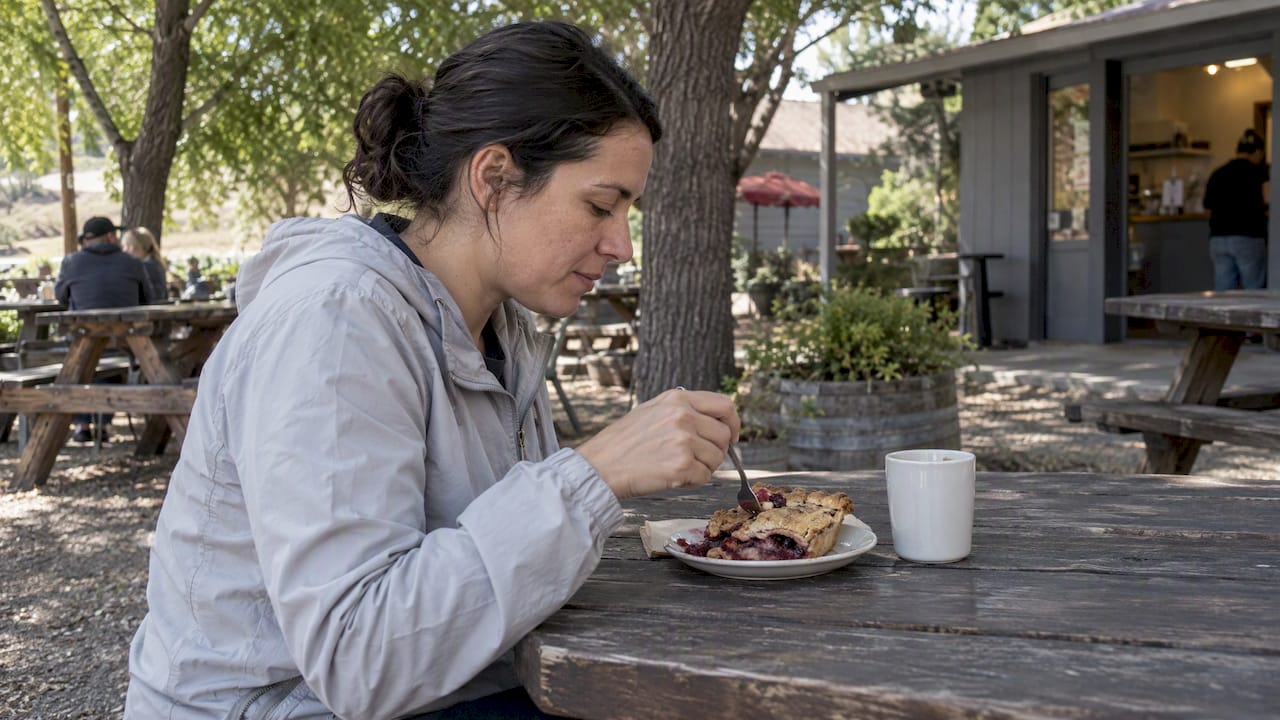
    Visitor eating pie at Wynola outdoor seating

    Both locations list their own hours and contact details on Mom’s Pie House’s site, so it’s worth checking before you commit to one over the other depending on your route into town.

    4. Apple Alley Bakery: lunch, gluten-free pie, and local favorites

    Apple Alley Bakery sits at 2122 Main Street and works well if you want more than just dessert. Its listing highlights a lunch menu frequently paired with a slice of pie, which makes it a solid stop if you’re hungry for a full meal rather than just a snack.

    The bakery stands out for its gluten-free and vegan pie options, a rarity among Julian’s pie shops, so if you’re traveling with someone on a restricted diet, this is likely your best bet. Popular picks include the caramel pecan apple pie and a crumble-topped apple version with a sugary streusel finish instead of a traditional top crust.

    Reviews compiled on Restaurantji consistently mention the gluten-free crust and the lunch specials as reasons to choose Apple Alley over a quick walk-up slice elsewhere. If you’ve got time, order a sandwich or soup first, then finish with pie.
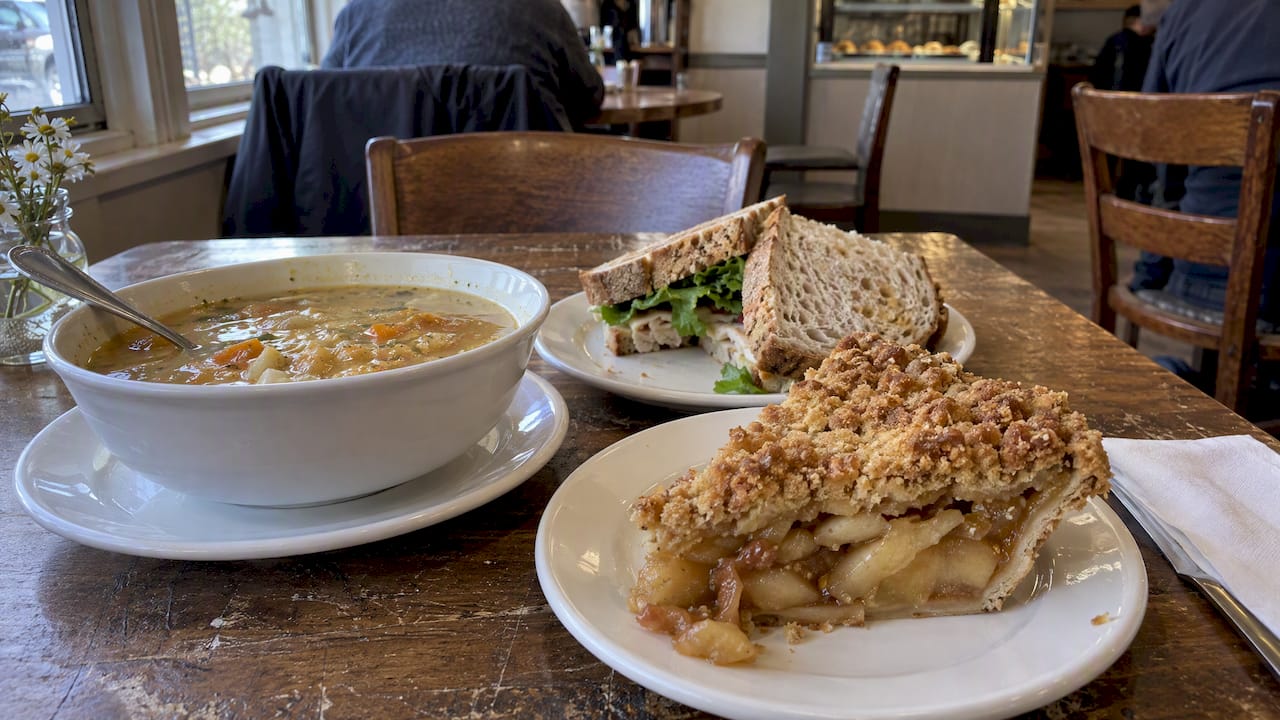
    Bakery lunch served with crumble apple pie

    5. What to order: apple pie styles and pairings

    Julian’s apple pies come in several styles. Traditional flaky double-crust pies lean tart and buttery. Dutch or crumb-topped versions swap the top crust for a cinnamon streusel, which gives a sweeter, crunchier bite. Natural apple pies skip extra sugar and let the fruit carry the flavor, a good option if you find other versions too sweet.

    Beyond apple, look for specialty flavors like caramel pecan, boysenberry apple crumb, and strawberry rhubarb when they’re in rotation.

    • Order a slice if you’re pie-hopping between shops.
    • Order a whole pie if you’re taking dessert home or feeding a group.

    Pro Tip: Pair your slice with a scoop of cinnamon ice cream or a cup of hot cider, both common add-ons at Julian’s pie counters.

    6. Best times to visit and how to skip the lines

    Julian gets busy, especially on weekends during apple season, so timing your visit matters more than you’d think.

    1. Arrive on a weekday morning, ideally before 11am, to beat both crowds and the lunch rush.
    2. Expect long lines at Julian Pie Company and Mom’s Main Street location on Saturday and Sunday afternoons.
    3. Park on a side street off Main if the main lot is full. Downtown Julian is small enough to walk between every shop once you’re parked.
    4. Visit Mom’s Pie House’s Wynola Garden location instead of the Main Street flagship if you want a calmer, sit-down pie break.

    Weekday visits also mean better odds that your first-choice pie flavor hasn’t sold out by the time you arrive.

    7. Buying whole pies to ship or carry home

    If you want pie waiting for you after the trip, Julian Pie Company ships via FedEx with 2-day and overnight windows on select weekdays, so ordering a few days ahead of a planned delivery date is smart. Mom’s Pie House and Apple Alley Bakery are better suited to advance phone or in-person orders for whole pies if you’re picking up locally rather than shipping.

    If you’re driving home the same day, keep your pie flat in the trunk or back seat rather than the floorboard, and avoid stacking anything heavy on top. A cooler bag works well in warm weather to keep a cream-based pie from softening on a long drive back to San Diego or Los Angeles.

    8. How SoCal Sights built this guide

    This guide comes from Joshua, a contributor to SoCal Sights, where our team curates hidden gems and local food spots across Southern California. We pulled shop details for this roundup from official bakery pages, review sites, and local travel coverage, cross-checking hours, addresses, and shipping details rather than relying on a single source.

    9. How Julian became a pie destination

    Julian’s pie reputation didn’t appear overnight. The mountain town built its identity on gold mining, but its cooler climate and fertile soil also proved well suited to apple orchards. Over the decades, those orchards turned Julian into one of Southern California’s best-known spots for fresh apple pie, with bakeries opening to sell what the surrounding farms were growing.

    Julian Pie Company traces its own roots to 1986, when it grew out of a family operation tied directly to the area’s apple harvest, according to its about page. The company later built a dedicated baking facility in nearby Santa Ysabel to keep up with demand, and pies from that kitchen now ship across the country.

    Mom’s Pie House has been part of that story even longer, baking from scratch daily since 1984. That kind of longevity matters in a town where pie isn’t a novelty item, it’s closer to a local industry, with shops that have fed the same families for generations and built reputations well beyond the mountain itself.

    Understanding that history adds something to the visit. You’re not just grabbing dessert, you’re tasting a tradition that grew directly out of the apples still being harvested in the hills around town.

    10. Hours, prices, and whether pies are baked fresh daily

    Most Julian pie shops keep similar hours, generally opening around 9am and closing by 5pm or 6pm, though it’s worth checking each shop’s own listing before you drive up, since hours can shift seasonally.

    A single slice typically runs a few dollars, while whole pies cost more depending on size and filling. Julian Pie Company lists its Original Apple whole pie at $28.95, which gives you a sense of what to expect at a flagship shop; other flavors and bakeries may price slightly higher or lower depending on ingredients like pecans or specialty fruit.

    The available information describes pie-making at these shops, but does not establish that all three make their pies on-site or in a local kitchen rather than receiving them frozen. The pie here tastes different from what you’d find at a grocery store. Apple Alley Bakery in particular starts early to prepare pies on the premises before opening for lunch service, which is part of what keeps its gluten-free crusts and daily specials consistent.

    If you’re choosing between a slice and a whole pie, let your plans decide it. A slice makes sense if you’re sampling multiple shops in one trip, while a whole pie is the better call if you’re bringing dessert home for a group or shipping one to family.

    11. Seasonal pies and Julian’s apple-harvest events

    Julian’s pie offerings shift with the seasons, following the apple harvest that put the town on the map in the first place. Expect more apple-forward flavors, Dutch apple, natural apple, and caramel apple variations, concentrated in the fall harvest months, when local orchards are at their peak.

    Berry pies like boysenberry and strawberry rhubarb tend to show up more in spring and summer when those fruits are in season locally. Shops rotate their daily offerings based on what’s fresh, so a flavor you loved on one visit might not be available on your next trip, which is part of the appeal if you like returning throughout the year.

    Seasonal apple and berry pie varieties

    Fall is also when Julian leans hardest into its apple identity, with harvest-season crowds drawn by the orchards themselves as much as the pie shops. If you’re planning a visit specifically to catch apple season, check with the shops about fresh pie and expected crowds.

    12. Getting to Julian without your own car

    Julian sits in the mountains east of San Diego, and there’s no train or regular public bus route that runs directly into town, so most visitors drive. If you don’t have a car, your most practical option is joining a guided day tour from San Diego, several of which include stops in Julian specifically for the pie shops and apple orchards.

    Ridesharing is another option, though the drive from San Diego takes time through mountain roads, and rideshare availability can be limited once you’re in a small town like Julian. If you’re coordinating a trip with friends, renting a car for the day is often simpler than piecing together rides for a round trip into the mountains.

    For a broader look at getting around the region and building out a full day, our Southern California road trip guide covers routes and stops that pair well with a Julian detour.

    13. Why pie tasting is Julian’s must-do stop

    There’s something about walking Main Street with a paper plate of warm apple pie that captures what Julian is about. The smell of cinnamon and baked apples can add to a visit, especially during the harvest season.

    For a day trip out of San Diego, pie tasting is the easiest kind of memory to make: low effort, high payoff, and something you can’t really get at home.

    — Joshua

    14. Plan your next Southern California food trip with SoCal Sights

    A Julian pie run is the kind of outing that works even better as part of a bigger day, and that’s exactly where we come in. We curate hidden gems and local food spots across Southern California, the kind of places that don’t always make the big travel sites, so you can build a day trip around more than just one bakery stop.

    Socalsights

    If you’re a Julian business owner or planning events in the area, our membership and advertising options can put your spot in front of travelers already looking for exactly what you offer. And if you’re the one planning the trip, check out our day trips from San Diego guide for more stops worth adding to your route.

    FAQ

    Where are Julian pies sold?

    Julian pies are sold directly at the bakeries themselves, mainly along Main Street, including Julian Pie Company, Mom’s Pie House, and Apple Alley Bakery. Julian Pie Company also ships whole pies nationwide via FedEx 2-day and overnight delivery on select weekdays.

    Which pie is better, Mom’s pies or Julian Pie Company?

    Both are well-regarded, scratch-made bakeries with slightly different strengths. Mom’s Pie House, baking since 1984, is known for its from-scratch daily pies and a quieter second location at Wynola Garden, while Julian Pie Company stands out for its long hours, shipping options, and orchard history.

    Where can I buy a Julian apple pie?

    You can buy a Julian apple pie directly from any of the Main Street bakeries, including Julian Pie Company, Mom’s Pie House, and Apple Alley Bakery. Julian Pie Company’s whole Original Apple pie is listed at $28.95 and can be shipped if you can’t visit in person.

    Does Vons sell Julian pies?

    The bakeries’ own sites do not establish whether grocery chains like Vons sell their pies, so you can buy directly from the Main Street shops or use Julian Pie Company’s shipping service. Buying in person or ordering straight from the bakery also ensures the pie is fresh rather than mass distributed.

    Sources

  • Palos Verdes Tide Pools: Best Times, $6 Parking, Family Safety

    Palos Verdes Tide Pools: Best Times, $6 Parking, Family Safety

    The best Palos Verdes tide pools are at Abalone Cove Shoreline Park (Abalone Cove and Sacred Cove), Rancho Palos Verdes Beach below Founders Park, and White Point and Royal Palms near San Pedro. Before you head out, check the tide charts and the city’s trail alerts since landslide activity and rain can close access with little warning.


    TL;DR:

    • Check NOAA Station 9410660 for a daytime minus tide; arrive about an hour before low water, since weather can shift actual levels.
    • Check city trail alerts before leaving, because rain and landslide work can close Abalone Cove access; Rancho Palos Verdes Beach is the reliable fallback.
    • At Abalone Cove and Sacred Cove, do not touch, collect, or disturb marine life or plants; wet rocks and sudden surge also demand careful footing.
    • Abalone Cove parking is card only, with the first 30 minutes free, then $6 for up to two hours; its lot closes on four holidays.

    Socalsights
    Find More Southern California Gems
    Explore local recommendations for activities, food spots, and unique itineraries across Southern California, including places beyond the usual guidebooks.

    Explore local recommendations

    Table of Contents

    Top Palos Verdes Tide-Pool Spots and Who Each Suits

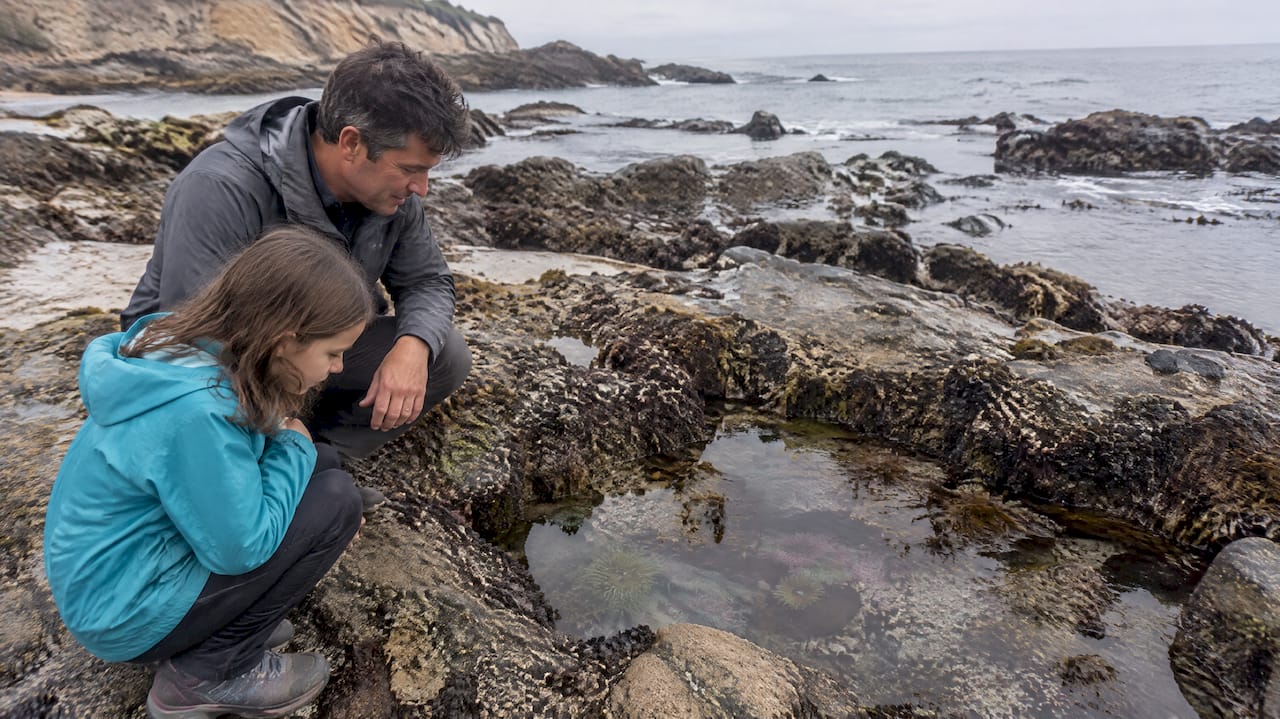
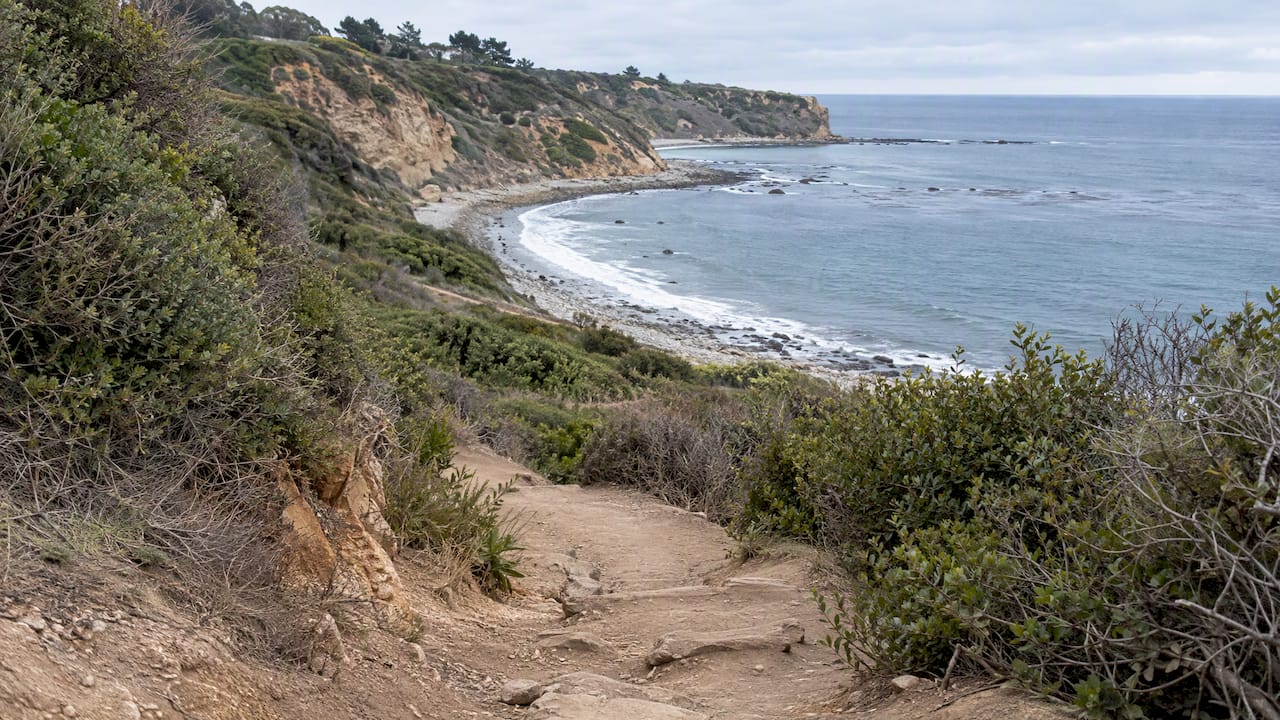
    Abalone Cove Shoreline Park is the spot most people picture when they think of tide pooling on the peninsula, and for good reason. The reserve covers two beaches, Abalone Cove and Sacred Cove, plus bluff-top trails with ocean views the whole way down. Both beaches sit inside a State Marine Conservation Area, so the marine life here tends to be more abundant than at unprotected shorelines. It suits visitors who want the classic experience and don’t mind a moderately steep trail down to the water.

    Trail descending toward Abalone Cove beach

    Rancho Palos Verdes Beach, reached via the Sunset and Sunrise Trails from Founders Park, sits beneath the Trump National Golf Club and offers some of the most reliable tide-pool viewing on the peninsula. It’s rocky, not a swimming beach, but it’s a smart backup when Abalone Cove’s trails are closed. White Point and Royal Palms, further south near San Pedro, tend to have gentler approaches and more open space for kids to explore, which makes them a good pick for families with younger children or anyone less comfortable on a steep bluff trail.

    Bluff Cove and a handful of smaller coves scattered along the peninsula round out the options. They’re quieter, less crowded, and worth considering once you’ve learned the terrain, but they can be harder to find and less forgiving if you’re new to the area.

    • Abalone Cove: classic tide pools, moderate trail, protected marine zone.
    • Rancho Palos Verdes Beach: reliable backup, accessible via Founders Park.
    • White Point/Royal Palms: easiest access, best for families.
    • Bluff Cove: quieter, better suited to experienced visitors.

    Pro Tip: Pick two spots before you leave home, a primary and a backup, since closures on the peninsula happen more often than you’d expect.

    Parking, Hours, and Closures You Need to Check First

    Logistics make or break a tide-pooling trip here, so it helps to know the details ahead of time. The Abalone Cove parking lot uses card-only payment: the first 30 minutes are free, then it’s $6 for up to two hours and $12 beyond that. The lot closes entirely on January 1, Thanksgiving, December 24, and December 25, so plan around holidays.

    For Rancho Palos Verdes Beach, street parking near Founders Park is your best bet, and restrooms are available at the park itself before you start down the Sunset or Sunrise Trail.

    • Card-only payment at Abalone Cove, no cash accepted.
    • Abalone Cove lot closed on major holidays.
    • Restrooms and parking available at Founders Park for the Rancho Palos Verdes Beach trails.
    • Trail closures can happen after heavy rain or during landslide remediation work.

    Before you go, check the city’s trail conditions and alerts page, since both rain and the ongoing Portuguese Bend landslide have triggered closures on short notice. If you want a guided experience, docent-led hikes through Los Serenos de Point Vicente run within the preserves and tide-pool areas, though you’ll need to contact the city in advance to get a spot since they fill up.

    When to Go: Reading Tide Charts the Easy Way

    Timing matters more than location here; understanding how to tide fish salmon bays can also give useful background on tidal windows for coastal activities like tide pooling. Tide pools are only exposed during low tide, and the lower the tide, the more reef and marine life you’ll see. A “minus” tide, meaning the water drops below the average low mark, gives you the widest window for exploring safely.

    1. Check NOAA Station 9410660 (Los Angeles Outer Harbor) for accurate local predictions before you pick a day.
    2. Look for daytime low tides, ideally a minus tide, rather than a nighttime low you can’t see by.
    3. Arrive about an hour before the predicted low and plan to stay up to an hour after.
    4. Expect the biggest, lowest tides around the new and full moon phases, known as spring tides.

    The lowest tides of the month cluster around new and full moons, which means more exposed reef but often more crowds and slicker rocks too, per NOAA’s tide predictions for Station 9410660.

    Keep in mind that tide predictions are forecasts, not guarantees. Wind, swell, and storm activity can all shift actual water levels, so treat the chart as a starting point rather than the final word.

    Safety, Rules, and Respecting the Marine Life

    Abalone Cove and Sacred Cove sit inside a State Marine Conservation Area, which means no collecting, touching, or disturbing anything you find, plants included. The rule of thumb everywhere on the peninsula is simple: look, don’t touch.

    Rocks near the waterline get slippery fast, and surge can knock you off balance without warning. Lifeguards generally aren’t stationed at rocky tide-pool sites, so you’re responsible for your own footing and judgment. Rain and landslide movement can also close trails with little notice, which is exactly why checking the city’s alert page before you leave matters as much as checking the tide.

    • Never touch, collect, or move marine life or plants.
    • Watch your footing on wet rocks, especially near the surge line.
    • Tell someone your plan if you’re hiking an unfamiliar trail.
    • Bring a phone and know you may have limited cell service on some bluff trails.

    Pro Tip: Wet rocks near the waterline are often the slickest spots in the whole reserve, so take your time stepping between pools.

    What to Pack for a Smooth Family Outing

    A little preparation goes a long way here. Pack sturdy, closed-toe shoes with good grip, sun protection, and a light layer since the coastal breeze can turn cool fast. Bring water, and if you want a closer look at anything in the pools, a small soft brush works better than your hands for observing without disturbing marine life.

    1. Wear shoes built for wet rocks, not sandals or flip-flops.
    2. Bring sunscreen, a hat, and a light jacket for wind off the water.
    3. Pack water and snacks since none of these sites have concessions nearby.
    4. Arrive early to grab parking, since lots fill up fast on weekends.

    Steep bluff trails at Abalone Cove make strollers and most mobility aids impractical, so White Point or Royal Palms are worth considering if that’s a factor for your group. Keep an eye on kids near pool edges, give other visitors room to look, and if your first-choice trail is closed, Rancho Palos Verdes Beach makes a reliable fallback.

    Our Local Timing Tricks for Palos Verdes Tide Pools

    We’ve found the sweet spot is arriving 30 to 45 minutes before a good daytime low tide. You’ll get softer morning light for photos, easier parking, and a lot fewer people crowding the best pools. Weekday mornings beat weekend afternoons every time on this stretch of coast.

    If you’re planning a bigger coastal trip, our guides on timing tide pool visits in San Diego and Laguna Beach’s tide pools, timing, and docent programs cover similar tactics you can apply up and down the Southern California coast. The same principles that work in Palos Verdes, early arrival, minus tides, and checking local alerts, hold true wherever you’re exploring.

    — Joshua

    Plan Your Next Coastal Day Trip With Us

    We built our guides around exactly this kind of trip: knowing where to park, when the tide works in your favor, and which trail to try when your first pick is closed. Our local write-ups cover timing tips, parking intel, and map-ready suggestions for coastal spots across Southern California, so you’re not guessing when you get there.

    Socalsights

    If you run a local business or event near the Palos Verdes Peninsula and want to reach people planning these trips, our membership and advertising options put you in front of readers actively searching for things to do nearby. Check out the membership page to see how a featured listing works for your business.

    FAQ

    What is the best time of day to visit Palos Verdes tide pools?

    The best time is during a daytime low tide, ideally a minus tide, which exposes the most reef for viewing. Check NOAA Station 9410660 for the Los Angeles Outer Harbor to find the next low tide window before you head out.

    Are Palos Verdes tide pools free to visit?

    Visiting the tide pools themselves is free, though parking at Abalone Cove requires card payment with free parking for the first 30 minutes and hourly rates after that. Rancho Palos Verdes Beach can be reached from street parking near Founders Park at no cost.

    Can you touch or collect things in Palos Verdes tide pools?

    No, Abalone Cove and Sacred Cove sit within a State Marine Conservation Area where touching, collecting, or disturbing marine life and plants is not allowed. The rule across the peninsula is to look without touching, which helps keep the ecosystem intact for future visitors.

    What should I do if my favorite trail is closed?

    Check the city’s trail conditions and alerts page before you leave, since rain and landslide activity can close access with little notice. Rancho Palos Verdes Beach near Founders Park is a dependable alternate site when Abalone Cove trails are unavailable.

    Where else in Southern California can I find good tide pools?

    Beyond Palos Verdes, San Diego County and Orange County both have well-known tide-pooling spots with their own tide-timing quirks. Our guides on San Diego tide pools and Laguna Beach’s hidden coves cover timing, parking, and access details for those areas.

    Sources

  • Carlsbad Flower Fields: 10 Weeks of Blooms, Tickets, and Local Tips

    Carlsbad Flower Fields: 10 Weeks of Blooms, Tickets, and Local Tips

    The Flower Fields at Carlsbad Ranch open for the 2026 season on March 1 and run through May 10, with roughly 80 million Tecolote® Giant ranunculus blooming across about 55 acres. That’s the main event: a hillside of color you can walk right through. Our one piece of advice before anything else: book your timed ticket early for peak weekends and aim for a morning slot, since the light is softer and the crowds haven’t arrived yet.


    TL;DR:

    • Timed tickets reserve an arrival window, and weekend slots can sell out days ahead; buy through the official page because add ons may be unavailable.
    • Peak color arrives from late March through April, while wave planting every two weeks means early and late visits show different sections at their best.
    • Weekday mornings are calmest, and parking is free; search The Flower Fields in your map app because the street address can misdirect drivers.
    • The hillside paths are sloped dirt, so wear closed toe shoes; the wagon tour accommodates wheelchairs and walkers, and staff can assist at check in.

    Socalsights
    Find More Carlsbad Local Gems
    Pair your Flower Fields visit with curated Southern California activity, food, and itinerary recommendations from local knowledge.

    Explore SoCal Sights

    Table of Contents

    Dates, Hours, Address, and Parking

    The 2026 season runs from March 1 through May 10, a full ten weeks of blooms. The farm sits at 5704 Paseo del Norte in Carlsbad, but we’d skip typing that address into your GPS. The official trip-planning page recommends searching “The Flower Fields” directly in your map app instead, since the raw street address can route some drivers toward service roads rather than the public entrance.

    Parking is free, with two general lots feeding into the front gate. A few things to know before you go:

    • Weekends fill up fast, especially in April and around Mother’s Day, so arrive early if you’re visiting on a Saturday or Sunday.
    • The lots are designed for easy in-and-out flow, but midday arrivals on peak weekends should expect a short wait to park.
    • Weekday mornings are consistently the calmest window for both driving in and finding a spot close to the entrance.

    If you’re building a bigger coastal day out of this trip, our Southern California road trip guide has stop ideas for the drive up or down the coast.

    How to Buy Tickets and What They Cost

    Tickets are sold through the official Buy Tickets page, and we’d buy there directly rather than through a reseller. Entry runs on a timed system, so your ticket reserves a specific arrival window rather than a flexible all-day pass. That keeps the paths from feeling overcrowded, but it also means popular weekend slots can sell out days in advance.

    Pricing is tiered by age, with adult tickets costing more than child tickets and kids under 3 getting in free. A few add-ons cost extra on top of general admission:

    • The wagon ride tour, a relaxed way to see the whole farm without walking the slopes.
    • The butterfly encounter, a separate paid experience some visitors add to their day.
    • Specialty retail items like bulbs or bouquets, available at the on-site shop.

    Same-day add-on purchases are often possible, but availability isn’t guaranteed on busy days. The official plan-your-trip page notes that cards are accepted for on-site purchases, so you’re not stuck relying on cash at the gate.

    What You’ll See and Do on Site

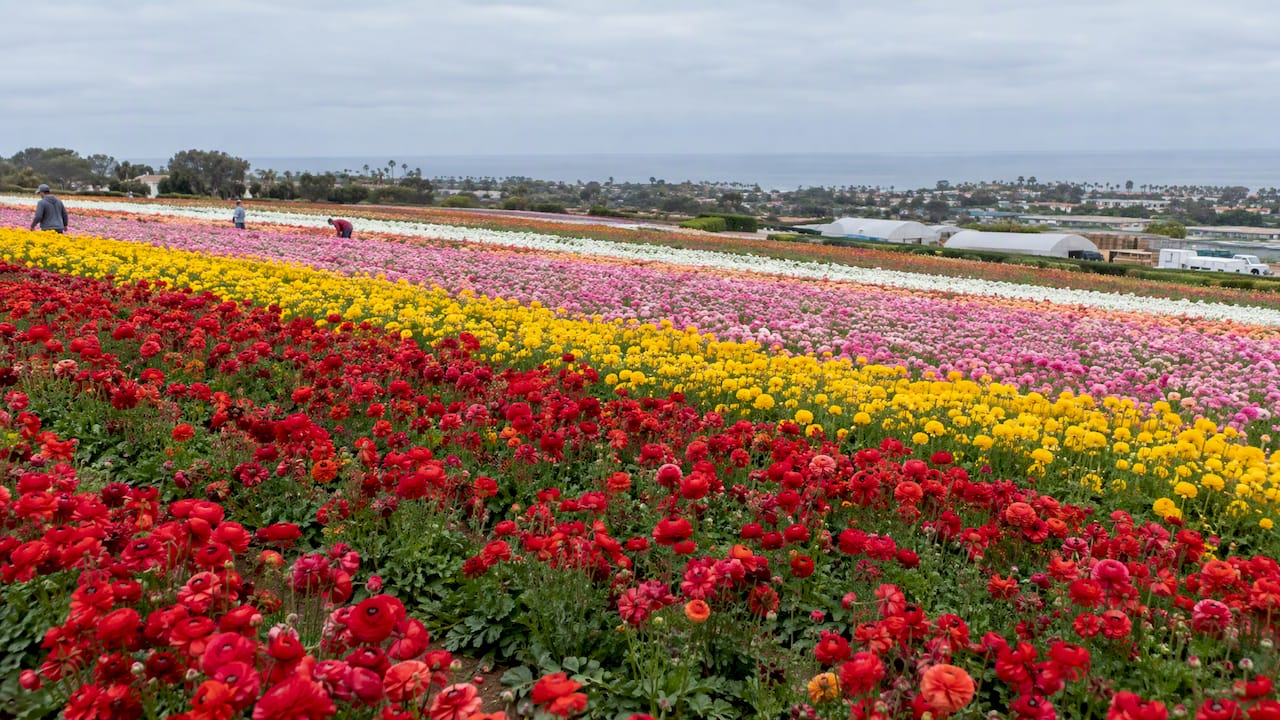
    The ranunculus fields are the reason most people come, and the scale is genuinely hard to picture until you’re standing in it: millions of blooms layered in color bands across 55 acres of hillside. Beyond the fields themselves, the official attractions list includes several extras built into your visit:

    • The Sweet Pea Maze, a fragrant, winding path that’s popular with families.
    • The Sculpture & Illusion Garden, a photo-friendly stop with playful visual tricks.
    • A playground area for kids who need a break from walking.
    • Blueberry picking, offered on a weekday schedule tied to the farm’s harvest calendar.
    • A demonstration garden showing how different plants are grown and cared for.
    • Live butterflies, available as the paid add-on mentioned above.

    General admission covers the fields, maze, sculpture garden, playground, and demonstration garden. The wagon ride and butterfly encounter cost extra. Most visitors spend about two to three hours on site once you factor in photos, the maze, and a stop at the shop.

    When the Blooms Peak and Why the Season Lasts So Long

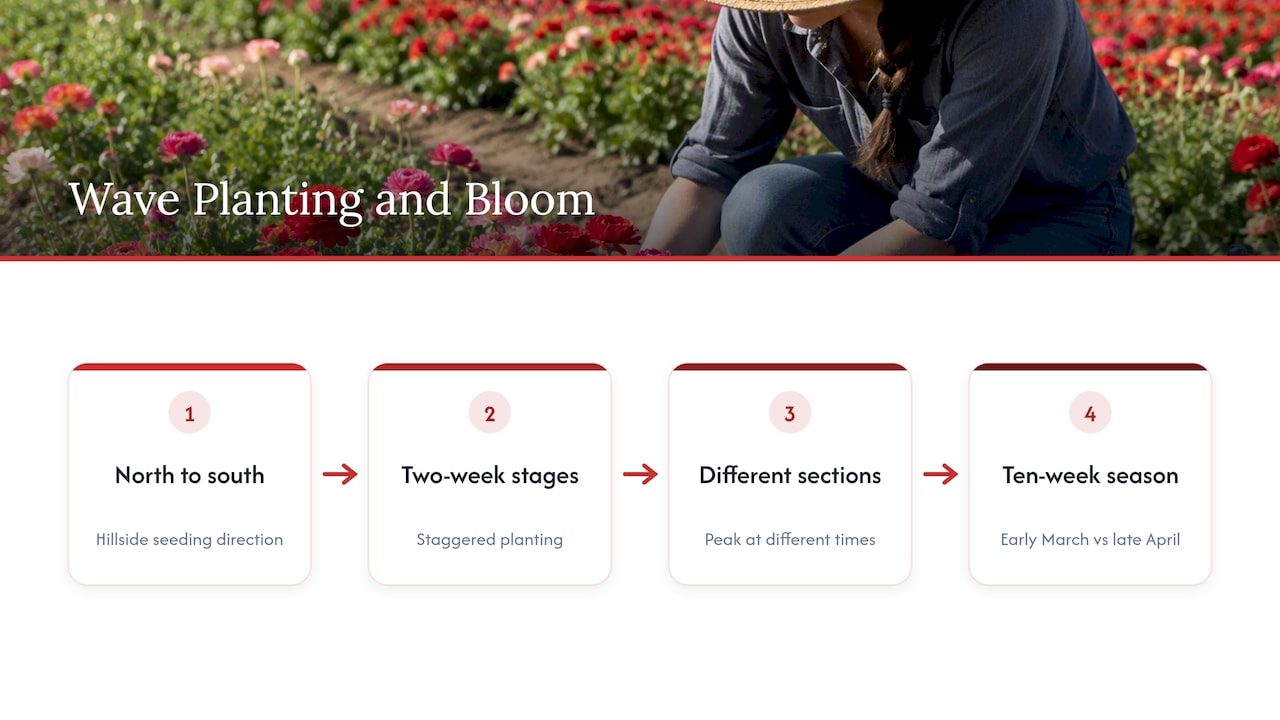
    Peak color usually lands in late March through April, but the ten-week window exists because of how the farm plants its fields. Growers use a practice called wave planting, seeding the hillside from north to south in stages roughly every two weeks, according to local reporting from Axios San Diego. That staggered approach means different sections of the farm hit their peak at different points in the season, so an early-March visit and a late-April visit can look noticeably different.

    Staggered planting creates blooms across ten weeks

    Weather plays a role too. Cooler stretches can slow blooming, while warm, dry spells tend to push flowers open faster. Worth noting: this seasonal display is a planned agricultural cycle, not the kind of unpredictable desert “superbloom” that follows a wet winter. If you’re chasing that specific phenomenon, our superbloom status guide tracks where those conditions are showing up elsewhere in the region.

    Footwear, Accessibility, and Photo Rules to Know Before You Go

    The paths through the fields are sloped dirt, not pavement, so comfortable, closed-toe shoes make a real difference. Pack sun protection and water too, since there’s not much shade once you’re out among the rows.

    A few practical notes to keep your visit smooth:

    1. Stay on the designated paths at all times and never step into the growing beds, both for your safety and the flowers’ sake.
    2. If mobility is a concern, the wagon tour is built to accommodate wheelchairs and walkers, and you can ask for check-in assistance at the customer service window.
    3. Skip the tripod-and-lens professional setup unless you’ve booked a shoot through the farm directly. The official photography policy allows casual phone and personal photos but restricts outside commercial shoots.
    4. Type “The Flower Fields” into your map app rather than the street address to land at the correct entrance and parking lot.

    Pro Tip: Bring a wide-brim hat instead of sunglasses alone. The open hillside has almost no shade, and a hat keeps your face cool for the two or three hours you’ll likely spend wandering.

    Local Tips for a Better Visit

    Visitors are often advised to arrive at opening hour when the light is soft, the lines are short, and the fields feel less crowded. Midweek mornings typically offer a calmer experience than weekends.

    Pair your visit with a short stop in Carlsbad Village for breakfast before you head over, or swing by a coastal viewpoint afterward since the beach is just minutes away. On busy weekends, use the lot entrance closest to the main road rather than circling for the closer one. And if you’re hoping to pick blueberries, remember that’s a weekday-only offering tied to the harvest schedule.

    Special Events and Festivals During the Season

    The ten-week run isn’t just static fields. The farm builds smaller seasonal moments into the calendar, from themed weekends tied to the blooming cycle to evening hours during certain stretches of the season when the light and temperature make for a different kind of visit. These events tend to draw heavier crowds than a typical weekday, so if you’re planning around one, book your timed ticket well ahead through the official ticketing page.

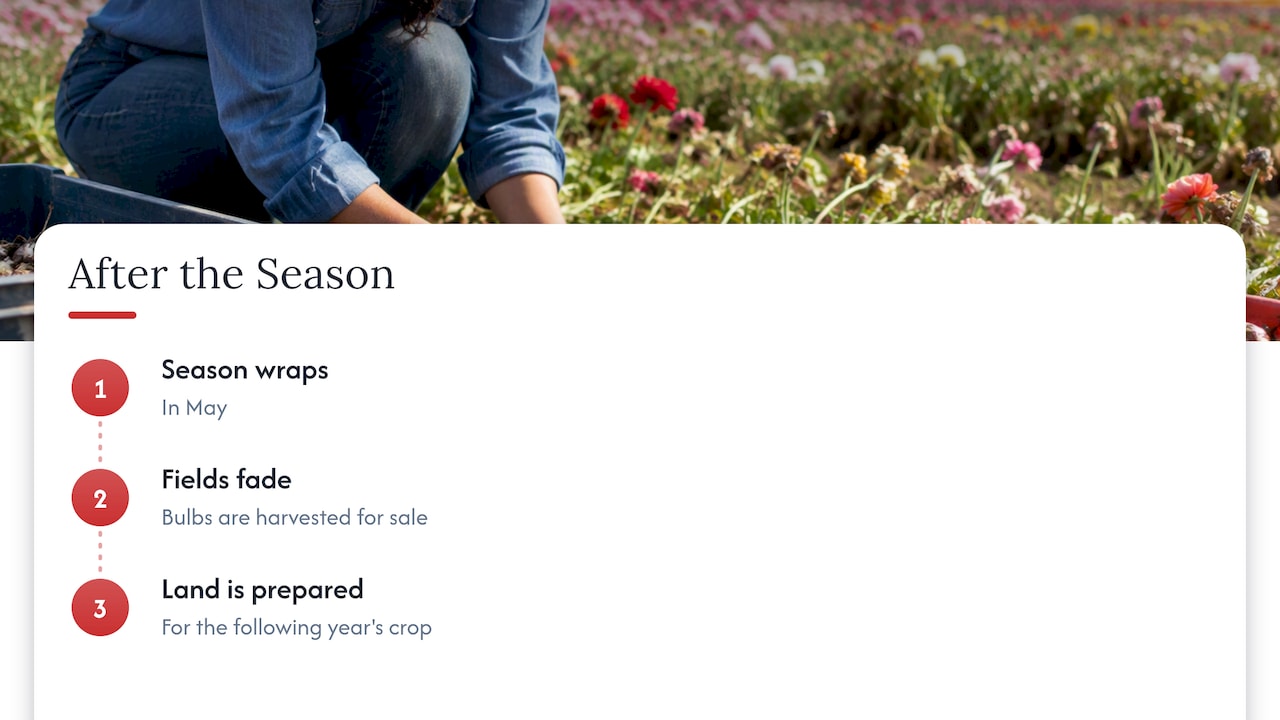
    The farm’s rhythm follows its own agricultural calendar. Once the season wraps in May, the fields are allowed to fade, bulbs get harvested for sale, and the land is prepped for the following year’s crop, based on coverage from KPBS. That cycle is part of why the season has a firm start and end date each year rather than running indefinitely.

    Special Events and Festivals During the Season — overview diagram

    Why This Spring Tradition Is Worth the Trip

    North County San Diego has plenty of pretty views, but there’s something about walking a hillside of ranunculus that feels different every year. We built SoCal Sights to help you spend your limited weekend hours on the places actually worth the drive, and this is one of them.

    — Joshua

    Plan Your Visit With SoCal Sights

    We’ve spent a lot of time helping readers turn a single attraction into a full day worth remembering, and the Flower Fields are a perfect anchor for exactly that kind of trip. If you want a ready-made itinerary pairing this visit with nearby coffee shops, beaches, or a weekend getaway, our road trip guide has routes built around stops like this one.

    Socalsights

    If you’re planning a longer coastal stay, resort options like Omni La Costa sit close by for an overnight extension. And if you run a local business or event near Carlsbad, we’d love to feature you. Check out advertising with SoCal Sights to see how we help local spots reach visitors planning trips just like this one.

    FAQ

    What kind of flowers are in Carlsbad flower fields?

    The main display is the Tecolote® Giant ranunculus, a large-bloom variety grown in color-blocked rows across the farm’s hillside. The farm also features a separate Sweet Pea Maze as part of general admission.

    What flowers are in bloom during May?

    Ranunculus blooms typically carry through early May before the 2026 season closes on May 10. Because the farm uses wave planting, some sections planted later in the cycle tend to peak closer to the season’s end.

    Will there be a superbloom in California in 2026?

    Carlsbad’s display is a planted agricultural bloom, not a desert superbloom, which depends on unpredictable winter rainfall in wildflower regions. For current superbloom conditions elsewhere in the state, our superbloom tracking guide covers where those patterns are showing up.

    Where are wildflowers in California?

    Beyond Carlsbad’s cultivated fields, California has several wild desert and mountain regions known for seasonal wildflowers, including Anza-Borrego Desert State Park. Our Anza-Borrego wildflower guide covers viewing conditions and timing for that area specifically.

    Sources

  • Skip Open Sand: San Diego Beach Camping, Tide Tips, and Fire Rules

    Skip Open Sand: San Diego Beach Camping, Tide Tips, and Fire Rules

    Legal beach camping in San Diego means booking a designated campground, not spreading a sleeping bag on open sand. Your real options are San Elijo State Beach, South Carlsbad State Beach, Silver Strand State Beach, Campland on the Bay near Mission Bay, and a handful of county-run campgrounds near the coast. Start with ReserveCalifornia for the state beaches, then check sdparks.org for county sites.


    TL;DR:

    • ReserveCalifornia handles San Elijo, South Carlsbad, and Silver Strand; county campgrounds use a separate reservation system with different fees and stay limits.
    • San Elijo and South Carlsbad sit above the sand, so reaching the beach usually means taking stairs rather than walking straight from camp.
    • Silver Strand has vehicle and trailer limits up to 40 feet, and some areas require self contained vehicles because full hookups are not available everywhere.
    • Coastal sites fill fastest from March through November, so weekday arrivals offer better odds, while popular bluff sites may disappear minutes after reservations open.
    • Park Posted Orders set curfew hours, fire restrictions, parking rules, and vehicle limits; check the current document before departure.

    Socalsights
    Find More Coastal Favorites
    Explore SoCal Sights for local recommendations on activities, food spots, and unique itineraries across Southern California.

    Explore SoCal Sights

    Table of Contents

    At-a-Glance Shortlist of Beach and Near-Beach Campgrounds

    We’ve combed through every coastal campground option in San Diego County so you don’t have to open ten browser tabs at midnight trying to find a site. Here’s the shortlist we actually recommend starting with, depending on what kind of trip you’re planning.

    • San Elijo State Beach: Bluff-top sites with stairs down to a long sandy beach, a favorite for surfers and sunset watchers. Book through ReserveCalifornia.
    • South Carlsbad State Beach: Similar bluff setup with a mix of ocean and inland sites, good for families who want a short walk to the water. Also booked through ReserveCalifornia.
    • Silver Strand State Beach: A narrow strip of land with the ocean on one side and Mission Bay on the other, popular with self-contained RVs. Reserve through ReserveCalifornia.
    • Campland on the Bay (Mission Bay): A private RV resort with pools, a marina, and bay access, best for families who want amenities over rustic charm. Book directly through Campland’s own reservation system.
    • County campgrounds near the coast: Spots like those in the Tijuana River Valley area offer a quieter, more budget-friendly alternative close to the water. These use the county reservation system instead of ReserveCalifornia.

    Each of these fills up fast in peak months, so knowing which one fits your trip before you start clicking through booking calendars saves a lot of frustration.

    Site-By-Site Practical Details You Must Check Before Booking

    Picking the right campground is only half the job. The site you actually get assigned can make or break your trip, so here’s what we check before locking in a reservation.

    San Elijo State Beach sits on a bluff above the sand in Encinitas, and most sites are a short staircase from the beach rather than right on it. Hookup options vary by site, so check the campground map before you book since some “ocean” sites still have limited views. Vehicle length limits and curfew hours are posted in the park’s Posted Orders, and check-in and check-out times are strictly enforced. San Elijo also publishes clear rules on vehicle parking and fire use that are worth reading before you pack the car.

    South Carlsbad State Beach runs along a similar bluff-top layout just south of Carlsbad Village. The campground page lists separate fees for ocean-facing sites with hookups versus inland sites without, and the campsite map clearly marks single and double hookup sites so you know what you’re booking. Vehicle length limits apply here too, and during peak summer weekends you’ll see campers lining up early for cancellations since the ocean sites go first.

    Silver Strand State Beach is a different animal because it’s a sliver of land between Coronado and Imperial Beach, with the ocean on one side and Mission Bay waters on the other. Some areas require fully self-contained vehicles, meaning you’ll need your own bathroom and water setup since there isn’t full hookup infrastructure everywhere. The park posts vehicle and trailer length limits up to 40 feet, and day-use pricing differs from overnight camping fees, so double-check which you’re paying for when you book.

    Campland on the Bay, the main private RV resort option near Mission Bay, runs on its own booking system separate from ReserveCalifornia. It leans into resort-style amenities including pools, a marina, and organized family activities, which makes it a solid pick if you want camping without giving up creature comforts. Because it’s privately operated, policies on pets, vehicle size, and stay length can differ from state park rules, so it’s worth reading Campland’s own site before assuming state park rules apply.

    County campgrounds near the coast, including sites in the Tijuana River Valley area, offer a quieter and often more affordable alternative if the state beaches are booked solid. These are reserved through Sdparks rather than ReserveCalifornia, and the county publishes its own set of stay limits and fees that differ from state park policy. If you’re flexible on location and want a backup plan when the beachfront sites sell out, these are worth a look.

    Must-Know Rules and Safety Constraints

    San Diego’s beach parks have rules that trip up a lot of first-time campers, and knowing them ahead of time keeps your trip from getting cut short by a ranger’s knock on the tent.

    • Sleeping directly on open beach sand is prohibited at San Diego’s state beaches; overnight stays are allowed only in designated campsites or in fully self-contained vehicles where the park specifically permits it.
    • Ground fires are not allowed, but propane or butane stoves are generally fine as long as they’re kept with proper clearance from anything flammable.
    • Curfew and quiet hours are strictly enforced, along with rules on glass containers, dogs on leashes, and vehicle parking in designated spots only.
    • Oversized vehicles need to check length limits before arrival since not every site accommodates larger RVs or trailers.

    Pro Tip: Read the park’s Posted Orders PDF before you leave home. These documents spell out exact curfew hours, fire rules, and vehicle restrictions for that specific park, and they change from year to year.

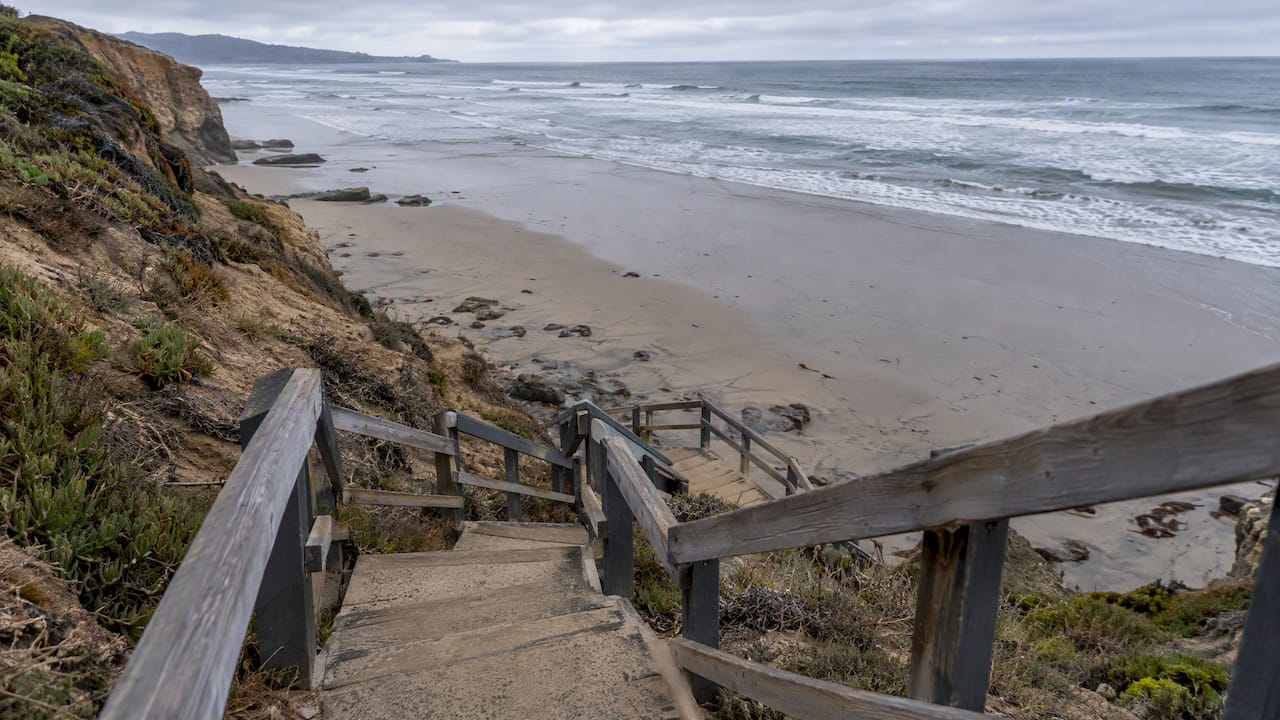
    Posted Orders for San Diego Coast District parks list curfew hours from late evening to early morning, along with detailed fire and vehicle parking rules specific to each beach. These posted rules are the final word on what’s allowed at that site, so when in doubt, that’s the document to check. Bluffs and tide changes add another layer of caution: always keep an eye on tide tables before walking the shoreline at dawn or dusk, especially near the staircases that connect bluff-top campsites to the beach below.

    Bluff staircase leading to a changing tide line

    Booking Mechanics and Timing: Getting the Site You Actually Want

    Here’s how we approach booking a coastal campsite without losing our minds over a fully booked calendar.

    1. Start with ReserveCalifornia for San Elijo, South Carlsbad, and Silver Strand since these are the official state park booking channels.
    2. Check Sdparks separately for county-run campgrounds, which operate on their own reservation system with different stay limits and annual caps.
    3. Target weekday arrivals over weekends, since coastal sites fill up fastest from March through November.
    4. Pull up the campground’s site map before booking so you know exactly which numbered site you’re getting, not just a general category.
    5. Confirm your vehicle’s length against the park’s posted limits before you finalize anything, especially at Silver Strand.

    Pro Tip: Set a recurring calendar reminder for your target campground’s booking release date. Popular bluff-top sites at San Elijo and South Carlsbad often get snapped up within minutes of becoming available.

    Decision Checklist: Which Site Fits Your Trip

    Before you start scrolling through booking calendars, run through these questions to narrow things down fast.

    • Do you need full hookups for a large RV? Campland on the Bay or Silver Strand’s self-contained vehicle sites are your best bets.
    • Is walking to the surf on foot a priority? San Elijo and South Carlsbad both offer bluff-top access with stairs to the sand.
    • Are you traveling with a trailer or oversized rig? Check Silver Strand’s length limits before anything else.
    • Want pools, a marina, and organized family activities? Campland on the Bay leans resort over rustic.
    • Looking for something quieter and more budget-friendly? A county campground near the coast might fit better than a sold-out state beach.

    Local Tips: Tide Timing, Packing, and Logistics

    Low tide right after sunrise is usually the best window for exploring tide pools near San Elijo, and a tide pools guide breaks down timing in more detail. Grocery runs are easy near Encinitas and Carlsbad, both a short drive from their respective campgrounds, and gas stations cluster near the main coastal highway exits.

    • Pack layers for the evening breeze, since coastal temperatures drop fast after sunset.
    • Bring sun protection and beach shoes for the walk down bluff staircases.
    • Strap-downs for canopies and camp gear help on windier days near the water.
    • Use biodegradable soap for any rinsing to keep the coastline clean for the next camper.

    Pro Tip: Check a live coastal webcam the morning of your trip through a directory like GlobeWebcams to get a quick visual read on fog or wind before you load the car.

    Our Take: Picking the Right Spot for Your Trip

    If you want creature comforts and don’t mind trading rustic charm for a pool, Campland on the Bay wins. If you want to wake up to actual surf sound, a bluff-top site at San Elijo or South Carlsbad beats anything inland, even with the stairs.

    — Joshua

    Plan Your Next Coastal Trip With SoCal Sights

    Finding the right campground is just the start. We put together local guides that go beyond the basics, covering secret beaches, weekend itineraries, and the kind of spots that don’t show up in standard travel guides.

    Socalsights

    What you get Where to find it
    Local beach guides Secret Beaches San Diego
    Weekend trip planning San Diego Weekend Itinerary
    Business promotion Advertise With SoCal Sights

    If you run a local business near one of these campgrounds and want to reach travelers planning their trip, check out advertising with SoCal Sights to get featured in front of our readers.

    FAQ

    Are There Any Beaches You Can Camp on in California?

    Several California state beaches allow camping in designated campgrounds, including the three San Diego-area options covered here. Reservations for these run through ReserveCalifornia, the state’s official booking portal.

    What Is the 200 Rule for Camping?

    This isn’t a rule referenced in official San Diego park guidance, and definitions vary depending on the source. For San Diego beach camping specifically, the rules that matter are the park’s own Posted Orders covering vehicle limits, curfew hours, and fire restrictions.

    Can I Sleep on the Beach in San Diego?

    No, sleeping directly on open sand is prohibited at San Diego’s state beaches. Overnight stays are only allowed in designated campsites or in fully self-contained vehicles where the park specifically permits it.

    Sources

  • Antelope Valley Poppies: Check PoppyCam, Then Explore SoCal

    Antelope Valley Poppies: Check PoppyCam, Then Explore SoCal

    The best window to catch Antelope Valley poppies in full bloom typically falls between late March and mid-April, though flowers can appear anywhere from mid-February through May depending on rainfall. Before you drive out, check the official reserve page or call the Wildflower Hotline, because bloom timing shifts every year and we’d hate to see you make the trip for nothing. Go early on a weekday for the best light and the smallest crowds.


    TL;DR:

    • Check the reserve page or PoppyCam before leaving, because rainfall and overnight weather can quickly change bloom conditions at the reserve.
    • Poppies open most fully from 10 AM to 3 PM on sunny, calm days, while cold, wind, and cloud cover can keep petals closed.
    • Bring $10 per vehicle for parking and allow time for roughly 8 miles of trails; the visitor center area includes a paved accessible route.
    • Choose a weekday and arrive before 10 AM, since peak bloom weekends fill quickly and overflow parking may add a long walk or wait.
    • Stay on marked trails and leave flowers untouched, because foot traffic compacts the loose soil poppies need to germinate in future seasons.

    Socalsights
    socalsights.com
    Find More SoCal Hidden Gems
    After checking the poppy bloom, explore local recommendations for activities, food spots, and unique itineraries across Southern California.

    Explore SoCal recommendations

    Table of Contents

    Quick Facts: Location, Hours, Fees, and Trails

    The Antelope Valley California Poppy Reserve sits in the western Antelope Valley, roughly 15 miles west of Lancaster and about 90 minutes from downtown Los Angeles depending on traffic. It’s a straightforward drive up the Antelope Valley Freeway, and most visitors treat it as a half-day trip rather than an overnight stay.

    Here’s what you need to know before you go:

    • Hours: Open sunrise to sunset, year-round, according to California State Parks.
    • Parking fee: $10 per vehicle, per day, collected at the entrance kiosk.
    • Trail mileage: About 8 miles of trails total, including a paved, wheelchair-accessible section near the visitor center.
    • Visitor center: The Jane S. Pinheiro Interpretive Center opens seasonally during peak bloom, usually spring.
    • Live updates: The reserve maintains a PoppyCam and a Wildflower Hotline for real-time bloom status.

    The reserve offers 8 miles of trails, a figure that surprises a lot of first-time visitors who picture a quick loop around a flower field. It’s a genuine hiking destination, not just a roadside pullout, so budget more time than you’d expect for a short wildflower stop.

    When Poppies Peak and How Weather Shapes Each Day

    California’s state flower doesn’t follow a fixed calendar. The wildflower season at the reserve generally runs from mid-February through May, with peak viewing most often landing in late March to mid-April. Some years run early, some run late, and the only way to know for sure is to check conditions close to your visit.

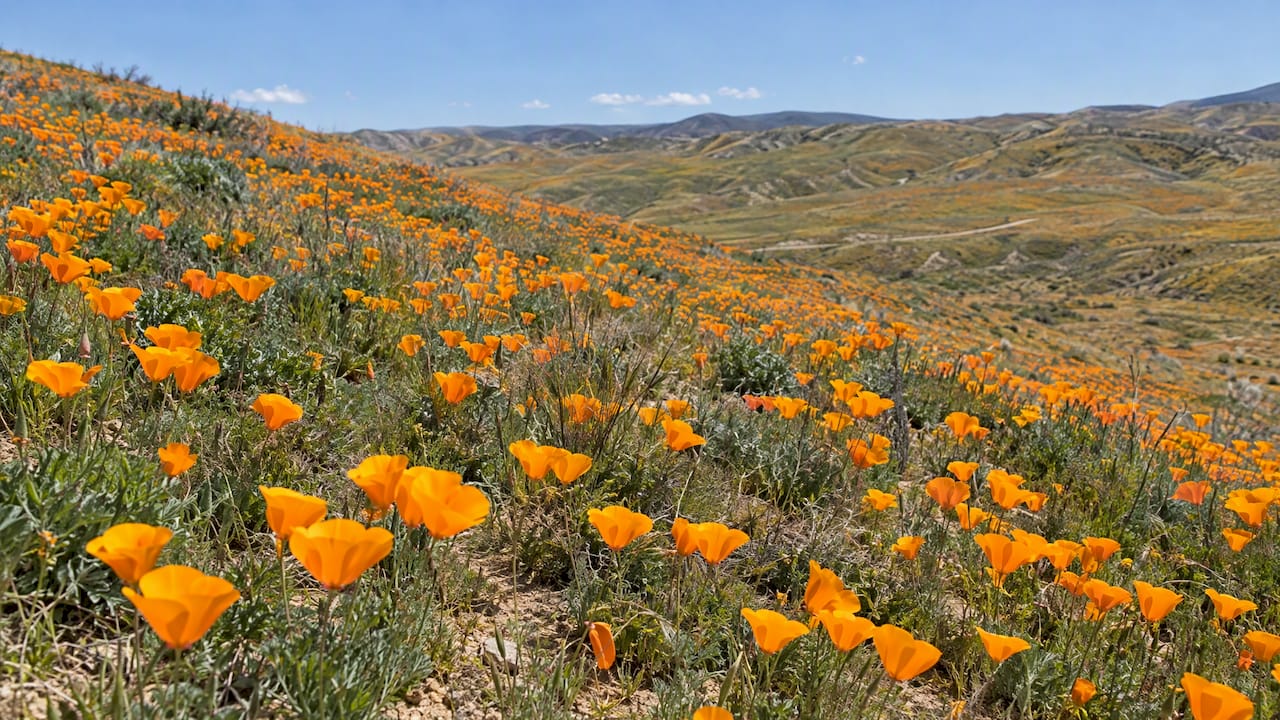
    Superblooms, the rare years when poppies carpet entire hillsides in orange, happen when winter rainfall lines up with mild spring temperatures. Recent superbloom years included 2017, 2019, and 2023, though the reserve staff are quick to point out they do nothing to water or encourage the flowers. The bloom lives or dies entirely on natural rainfall, which is part of what makes a good year feel special.

    Poppies are phototropic, meaning the petals open with warmth and sunlight and close up tight when it’s cold, windy, or overcast. That’s why the same hillside can look completely different at 8 AM versus noon.

    Time of day Typical poppy behavior
    Early morning Petals often still closed or curled
    Midday (10 AM to 3 PM) Petals fully open on sunny, calm days
    Late afternoon Petals may begin closing as temperatures drop
    Overcast or windy days Petals stay closed regardless of time

    Pro Tip: Call the Wildflower Hotline the morning of your visit, since conditions can change overnight after a cold front moves through.

    How to Get There, Park, and Pack for the Day

    Getting to the reserve is easy, but timing your arrival matters more than the drive itself. Here’s a simple sequence to follow:

    1. Check conditions first. Call the Wildflower Hotline at 661-724-1180 or check the PoppyCam before leaving home.
    2. Plan your route. From Los Angeles, take the Antelope Valley Freeway (CA-14) north, then follow signs west on Lancaster Road, which becomes Avenue I, toward the reserve.
    3. Arrive early. Lots fill fast on weekends during peak bloom, and overflow parking can mean a long walk or a long wait.
    4. Pay at the kiosk. The $10 per vehicle fee is collected on-site, cash or card depending on staffing.
    5. Start on the main trail. The paved ADA section near the visitor center gives everyone an easy first look before branching onto dirt trails.

    Weekdays are noticeably calmer than Saturdays and Sundays during a strong bloom year, and arriving before 10 AM usually means an easier parking experience and softer morning light for photos.

    Pack smart, because the Antelope Valley sun doesn’t mess around:

    • Water, more than you think you’ll need, since there’s little shade on the trails.
    • Sun protection: hat, sunscreen, and sunglasses.
    • Sturdy walking shoes, since trails are dirt and can get uneven.
    • Binoculars if you want a closer look at distant hillsides.
    • Snacks, since food options inside the reserve are limited.

    There’s no camping at the reserve, and shade is scarce once you’re out on the trail system. Restrooms and picnic areas are available near the visitor center, and the paved accessible trail makes a solid option for visitors who want the poppy experience without tackling the hillier dirt paths.

    What the Trails Feel Like and What Else You’ll See

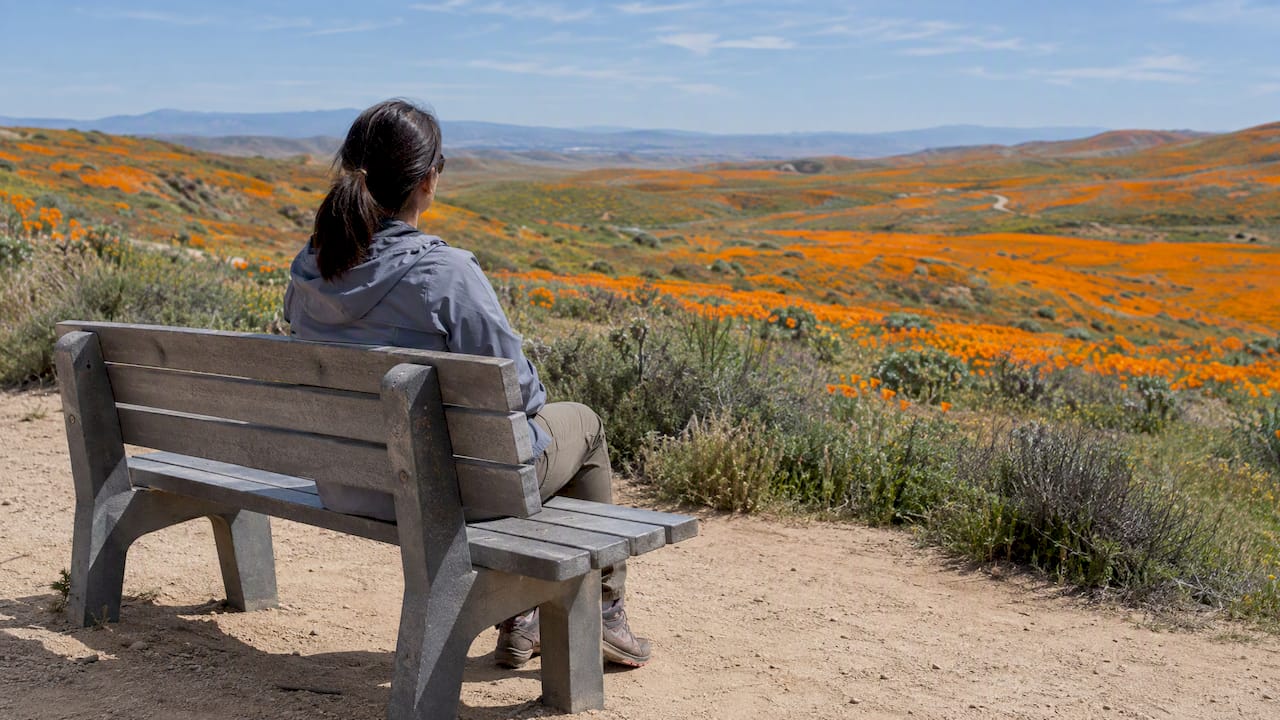
    The Antelope Loop is the reserve’s signature trail, a gentle rolling path through hillsides that turn orange during a good bloom. Benches are scattered along the route, which makes it easy to slow down and actually take the scene in instead of rushing through.

    Visitor resting beside poppies on Antelope Loop

    Poppies rarely bloom alone out here. Depending on timing and rainfall, you might also spot owl’s clover, lupine, goldfields, cream cups, and coreopsis mixed in among the orange, creating patches of purple, yellow, and white that make the hills look almost painted.

    Wildlife sightings are common too, including:

    • Red-tailed hawks circling overhead, hunting the open grassland.
    • Jackrabbits darting between shrubs near the trail edges.
    • Western fence lizards sunning themselves on rocks.
    • Occasional coyote sightings at dawn or dusk, best observed from a distance.

    Reserve rules exist for good reason, and they’re simple to follow: stay on marked trails, never pick the flowers, no drones, and no pets except service animals. These aren’t bureaucratic hurdles. They’re what keeps the hillsides looking the way you came to see them.

    Getting the Shot Without Hurting the Habitat

    The best photos come from the same window that gives you the best viewing: late morning to early afternoon on a sunny, calm day, when every petal is wide open. Harsh midday light can wash out the orange, so angling your shots slightly off-direct-sun often gives richer color.

    A few techniques make a real difference:

    • Use a telephoto lens to get close-up detail instead of stepping off the trail into the flowers.
    • Shoot low and wide to include the scale of a hillside, not just a single bloom.
    • Look for foreground interest, like a cluster of poppies against a distant mountain backdrop.
    • Shoot during the golden hour near sunset for warmer tones, keeping in mind petals may already be closing.

    Pro Tip: A zoom lens gets you the tight, detailed poppy shot everyone wants, without trampling a single stem.

    If you’re planning anything beyond casual phone photos, like an organized group shoot or commercial work, the reserve requires a permit. And no matter how tempting that viral “lying in the poppy field” shot looks on social media, drones are prohibited and off-trail walking damages the very thing you’re trying to photograph.

    Desert Safety and Why the Rules Matter

    Antelope Valley sits in high desert, and spring days can swing from chilly mornings to genuinely hot afternoons fast. Bring more water than feels necessary, watch for early signs of heat illness like dizziness or headache, and take breaks in whatever shade you can find near the visitor center.

    The “stay on the trail” rule isn’t arbitrary. Soil compaction from foot traffic reduces the loose, aerated ground poppies need to germinate, according to botanical research on the species, which means a shortcut through the flowers today can mean fewer blooms for years afterward.

    A few guidelines worth repeating:

    • No picking flowers, which is enforced with fines.
    • No pets, except service animals.
    • Stay on marked trails at all times, even for photos.
    • Consider supporting the Poppy Reserve Mojave Desert Interpretive Association, the local group that helps sustain the reserve through volunteer work and donations.

    Local Tips for a Better, Quieter Visit

    We’ve found that timing and small detours make a bigger difference here than most visitors expect. Weekday mornings, especially Tuesday through Thursday, tend to run far lighter than weekend crowds even during a strong bloom year. If the main trail feels packed, side paths branching off the Antelope Loop often give you the same hillside views with far fewer people in your shot.

    A few ways to round out the day:

    • Pack a picnic for the designated areas near the visitor center before or after your hike.
    • Pair your poppy visit with a broader day trip, since the surrounding area has plenty to explore if you build in extra time.
    • Check our guide to other Southern California super bloom spots if you want to compare nearby wildflower destinations in the same season.
    • If poppies aren’t blooming yet, Anza Borrego’s wildflower season sometimes overlaps and offers a backup plan.

    A Few Honest Thoughts on the Poppy Fields

    There’s something genuinely humbling about standing on a hillside that’s turned entirely orange by a flower that didn’t need a single drop of help from us. No irrigation, no planting, just rainfall and timing lining up the way they’re supposed to.

    That’s exactly why the rules around staying on trails and leaving flowers alone matter so much to us. Every bloom year depends on the seedbed surviving the one before it. We focus on finding the places that make Southern California feel worth exploring, and few spots capture that better than a hillside of wild poppies that nobody planted.

    — Joshua

    Plan Your Full Southern California Trip With Us

    A poppy hillside is a great start to a day, but the Antelope Valley sits close to a lot of ground worth covering, and we built our membership around helping local spots and trip ideas reach people exactly like you. Through Advertise With SoCal Sights, local businesses and event organizers get featured placement on our site, which means the recommendations you see come from real local spots trying to connect with visitors, not generic filler.

    Socalsights

    If you want to stretch your poppy day into a full weekend, a few of our guides pair nicely:

    Check out our membership page to see how we help local spots get discovered, or browse our guides for your next outing.

    FAQ

    Is a poppy considered a wildflower?

    Yes, the California poppy is classified as a wildflower, meaning it grows and reproduces naturally without cultivation. At the Antelope Valley reserve, poppies grow alongside other wildflowers like lupine and goldfields, all part of the same native plant community.

    Can you just scatter California poppy seeds?

    California poppy seeds generally need loose, well-drained soil and full sun to germinate well, so simply tossing them on compacted or shaded ground often leads to poor results. Timing matters too, since fall sowing in most of California tends to produce stronger spring growth than a random scatter at the wrong time of year.

    Is California poppy hallucinogenic?

    No, the California poppy is not hallucinogenic, despite its botanical relation to opium poppies. Its pollen also isn’t a wind-borne allergen, and while it has a history in indigenous herbalism, there’s no clinical evidence supporting psychiatric treatment claims.

    What is the rarest poppy color?

    California poppies most commonly bloom in shades of orange, yellow, and red, though pink and white variations do occur. There isn’t one single color that botanical sources universally designate as the rarest, since rarity depends heavily on the specific population and region.

    Sources

  • Day of the Dead in Los Angeles: Free Events and Hidden Altars

    Day of the Dead in Los Angeles: Free Events and Hidden Altars

    If you want free, family-friendly altars, head to Gloria Molina Grand Park. If you want the historic heart of the tradition, walk the nightly procession at Olvera Street. If you want a big ticketed cemetery festival with stages and vendors, Hollywood Forever is your pick. Most events cluster from late October through November 1 and 2, and we break down the details, costs, and etiquette below.


    TL;DR:

    • Grand Park displays more than 16 altars built by community members and offers participatory workshops; admission is free throughout its exhibition, which lasts several days.
    • Olvera Street pairs nightly processions with community altars and a historic vendor market, while its festival programming is mostly free to attend.
    • Hollywood Forever requires a paid ticket, and prices and availability can change, so buy tickets ahead because popular nights sell out quickly.
    • Ask before photographing a personal altar, and contribute offerings only when organizers invite them; use Metro rail or rideshare near crowded downtown venues.
    • Neighborhood pop ups may not appear on major calendars, so check local cultural centers and community groups on social media before the holiday.

    Socalsights
    Find More Local Los Angeles Gems
    Socalsights shares local recommendations for Southern California, helping you find memorable activities and places beyond the best-known spots.

    Explore local recommendations

    Table of Contents

    1. Where to celebrate Día de los Muertos around Los Angeles

    Los Angeles doesn’t do Día de los Muertos halfway. We have altars in public parks, candlelit processions through historic plazas, and a cemetery festival that draws thousands. Here’s how the main options stack up.

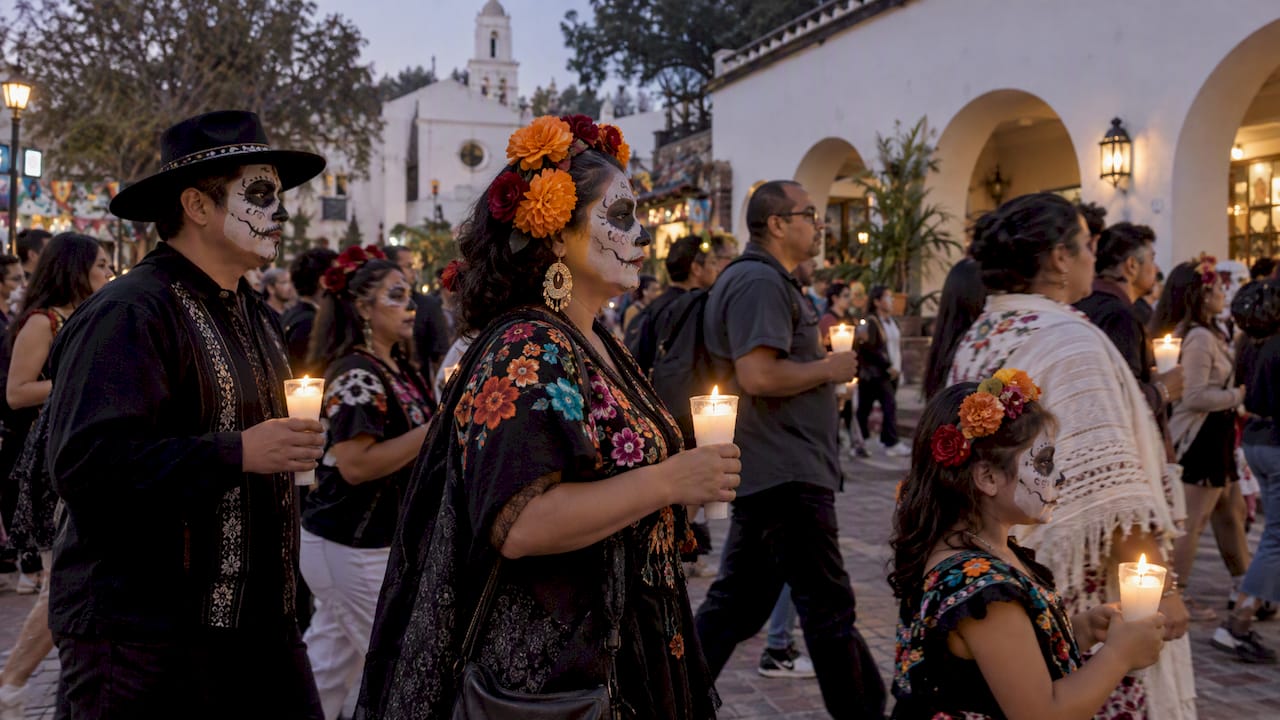
    Gloria Molina Grand Park runs a free, multi-day Downtown Día de los Muertos exhibition in the heart of Downtown LA. The official Grand Park program features more than 16 community-built altars, hands-on workshops, and a closing Noche de los Muertos ceremony. It’s free admission, which makes it the easiest entry point if you’ve never been to one of these events before.

    Olvera Street and El Pueblo host one of the longest-running celebrations in the city. The City of Los Angeles culture site describes a multi-day festival built around nightly processions, community altars, and a historic vendor market that has anchored the tradition in LA for generations.

    Hollywood Forever Cemetery throws the biggest ticketed event in town. Ladayofthedead organizes a large-scale festival with multiple stages, altar displays, food and craft vendors, and programming that runs late into the night. This is the one to pick if you want music, crowds, and an all-out festival atmosphere rather than a quiet, reflective evening.

    Beyond those three, dozens of smaller events pop up across Southern California every year, ranging from neighborhood altars to craft workshops at libraries and community centers.

    A few cost notes worth keeping in mind:

    • Grand Park and most Olvera Street programming are free to attend.
    • Hollywood Forever requires a paid ticket, with prices and availability that may vary, so check the official site before you plan your night.
    • Arrive early for free events if you want to see the altars without a crowd, and buy Hollywood Forever tickets ahead of time since popular nights sell out.

    2. What you’ll actually see at these events

    Every celebration centers on the ofrenda, or altar, built to welcome the spirits of loved ones back for a night. Families place photos, favorite foods, marigolds, and small personal items on tiered platforms, and the result is part memorial, part art installation.

    Tiered community ofrenda with marigolds and offerings

    Expect performances too. Aztec danza groups often open ceremonies with drums and feathered regalia, mariachi sets show up at several venues, and some festivals layer in contemporary bands and DJ sets once the sun goes down.

    You can usually join in, not just watch. Common workshop options include:

    • Sugar-skull decorating for kids and adults.
    • Papel picado (cut-paper banner) making.
    • Face painting styled after the calavera look.

    Grand Park’s program features more than 16 community altars on display during its exhibition, which gives you a sense of how much community participation goes into a single event.

    Some celebrations lean more ritual, like Olvera Street’s nightly processions, while others, like Hollywood Forever, lean more toward entertainment and spectacle. Knowing which mood you’re after helps you pick the right night.

    3. How to join in respectfully

    Altars are memorials, not photo props. Organizer guidance around Hollywood Forever’s event stresses that these displays represent real grief and real remembrance, so treat them with the same care you’d want for a loved one’s memory.

    A few steps to keep your visit smooth and considerate:

    1. Ask before photographing a personal altar up close, especially one built by a family or small community group.
    2. Bring a small offering or token only if an event explicitly invites public contributions, never place items on a private ofrenda uninvited.
    3. Arrive during daytime hours for family-friendly workshops, and come back in the evening for processions and performances.
    4. Plan your transit ahead. Downtown events near Grand Park and Olvera Street get crowded, and street parking fills fast, so Metro rail or rideshare drop-off saves you a headache.

    If you’re more interested in the visuals than the altars themselves, our guide to photo spots around Los Angeles has plenty of picturesque options that don’t require crowding someone’s memorial display.

    Pro Tip: Bring cash in small bills. Many vendor stalls at Olvera Street and neighborhood pop-ups don’t take cards.

    4. Hidden neighborhood altars worth seeking out

    The big three events get the headlines, but some of the most moving celebrations happen at the neighborhood level, in church courtyards, library lobbies, and small community centers across the city.

    • Boyle Heights community altars often appear at local cultural centers, built by residents rather than organizers, and they carry a personal weight the bigger festivals can’t replicate.
    • Highland Park pop-up shrines show up in storefront windows and small plazas during the final week of October.
    • East LA library branches frequently host sugar-skull workshops for families looking for a quieter, lower-key activity.
    • Self-help graphics and small art collectives around Boyle Heights sometimes display community ofrendas alongside print exhibitions.

    The best way to find these is to follow neighborhood cultural centers and community organizations on social media in the weeks leading up to the holiday, since many pop-ups aren’t listed on major event calendars at all. If you’re building a weekend around the holiday, pair a neighborhood altar visit with other offbeat LA experiences for a fuller day out.

    5. The roots of Día de los Muertos in Los Angeles

    Día de los Muertos traces back to Indigenous Mesoamerican ancestor-veneration practices, commonly observed around November 1 and 2. The holiday didn’t arrive in Los Angeles as a finished tradition, though. It was reshaped here.

    Academic research from Rutgers documents how Chicano artists in Los Angeles built public Día de los Muertos practices in the 1970s, turning a private, home-based observance into community gatherings with public altars and processions. Those practices influenced visual elements that later spread well beyond the city.

    Regina Marchi’s research specifically points to Los Angeles as a place where face painting and public ofrendas took on a civic, community-facing form that didn’t exist in the same way before. That matters if you’re new to these events, because a lot of what you’ll see at Grand Park or Olvera Street (public altars, open processions, communal art-making) reflects a distinctly Angeleno layer added on top of older Indigenous roots, not a straight import from one tradition.

    Understanding that history changes how you experience the night. You’re not just watching a cultural import. You’re watching a tradition that was actively built and shaped in this city.

    6. The role Latino communities play in shaping the celebrations

    Los Angeles has one of the largest Latino populations in the country, and that community didn’t just adopt Día de los Muertos, it actively built the public version of the holiday we see today. The Chicano movement of the 1970s used altars and processions as a form of cultural expression during a period of significant political organizing, and that choice still shapes how the holiday looks in LA decades later.

    Community groups continue to drive the programming at nearly every major event. Grand Park works with local artists and cultural organizations to curate its altar exhibitions, and Olvera Street’s festival grows out of a vendor community with a long local history. Smaller neighborhood altars, the kind you’ll find in Boyle Heights or Highland Park, exist entirely because residents choose to build them each year, with no studio or sponsor behind them.

    This grassroots structure is part of why the celebrations feel different depending on which neighborhood you’re in. A ceremony in Boyle Heights reflects the families who live there, while a Downtown exhibition draws on citywide collaboration. Both are authentic expressions of the same holiday, shaped by the same communities that have kept the tradition alive and visible in Los Angeles for decades.

    7. Local artists and vendors behind the festivities

    Walk through any major Día de los Muertos event in Los Angeles and you’ll notice the handmade touch almost everywhere. Altar displays at Grand Park are built by local artists and community groups, not outside contractors, and each one reflects a different neighborhood’s style and story.

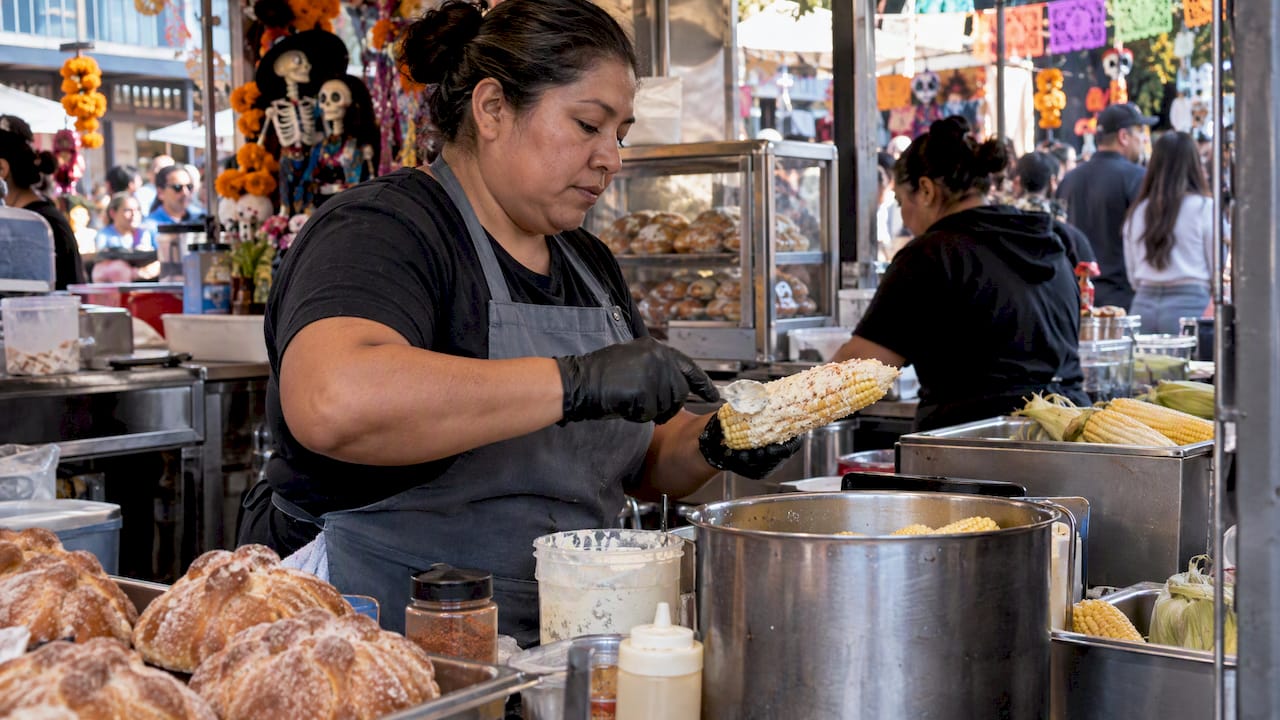
    Vendors play just as big a role. Olvera Street’s market has hosted craft and food vendors as part of its festival programming for years, and that mix of goods, from papel picado banners to hand-painted calavera figures, gives the event its texture. Food specialties round things out: expect pan de muerto, elote, and other classic Mexican street food staples at nearly every major celebration.

    Festival vendor serving elote beside pan de muerto

    Hollywood Forever’s vendor rows lean a bit more toward artisan crafts and festival merchandise, reflecting its larger, more produced format. Either way, buying from these vendors supports the same local creative community that builds the altars and runs the workshops, which makes shopping at these events feel like part of the celebration rather than a side activity.

    8. How to get involved beyond just attending

    If you want more than a one-night visit, there are real ways to plug into these celebrations year over year. Grand Park’s program has included a mentorship-based altar-making initiative as part of its Downtown Día de los Muertos lineup, giving community members a hand in building the exhibition itself rather than just viewing it.

    Community centers and cultural organizations across East LA and Boyle Heights regularly look for volunteers to help set up altars, run workshop tables, or staff information booths during the festival window. Libraries hosting sugar-skull or papel picado workshops often need extra hands too, especially for family-day events.

    The easiest way in is to reach out directly to the organization behind an event you admire, whether that’s a neighborhood cultural center or one of the larger festival organizers, a few weeks before the holiday. Many of these groups run on community participation every single year, and showing up to help is often as simple as sending an email or showing up to a planning meeting.

    9. What this holiday teaches us about looking closer to home

    Every year, we end up at a small altar we didn’t plan on finding, tucked into a library lobby or a storefront window in a neighborhood we were just passing through. Those moments tend to stick with us more than the big festivals do.

    That’s really the heart of what we do: the smaller, community-run events carry a kind of honesty that’s harder to find once a celebration scales up. Grand Park and Hollywood Forever are worth your time, but the neighborhood altar built by a handful of families often tells you more about what this holiday actually means.

    — Joshua

    Find more local events with our guides

    We built our guides around exactly this kind of discovery: the hidden altars, pop-up workshops, and neighborhood events that don’t always make it onto the big festival calendars. If Día de los Muertos has you curious about what else is happening around the city, our guide to unique things to do in Los Angeles is a good next stop.

    Socalsights

    • We highlight community-submitted spots that mainstream guides tend to skip.
    • Local businesses and event organizers can get featured through our membership and advertising page.
    • Our picks update year to year as new neighborhood events and pop-ups take shape.

    If you run a cultural event or a small business tied to local celebrations, reach out through our membership page to get in front of readers planning their Día de los Muertos weekend.

    FAQ

    For how many years has Día de los Muertos been celebrated?

    Día de los Muertos descends from Indigenous Mesoamerican ancestor-veneration practices which long predate modern record-keeping. The public, community-centered version celebrated across Los Angeles today took shape more recently, largely through Chicano artists in the 1970s.

    What are 5 symbols of Day of the Dead?

    Common symbols include the ofrenda (altar), marigold flowers, calavera (skull) imagery, papel picado banners, and pan de muerto. You’ll see all five represented at major Los Angeles events like Grand Park’s Downtown exhibition and the Olvera Street festival.

    How do I celebrate the Day of the Dead?

    You can attend a public event like Grand Park’s free altar exhibition, the Olvera Street procession, or the Hollywood Forever festival, or build a small home altar with photos and favorite items of someone you’ve lost. Workshops at libraries and community centers also offer a hands-on way to join in, from sugar-skull decorating to papel picado making.

    What are three traditions of the Day of the Dead?

    Three core traditions are building ofrendas to welcome spirits home, holding processions through streets or plazas, and sharing food like pan de muerto as part of the remembrance. In Los Angeles, these traditions show up at events ranging from Olvera Street’s nightly procession to small neighborhood altars in Boyle Heights.

    Sources

  • 9 Locals’ Picks: Things to Do in Lancaster, CA and When to Visit

    9 Locals’ Picks: Things to Do in Lancaster, CA and When to Visit

    Our top picks for Lancaster, California start with the Antelope Valley California Poppy Reserve, The BLVD Cultural District’s murals and local restaurants, MOAH’s rotating exhibits, and a drive down the Musical Road. Those four alone fill a great day, but we’ve put together a full shortlist, seasonal timing notes, and three ready-made itineraries below so you can plan your visit in minutes.


    TL;DR:

    • Poppy blooms typically peak from the middle of February through May, but rainfall shifts timing; weekday visits and early arrival help avoid parking pressure.
    • MOAH charges no general admission, while its satellite space MOAH:CEDAR opens Thursday through Sunday from 2 PM to 6 PM; check hours before visiting.
    • BLVD Market runs Saturdays April through October, while Monday Night Bites operates May through October, so confirm dates before planning an evening around either event.
    • The reserve lies west of downtown, so place it at the beginning or end of your day to avoid backtracking between attractions.
    • Drytown Water Park operates seasonally, Willow Springs events vary by calendar, and the Indian Museum has limited open days, so confirm schedules before driving out.

    Socalsights
    Find More Local SoCal Gems
    Explore curated recommendations for Southern California activities, food spots, and itineraries, including lesser-known places locals love.

    Explore SoCal recommendations

    Table of Contents

    Must-Do Lancaster Highlights at a Glance

    If you only have time to skim, this is the shortlist we hand to friends visiting Lancaster for the first time.

    1. Antelope Valley California Poppy Reserve: best for wildflower photos; peak bloom runs mid-February through May.
    2. MOAH and MOAH:CEDAR: best for free-admission art; MOAH:CEDAR is open limited hours on Thursdays through Sundays in the afternoon to early evening.
    3. The BLVD Cultural District: best for a walkable afternoon of murals and dining; busiest on market days.
    4. Musical Road (Avenue G): best for a quirky five-minute detour; drive it slowly for the full effect.
    5. Willow Springs International Raceway: best for motorsport fans; check the event calendar before heading out.
    6. Drytown Water Park: best for families on hot afternoons; seasonal hours apply.
    7. Charlie Brown Farms: best for nostalgic snacks and photo ops; open most of the year.
    8. Antelope Valley Indian Museum: best for a quiet, educational stop; limited open days.
    9. BLVD Market and Monday Night Bites: best for sampling several local vendors at once; runs spring through fall.

    Pick two or three from this list and you’ve got a solid half-day in the Antelope Valley.

    Outdoor Highlights: Poppies, Trails and Quiet State Parks

    The Antelope Valley California Poppy Reserve typically peaks from mid-February through May, and the Jane S. Pinheiro Interpretive Center opens on a seasonal schedule during bloom. Expect weekday hours of roughly 10 AM to 4 PM and weekend hours roughly from early morning to early evening once the hills turn orange.

    • The reserve sits about 15 miles west of central Lancaster, so budget 20 to 25 minutes of driving time.
    • A paved trail section makes part of the reserve accessible to wheelchairs and strollers.
    • Bring water, sunscreen, and a hat since shade is limited once you’re out among the poppies.

    Bloom quality shifts every year, and the reserve’s trail network covers eight miles with shaded picnic areas, open sunrise to sunset year-round. If crowds aren’t your thing, Arthur B. Ripley Desert Woodland State Park offers free admission and a quieter walk through juniper woodland, and Saddleback Butte State Park gives you Joshua trees and desert solitude without the poppy-season traffic.

    Arts and Culture on The BLVD and at MOAH

    MOAH, the Lancaster Museum of Art and History, does not charge general admission and operates four locations across the city, including the experimental space known as MOAH:CEDAR. That openness is intentional: the museum leans on donations and partnerships, including ties to LACMA, to keep its exhibits community-driven rather than locked behind a ticket counter.

    • MOAH:CEDAR keeps limited hours, open Thursdays through Sundays in the afternoon to early evening.
    • The main MOAH building anchors one end of Lancaster Boulevard with rotating contemporary exhibits.
    • The BLVD Cultural District layers in a mural walk, public art installations, and performances at the Lancaster Performing Arts Center.
    • The Western Hotel Museum gives you a quick dose of Antelope Valley history a few steps off the main strip.

    Pro Tip: Pair a MOAH:CEDAR visit with a BLVD Market evening when the calendar lines up. You’ll catch the art and the street energy in one trip.

    Local Bites: The BLVD Dining, Markets and Signature Treats

    Lancaster’s food scene centers on The BLVD, where locally owned spots outnumber chains by a wide margin. We’re partial to Crazy Otto’s for stacked diner pancakes, Poppy Pizzeria for a casual slice, and Zelda’s 750 West if you want a nightcap after a museum walk. Olive’s Mediterranean Cafe and La Michoacana round out the mix for something lighter or sweeter.

    • The BLVD’s dining directory lists cafes, restaurants, and pubs concentrated along a few walkable blocks.
    • BLVD Market runs April through October and gathers local vendors for a Saturday browse.
    • Monday Night Bites runs May through October, a smaller weekly food-truck gathering.
    • Arrive early to markets for parking and shorter lines, and expect family-friendly menus at most stalls.

    Family-Friendly Fun and Adrenaline Options

    Drytown Water Park gives families a straightforward way to beat the High Desert heat, with slides and pools that suit most ages during its seasonal operating months. Charlie Brown Farms, meanwhile, is built for nostalgic snacking and photo ops: oversized candy displays, a rustic farm stand feel, and enough quirky corners to keep kids entertained while you browse.

    • Willow Springs International Raceway hosts public motorsport events throughout the year; check the Antelope Valley visitor guide or the raceway’s own calendar before you drive out to the Rosamond area.
    • Drytown Water Park operates on a seasonal schedule, so confirm dates before packing the cooler.
    • Charlie Brown Farms stays open most of the year and works well as a quick stop between other activities.

    Quirky Lancaster: Musical Road and Photo-Worthy Stops

    Avenue G’s Musical Road is a genuine local curiosity: grooves cut into the pavement play a melody as your tires roll over them. Local drivers say the tune comes through clearest around 55 miles per hour, though that’s more neighborhood lore than an official spec, so treat it as a fun experiment rather than a guarantee.

    • Pull over safely before and after your pass since the road sees regular traffic.
    • The BLVD’s mural walk and the Aerospace Walk of Honor both make for strong photo stops nearby.
    • Midweek mornings tend to be quietest for mural photography without other visitors in frame.

    Pro Tip: Drive the Musical Road twice, once at a cautious pace and once closer to 55 mph, to compare the sound.

    When to Time Your Visit: Major Events and Festivals

    Spring brings the biggest overlap of attractions. The California Poppy Festival lands during bloom season and draws crowds who want wildflowers and live entertainment in the same weekend. Later in the year, the Antelope Valley Fair and Alfalfa Festival takes over in September with carnival rides, agricultural exhibits, and a distinctly local-fair feel.

    • California Poppy Festival: spring, timed around peak bloom, expect larger crowds at the reserve that same weekend.
    • Antelope Valley Fair and Alfalfa Festival: September window, a multi-day event with rides and exhibits.
    • BLVD Market: seasonal Saturdays, April through October.
    • Monday Night Bites: weekly, May through October.

    If you’re chasing poppies and want to skip festival crowds, aim for a weekday rather than festival weekend.

    Three Sample Itineraries: Half-Day, Full-Day, Weekend

    These three plans cover the most common ways visitors tell us they want to spend time in Lancaster.

    1. Half-day: Start with a BLVD mural walk, grab lunch at one of the boulevard’s cafes, then pop into MOAH for an hour before heading home.
    2. Full-day: Hit the Poppy Reserve in the morning light, pack a picnic, spend the early afternoon at Arthur B. Ripley Desert Woodland State Park or back at MOAH:CEDAR, then finish with dinner on The BLVD.
    3. Weekend: Day one covers family or adrenaline picks like Drytown Water Park or a Willow Springs event; day two combines the Poppy Reserve in the morning with a BLVD cultural afternoon and a Monday Night Bites dinner if your dates line up.

    Order your stops by drive time: the reserve sits west of downtown, so most visitors save it for the first or last leg of the day to avoid backtracking.

    Practical Planning: Weather, Parking and What to Bring

    The Antelope Valley runs hot by day and cool by night, so layers matter more than most visitors expect.

    • Pack water, sunscreen, and a light jacket even in warmer months.
    • MOAH is donation-based with flexible hours, but MOAH:CEDAR only opens Thursday through Sunday, 2 PM to 6 PM, so check before driving over.
    • Arrive early during poppy season since reserve parking fills up on sunny weekends.
    • Cell reception can be patchy near the reserve and state parks, so download maps ahead of time.
    • Confirm hours on official event pages since seasonal schedules shift year to year.

    Why We Love Lancaster’s Hidden Gems

    We built this list from the spots locals keep recommending to each other, not just the ones every guidebook repeats. If you try one offbeat pick, like the Musical Road or Ripley’s quiet trails, tell us about it. And always double-check hours on official sites before you go.

    — Joshua

    Plan Your Lancaster Trip With SoCal Sights

    We know the frustration of piecing together a Lancaster itinerary from a dozen different browser tabs, which is exactly why we built our guides around the picks locals actually make. If you run a restaurant, shop, or event on The BLVD or anywhere in the Antelope Valley, advertising with SoCal Sights puts your business in front of readers actively planning their next Lancaster visit, no long-term contract required since pricing is available on request.

    Beyond Lancaster, our guide to fun activities near you can help you extend the trip into the wider High Desert or back toward Los Angeles. If you’d rather browse ticketed events and happy hours across California, EventHound’s activity guide is a solid companion for filling in gaps between our recommendations. Check out our other weekend getaway picks to turn your Lancaster day into a full Southern California weekend.

    Plan Your Lancaster Trip With SoCal Sights — overview diagram

    FAQ

    What is Lancaster, CA known for?

    Lancaster is known for the Antelope Valley California Poppy Reserve’s spring wildflower bloom, The BLVD Cultural District’s murals and dining scene, and quirky local stops like the Musical Road. The city sits in the High Desert, roughly an hour north of Los Angeles according to Lancaster’s own visitor page.

    When is the best time to see the poppies in Lancaster?

    Peak bloom at the Antelope Valley California Poppy Reserve typically runs mid-February through May, though exact timing shifts with winter rainfall. Weekday visits tend to be quieter than weekends once the hills turn orange.

    Is MOAH free to visit?

    Yes, MOAH does not charge general admission and welcomes donations instead. Its satellite location, MOAH:CEDAR, keeps more limited hours of Thursday through Sunday, 2 PM to 6 PM.

    What are some family-friendly things to do in Lancaster?

    Drytown Water Park and Charlie Brown Farms are two of the most popular family stops, offering seasonal water slides and nostalgic snack browsing respectively. The BLVD Cultural District also works well for families thanks to its walkable layout and casual dining options.

    How do you experience the Musical Road in Lancaster?

    Drive along Avenue G and the road’s grooves will play a melody as your tires pass over them, with local drivers reporting the clearest tune around 55 miles per hour. Pull over safely before and after your pass since the road carries regular traffic.

    Sources

  • 7 Japanese Gardens in Los Angeles, Hours, $5 Entry & Festival Calendar

    7 Japanese Gardens in Los Angeles, Hours, $5 Entry & Festival Calendar

    For a peaceful tea house stroll, head to the Japanese Garden (SuihoEn) in Van Nuys. For sprawling grounds and photography, Huntington is tough to beat. For rare access to a design treasure, Storrier Stearns delivers, and for community events tied to the Japanese American calendar, Little Tokyo’s JACCC and nearby JAPAN HOUSE LA round things out. We’ve got the hours, admission, and transit details below so you can pick fast.


    TL;DR:

    • SuihoEn in Van Nuys charges $5 for general admission and closes on Fridays, Saturdays, and within 24 hours of rain, affecting weekend visits.
    • The Huntington’s Japanese garden is part of a larger estate requiring advance timed tickets, with availability and pricing varying seasonally.
    • Storrier Stearns Japanese Garden in Pasadena is only open on limited days or through reservations, requiring prior confirmation for visits.
    • Visiting festivals like Nisei Week or Tanabata at the Japanese American Cultural & Community Center enhances the cultural experience; check event dates beforehand.
    • Parking and transit details vary by garden, with SuihoEn offering on-site parking and Little Tokyo gardens often paired with nearby cultural attractions.

    Socalsights
    Discover More SoCal Hidden Gems
    Find curated recommendations for unique activities, local food spots, and lesser-known Southern California attractions from community-driven local knowledge.

    Explore SoCal Sights

    Table of Contents

    1. The Best Japanese Gardens in Los Angeles at a Glance

    Here’s our quick-scan list before you dive into the full details. Each one serves a different kind of visit, so match the garden to your mood and your schedule.

    1. The Japanese Garden (SuihoEn), Van Nuys: best for a quiet, affordable wet-strolling garden with a tea house; closed Fridays, Saturdays, and after rain.
    2. Huntington Library, Art Museum & Botanical Gardens: best for large grounds and photography, but timed-entry tickets usually need advance booking.
    3. Storrier Stearns Japanese Garden, Pasadena: best for design lovers who can plan around limited public open days or events.
    4. Descanso Gardens: best for seasonal blooms, especially camellias, within a broader botanical garden setting.
    5. Earl Burns Miller Japanese Garden, Long Beach: best for a compact, college-campus escape with koi and a teahouse.
    6. James Irvine Japanese Garden, Little Tokyo: best for pairing a garden stop with downtown culture and community events.
    7. Kyoto Gardens, Little Tokyo area: best for a convenient, low-key garden stop near hotels and restaurants.

    Full profiles with hours, admission, and access notes follow in the next section.

    2. What to Expect at Each Garden: Hours, Admission, and Access

    Each of these gardens has its own rhythm, so check the specifics before you go. Here’s what we found for each one.

    • The Japanese Garden (SuihoEn), Van Nuys: This garden blends a wet-strolling path, a tea house, and both dry Zen and wet features, according to the LA Sanitation & Environment page. General admission runs $5, with children age 3 and younger and seniors 62 and older at $3. The garden closes Fridays, Saturdays, City holidays, and within 24 hours of rain, with last entry at 3:15 pm and exit by 3:30 pm. Parking is available on-site near the Donald C. Tillman Water Reclamation Plant in Van Nuys.
    • Huntington Library, Art Museum & Botanical Gardens: The grounds include a well-known Japanese garden section within a much larger estate of botanical collections. Tickets typically require advance, timed-entry purchase, so check the Huntington’s official site before you drive out, since availability and pricing shift by season.
    • Storrier Stearns Japanese Garden, Pasadena: This nearly two-acre private garden and traditional teahouse carries real design pedigree, but it only opens to the public on limited days or through special events and reservations. If a specific open day matters to your trip, confirm it directly on the garden’s own site first.
    • Descanso Gardens: Known for seasonal floral displays, especially camellias, Descanso includes a Japanese-style section within its broader botanical layout. It runs on a general admission and ticketing model, and the lineup of seasonal events changes, so check the official calendar for what’s blooming when you plan to visit.
    • Earl Burns Miller Japanese Garden, Long Beach: Tucked into the Cal State Long Beach campus, this garden offers koi ponds, a teahouse, and a compact layout that makes for an easy, unhurried visit. Campus parking rules apply, so plan for a permit or visitor lot.
    • James Irvine Japanese Garden, Little Tokyo: Known locally as “Seiryu-en” (Garden of the Clear Stream), this garden sits near the Japanese American Cultural & Community Center and works well as a short stop before or after downtown programming.
    • Kyoto Gardens: This smaller garden space near Little Tokyo hotels gives visitors a convenient patch of greenery without a long drive, useful if you’re already downtown for food or culture.

    For any garden without a confirmed public schedule here, treat the official site as the final word on hours and reservations before you head out.

    3. Festivals and Events Tied to Japanese Gardens and Culture

    Garden visits get a lot more interesting when they overlap with Little Tokyo’s festival calendar. Nisei Week and the Tanabata Festival both center on the Japanese American Cultural & Community Center (JACCC) and draw heavily on community history and craft traditions.

    • Nisei Week programming at JACCC includes cultural arts, exhibitions, and often free festival events within walking distance of Little Tokyo transit stops.
    • The 2026 L.A. Tanabata Festival featured kazari displays and community workshops, giving visitors a hands-on look at Japanese craft traditions.
    • Bonsai exhibitions and occasional Sunday garden openings pop up seasonally at smaller venues, so watch local event pages for dates.
    • SuihoEn closes on City holidays and within 24 hours of rain, which can throw off a planned weekend visit if you don’t check ahead.

    Confirm exact dates and ticketing on each event’s official page before building your itinerary around it.

    4. How to Choose the Right Garden for Your Visit

    Picking the right garden comes down to a handful of practical factors: how far you’re willing to drive, how much crowding you can tolerate, whether you care about programming or just quiet, your photography goals, your budget, and any accessibility needs. Run through this checklist before you go.

    1. Confirm the garden’s current hours and any weekday closures.
    2. Check whether reservations or timed-entry tickets are required.
    3. Look up the weather forecast, since rain closes SuihoEn for 24 hours.
    4. Plan your parking or transit route in advance.
    5. Verify whether restrooms, tea house access, or seating are available on-site.

    Pro Tip: Visit smaller gardens early on a weekday for the best light and fewest people, then save festival weekends for the larger cultural centers where crowds are part of the experience.

    5. Our Local Tips for Getting There and Pairing Your Visit

    Parking at SuihoEn is easiest on weekday mornings, and Little Tokyo gardens pair naturally with a stop at JAPAN HOUSE LA for exhibitions on Japanese food, art, and mindfulness. If you’re building a longer day, check our unique things to do in Los Angeles guide for nearby stops worth adding.

    Visitor approaching JAPAN HOUSE LA venue

    6. Why These Gardens Matter Beyond the Scenery

    These gardens carry real Japanese American community history, not just aesthetics. Festivals like Nisei Week and Tanabata keep that history active, so visit with the same respect you’d bring to any living cultural space.

    — Joshua

    7. Plan Your Next SoCal Garden Day With Us

    We provide guides to help you find reliable details so you can enjoy your day out more easily. If you run a local business or want your event featured alongside guides like this one, our membership and advertising page walks through how that works.

    Socalsights

    Garden type Best for Typical cost
    SuihoEn (Van Nuys) Quiet strolling and tea house $5 general, $3 children/seniors
    Huntington gardens Photography and large grounds Timed-entry ticket, check official site
    Little Tokyo gardens Culture and events Free to low-cost, varies by site

    FAQ

    What are the three most famous gardens in Japan?

    Japan’s three classical “great gardens” are Kenrokuen, Korakuen, and Kairakuen, each a large strolling garden built around a central pond and walking circuit, as described by Japan Guide. These gardens shaped the strolling-garden style you’ll recognize in several Los Angeles gardens, including SuihoEn’s wet-strolling layout.

    Are the Japanese gardens in LA free?

    Some are free to enter, while others charge a modest admission. SuihoEn in Van Nuys charges $5 general admission, with children and seniors at $3, while larger estates like the Huntington run on a separate ticketed model.

    Does California have a Japantown?

    Yes, Little Tokyo in downtown Los Angeles functions as the region’s historic Japanese American cultural district, home to JACCC, JAPAN HOUSE LA, and annual festivals like Nisei Week and Tanabata. It remains a center for community programming and cultural events tied to Japanese American history.

    What is considered the most beautiful garden?

    Beauty in garden design is subjective, but Japan’s classical “three great gardens,” Kenrokuen, Korakuen, and Kairakuen, are widely cited as benchmarks for strolling garden design. Locally, the Huntington’s Japanese garden sections and SuihoEn’s wet-strolling layout each offer a different take on that same tradition.

    How do I learn more about Japanese garden design?

    For a deeper look at design elements like koi ponds and traditional layout choices, Koi Waters covers garden design and pond culture in detail. It’s a useful next stop if a visit leaves you curious about the craft behind what you saw.

    Sources

  • Save Money: Free San Diego Picks, Balboa Park, La Jolla, Family Tips

    Save Money: Free San Diego Picks, Balboa Park, La Jolla, Family Tips

    Here’s the short answer: the best free things to do in San Diego are Balboa Park’s grounds and free tram, La Jolla Cove and other public beaches, Cabrillo National Monument’s tidepools, and cultural gems like the Timken Museum and Spreckels Organ Pavilion. Watch for small costs like parking or special exhibits, and remember tidepool viewing depends on the tide. Families especially get a lot of mileage out of this list.


    TL;DR:

    • Visiting Balboa Park and using its free tram is the most efficient way to see major attractions and avoid parking issues.
    • Tidepool viewing at Cabrillo National Monument is best during low tide in fall and winter, requiring checking tide schedules beforehand.
    • La Jolla Cove offers free wildlife watching, but tidepools require careful timing and sturdy shoes for safe exploration.
    • Kid-friendly free events like the Kids Free October program and summer movies enhance family visits without added costs.
    • Parking near beaches and parks fills early, so arriving before 9 AM and planning for timing and weather saves time and frustration.

    Socalsights
    Find More Southern California Gems
    SoCal Sights shares curated local recommendations for unique activities, food spots, and lesser-known places across Southern California.

    Visit SoCal Sights

    Table of Contents

    1. Top free things to do in San Diego

    San Diego is one of those rare cities where the best stuff doesn’t cost a dime. We’ve grouped our favorite free picks by category so you can scan and pick what fits your day.

    Parks and green space:

    • Balboa Park: 1,200 acres of gardens, museums, and shaded paths right in the heart of the city.
    • Presidio Park: Quiet hilltop views over Mission Valley, great for a sunset walk with almost no crowds.

    Museums and cultural highlights:

    • Timken Museum of Art: Permanently free, housing European old masters and American paintings in a cool, quiet gallery.
    • Spreckels Organ Pavilion: Free outdoor concerts on the world’s largest outdoor pipe organ.

    Beaches and coastal spots:

    • La Jolla Cove: Sea lions, leopard sharks in summer, and some of the clearest water in the county.
    • Coronado Beach: Wide, soft sand with views of the famous Hotel del Coronado.
    • Mission Beach: The boardwalk scene, bikes, skaters, and street performers.

    Scenic walks and viewpoints:

    • Sunset Cliffs: Dramatic bluffs over the Pacific, best right before dusk.
    • Embarcadero and Seaport waterfront: Flat, easy strolling with harbor views and the USS Midway as a backdrop (viewing the ship from outside is free; boarding it isn’t).

    Family events and markets:

    • Little Italy Mercato: A Saturday farmers market with free samples and street musicians.
    • Summer concerts and movie nights: Rotating free programming across city parks.

    Each of these works on its own or stacked into a day trip. Balboa Park and the beaches are the heavy hitters, but the smaller spots like Presidio Park or Sunset Cliffs are where you get breathing room away from the crowds.

    2. Balboa Park: free highlights, tram logistics, and resident days

    Balboa Park itself charges no entry fee, and a handful of its best features cost nothing even inside the gates. The Botanical Building and its lily pond are free year round, and the Timken Museum of Art is permanently free, a rarity among the park’s 17 museums according to Balboa Park’s own FAQ page. Weekend lawns around the Prado often host free programming too, from drum circles to pop-up art shows.

    Getting around on foot can eat up your morning, which is where the park’s free tram comes in handy:

    • The City of San Diego’s free Balboa Park tram runs daily and is ADA-accessible, stopping near major museums and the Spreckels Organ Pavilion.
    • Spreckels Organ Pavilion hosts free organ concerts every Sunday, a weekly tradition that’s been part of the park’s rhythm for decades, per Balboa Park’s FAQ page.
    • Several museums rotate free admission days for San Diego residents and active military, though you’ll need a photo ID with a local address to get in free.

    If you’re visiting from out of town, don’t plan your trip around resident free days. Stick to the always-free spots instead and treat any resident deal as a bonus if you happen to qualify.

    3. Beaches and tidepools: when to go for the best views

    Every beach in San Diego is public and free, which is easy to take for granted if you grew up here. La Jolla Cove is the standout for wildlife watching, with sea lions lounging on the rocks and, if you’re lucky in summer, leopard sharks cruising the shallows. For tidepools specifically, Cabrillo National Monument is the gold standard, but timing makes or breaks the experience.

    • Tidepool life is most visible during low tide, and the National Park Service notes that fall and winter often bring low tides during daylight park hours, which makes those seasons your best bet for spotting anemones, crabs, and sea stars.
    • Check the NPS tide schedule before you go. Arriving at the wrong tide means a lot of wet rocks and not much else.
    • Mission Beach and Coronado are better for swimming and people-watching than tidepooling, so plan accordingly depending on what your family wants out of the day.

    We’ve gone deeper on exact tidepool spots and timing in our tidepool guide, and if you want quieter sand away from the main drags, our secret beaches guide is worth a look too.

    Pro Tip: Wear shoes with real grip for tidepooling. Wet rocks are slicker than they look, and flip-flops are asking for a scraped knee.

    Hiker testing grip beside a tidepool

    4. Seasonal deals and recurring free family programs

    San Diego stacks its free family programming so there’s almost always something going on. The biggest is Kids Free October, when more than 70 local attractions let children 12 and under in free with a paying adult, according to the San Diego Museum Council, which runs the program and posts participant lists and coupons each year.

    Beyond October, a few things repeat all year:

    • Summer Movies in the Park, with free outdoor screenings in various neighborhoods.
    • Weekly organ concerts at Spreckels Organ Pavilion, free and open to everyone.
    • Library programs and workshops, often aimed at kids and teens, at branches across the city.

    Always double check dates and whether reservations are required before you build a trip around any of these.

    5. How to save money and time on your visit

    A little planning turns a good free day into a great one. Here’s what actually matters:

    1. Park early. Free street parking fills up fast near Balboa Park and the coast, especially on weekends, so aim to arrive before 9 AM.
    2. Use the tram. The free Balboa Park tram saves you from circling for a spot near the museums, and it’s a lifesaver if you’ve got a stroller or tired kids in tow.
    3. Check tide charts ahead of tidepool visits. Timing is everything at Cabrillo, so don’t wing it.
    4. Pack smart. Bring sunscreen, water, and sturdy shoes, especially for tidepools or longer walks like Sunset Cliffs.
    5. Mind accessibility needs. The Balboa Park tram is ADA-accessible, but some beach paths and tidepool areas are uneven, so plan routes accordingly if mobility is a concern.

    Pro Tip: If you’re juggling nap schedules or meltdown windows, aim to hit your main stop before 11 AM. We break down exactly how in our family activities timing guide.

    6. Local picks and a half-day free itinerary

    A few spots locals love that don’t always make the big lists: Presidio Park for quiet hilltop views, Spanish Village Art Center inside Balboa Park for free artist demos, and Sunset Cliffs at golden hour when the crowds thin out.

    Three free San Diego local picks

    For a simple half-day plan, start at Balboa Park’s Botanical Building around 9:30 AM, hop the free tram to the Spreckels Organ Pavilion if a concert’s running, then head to La Jolla Cove by early afternoon for tidepools and sea lions. Park near Inspiration Point for the smoothest tram access. Our weekend itinerary guide has a longer version if you want to stretch it into a full day.

    7. Why free experiences matter to us

    Free access to parks, beaches, and museums keeps culture within reach for families who can’t drop $100 on a day out, and that matters to us. Part of our mission is surfacing the local favorites that don’t always make the mainstream guides, and we’d love for you to share your own go-to spots with our community.

    — Joshua

    Want more hidden gems like these?

    We built our site around the idea that the best San Diego experiences are often the ones not shouting the loudest, and we keep finding new free spots worth sharing. If you run a local business or event and want to reach people planning free and budget-friendly outings, advertising with SoCal Sights puts you in front of exactly that audience.

    Socalsights

    • Browse our local activity guide for more picks beyond this list.
    • Have a favorite free spot we missed? We’re always glad to hear about it.

    FAQ

    What’s going on in San Diego today for free?

    San Diego always has something running, from weekly Spreckels Organ Pavilion concerts on Sundays to weekend lawn events in Balboa Park. Check local event calendars and the museum council’s listings for the most current schedule before you head out.

    What to do cheaply in San Diego?

    Beaches, tidepools, and Balboa Park’s grounds cost nothing, and the free tram cuts down on parking stress. Pairing a free museum visit, like the Timken, with a beach stop makes for a full day without spending much at all.

    What are some hidden places to visit in San Diego?

    Presidio Park and the Spanish Village Art Center inside Balboa Park are easy to miss but worth the detour for quieter crowds. Sunset Cliffs at golden hour is another local favorite that doesn’t get the same attention as the bigger beaches.

    What are the top 5 things to do in San Diego?

    Balboa Park’s grounds and free tram, La Jolla Cove, Cabrillo National Monument’s tidepools, the Timken Museum of Art, and the Spreckels Organ Pavilion concerts round out a strong free itinerary. Each one works well alone or combined into a single day trip.

    Sources

  • See La Jolla’s Seven Sea Caves Safely, From Sunny Jim to Kayak Access

    See La Jolla’s Seven Sea Caves Safely, From Sunny Jim to Kayak Access

    Seven sea caves, White Lady, Little Sister, Shopping Cart, Sea Surprize, Arch, Sunny Jim, and Clam, sit along the sandstone bluffs between La Jolla Cove and La Jolla Shores. Most visitors see them by walking the Sunny Jim land tunnel, booking a guided kayak tour, snorkeling from the Cove, or simply watching from the clifftop path. Since the caves sit inside a protected marine reserve, wildlife distance rules apply no matter which option you pick.


    TL;DR:

    • Visiting Sunny Jim by land is the easiest option with a ticketed tunnel, but it only grants access to one cave and involves stairs.
    • Guided kayak tours provide the closest water-level views of ocean-facing caves and are safer than DIY trips due to real-time condition assessments.
    • Water access to the caves depends heavily on calm swell and low tide, making early mornings and checking tide charts essential for safe visits.
    • Marine reserve rules require maintaining at least 50 yards from seals and sea lions and avoiding cave entry during rough surf for safety and wildlife protection.
    • Risks inside caves include surge, submerged rocks, and cold water, necessitating proper gear, guided trips, and respecting ocean conditions for safe exploration.

    Socalsights
    Find More Authentic SoCal Experiences
    Explore curated recommendations for hidden gems, local food spots, fun activities, and unique itineraries across Southern California.

    Explore SoCal hidden gems

    Table of Contents

    How do you choose the best way to see the caves?

    Your pick really comes down to how close you want to get and how comfortable you are in the water. Each method has a different trade-off between ease, cost, and the kind of view you’ll walk away with.

    • Sunny Jim via The Cave Store: a ticketed tunnel and stairway that gets you into one cave on dry land, ideal for families, kids, or anyone who’d rather skip the ocean altogether.
    • Guided kayak tours: the closest look at the ocean-facing caves, led by someone who knows the swell patterns and entry points.
    • Snorkeling or scuba from La Jolla Cove: a good option on calm days for underwater views of the reef and cave mouths.
    • Bluff viewpoints or boat trips: the easiest choice when surf is up or you just want photos without getting wet.

    Entering the other six caves on foot is rare and mostly limited to the lowest tides of the year, and even then it carries real risk from surge and slippery rock. Most locals treat DIY cave entry as something to skip in favor of a guide.

    The seven caves, east to west

    According to City of San Diego archival records, the seven caves run in this order, carved into sandstone roughly 75 million years old, with openings that face north toward Scripps Pier and La Jolla Shores.

    • White Lady: ocean-facing, named for pale streaks of mineral staining on its walls, viewable mainly by kayak or boat.
    • Little Sister: a smaller ocean-facing cave tucked near White Lady, best spotted from the water at low tide.
    • Shopping Cart: ocean-facing, named for debris once lodged in its mouth, a popular kayak photo stop.
    • Sea Surprize: a narrow ocean-facing opening that surprises paddlers with a sudden interior chamber.
    • Arch (Arches): ocean-facing with a dramatic rock arch visible from both water and the clifftop trail.
    • Sunny Jim: the only cave with a reliable land entrance, reached through a tunnel and staircase at The Cave Store.
    • Clam: ocean-facing, named for its rounded, shell-like opening near the western edge of the cluster.

    Sunny Jim stands apart as the one cave almost anyone can visit without a boat, snorkel gear, or paddling experience.

    How each access method actually works

    1. Sunny Jim tunnel: buy a ticket at The Cave Store on Coast Boulevard, then walk down roughly 145 hand-carved steps through the tunnel to a platform inside the cave. Stairs make this option tough for strollers or wheelchairs.
    2. Guided kayak tours: most launch from La Jolla Shores or the Cove and paddle along the bluffs, pausing at cave mouths when swell allows. Guides read conditions in real time and know which caves are safe to approach that day, which is why we’d rather point readers toward guided kayak trips than a solo outing.
    3. Boat or coastal walk: view the caves from offshore or from the clifftop path above Coast Boulevard, a solid backup when the water’s too rough for anything else.
    4. Extreme low tide: a handful of days each year bring tides low enough to expose cave floors, but currents and slick rock make foot access genuinely rare and risky.

    What rules protect you and the wildlife here

    La Jolla Cove sits inside an ecological reserve, and City rules prohibit fishing or removing anything from the water or rocks. At Point La Jolla, the City recommends staying at least 50 yards from seals and sea lions hauled out on the rocks, since getting closer can count as harassment under federal law.

    City reports describe a clear shift toward active management at the Cove, with expanded ranger presence and new signage rolled out through 2024 and 2025 to keep people and marine mammals apart. That means more visible enforcement than you might remember from past visits.

    • Keep well back from hauled-out animals, even if they look unbothered by nearby swimmers.
    • Watch for seasonal closures at Point La Jolla and Children’s Pool during pupping season.
    • Skip cave entry entirely in rough surf, and lean on a guided tour when you’re unsure about conditions.

    When should you plan your visit?

    Water access to most of the caves depends on calm swell and a low tide, so checking a local tide chart before you go saves a wasted trip. Mornings tend to bring calmer water and thinner crowds, and arriving early also means an easier time finding parking near the Cove.

    • Check tide charts and swell forecasts the morning of your visit, not days ahead.
    • Aim for early morning, both for calmer conditions and lighter foot traffic.
    • Expect heavier ranger presence and possible closures during pupping season.
    • Check the lifeguard and City pages same-day for any posted closures.

    How old are the caves, and where does the Sunny Jim name come from?

    The caves formed as ocean waves wore away sandstone laid down roughly 75 million years ago, slowly hollowing out the openings we see today along the La Jolla bluffs. City archival records reference the cluster under the older name “Mammoth Caves,” with petitions and tunneling proposals dating back to the early 1900s.

    Gustav Schultz is credited with carving the tunnel that now connects The Cave Store to Sunny Jim, giving visitors a dry route into one of the seven caves. Local lore ties some of the caves to smuggling during Prohibition, but we’d treat that as neighborhood storytelling rather than documented history unless archival records say otherwise.

    What should you pack and plan for?

    A little preparation goes a long way here, since the Cove gets busy and parking disappears fast on warm days.

    • Reef-safe sunscreen, since you’re swimming or paddling near a protected reef.
    • Water and sturdy water shoes for slippery rocks and tide pools.
    • A dry bag for your phone or camera, especially on a kayak.
    • Cash or a parking app, since street spots near the Cove fill up quickly.

    Restrooms, showers, and a lifeguard station sit right at La Jolla Cove, but accessibility varies by method: Sunny Jim involves stairs, and kayak operators differ in what accommodations they can offer.

    Pro Tip: Book your kayak tour or Sunny Jim ticket a day ahead on weekends, since both sell out by mid-morning once the parking lots fill.

    A few things I’ve learned from timing visits here

    When you call a kayak outfitter, ask about their cancellation policy for rough swell and whether the guide adjusts the route based on morning conditions, since that’s the detail that separates a great trip from a soggy, cave-less one. For quieter views, the clifftop path past the Cove toward Point La Jolla gets far less foot traffic than the main overlook. Pair your visit with nearby tide pools for a full coastal morning.

    What makes each cave worth seeking out

    Sunny Jim draws the most visitors simply because it’s the only cave you can walk into, and the view out through its mouth toward the open Pacific is worth the climb down. Arch stands out above water too, since its rock archway is visible from the clifftop trail even if you never get in a kayak or boat.

    Shopping Cart and Sea Surprize reward paddlers willing to get close: Shopping Cart’s mouth narrows into a dim chamber, while Sea Surprize opens into a surprisingly roomy interior once you’re past the entrance. White Lady and Little Sister sit near each other and are often paddled as a pair, their pale mineral streaks and smaller openings making them easy to tell apart once you’ve seen both. Clam, the westernmost cave, rounds out the group with a shell-shaped opening that catches good afternoon light for photos.

    Wildlife sightings vary by season and day, but the reef around these caves supports garibaldi, leopard sharks in shallow water nearby, and the seals and sea lions that haul out on the rocks above the waterline. None of that is guaranteed on any single visit, but it’s part of why guides keep paddling the same stretch of coast year after year.

    What hazards should you watch for inside the caves?

    Surge is the biggest risk: waves that look mild from shore can push a kayak or swimmer into cave walls, and the swell inside a cave often feels stronger than it did outside. Submerged rocks near cave mouths are another hazard, especially at low tide when they sit just below the surface.

    Kayaker moving away from surging cave entrance

    If you’re snorkeling or kayaking and a set of waves rolls in while you’re near a cave entrance, the safest move is to paddle or swim away from the opening rather than toward it, since backwash can trap you against rock. Anyone in distress near the Cove should signal the lifeguard tower rather than attempt a solo rescue, and lifeguard stations at the Cove are staffed specifically because conditions here can shift fast.

    Cold water is an underrated risk too. Even on a warm day, Pacific water temperatures can bring on fatigue or mild hypothermia faster than swimmers expect, which is one more reason a wetsuit or guided tour with proper gear beats going it alone.

    How is this area protected, and what can you do to help?

    La Jolla Cove and the surrounding caves sit inside the La Jolla Underwater Park, an ecological reserve where City rules prohibit fishing and removing marine life or rocks. UC San Diego Sea Grant guidance frames distance from marine mammals as basic habitat protection, not just a courtesy, since repeated disturbance can push seals and sea lions off their haul-out spots for good.

    Visitor observing sea lions from a distance

    The simplest way to help is to keep your distance, pack out anything you bring in, and avoid touching rock, coral, or marine life even when it’s within easy reach. Choosing a guided tour also supports operators who already work within these rules and can model good practice for first-time visitors.

    Who are good guided tour providers, and what do they cost?

    Kayak outfitters based near La Jolla Shores and the Cove typically run tours lasting one to two hours, covering the ocean-facing caves when conditions allow. Options generally range from shared group tours to smaller private trips, with private bookings costing more for a guide’s full attention and a flexible route.

    Snorkel tours, often paired with kayaking or run separately, tend to run shorter, usually under an hour in the water, and focus on the reef just outside the Cove rather than deep cave interiors. Before booking any operator, ask directly about group size, whether a guide enters caves on the day of your visit, and what their policy is if swell picks up, since the same outfitter might run a very different route in different conditions. We’d rather point you toward reading up on what a kayak trip includes before booking than guess which company fits your plans.

    How does weather change what you can see?

    Swell size matters more than sunshine here. A calm, glassy morning can make several caves accessible by kayak or snorkel, while a swell from a distant storm can shut down water access entirely, even on a sunny day. Wind also plays a role, since onshore wind chop can make paddling near cave mouths uncomfortable or unsafe well before the surf itself looks dangerous.

    Winter tends to bring bigger, less predictable swell along this stretch of coast, while summer and early fall often offer calmer windows, though neither season guarantees good conditions on any single day. That’s the real reason to check tide and swell reports the morning of your visit rather than planning weeks out: the ocean here changes faster than a forecast can promise.

    Why visiting responsibly matters

    The mornings I’ve spent watching sea lions doze on the rocks above Sunny Jim, from a respectful distance, stick with me more than any closer photo would. Following the rules here isn’t a formality. It’s what keeps this coastline worth visiting.

    — Joshua

    Plan the rest of your San Diego trip with us

    Once you’ve seen the caves, there’s a lot more of this coastline worth exploring, and that’s exactly what we built SoCal Sights to help with: real, specific recommendations instead of another generic list. If you run a local business or tour operation near La Jolla, advertising with SoCal Sights puts you in front of readers actively planning their visit. For a longer stay, check our San Diego weekend itinerary for ideas on where to go next, and consider grabbing The Gardens of Anuncia Tickets for a local cultural experience at The Old Globe.

    Socalsights

    FAQ

    What are the seven sea caves in La Jolla?

    The seven caves, listed east to west, are White Lady, Little Sister, Shopping Cart, Sea Surprize, Arch, Sunny Jim, and Clam. They sit along the sandstone bluffs between La Jolla Cove and La Jolla Shores.

    Is visiting the La Jolla sea caves worth it?

    Most visitors find the trip worthwhile, whether they walk into Sunny Jim, paddle past the others by kayak, or just watch from the clifftop. The combination of dramatic sandstone formations and regular wildlife sightings makes it one of the more memorable stops along this stretch of coast.

    Can you enter the La Jolla caves without a tour?

    Sunny Jim can be entered independently with a ticket from The Cave Store, no guide required. The other six caves are ocean-facing and best reached by guided kayak or snorkel tour, since entering them on foot is rare and depends on unusually low tides.

    What are some other well-known sea caves along the California coast?

    California’s coastline holds other notable sea cave clusters, including those around the Channel Islands, though each site has its own access rules and conditions. If a Channel Islands trip interests you, our Channel Islands day trip guide covers how to plan one.